Serving Brooklyn, Queens and Long Island(929) 429-2429Open six days a weekFree estimateGuaranteed work
On Point Garage Doors
Open 24 hours Sun-Thu, Fri until 5 pm Free estimate Springs, openers, cables We come to you
Emergency?Call nowBook free estimate
Brick attached homes, co-op garages and the shopping strips under the train

Jackson Heights Garage Door Repair

Free estimateSame-day serviceCommon parts on board
  • Free estimate
  • Same-day service
  • Common parts on board
Emergency garage door repair★★★★★ 5.0 on Google · 42 reviews

Book your free estimate

Takes 30 seconds. We call you back to set a time.

Or just call (929) 429-2429 and talk it through.

Home › Jackson Heights Garage Door Repair

Real jobs. Real photos.

These photos are from our own jobs, with our logo on them.

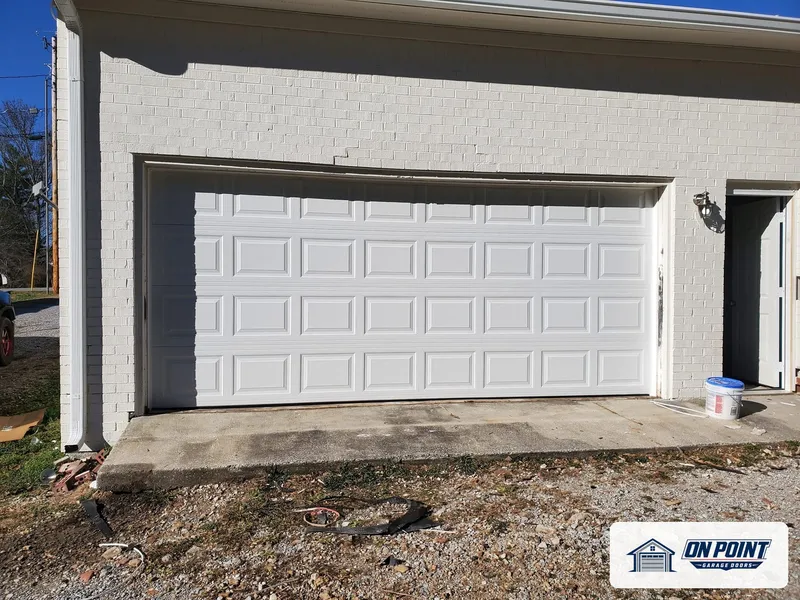
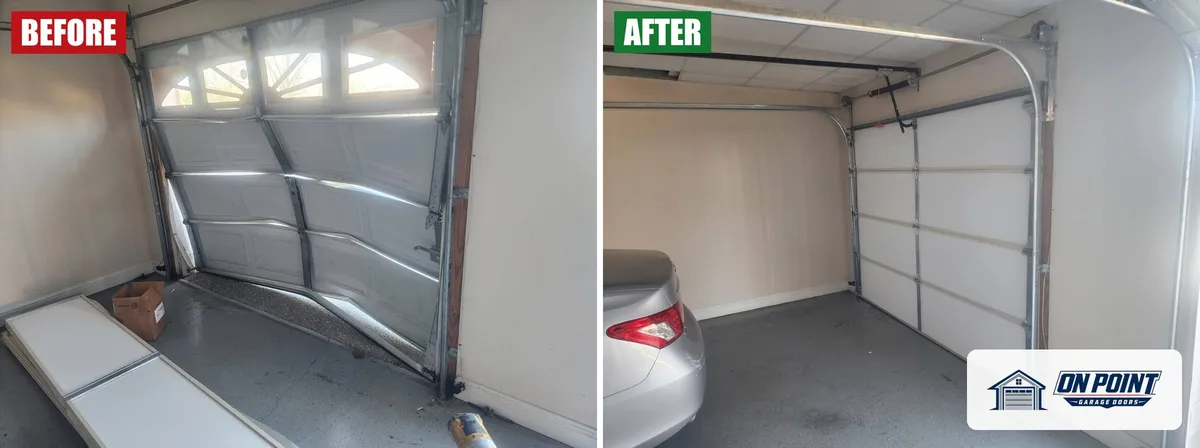
Caved-in door, made new: before and after photo from one of our jobs
Caved-in door, made new
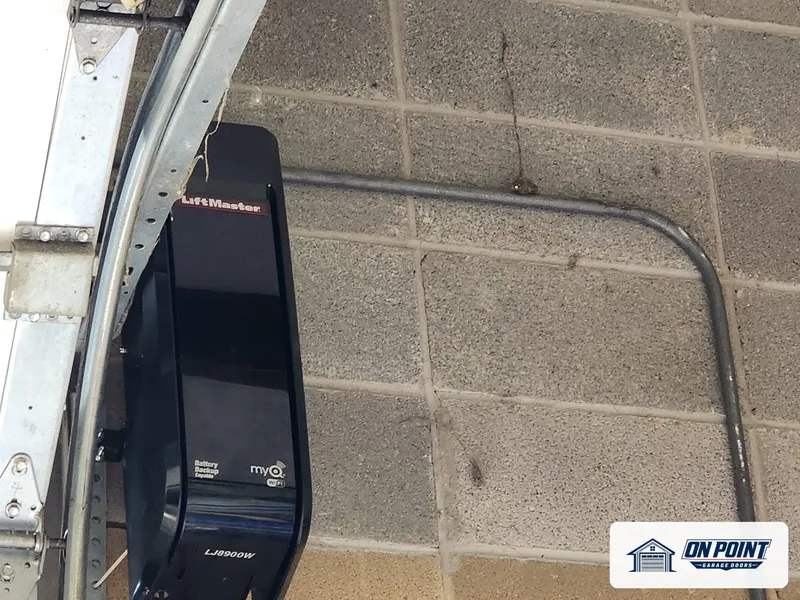
Wall-mount opener installed, photo from one of our jobs
Wall-mount opener installed
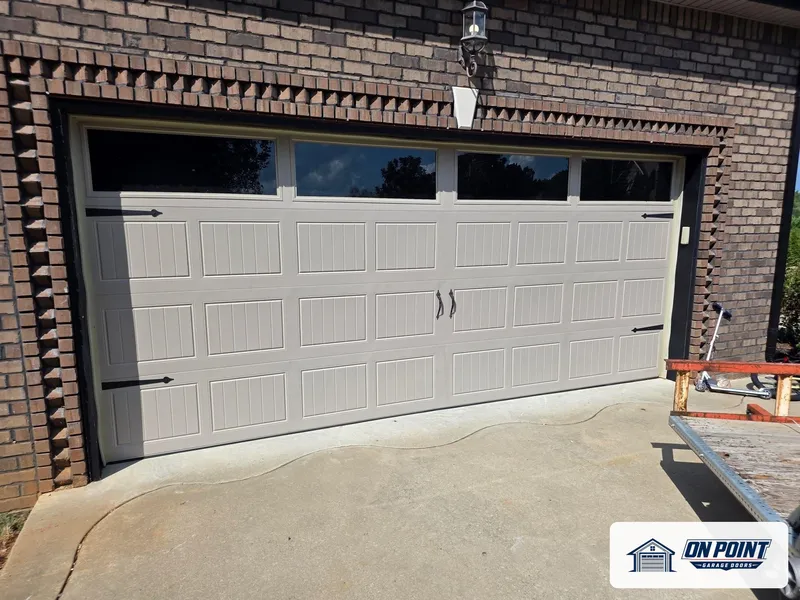
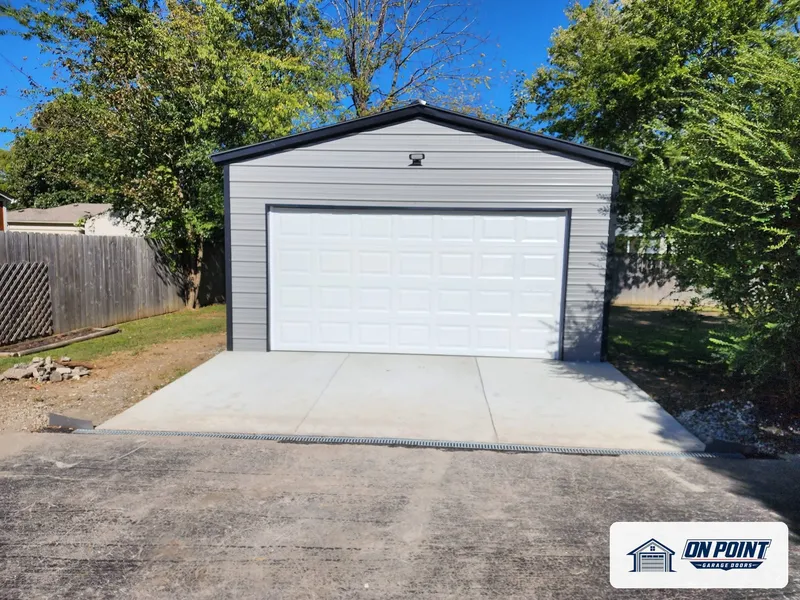
New double door, photo from one of our jobs
New double door

Garage door repair in Jackson Heights for the attached brick homes with garages below the stoop, the garage compounds behind the co-op buildings, and the roll-down gates on the busy shopping streets under the elevated line. Free estimate first.

Garages tucked under brick homes

On the blocks of attached brick houses, many homes have a garage set below the front steps, opening onto a short sloped driveway.

The slope sends rain and melting snow straight at the door, so the bottom section, the seal and the lowest track rust first.

Steel doors with a short band of glass across the top let some daylight into a garage that sits half below the sidewalk, and they sit well against the old brick fronts without looking out of place.

Some co-op buildings have rows of garages along a shared lane or under the courtyard, each rented to a different resident.

Those doors are often old, one-piece or simple sectionals, and owners want them working without changing the look of the row.

Stores and restaurants under the train open their gates early and pull them down late, and the dust and vibration from the line wear guides and slats.

A shop gate that refuses to drop at closing leaves the stock behind glass all night, so that call is moved ahead of routine house work on the route.

Blocks near the main shopping streets are crowded with shoppers and double-parked deliveries, so garage entrances get blocked and doors get clipped.

Parking on these streets is scarce, so a garage door that will not open means the car stays trapped or circles for a spot.

Early appointments can be set when the car is needed for work.

Plenty of owners now use the garage as a storeroom or a workbench and open the door only a few times a month, yet the springs stay wound the whole time and can still give out on a cold morning.

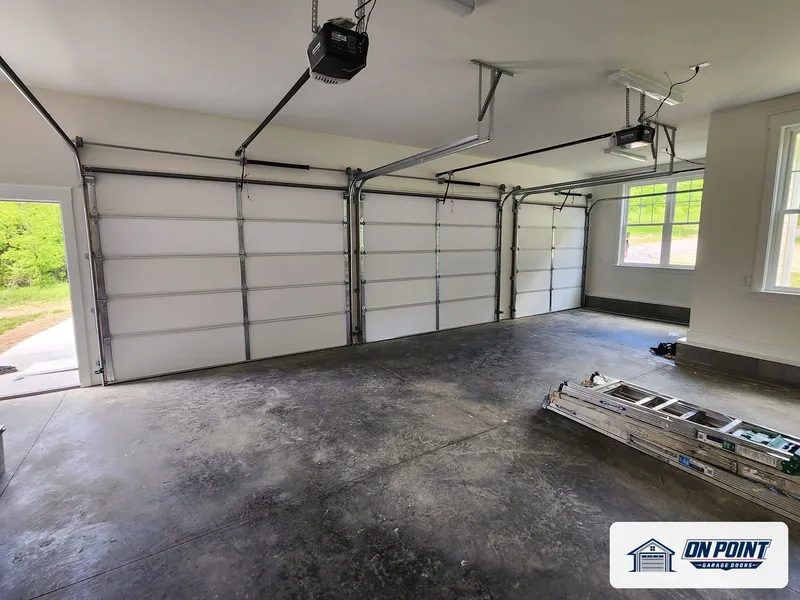
Two new garage doors and openers seen from inside, an On Point Garage Doors job

Doors and gates we look after here

Brick home under a stoop, a rented space in a co-op garage row or a gate on the shopping street: the door is run and looked over before a single line of the estimate is written.

On Point Garage Doors job photo: new double garage door black hardware
On Point Garage Doors job photo: new door detached garage
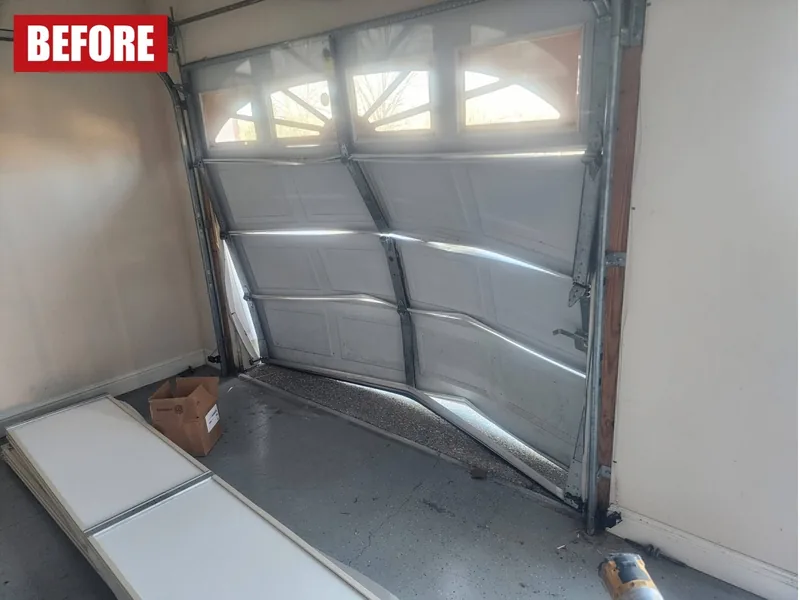
Caved-in garage door panels before On Point Garage Doors replaced the door

Trouble by kind of garage

Below-grade garages. Rusted bottom sections, torn seals, broken springs and openers that strain up the slope.

A taller bottom seal helps doors on sloped driveways close tight against the ground.

When the opener groans its way up the slope, the springs get tested with the door unhooked first, because a tired spring makes even a good opener sound like it is dying.

Co-op garage rows. One-piece and older sectional doors get springs, rollers and hardware matched to what is there.

If the board wants a uniform look, replacement doors are chosen to match the row.

Store gates under the elevated line. Curtain slats, barrel springs, bottom bars, locks and gate motors, all of them worn by grit and the shaking of passing trains.

Manual gates that are hard to lift are rebalanced or motorized.

Wall-mounted openers free the ceiling where the garage doubles as storage.

Openers. Old chain drives under bedrooms are swapped for quiet belt drives.

Remotes and keypads are paired again after the work.

Insulated doors help garages under bedrooms stay warmer and quieter.

If a car or a delivery hand truck has hit the door or the gate, leave it exactly where it stopped and keep the opener off until a technician has looked at the sections and the guides.

Backing up a steep driveway onto a busy street, a bumper can catch one corner of the door and twist the track on that side, so both tracks and both cables are checked together.

Where our trucks run from here

The brick blocks, the garden co-ops and the shops under the train are a regular stop on our Queens route, and the same crews cover Brooklyn and Long Island.

Anything you mention on the call, which garage in the row, the board's rules on the look of the door, what the door did, goes into the technician's notes before he sets out.

A trapped car, or a shop gate stuck open, gets treated as urgent.

Seasons in the brick blocks

Winter. Ice forms at the bottom of sloped driveways and locks the seal to the ground.

Winter also freezes the bottom seal to the slope, and a frozen door should be left to thaw rather than forced.

Spring. Heavy rain runs down to the door and finds every gap in a worn seal.

Summer. Heat bakes the street-facing doors and dries out rubber and gate slides.

Fall. A tune-up before the cold catches worn springs while the repair can be planned.

First look at the door

He opens and closes the door a few times on the opener, listening for grinding and watching for a jerk at the top, then disconnects it to feel the springs and goes over cables, rollers, hinges and track.

What he finds is explained in everyday words and written up as a free estimate with each part on its own line, and nothing is touched until you agree.

Springs are sized to what the door weighs now, which matters on the old one-piece doors in the co-op rows, since many of them are far heavier than a modern sectional of the same width.

Most springs, cables and rollers for these doors come on the truck.

Before he packs up, the opener is lowered onto an object in the doorway so you can watch it stop and back up.

Old springs and cables leave in his truck, and the sidewalk and the shared lane are left clear for the neighbors.

You see the door open and close and seal at the bottom before he leaves.

What a nearby crew does differently

Work on a store gate can be set before the shop opens its doors, so the owner never loses a selling day to a stuck curtain.

He calls ahead before arriving.

Nothing happens without your go-ahead.

Parts that go first under the train

Slopes and salt decide which parts go first here.

Once a spring breaks, the door is dead weight hanging on its cables; keep it shut, keep the kids away from it and call us.

Coils that have opened up gaps are a sign the spring is nearly finished.

Lift cables rust at the bottom corners where meltwater collects at the foot of the slope, so both are renewed as a pair and the door goes up level again.

The drums are checked and replaced when worn.

Photo eyes on a below-grade garage are set high enough on the jamb that standing water and ice at the bottom of the drive cannot reach them.

A bottom track rusted thin by meltwater is cut out and replaced with new steel.

Track brackets that have worked their way out of old brick and mortar are anchored again into sound masonry, so the track stops shaking every time the door runs.

The opener is tested gear by gear before anything is swapped.

When it is worn out, quiet belt and phone-connected models are explained.

Booking a visit

Say whether the door is on a house, in a co-op garage row or on a store front, and whether it is the only way the car gets out; that tells us which parts ride along.

Every estimate is free.

Questions from co-op rows and brick blocks

Our garage is one of a row rented out by our co-op. Who decides what work can be done on the door?

The board or the managing agent usually owns the doors, so the visit is set up with them or with their written approval. The technician looks at the door you rent, explains what it needs, and writes the estimate so the board can see each part. If the row has to keep one look, a replacement door is chosen to match the others.

Our garage sits below the stoop at the bottom of a short, steep drive. Why does the bottom of the door keep rusting out?

Rain and melting snow run straight down that slope and sit against the bottom section, the seal and the feet of the track. Over the years the steel thins there first. The technician checks the bottom brackets, the cable ends and the lowest rollers, renews what has rusted, and puts on a taller bottom seal that presses tight against the slab.

The roll-down gate on our restaurant by the train gets heavier to lift each week. What usually causes that?

On these shopping streets the cause is nearly always the coil spring hidden in the barrel above the gate, which slowly gives up its tension. Soot and grit shaken loose by passing trains also build up in the side channels, and dented slats bind on the way up. All of that is checked at one visit, the spring tension is set again and badly bent slats are swapped out.

Our garage is under the bedroom and the opener wakes everyone up. Is there a quieter setup?

There is. Most of the racket on these brick houses comes from an old chain drive and the bare steel rollers on the door, carried straight into the floor above through the ceiling. Moving to a belt-driven opener hung on cushioned straps, and changing the rollers to nylon ones, cuts the sound to a hum. Insulated sections help too, since they deaden the door itself.

Parking is so hard on our block that the garage is the only spot we have. What happens if the door will not open in the morning?

Tell us that when you call, because a car shut inside on a block with no street parking is treated as urgent. The technician first makes the door safe, then finds out whether a spring, a cable or the opener is to blame, and the common parts for these doors ride along, so most doors are working again on that visit.

A garage you can count on again

Describe what the door or gate is doing and choose a time that suits the house or the shop; the estimate is free either way.

Call us at (929) 429-2429.

A free estimate for stoop garages, co-op rows and shop gates

Tell us about the door and the garage it sits in, and a free estimate comes back whatever you decide to do.

Or just call (929) 429-2429 and talk it through.

More repairs