Takes 30 seconds. We call you back to set a time.
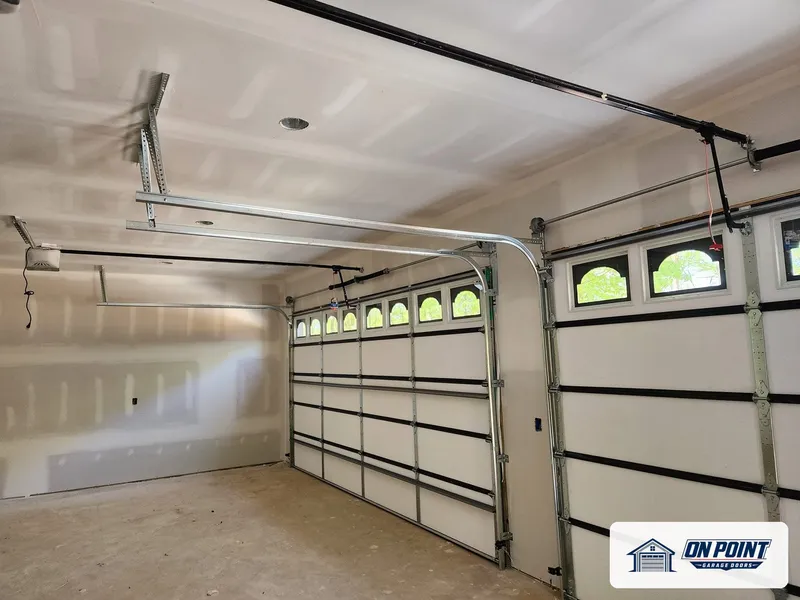
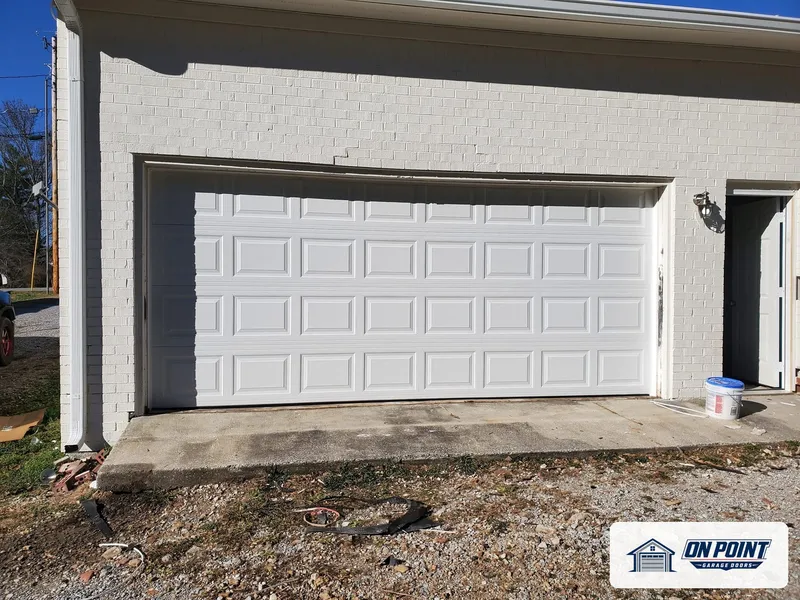
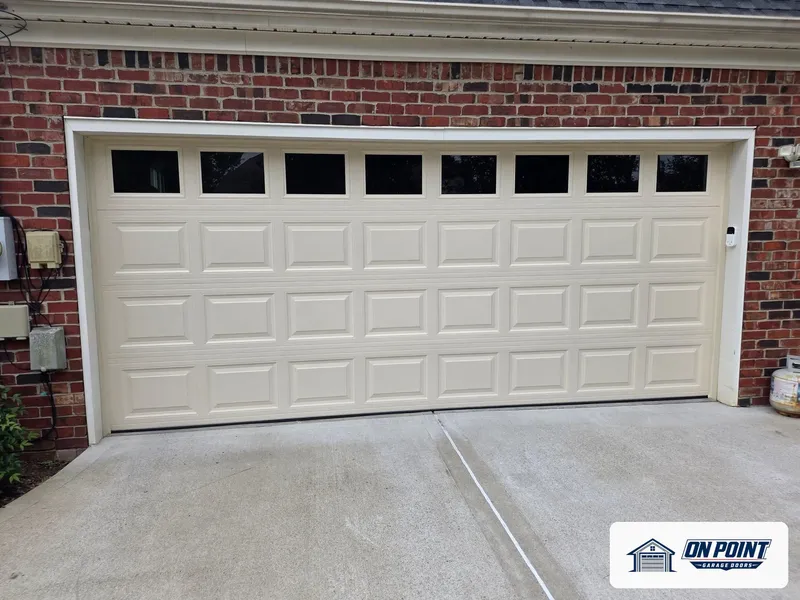
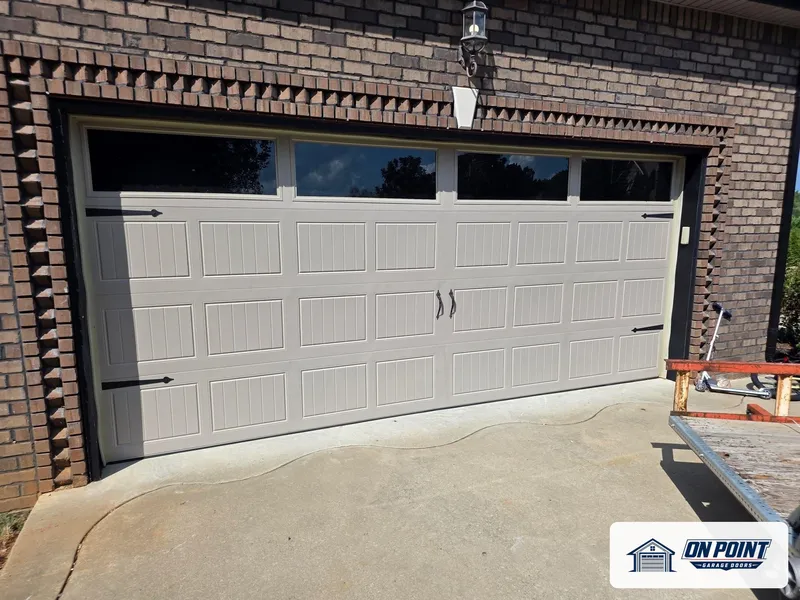
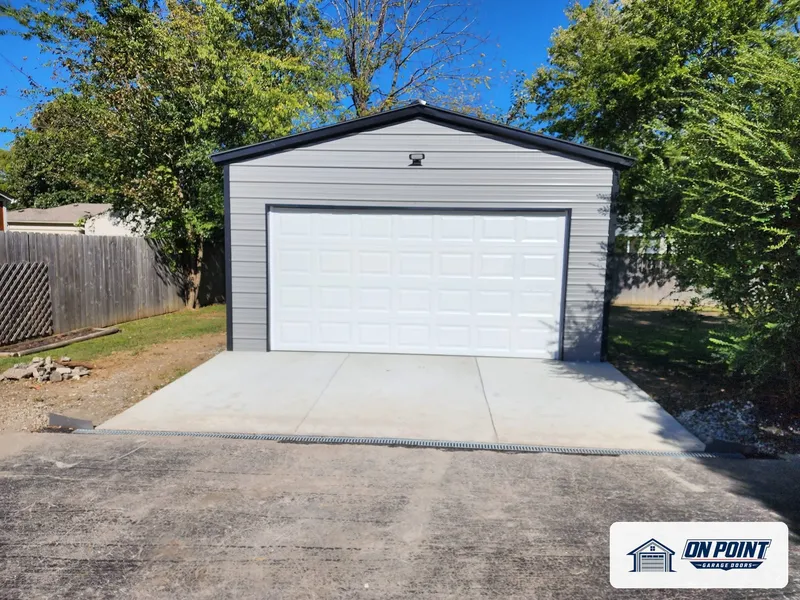
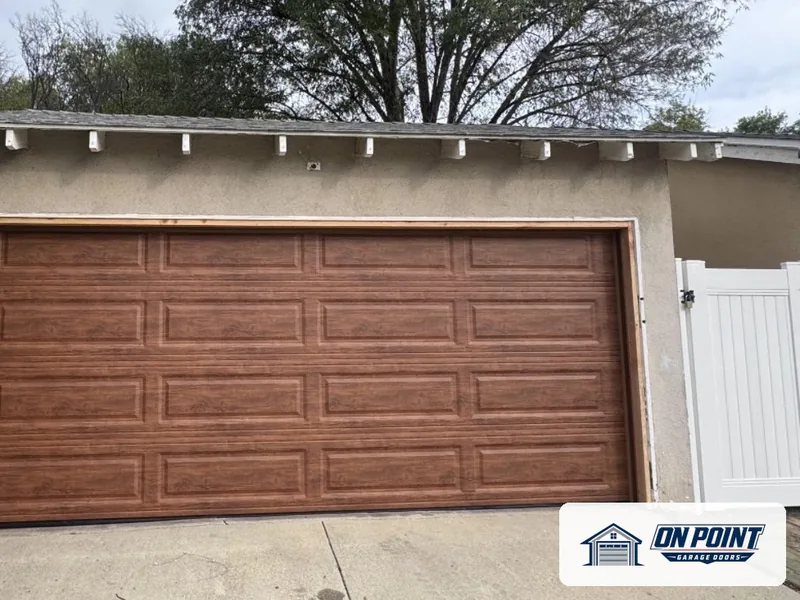
These photos are from our own jobs, with our logo on them.


Garage door repair in Kew Gardens for the Tudor and colonial houses on the winding streets near the park, the garages under the prewar and postwar apartment buildings, and the shops near the rail station. Free estimate first.
Many of the single-family homes are Tudors and colonials built on rolling streets, and some have garages set into the slope or tucked under the house.
The neighborhood was laid out on old golf links early in the last century, and the streets still follow the rise and dip of that ground.
Those garages are often short and low, with openings sized for cars of an earlier era.
Doors are chosen to suit stucco and half-timbered facades.
On a half-timbered front a plain white slab can look pasted on, so color, panel layout and glass are compared against the trim before a door is chosen.
A carriage-style face with dark straps on an insulated steel core gives the period look without the weight and upkeep of solid timber.
Apartment buildings here often have a garage below the building for residents, with one door serving many cars.
Those shared doors wear quickly and are serviced with heavy-duty springs and operators.
Commuters walk to the station past driveways on the curving streets, and a door left open is noticed quickly.
The little row of shops carried on the bridge over the rail cut has roll-down fronts of its own, with scarcely any room behind them to work.
Mature oaks from the park and along the curbs drop acorns and twigs that lodge in the track and under the rubber at the floor.
The technician checks for that debris on a fall visit, along with the balance of the door.
A few under-house garages end inches past a modern bumper, which is why the down and up stops are set with the car you really drive in mind.

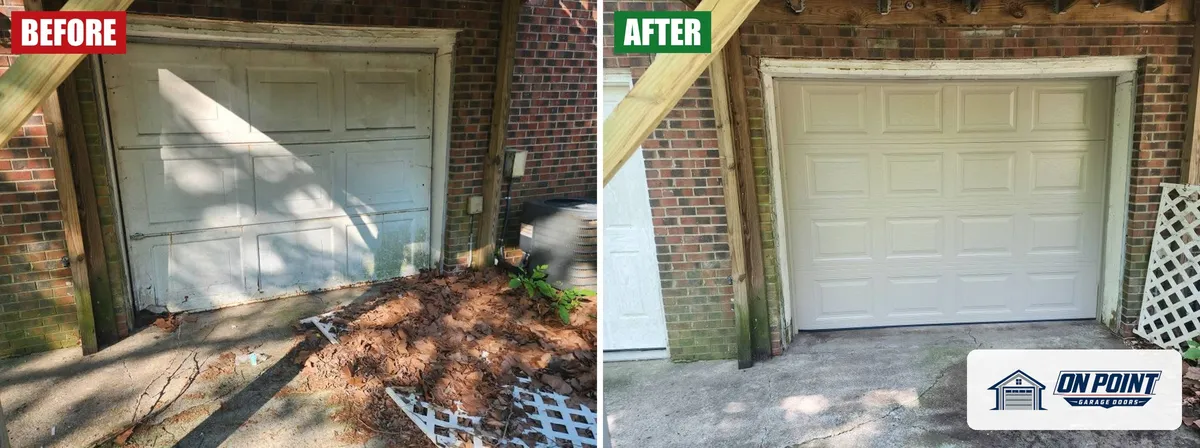
Tudor, colonial or apartment garage, the door is examined before any figure is written down.


Garages under old houses. Low headroom, short garages and doors that rub on old framing.
Double track with a low-clearance top fixture, or an opener beside the shaft, can make such a space work.
When an old timber door has grown hard to lift, its balance is tested first, since paint and soaked wood add pounds that the first springs were never given.
Period-style doors. Replacements that suit the house, with real-looking carriage hardware.
Old wood doors are swapped for lighter insulated ones if the owner wishes.
Apartment garages. Shared doors get high-cycle springs, heavy rollers and an operator that can take the daily traffic.
Fobs and remotes are set up for residents after the work.
Openers. A rattling chain unit under a bedroom is swapped for a near-silent belt drive.
Solid plaster ceilings carry sound well, so the hangers get rubber mounts too.
Remotes, keypad and phone control are set up.
An insulated door under a bedroom keeps the floor above from turning icy in January.
Should a bumper meet the door on one of these sloped aprons, leave the switch alone until the sections and rollers have been inspected.
Openings from the age of smaller cars snag mirrors, and a snag can pull a track bracket loose, so the plumb of both sides is verified before the next trip.
Kew Gardens is in the central Queens area we serve, around the great knot of parkways and the expressway; Brooklyn and Long Island are covered as well.
Anything you mention about the house or building reaches the technician.
Residents unable to get their cars out of a building garage get an urgent visit.
Winter. A hard frost is when worn springs on old garages finally snap.
Drives in the shade of the big trees hold ice long after the avenue is dry, and a door gripped by it should be left to let go by itself.
Spring. Runoff follows each hill straight to the sunken garages at the bottom of it.
A trench drain choked with last season's seeds sends all of that water under the door instead.
Summer. Humid weeks make old wood doors stick in their frames.
Fall. The oaks let go of everything at once, so this is the season to look at what has packed into the track and to have the springs tested before the frost.
He opens and closes the door while standing inside, where a twist in an old frame shows, then works through the header, coils, lift cables, wheels, rails and motor.
In a building garage he asks the superintendent what residents have been reporting.
You hear which part gave out and why, and the free estimate lists it apart from anything that is merely aging.
New coils are ordered or pulled from the truck to match what this particular door weighs.
He carries the springs and cables used on most of these doors.
His last test is a block of wood in the doorway, which the closing door must touch and retreat from.
Old parts go with him.
You see the door run smoothly before he leaves.
Building doors can be scheduled with the superintendent.
He calls on his way over.
No work starts without your say-so.
Old houses and shared building doors wear in very different ways.
A snapped coil means the cables and the opener are holding nothing that can be trusted, so keep clear and keep it shut.
In a garage dug into a slope there may be no second way to the car, which is worth saying on the phone.
Springs on shared building doors are high-cycle so they last.
The thin lift cables wear first where they meet the bottom fixtures, and the two are renewed together.
A drum with chewed grooves goes out at the same time, or it would fray the new cable.
Photo eyes on sloped driveways are set above where water runs.
Where the joists sit just above the opening, special low-clearance track is used.
Track rusted thin at the floor is renewed.
On ramps, the bracket feet are also kept out of the line the water takes.
Gear, board, capacitor and travel settings are ruled out in turn, so a working motor stays.
A wall-mounted unit beside the door leaves the low ceiling of a garage under the house completely clear.
Say whether this is a house on a hill or an apartment entrance, and how steep the approach is.
Every estimate is free.
Like machinery, on a schedule the board sets with the managing agent. An entrance like that runs many times more than a house door, so springs, rollers, cables, the operator and every safety device need planned looks instead of waiting for a morning failure. Ask for a written record after each visit. It helps the board plan replacements and shows residents what was found and done.
Yes. Steel and composite doors come with carriage layouts, overlaid boards, wood-grain finishes and small-paned glass that sit comfortably beside stucco and dark timber. The details that matter are the color against the trim, the proportions of the boards and whether the hardware looks right at this size of opening. If covenants or a board have a say over the front of your house, show them the choice before ordering.
A seal handles wind-blown rain and small gaps. It cannot hold back a stream coming down a hill. The technician checks whether the rubber meets the floor all the way across and whether a threshold would help, then looks at where the water comes from. A blocked or missing drain at the foot of the slope is drainage work, and you will be told plainly when that is the real cause.
Often, yes. A wall-mounted opener needs no rail, only side room, a torsion shaft in good order and power nearby. If the door still runs on stretch springs, converting it is part of that plan. Where the side room is missing, low-clearance track can free just enough height for a slim rail. Pipes, beams and the depth of the garage decide it, so all are measured first.
Tell us the windows that are bad for you and the visit is planned around them where the schedule allows. These curving streets jam near the station and the parkway entrances, and a truck across a shared drive blocks more than one household. If the superintendent has to unlock a ramp or a panel, give us that person's availability as well, so nobody waits at a locked gate.
Tell us the symptom, the sound and when the superintendent or owner can meet us; the estimate is free.
Call us at (929) 429-2429.
Describe the garage and what changed in how it runs, and a free estimate follows with the choice left to you.