Takes 30 seconds. We call you back to set a time.
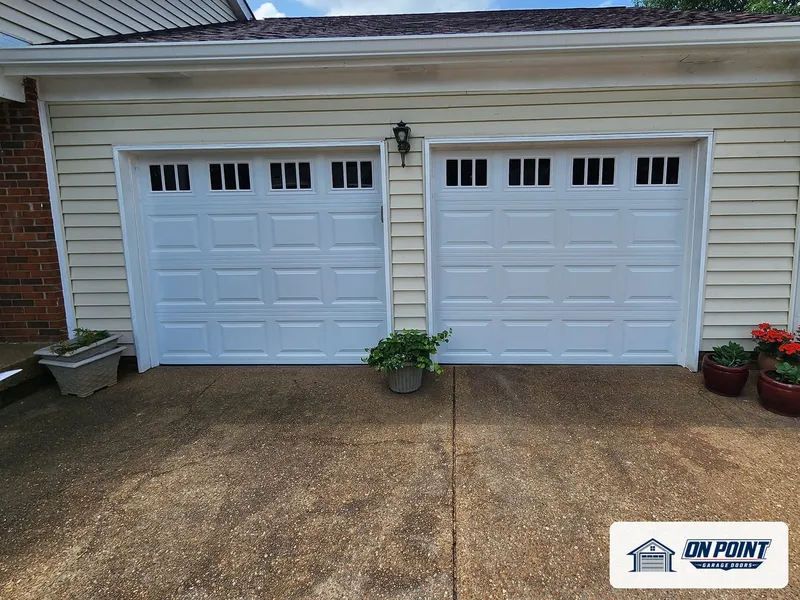
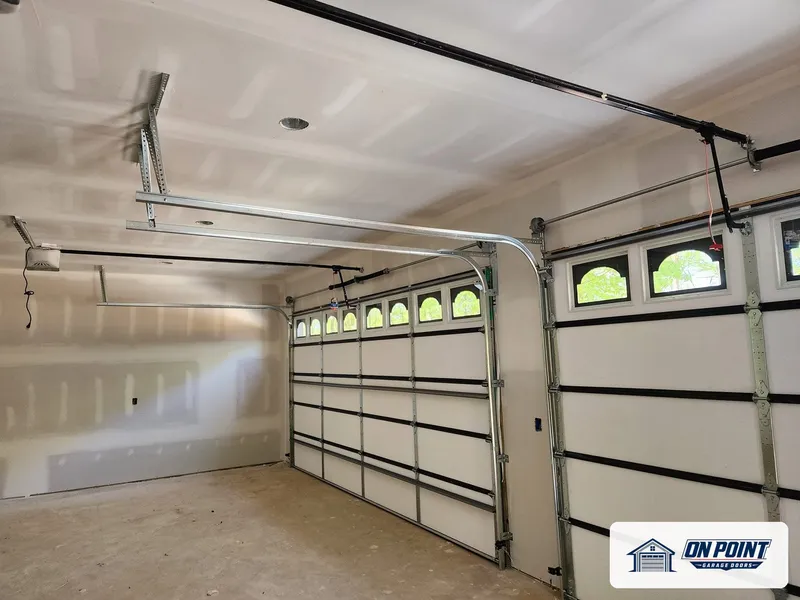
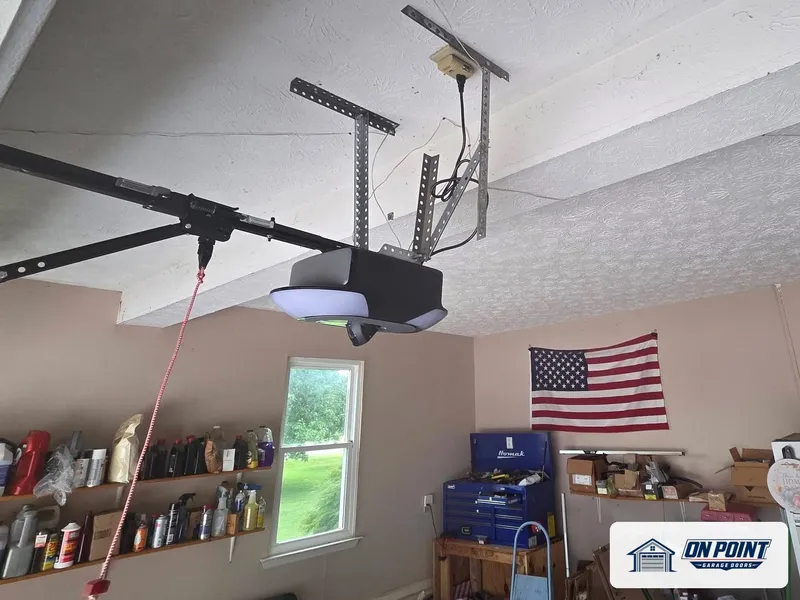
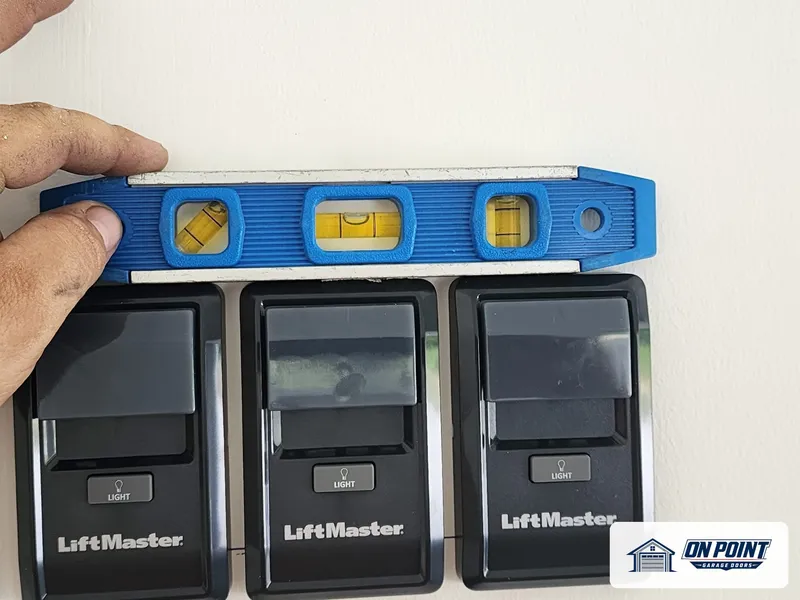
These photos are from our own jobs, with our logo on them.


Garage door repair in Cambria Heights for the detached brick and Tudor homes with front and side garages on these residential blocks. Free estimate first.
The blocks off Linden Boulevard are mostly one-family houses, brick and stucco Tudors, colonials and capes, with a drive beside or in front leading to the garage.
There is no subway at this end of Queens, so households lean on buses and their own cars, and the overhead door gets a trip for nearly every errand.
Some side drives are shared by two houses and run between them to a pair of garages in the rear yards.
Much of the housing went up from the twenties through the years after the war, so a surviving wood door or an early steel replacement can be several decades old.
At that age the frame, the track and the springs all need judging, and not just the part that happened to stop.
Quiet streets make a noisy opener noticeable, and a belt-drive opener with new rollers is often the quietest fix.
Some houses have garages below the main floor, where opener noise travels into the rooms above.
Garages that double as storage or a workshop may have shelves near the tracks that rub the door.
Barrels, folding chairs and party coolers stacked after a family cookout can end up leaning on a cable or in front of a sensor.
Everything near the track is checked so nothing presses on the door.
A garage turned into a workshop may also have extra wiring and outlets near the opener, which are checked for safe clearance.
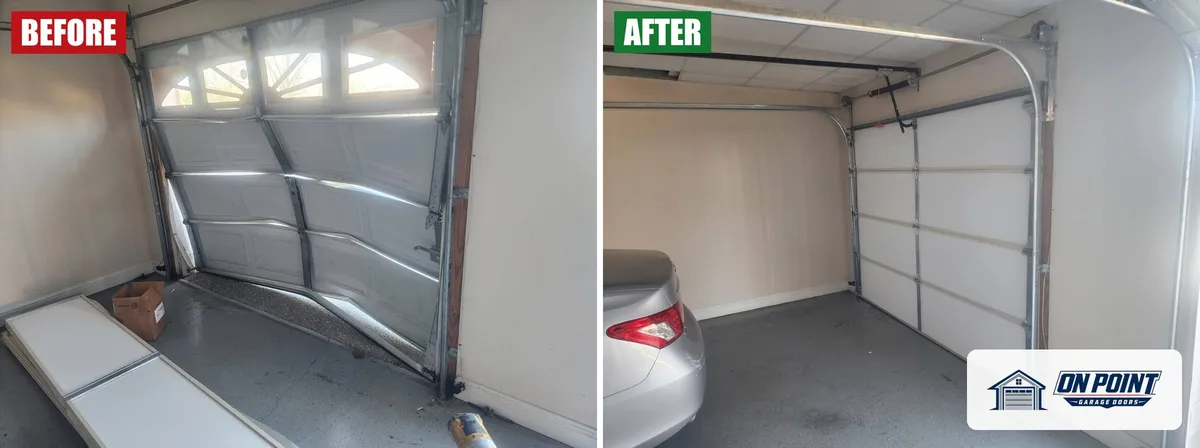
With the car parked a few feet from the door on these short driveways, a door that halts early ends up with a crease in its lowest panel.
When the maker still produces that pattern, the creased section alone can be changed; when it does not, the choices are put to you plainly.

Brick homes and Tudors alike: first the door is examined, then the estimate follows.
Small businesses on Linden Boulevard with a rear door or a roll-down gate are handled the same way.


Snapped springs. If you heard something like a gunshot in the garage and the door now feels glued shut, a spring has let go; keep it down.
Two-spring doors get both springs replaced together.
A heavy-feeling door, or one the opener struggles to lift, is checked for its springs before the opener is blamed.
Openers. Humming, grinding or reversing traces back to gears, boards or sensors, each tested in turn.
Once a board or motor is changed, each driver's remote, the keypad and the built-in car buttons are paired and tried.
Rollers and hinges. Worn rollers and cracked hinges make a door shake and squeal.
On an old wood door the hinge bolts can also pull through softened stiles, which feels much the same from the driveway.
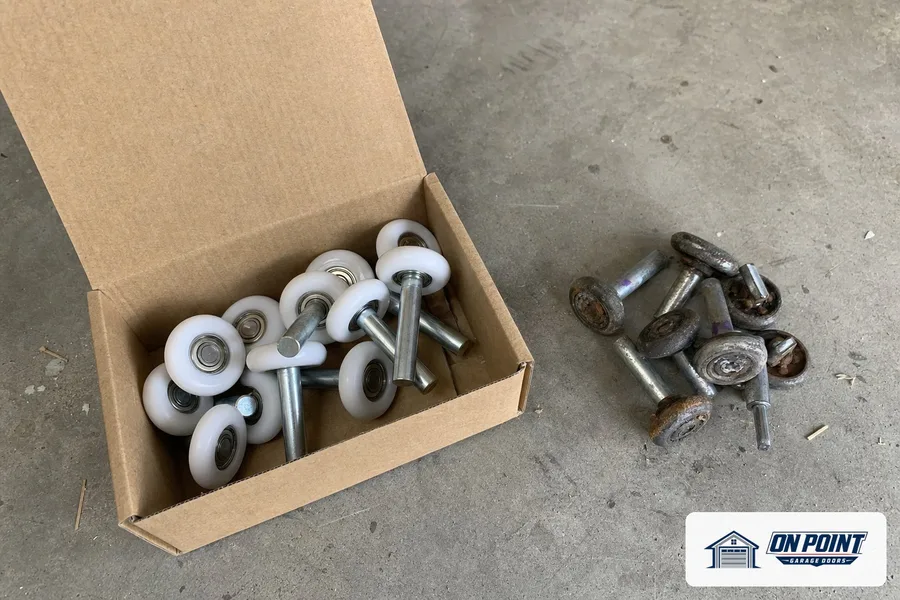
Sealed nylon rollers with bearings run quieter and last longer than the bare steel rollers many older doors came with.
New doors. Insulated steel doors keep a front garage warmer and help the room above it.
A replacement door arrives sized to the opening, and goes up with fresh track, springs and weatherstrip, so no old part drags the new door down.
Should a bumper push the door off line, resist sending it up or down; a displaced roller can let a section drop on the next trip.
This edge of southeast Queens beside Elmont is within our service area, along with Brooklyn, the rest of the borough and Long Island.
Details such as a shared side drive, a locked yard gate or a garage with no other entrance are written on the job for the technician.
An opening that cannot be secured overnight, or the household's one car boxed in on a work morning, is ranked above routine appointments.
Winter. Springs are weakest in the cold and often break on the first freezing week.
Ice in a narrow side drive also lets a car slide the last few feet into the bottom section.
Spring. Rain finds any gap under the door; a worn seal is replaced.
In a rear-yard garage, splash from a roof without a gutter can rot the bottom of both jambs.
Spring is also a good time to look at the weather seal along the sides and top of the door, where drafts get in.
Summer. Heat dries seals and rollers until the door squeals.
Fall. A pre-winter check catches worn parts on your schedule.
The street trees along these blocks fill tracks and sills with leaves at just that point in the year.
He asks who uses the door and when it began acting up, then separates door trouble from motor trouble by testing each without the other.
He walks you through what he found at the opening itself and leaves a free written estimate with a line for every repair.
Replacement hardware is chosen by the track radius, roller stem and spring measurements on your own door, with widely used sizes stocked on the truck.
Urgent items are marked apart from the ones that can ride out another season, leaving the order of the work up to your household.
He blocks the door's path with a piece of wood to prove the opener backs off, then breaks the sensor beam to prove it again.
Broken hardware is gathered and removed, and bikes or bins he moved are set back along the wall.
On the way out he runs the door a full cycle and watches the seal settle against the slab.
When the garage doubles as the front door for the family, getting it working comes first in the visit.
He phones on the way, giving you time to pull the car out.
Nothing happens until you say so.
Springs, drums, cables and bottom fixtures do the lifting, while the opener mostly guides a balanced door.
Most of the door's weight hangs on the spring; with the spring gone, that weight lands on whoever tries to lift it.
A door that slams shut or will not stay halfway open is often a spring that has lost its strength.
Cables fray near the drum and rust near the floor; they are replaced as a pair.
A sensor nudged by the recycling barrel blinks and blocks closing, so its bracket is straightened and stiffened rather than simply aimed again.
A fender in a slim side drive can kink the vertical rail, and no test run happens until that rail is true.
Worn openers are explained honestly, with quiet and smart replacements when needed.
Where the overhead door is the only way into a detached garage, battery backup and an outside emergency release are both worth having.
Phone-connected openers show whether the door is shut and send an alert if it was left up, handy when several people come and go.
Say what you hear and see, a bang, a grind, a door that stops, and the right parts come along.
Mention whether the garage is at the front or at the back of a shared drive, and whether somebody will be home to open the side gate.
The estimate is free, every time.
Do not force it, and tell us there is no second door when you call. If an outside emergency release was installed, the technician can use it; otherwise he works out a careful way in. Once the door is repaired, an exterior keyed release is worth adding so a dead opener or an outage does not lock the garage.
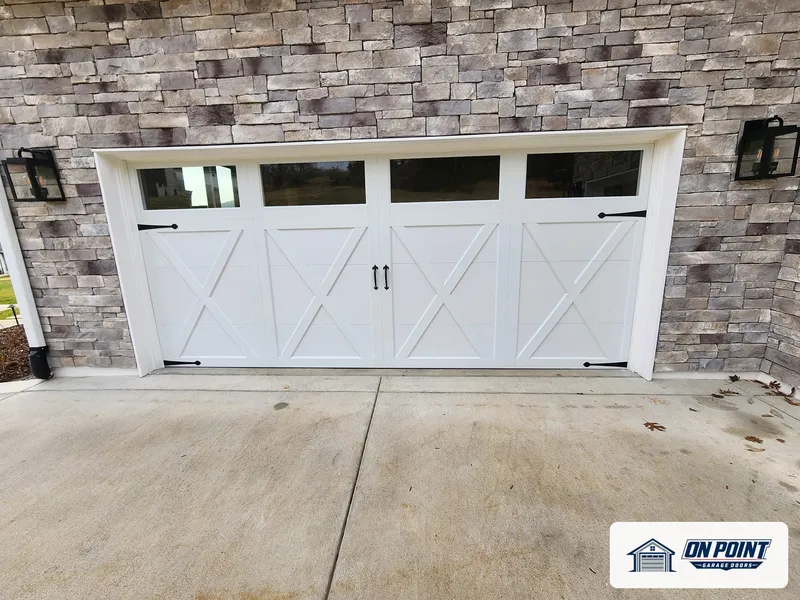
Only sometimes. Many openings accept a stock door once they are measured, but arched heads, unusual widths and limited headroom can call for a special order or special track. A stock carriage design with dark hardware often suits the half timber and brick well. The frame and the true opening are checked before a style is picked.
Usually, as long as the path is clear. Door sections are long but can be carried by hand down a drive that a truck cannot enter. Tell us about parked cars, air conditioners, fences and low wires along the way, and let your neighbor know the day so both households can plan around the installation.
An outside keypad, a remote for each driver and phone access on a compatible opener can all work together. A keypad code is easy to change when a helper or relative moves on, and a lost remote can be erased. A lit wall control at a comfortable height also helps older family members who come in through the garage.
It depends on whether that exact profile, width and section height are still made. The technician records the maker and measurements and looks at the next section up, the hinges and the jambs, since rust rarely stops neatly at a seam. If no match exists, you get the options in writing before deciding on a new door.
Tell us the house, the symptom and a day when the drive can be clear; the estimate that follows is free.
Call us at (929) 429-2429.
Describe the garage and the trouble; there is a free estimate to read before you agree to any repair.