Takes 30 seconds. We call you back to set a time.
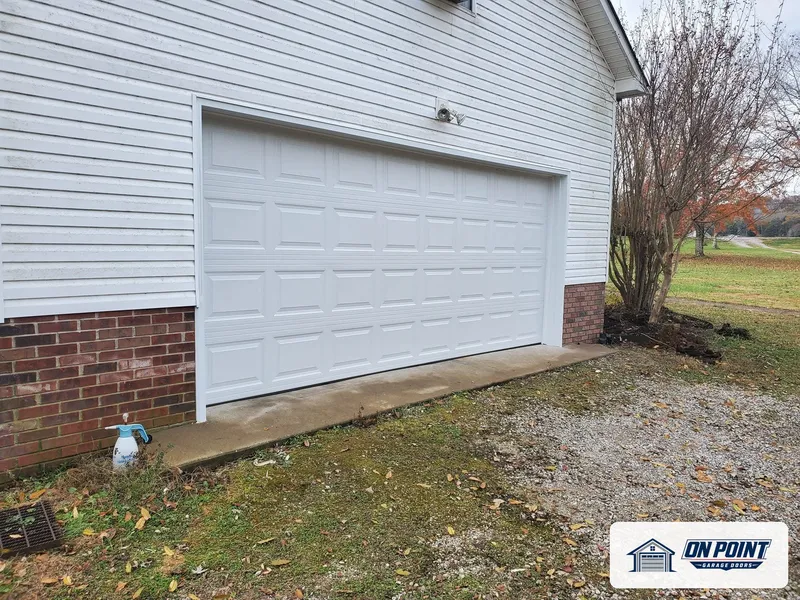
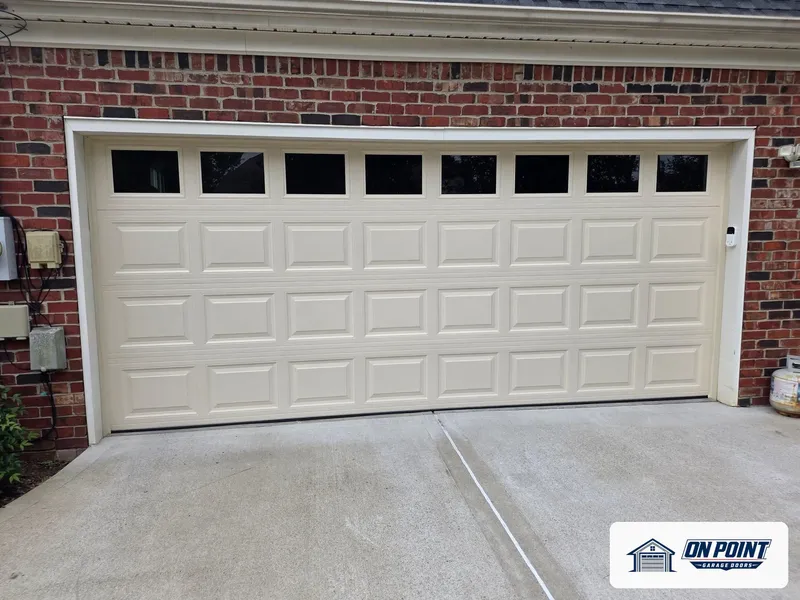
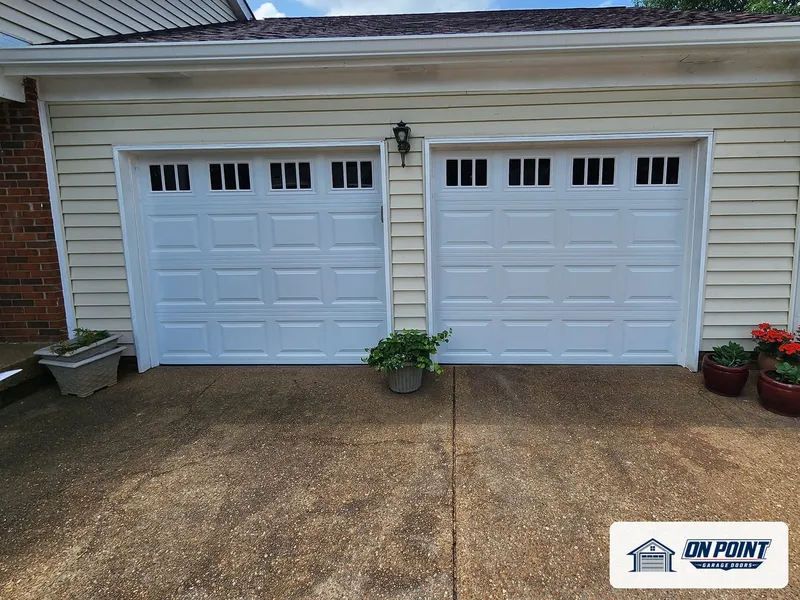
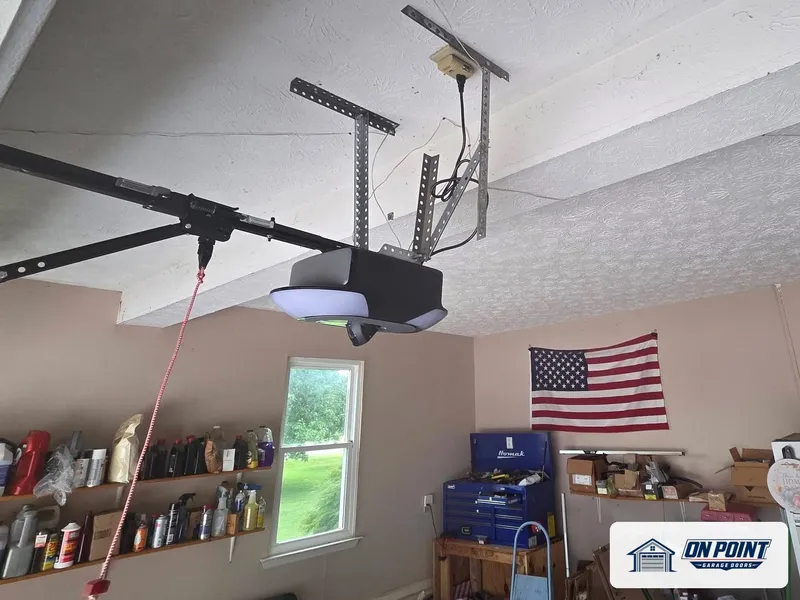
These photos are from our own jobs, with our logo on them.


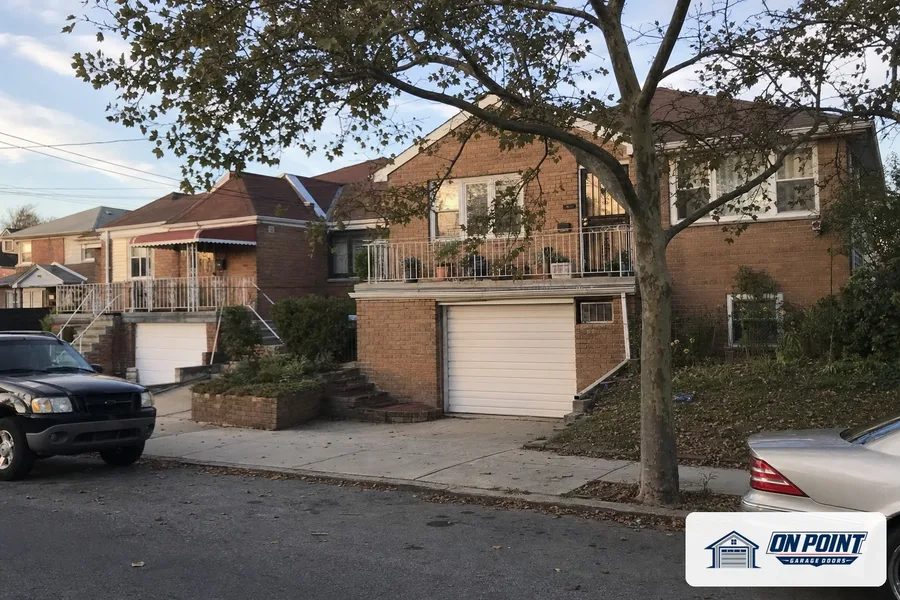
Garage door repair in Bellerose for the brick and frame colonials and capes with attached and detached garages, the attached row homes near the boulevards, and the shops along the avenue near the county line. Free estimate first.
Many houses here are modest colonials and capes on narrow lots, and the garages are small: a single bay, a short driveway and not much room on either side of the door.
Plenty of those garages were built for the cars of their day, so a modern SUV fits with only a hand's width to spare at the mirrors.
Tight side room limits which springs and tracks fit, so the opening is measured with care.
A plain steel door with a row of small windows across the top lets light into a dark single bay without giving up privacy.
Some attached homes have a garage at basement level, reached by a short slope down from the street.
The slope is often shared with the neighbor's driveway, so water from both houses ends up at the same two doors.
Those doors take water from the driveway and need a good bottom seal.
Shops along the avenue near the Nassau line pull their gates every night.
If a shop gate refuses to lock at closing time, that call goes ahead of routine work.
The neighborhood straddles the city line, and people often do not realize we cover both sides of it.
Big old trees shade the streets and drop leaves, seeds and twigs into tracks and along the floor seal.
Roots from those same trees lift driveway slabs over the years, and a floor that has heaved leaves a gap under one side of the door.
The technician sweeps that debris out of the tracks and off the seal on every fall call.
Some single-bay garages are so short that the door almost touches the car, so travel and sensors are set carefully.

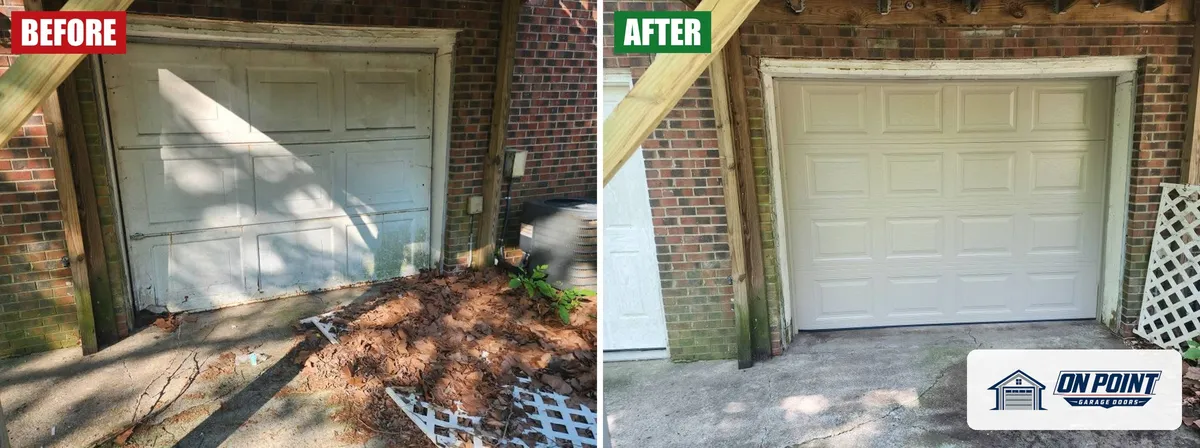
Small garage or storefront, every door is checked over before it is priced.
Because so many garages here are a single narrow bay, owners often ask whether a wider door is possible; the framing and the side room decide that, and both are checked.


Single-bay garages. Snapped springs, flat-spotted rollers and openers working harder than they should.
Where a beam sits low over the door, a low-headroom track kit and a side-mounted opener free up the space.
If the opener labors, the springs are tested first.
Basement-level garages. Rusted bottom panels and torn seals from runoff coming down the slope.
The lowest hinges and rollers sit in that water too, and they are checked for rust when the seal is changed.
A taller seal and a new bottom section keep the water out.
Detached garages. Old framing and doors that rub on one side.
Many of these sit at the end of a long shared strip of driveway and have not seen a new door since the house was built.
The opening is squared before any new door goes in.
A modern door can still go into an old opening with a low header once the track is chosen for it.
Avenue shops. Gate springs, slats, locks and motors.
A gate that is still pulled up by hand can be given a motor, and the springs in its barrel are set first.
A garage tucked beneath a bedroom loses far less heat with an insulated door and a fresh bottom seal.
If a bumper caught the door, leave it closed until it has been looked at; a bent section can jump the track.
Squeezing a wide car through a narrow opening scrapes the jamb, so the jamb, the weatherstrip and the track are checked as one.
These blocks on both sides of the city line are on our eastern Queens route, and the same crews run through Nassau and Brooklyn.
Whatever you tell us when you book is passed to him before he sets out.
A car shut in on a workday morning is moved to the front of the line.
If the only car in the family is stuck in a small garage, say so and the visit is moved up.
Winter. Cold snaps worn springs on the first hard frost.
Garages below the house hold the cold, and the bottom seal can freeze to the slab; let it thaw rather than forcing the door.
Spring. Runoff collects at basement-level garage doors.
Summer storms send leaves and seed pods into gutters, and overflow drips onto the top of the door.
Summer. Shade keeps garages damp, and rollers and hinges rust.
Fall. Leaves from the street trees fill tracks and seals, and a visit before the first frost catches a tired spring too.
He opens and closes the door a few times, then works through the springs, cables, rollers, track, seals and opener.
Some owners now use the garage as a home office, so the door rarely moves; idle springs can still snap when it finally opens.
Each problem is explained simply on a free estimate.
New springs are matched to the weight of the door as it is today.
Parts for most single-bay doors are on the truck.
Before leaving, the opener is shown reversing on an object in the doorway.
Worn parts are hauled away.
He runs it up and down with you watching before he packs his tools.
Gate repairs can be done before opening.
Shops along the avenue can book the first visit of the day so the gate is up before customers come by.
He calls before arriving.
You approve before anything is done.
If a smaller repair will do, he says so plainly instead of pushing a new door.
Small garages and damp shade decide what wears first.
A broken spring means the door's weight is unsupported; keep it closed and call.
Springs in damp garages rust and are checked every year.
Lift cables rust where they meet the bottom brackets, and both sides are changed together.
Worn drums go with them.
Photo eyes on basement-level garages are set above where water pools.
Where damp has eaten the lowest stretch of track, that section is renewed.
Loose brackets are fastened into solid framing.
Opener gears and boards are tested first.
In a tight garage a side-mounted opener clears the ceiling for shelves.
Tell us whether the garage is at street level or below the house.
Every estimate is free.
Yes. Both sides of the line are on the same route, so the visit, the parts and the free estimate are no different whether your tax bill comes from the city or the county. Just give us the street when you book so the technician knows which side he is heading to.
Sometimes. It depends on what sits on either side of the opening: a bearing wall, a chimney or the neighbor's driveway all limit it. The technician checks the framing and the side room, and if widening is not possible, a door with low-profile track and a slimmer opener still makes the most of the space.
A taller bottom seal, a new retainer if the old one has rusted, and side seals that close the gaps at the jambs. If the bottom section has rotted or rusted through, that one section can usually be replaced. Where water from the slope has nowhere to go, he will say so plainly.
It does. Springs that sit still for months can rust and snap the first time the door moves, and an idle opener may not respond when you finally need it. An insulated door and good seals also keep the room warmer, and a yearly check catches rust before it matters.
In most cases, yes. The gate first has to roll freely by hand, so the springs in the barrel are set and any bent slats or a twisted bottom bar are fixed. Then a motor sized for the curtain is mounted, the limits are set, and you get remotes or a key switch.
Tell us what the door is doing and pick a visit that fits the household; the estimate is free.
Call us at (929) 429-2429.
Say whether the garage is at street level or below the house; a free estimate comes back either way.