Serving Brooklyn, Queens and Long Island(929) 429-2429Open six days a weekFree estimateGuaranteed work
On Point Garage Doors
Open 24 hours Sun-Thu, Fri until 5 pm Free estimate Springs, openers, cables We come to you
Emergency?Call nowBook free estimate
Attached homes and garden-style blocks

Fresh Meadows Garage Door Repair

Free estimateSame-day serviceCommon parts on board
  • Free estimate
  • Same-day service
  • Common parts on board
Emergency garage door repair★★★★★ 5.0 on Google · 42 reviews

Book your free estimate

Takes 30 seconds. We call you back to set a time.

Or just call (929) 429-2429 and talk it through.

Home › Fresh Meadows Garage Door Repair

Real jobs. Real photos.

These photos are from our own jobs, with our logo on them.

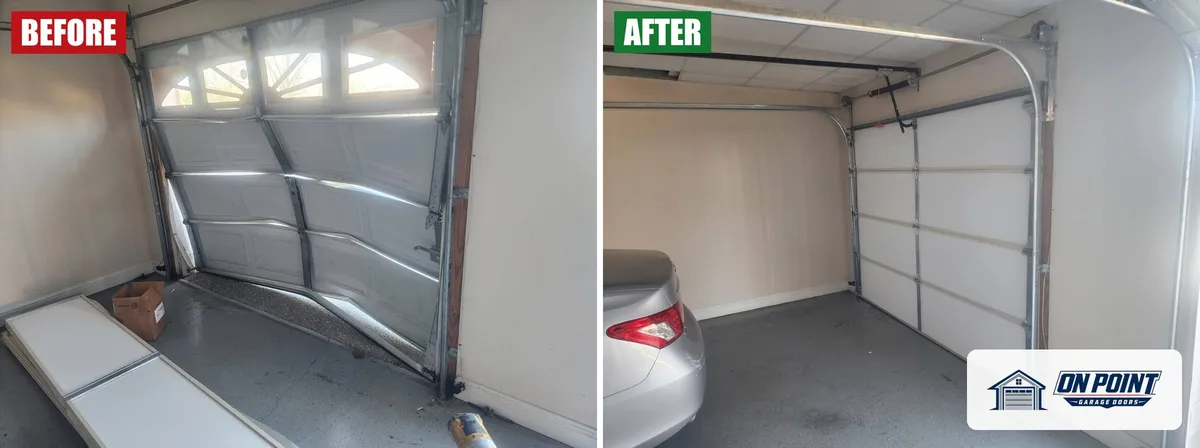
Caved-in door, made new: before and after photo from one of our jobs
Caved-in door, made new
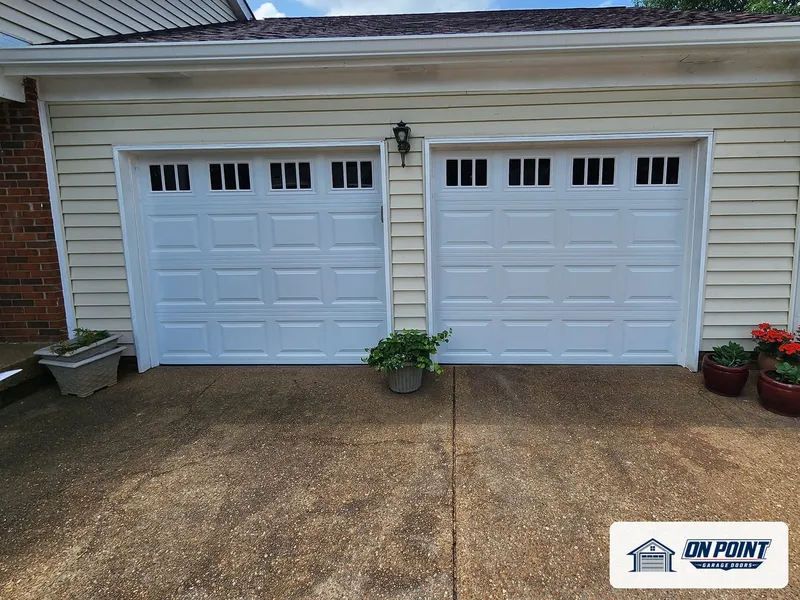
Two new doors, photo from one of our jobs
Two new doors
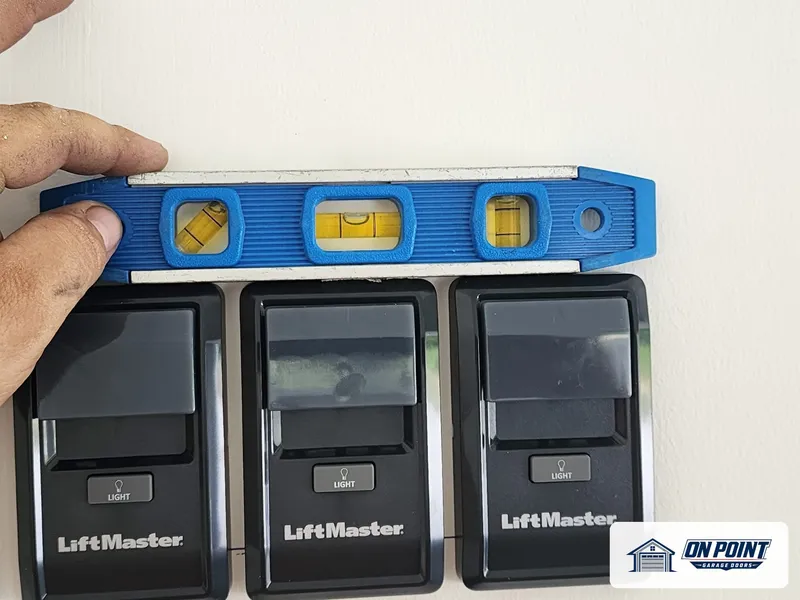
New remotes, set up on site, photo from one of our jobs
New remotes, set up on site

Garage door repair in Fresh Meadows for the attached and semi-detached houses with built-in garages, and the single-family streets around them. Free estimate first.

Built-in garages, everyday use

Many houses here have a garage built into the front of the house with a short driveway, and the door is used every time anyone comes or goes. That steady use is what wears out springs, rollers and opener gears.

Because the garage often opens straight into the house, a door stuck shut can block the family's main way in and out.

In homes where the garage sits below the main floor, a cold door also chills the stairs and the den beside it, so a good seal and an insulated door are worth asking about.

Many doors on these streets were replaced around the same time, and they are now reaching the age when springs and openers start to wear out together.

The neighborhood grew up around a large planned development of garden apartments and townhouses built after the war, with blocks of brick attached and semi-attached houses around it.

The big park with its ball fields and woods sits on the east side, and the expressway and Utopia Parkway carry most of the traffic past the shopping center.

When one neighbor's door fails, the house next door is often a season or two behind.

An old chain drive that clatters, or a door that slams onto the slab, echoes off the brick fronts and carries across the whole quiet block.

A belt-drive opener and fresh rollers usually make the biggest difference to noise.

Attached houses share walls, so the shake from an old opener can travel into the house next door.

That is one reason neighbors on these rows often replace their openers around the same time, and why a wall-mounted or belt-drive model is the usual choice.

The driveways are short, so a car nosed up to the door, a recycling bin or a scooter often sits right in the path of the photo eyes, and a door that refuses to close usually turns out to be a blocked beam rather than a broken part.

Some garages have been turned partly into storage or a workshop, and shelves set too close to the track can rub against the door.

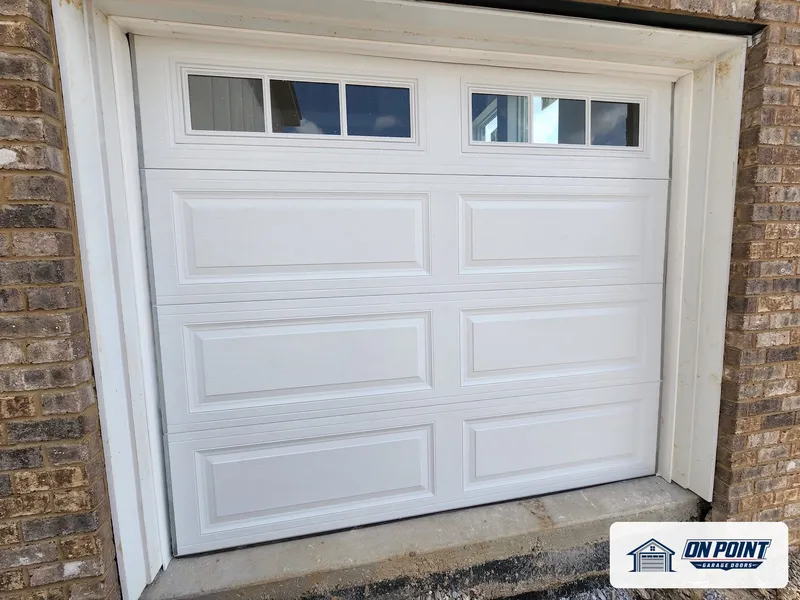
New garage door with windows on a brick house, installed by On Point Garage Doors

Work on built-in garages and brick row homes

Every house gets the same order of work: the whole door is looked over first and only then estimated, so the brick row with a built-in garage and the detached house on the corner both get a full check.

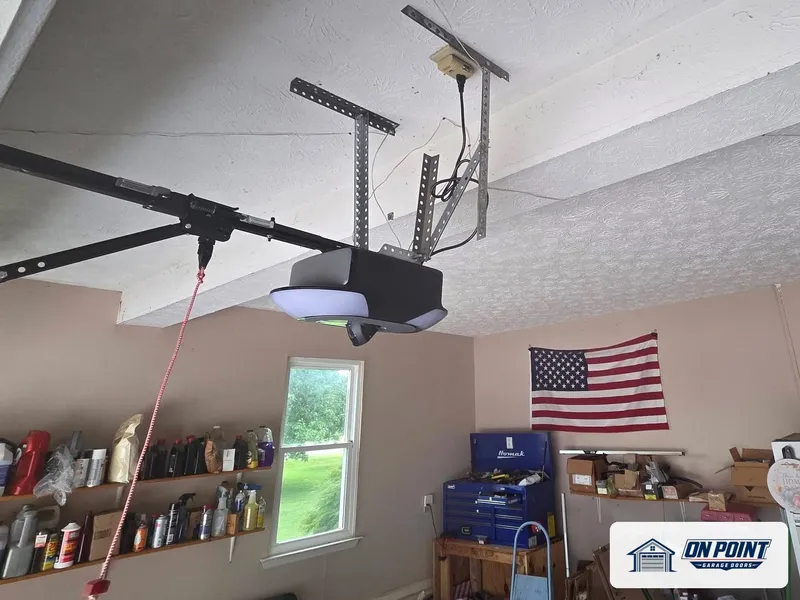
Garage door opener installed on the garage ceiling by On Point Garage Doors
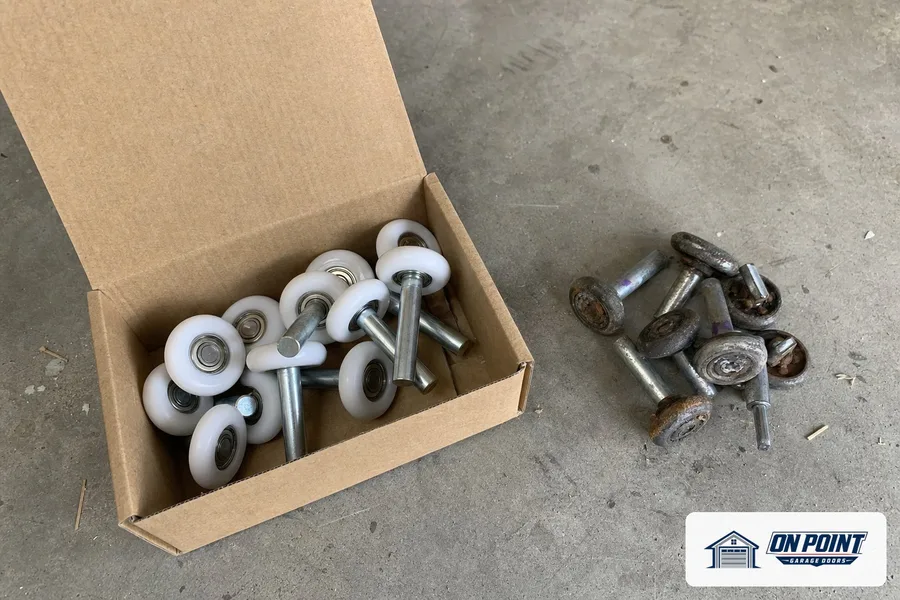
New garage door rollers next to the worn ones they replaced
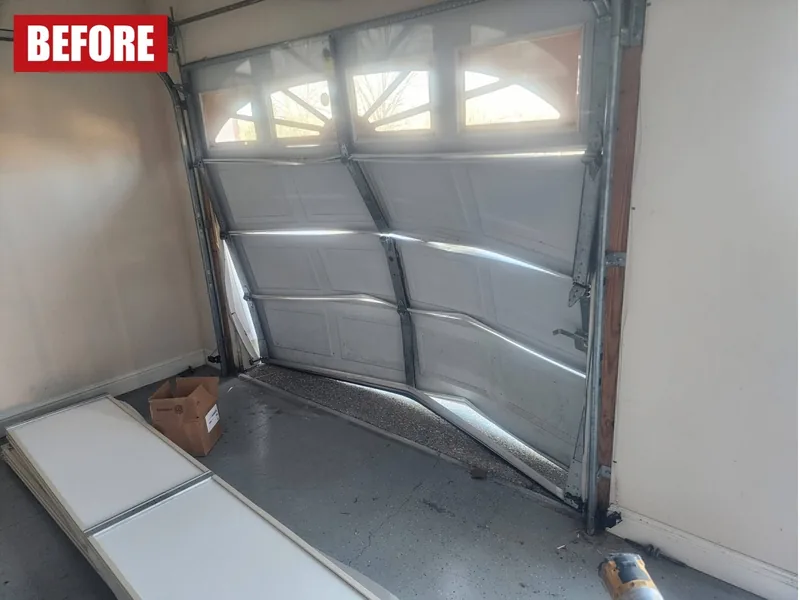
Caved-in garage door panels before On Point Garage Doors replaced the door

Trouble we find on these doors

Springs. A sharp crack from inside the garage, followed by a door the opener strains against and cannot raise, nearly always means a torsion spring has split. Leave it down and keep the car where it is.

On a door with two springs, the second is usually close to breaking too, so both are replaced together.

Openers. When the motor hums and the door stays put, stops partway, or bounces back up before it reaches the floor, the cause is usually the drive gear, the logic board or the photo eyes, and he tests each one before anything is swapped.

Remotes and keypads that stop working are often a receiver problem, not the batteries.

Rollers and hinges. Worn rollers make a door shudder; sealed nylon rollers run smoother and quieter.

Hinges crack first on the top section, where the opener arm pulls, and a cracked hinge is replaced before the section bends.

New doors. An insulated steel door keeps a built-in garage warmer and helps the bedroom or den above it through the winter.

A new door is measured, ordered to fit the opening and installed with new springs, track and seals, so every part starts fresh at the same time.

If a car has backed into the door, leave it exactly where it stopped until the sections and the track have been looked at.

Where our crews work from here

From here our crews head out across Queens, Brooklyn and Long Island.

Many homes on these blocks sit close to the expressway and the busy boulevards, so road grit and winter salt blow up the short driveways and settle in the bottom of the tracks.

Whatever you tell us about the door, the driveway or the opener is written down for the technician before he sets off.

A car shut inside on a workday morning, or a door that will not come down for the night, moves ahead of routine visits.

Seasons on a quiet street

Winter. Springs are at their weakest in the cold, and many give out on the first freezing week.

Spring. Rain finds any gap at the bottom of the door; a seal that no longer meets the floor is worth replacing.

Summer. Heat stiffens old rubber seals and dries out the rollers, which then start to squeal.

Fall. A check before the cold gives you time to replace a worn spring when it suits you.

What happens once he is at the door

He opens and closes the door several times while he listens, then works through the springs, drums, cables, rollers, track and opener in turn.

You get his findings in ordinary language and a free estimate that shows every part and repair on its own line.

Springs and rollers are sized to your door as it hangs today, and the parts these brick homes need most travel with him.

The opener's auto-reverse is tested twice, once with an object under the door and once with the sensor beam blocked.

Worn springs and frayed cables leave with him, and nothing he took off is left behind in the garage.

Why neighbors call the same crew

The visit is set around how your household uses the garage and the driveway.

He rings ahead so a car in the short driveway can be moved before he pulls up.

It is your decision what gets done.

Parts that give out first on these doors

On most of these doors a handful of parts do almost all the work, and spotting the tired one early keeps the job small.

The torsion spring holds up the weight of the door. When it snaps, the door turns into dead weight that no one should try to lift.

Lift cables wear where they wrap the drums and rust where they meet the bottom brackets, so both sides are renewed on one visit.

Photo eyes low on the track get knocked by bins and bicycles, and a door that reverses at the floor is often just a beam out of line.

Tracks bend when hit and can pull loose from the wall over time; a door on a damaged track should be left down.

Opener gears and boards wear out over time. When one is beyond repair, quiet and phone-connected models are explained.

With a battery backup on the opener, the door still opens and closes through a blackout.

Setting up a visit

Say what the door is doing and whether an opener runs it; that is enough for the technician to load the right parts.

Every visit comes with a free estimate.

Questions we hear on these blocks

Our driveway slopes down to a garage under the house. Why does water keep getting in under the door?

On these below-street garages, rain runs down the driveway straight at the door, and a bottom seal that has gone stiff or torn lets it through. He checks the seal, the bottom bar and the drain in front of the door, then puts on a seal that closes against the slab across its full width.

We share a wall with the house next door. Will a new opener cut the noise they hear?

Often it does. An old chain drive bolted to the ceiling passes its rattle into the shared wall. A belt drive or a wall-mounted opener beside the door, together with sealed rollers and firm hangers, takes most of that shake out, and he can show you both options at the visit.

The garage is under a bedroom and that room is always cold. Can the door help?

Yes, to a point. A thin single-layer door lets the winter straight into the garage, and the floor above stays cold. An insulated steel door with new side and bottom seals keeps that space noticeably warmer, and he looks at the gaps around the frame before suggesting a new door.

Our door went in when we bought the house long ago. Should the springs and the opener be looked at together?

It is a good idea. Doors on these rows were often put in at about the same time, so the springs, rollers and opener tend to wear out together. One visit tells you which part is closest to failing, so a broken spring does not catch you on a cold morning.

Grit from the expressway builds up in the bottom of the tracks. Is that hurting the door?

It can. Grit and winter salt settle low in the tracks and wear the rollers, and the lower brackets start to rust. He makes sure the rollers turn freely, the brackets are solid and the track is straight, and replaces worn rollers so the door runs quietly again.

Get the garage working again

Describe the door and choose a visit that suits your week. Every estimate is free.

Call us at (929) 429-2429.

A free estimate for brick rows and built-in garages

Let us know how the door behaves, and a free estimate follows, whether or not you go ahead.

Or just call (929) 429-2429 and talk it through.

More repairs