Takes 30 seconds. We call you back to set a time.
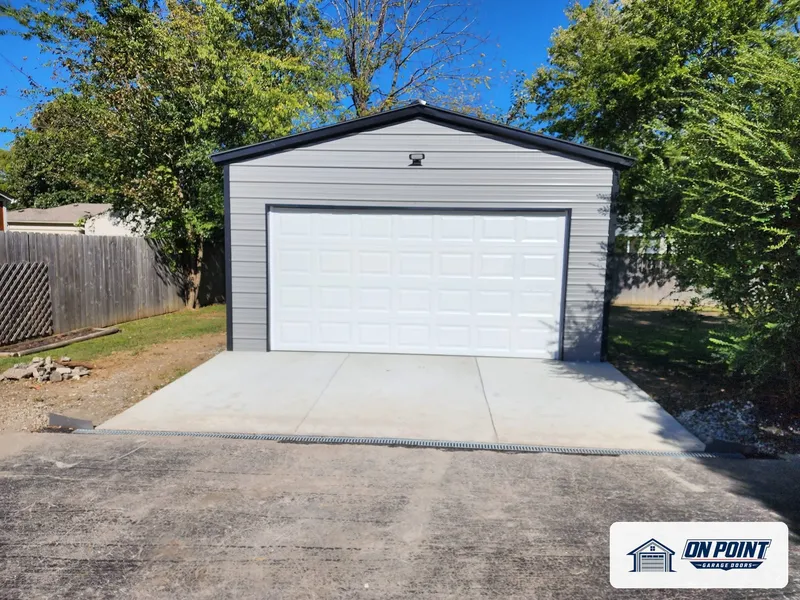
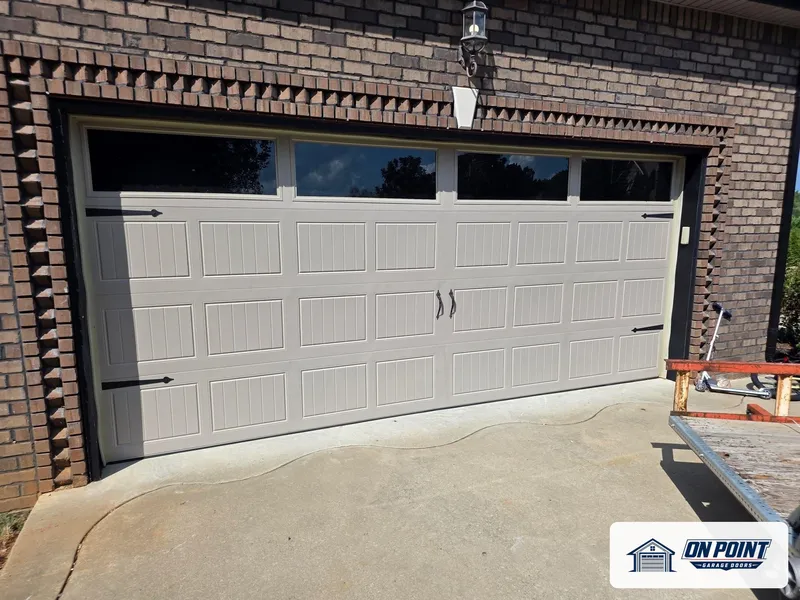
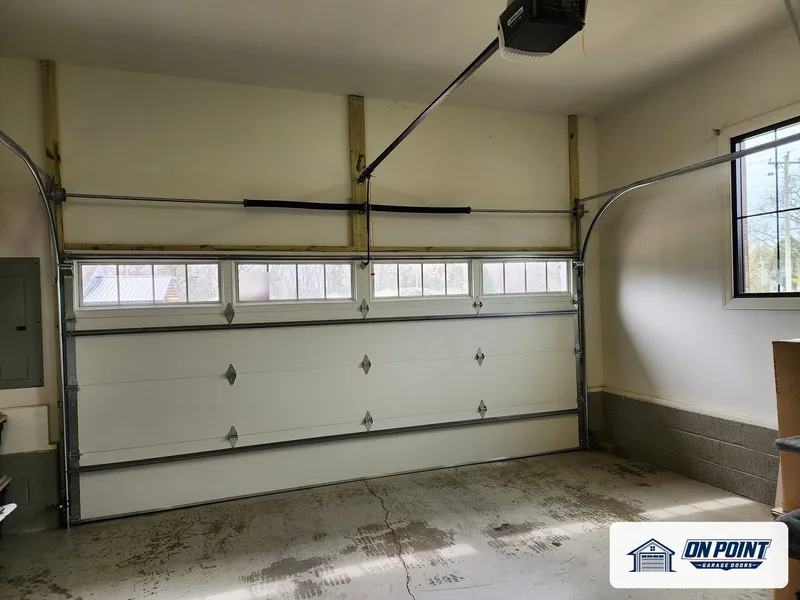
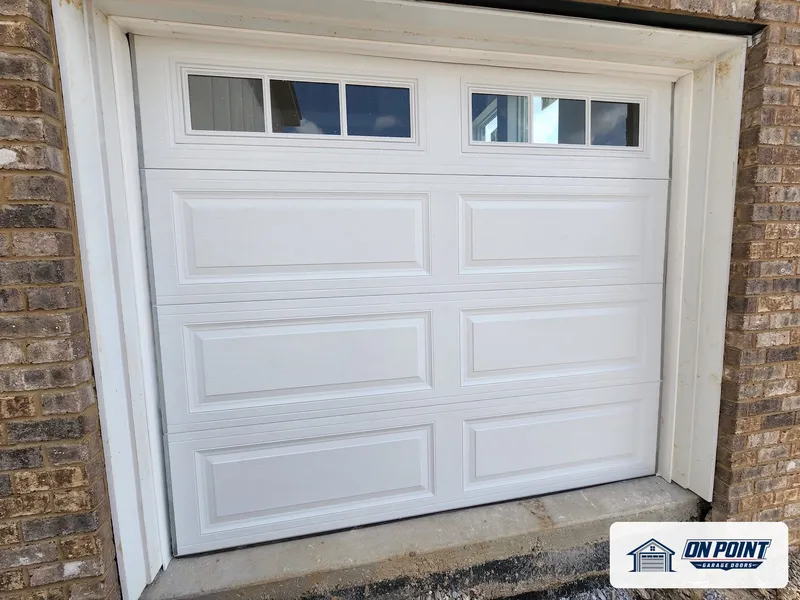
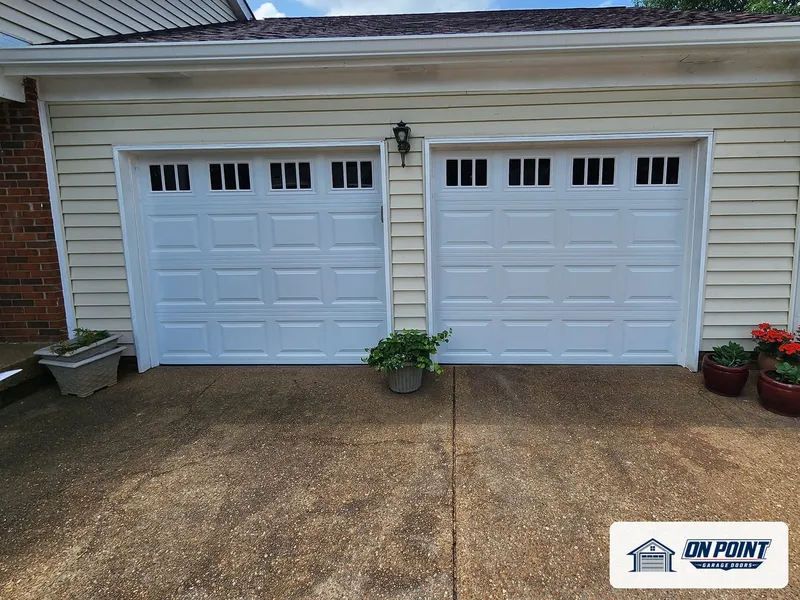
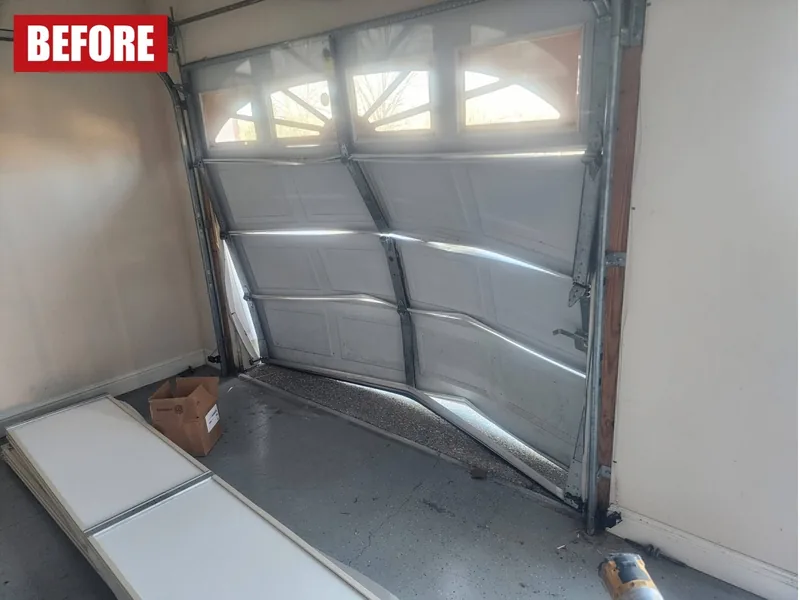
These photos are from our own jobs, with our logo on them.


Garage door repair in Ridgewood for the brick row houses with garages at the back or below, the small commercial garages on the side streets and the rolling gates on the shopping strips. Free estimate first.
The long rows of brick houses here rarely have a garage at the front. Where there is one, it is usually behind the house off a shared alley or built into a small lot, and the door may be decades old.
Side streets also hold small auto shops, workshops and storage garages with wide sectional or roll-up doors.
Small garages built for older, narrower cars can be a tight fit today, so the opener and door travel are set to give every inch of clearance.
Storefronts along the main shopping streets each have a rolling gate, opened and closed every day.
A gate that sticks before opening means a lost morning, so it is treated as urgent.
Old doors on old garages often carry parts from several repairs, and the springs may not suit the door that is hanging.
A door that was once wood and is now steel, still running on the springs of the old one, is a common find behind these rows.
Matching the spring to the door is the first thing checked.
Some doors here have new panels on old tracks or new springs on old drums, and mismatched parts are the most common reason a repair does not last.
Tight alleys and small lots leave little room to work, so the technician plans each step before carrying parts in.
Where a row of garages shares one narrow lane, the truck waits on the street and the work is kept to one door's width.
Parking is scarce, so a door that will not open can mean a long search for a space.
Rolling gates on corner shops face wind and weather from two sides, and their guides and locks wear sooner.

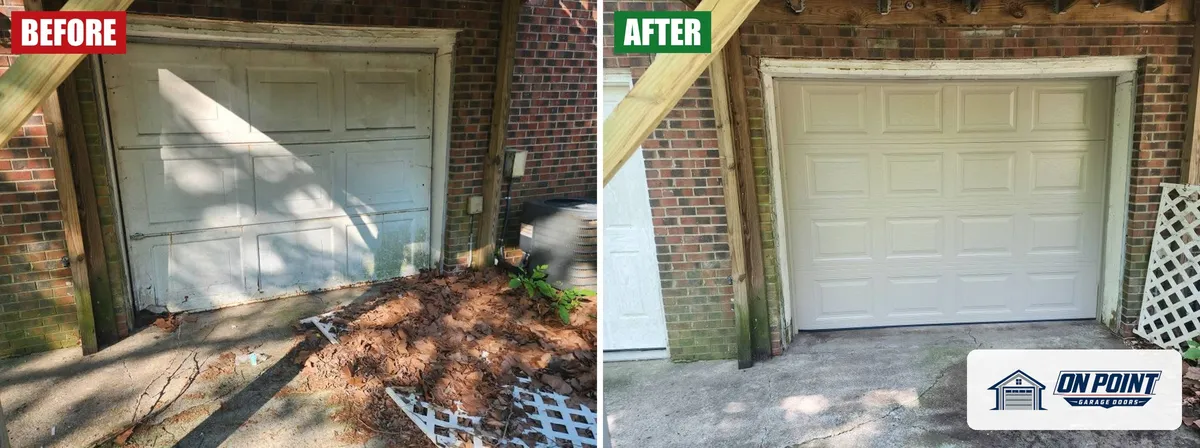
Homes, workshops and storefronts follow one rule: look the door or gate over first, then write the estimate.
On the old brick garages that look takes in the opening itself, since settled brick and dry wood framing decide how a door hangs.


House garages. Behind the rows, the doors that come to us most have a spring that has snapped, rollers worn flat or a cable fraying at the bottom corner.
Old doors that have been patched many times get an honest opinion on repair versus replacement.
Rolling gates. A gate that drops on its own, drags in its guides or will not lock usually has a tired spring in the barrel or slats bent by a hand truck.
Gate locks and bottom bars are checked so the gate secures properly at night.
Workshop and storage doors. Wide doors that are used all day wear springs and cables quickly.
Workshop doors that open many times a day benefit from high-cycle springs, which are offered when the old ones keep wearing out.
Openers. Older openers on small garages are often replaced with compact wall-mount or belt-drive units.
In a garage built for a narrow car, a wall unit beside the door frees the ceiling and keeps the rail out of the way of a roof box.
A door or gate that has taken a knock from a car or a delivery should stay where it is until the guides and the track have been looked at.
The brick blocks on both sides of the avenue are part of our regular route, along with the rest of Queens, Brooklyn and Long Island.
Whatever you mention, the lane, the lot or the gate, goes into the notes the technician reads before he sets off.
A gate that will not come down at closing, or a car shut into a garage where parking is scarce, moves ahead of routine visits.
Winter. Ice in gate guides and on door bottoms can freeze them shut; do not force them.
Winter is also hard on small garage doors facing the street, where plows push slush against the bottom seal.
Spring. Melting snow rusts the lowest hardware on old doors and gates.
Summer. Heat makes gate slats swell and drag in their guides.
Summer is also when a door's bottom seal dries and cracks, letting dust and water under the door.
Fall. A pre-winter check of springs, cables and locks avoids a frozen-morning breakdown.
Leaves from the street trees collect in the alleys and blow under garage doors, so the bottom seals get a look too.
The technician sees the door or gate in action, then inspects springs, cables, slats, guides and the opener or motor.
What he finds is put in plain words, with a free estimate that shows every part on its own line.
Springs and parts are matched to the door or gate in front of him, and the ones these blocks need most travel on the truck.
Openers and gate motors are checked for safe operation before he leaves.
Old parts are hauled off and the alley or sidewalk is left tidy.
On a shopping street the gate is left locked and working before the store opens its doors.
Storefront visits can be arranged around opening and closing.
In tight alleys, the work is planned so neighbors can still pass.
The decision is always yours.
Every door and gate depends on a few heavy-duty parts; on old ones, those parts may be original.
The spring carries the weight; once it breaks, lifting the door or gate is unsafe.
Cables are checked from drum to bottom bracket and replaced as a pair.
Photo eyes in tight garages get bumped by bikes and bins, and a door that will not close is often just a beam knocked out of line.
Bent tracks and gate guides can jam a door halfway; it stays put until reset.
On corner shops the guides take wind and rain from two sides and rust from the bottom up, so the lowest stretch is renewed when it has thinned.
Worn openers and motors are explained honestly, with replacement options when needed.
Tell us whether it is a garage behind the row, a workshop door off a side street or a gate on the avenue, and what it has been doing.
The estimate is free for homes, workshops and shops alike.
Yes. Each door in a row of garages has its own springs, cables and opener, even when the doors look alike. He works only on yours, keeps the shared lane passable while he works, and will mention it if a neighbor's door is leaning on the same post.
A roll-up door that has grown heavy usually has a spring inside the barrel that has lost its tension, or slats that have bent and drag in the guides. He checks both, along with the guides and the bottom bar, and resets or renews the spring so the door rolls up smoothly again.
Often, yes. A gate that sticks is first freed and set straight in its guides, because a motor will not cure bent slats. Once it runs smoothly, a motor can be added so the gate goes up and down from a switch, and the lock and bottom bar are checked on the same visit.
Old brick openings settle, and the wood framing inside them dries and splits. He measures each side and the top, renews wood that has split, and the new door is set to the opening as it really is, with seals that close the uneven gaps along the brick.
A car shut behind a dead door is moved ahead of routine visits, since there may be nowhere else to leave it. Tell us when you book, and the first goal of the visit is to get the door opening and closing safely so the car can come out.
Describe the door or gate, pick a visit that suits the shop or the household, and the estimate is free.
Rather explain it by phone? Call (929) 429-2429.
Let us know how the door or gate behaves; a free estimate follows, yes or no.