Takes 30 seconds. We call you back to set a time.
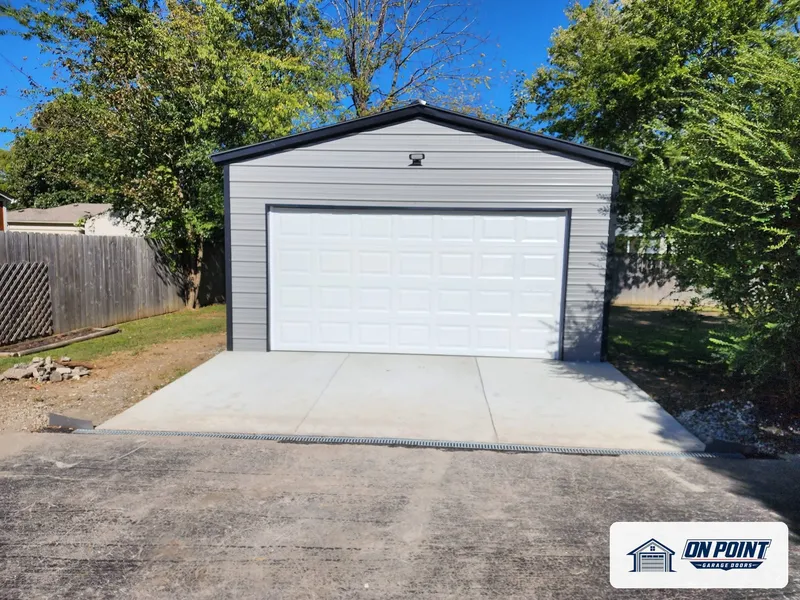
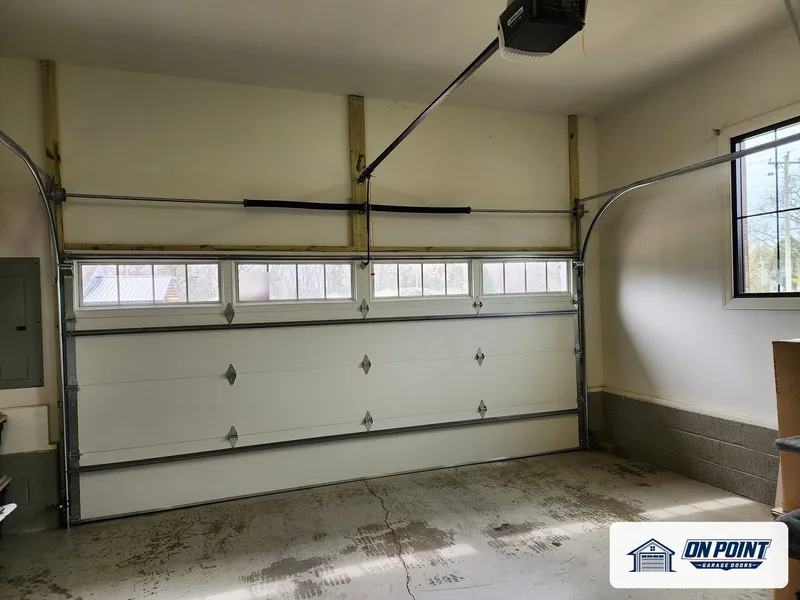
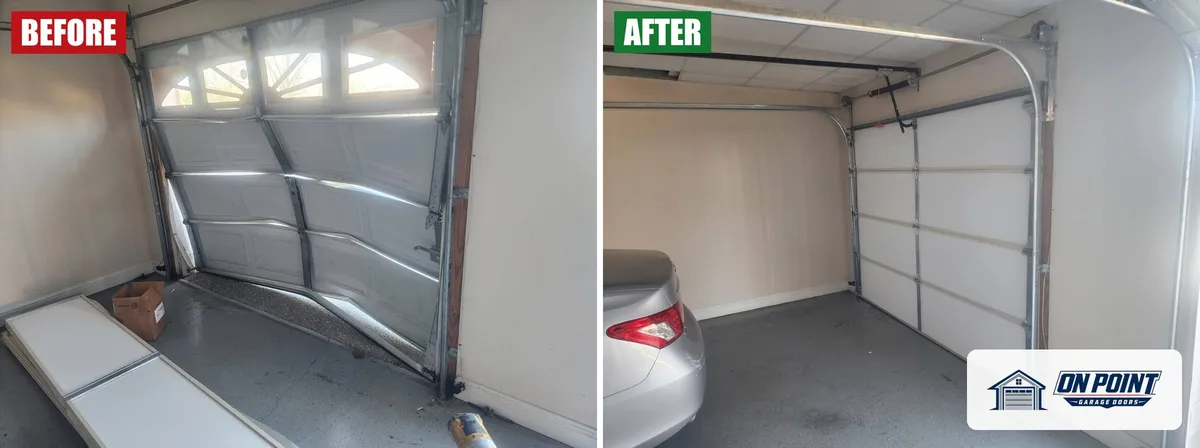
These photos are from our own jobs, with our logo on them.


Garage door repair in Corona for the attached brick houses with a garage under the stoop, the two-family frame homes with shared driveways, and the shops and auto businesses along the elevated line. Free estimate first.
Rows of attached houses fill the side streets, and many have a narrow garage set below the front steps with a short, sloped apron.
Those garages are tight, so a car door or a bumper often grazes the jamb, and the bottom section takes most of the knocks.
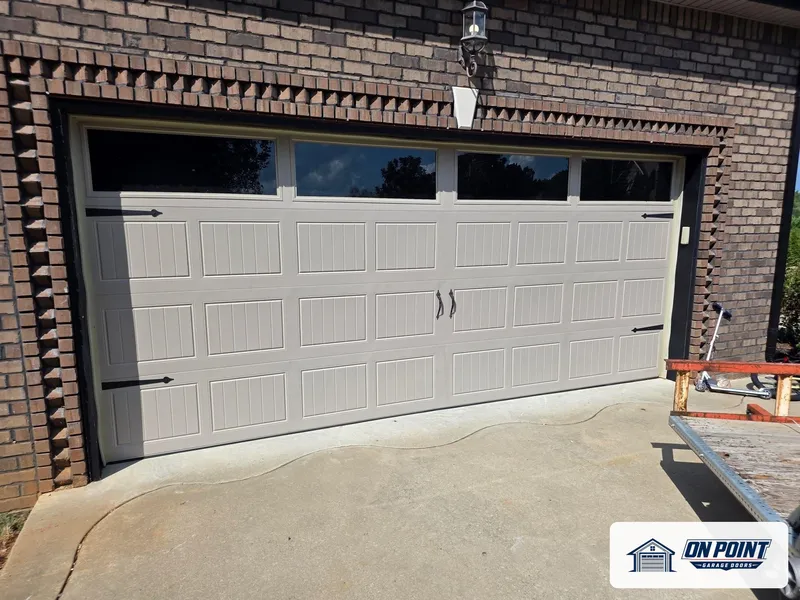
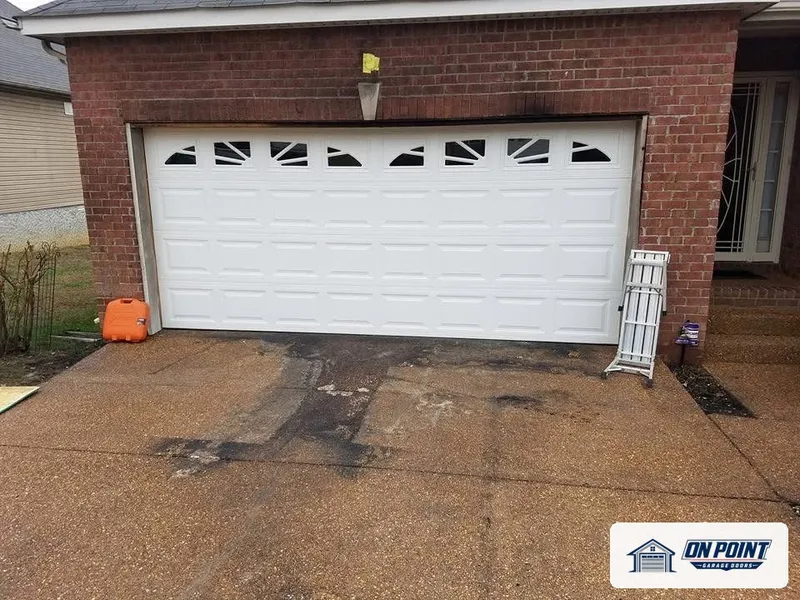
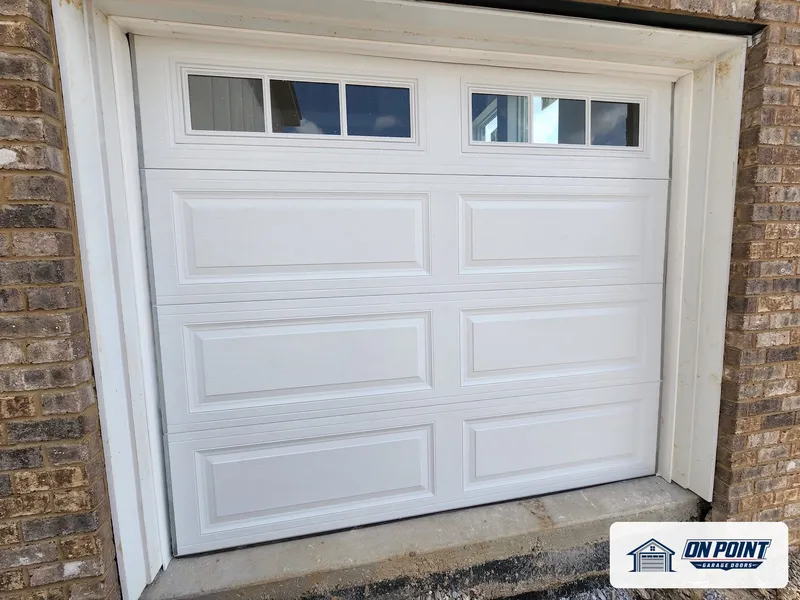
On the brick rows, owners mostly pick a plain steel door in white or almond with a short strip of glass across the top.
Two-family homes are the rule rather than the exception, and two households often share one garage door.
A door that opens for two families, morning and evening, wears its springs and rollers faster than most.
Under the elevated train on the main avenue, roll-down gates and garage doors on stores and workshops open early and close late.
Grit and brake dust from the trains settle in their guides and slats.
Cars parked bumper to bumper along the curb make backing out of a stoop garage a slow, careful job.
The quieter streets in the older section near the park have detached houses with longer driveways and garages out back.
Those rear garages often still carry an original wood door on old hardware.
Some garages have become storage for a family business, and a door packed with boxes behind it is opened only when deliveries come.

Stoop garage, shared driveway or storefront gate, we look at it before naming any figure.
Families often replace a stoop garage door when they redo the front steps, so the house looks finished.


Garages under the stoop. Low headroom, short aprons and doors bumped by tight turns.
Low-headroom track and a fresh bottom section usually put them right.
When a shared door starts slowing down for both households, the springs are the first suspect.
Shared two-family doors. Heavy use, worn springs and two sets of remotes.
A door that two households lean on daily is given heavier springs and an opener with some strength in reserve.
Store gates on the avenue. Bent slats, stuck guides and tired motors.
Gates are made to roll smoothly again before the shop opens.
A keypad beside the door lets both households in without sharing remotes.
Old rear garages. Wood doors, rusted track and sagging sections.
He tells you straight whether to repair it or put up a new door.
Over a stoop garage, the front room stays warmer once the door is insulated.
If a car backed into the door, keep it shut until it has been checked.
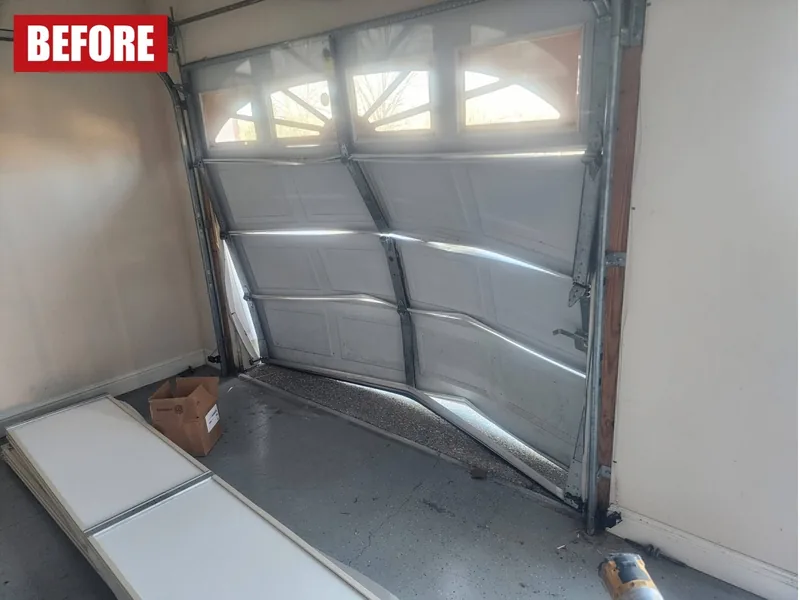
A bumper that taps the door on a tight turn can bend a hinge, so the hinges are checked along with the panel.
Corona sits on the Queens part of our route, and our crews also cover Brooklyn and Long Island.
Whatever you mention about the stoop, the apron or the shared driveway is written down for the technician.
If a car is stuck in the garage or the door will not shut, that visit is put ahead of routine work.
If the door is stuck before work, mention the time you need to leave when you call.
Winter. Plowed snow piles up against garages under the stoop and freezes the bottom seal to the apron.
Snow shoveled off the sidewalk lands right in front of the garage and freezes against the door overnight.
Spring. Heavy rain pools at the foot of sloped aprons and rusts the lower track.
Summer. Doors facing the street bake in the sun while kids play on the sidewalk in front of them.
Fall. Leaves and litter blow into the low spot in front of each garage and block the seal.
First he works the door from the wall button a handful of times, listening to the springs, cables, rollers, hinges and track, then the opener.
In garages under the stoop he looks at the ceiling for leaks from the steps above, since dripping water rusts the spring bar.
Then he walks you through what is worn and puts each part on a free, itemized estimate.
The springs he brings are chosen for what the door weighs today, windows and all.
Low-headroom parts come along for the garages under the house.
To show the safety reverse, he lays a piece of wood under the door and lets it close on it.
Old parts leave with him.
Both families can see it working before he goes, if they are home.
Visits can be planned around both families in the house.
He calls on the way.
No work starts until you agree.
A door with good sections and worn hardware gets a hardware fix, not a sales pitch.
Tight garages and heavy daily use shape the repairs here.
If a spring has snapped, the door weighs on the opener like a slab; keep it closed and phone us.
Busy shared doors get springs built for more cycles.
Cables fray at the bottom corners where the door gets bumped, so both are replaced.
Bottom brackets are checked with them.
Photo eyes get bolted low and firm, out of reach of the bikes and strollers kept beside the car.
Bent lower track from tight turns is straightened or replaced.
Loose brackets in old brick are anchored again.
The opener is checked on its own first, so a good motor is not swapped for nothing.
Under a bedroom, a belt drive keeps the morning departure from waking the family upstairs.
Let us know if the garage is under the stoop, shared or a store gate.
Hearing the estimate is free.
Say what the door is doing, pick a slot that works for both households, and the estimate is free.
Call us at (929) 429-2429.
Describe the noise or the stuck spot, and you will hear back with a free estimate.