Takes 30 seconds. We call you back to set a time.
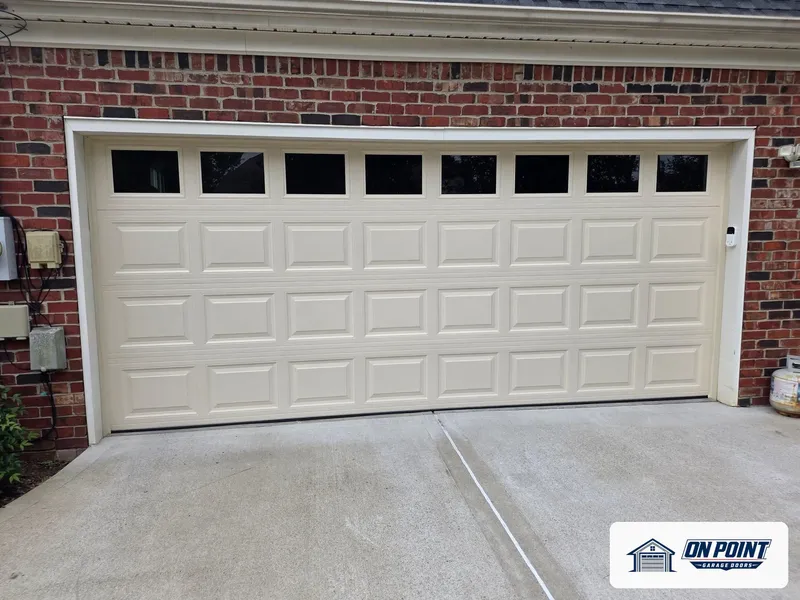
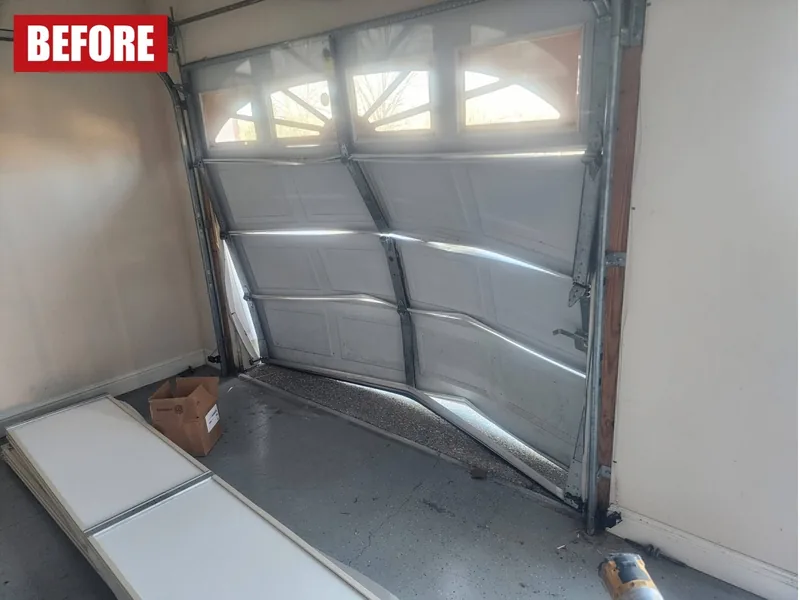
These photos are from our own jobs, with our logo on them.


Garage door repair in Queens Village for the capes, colonials, Tudors and ranches with driveways and one- or two-car garages, the homes along the county line, and the businesses on the main avenues. Free estimate first.
East of the big boulevards, the blocks turn leafy, with detached houses, short lawns and a garage for nearly every home.
Those doors open every morning and every evening, year after year, and their springs keep count.
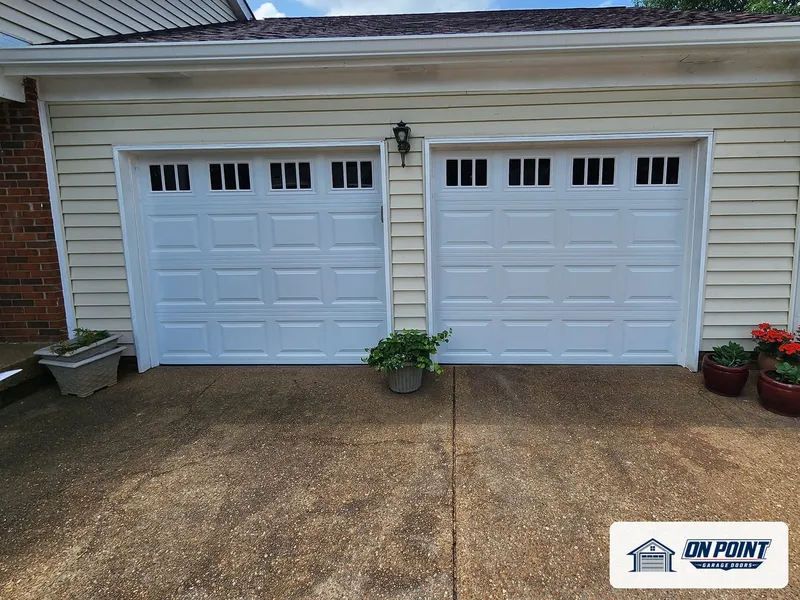
Raised-panel and carriage doors in white or almond suit the capes and colonials.
A good number of houses still carry the door that came with them, often a thin, uninsulated panel door that lets the cold in.
Swapping it for an insulated door is the most requested upgrade on these streets.
The main avenues are lined with auto shops, contractors' yards and small stores with roll-up doors and gates.
Along Jamaica Avenue and Hillside Avenue many of those gates go up early and come down late, so their springs and motors work hard all year.
If one of those will not shut at night, we treat it as urgent.
Heavy commuter traffic toward the parkways makes backing out of a driveway tricky, and doors get clipped.
Parents juggling school drop-offs and long commutes cannot lose the car to a stuck door.
A car locked behind a dead door on a weekday morning, with a train or a bus to catch, is worth mentioning when you reach us; that visit is moved up.
Some expanded capes gave half the garage to a family room and kept a narrower door for the rest.
A narrower door like that runs on lighter springs, and its opener rail is often shorter than the one a full garage would take.

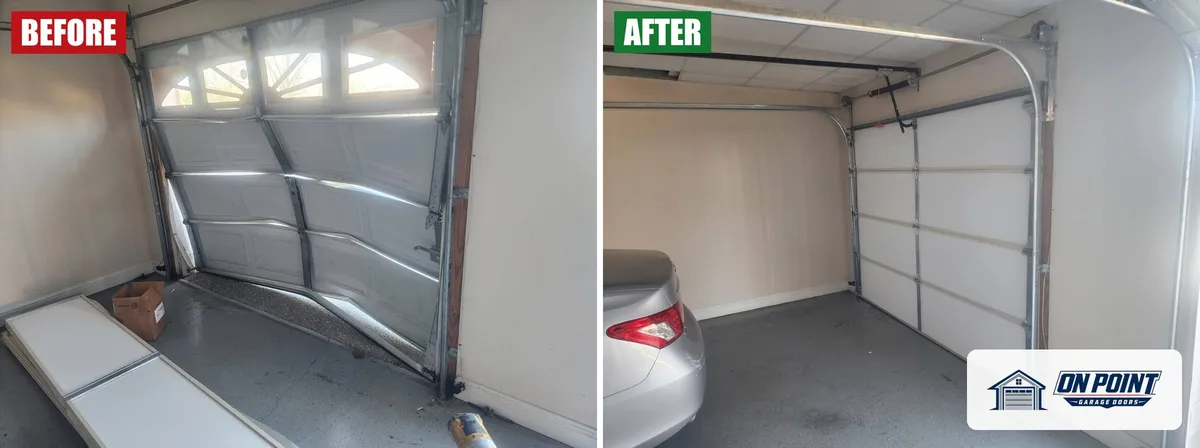
Cape, Tudor or storefront, we inspect before anyone talks numbers.


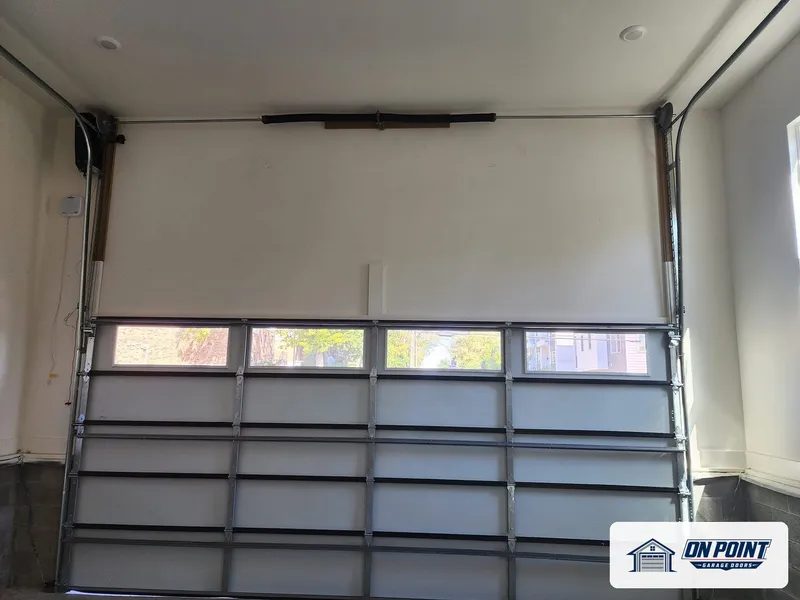
Garages at the back of a shared driveway. Snapped torsion springs, rollers worn to a flat spot, lift cables fraying where they meet the bottom bracket, and chain-drive openers from decades back.
A door used several times a day gets springs rated for many more cycles.
A door that suddenly feels heavy is usually telling you a spring is tired, so the springs are tested before anyone looks at the opener.
On the older brick houses the springs are often the stretch kind running along the tracks, and those get safety cables through them if they are missing.
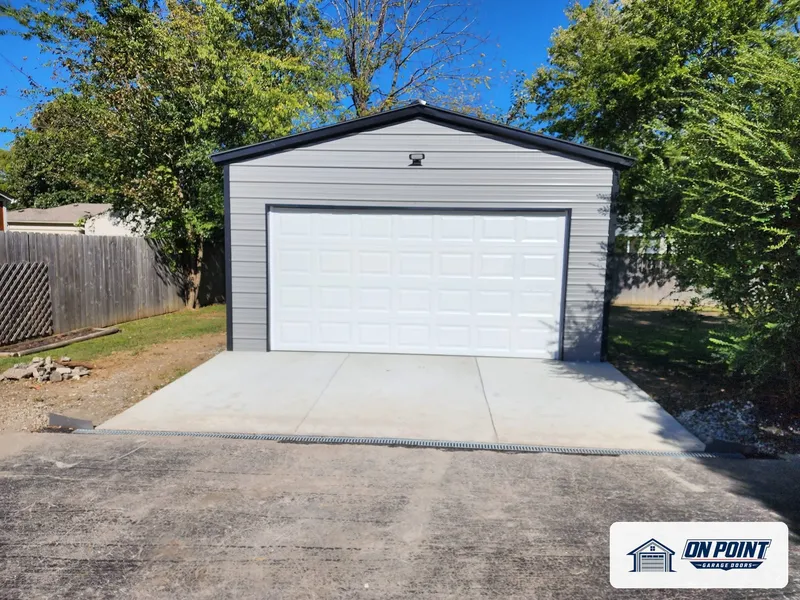
Garages out back. Aging framing, old doors and openers that have no photo eyes.
Photo eyes are added, or the opener is upgraded.
Door upgrades. Insulated raised-panel and carriage doors that suit the house.
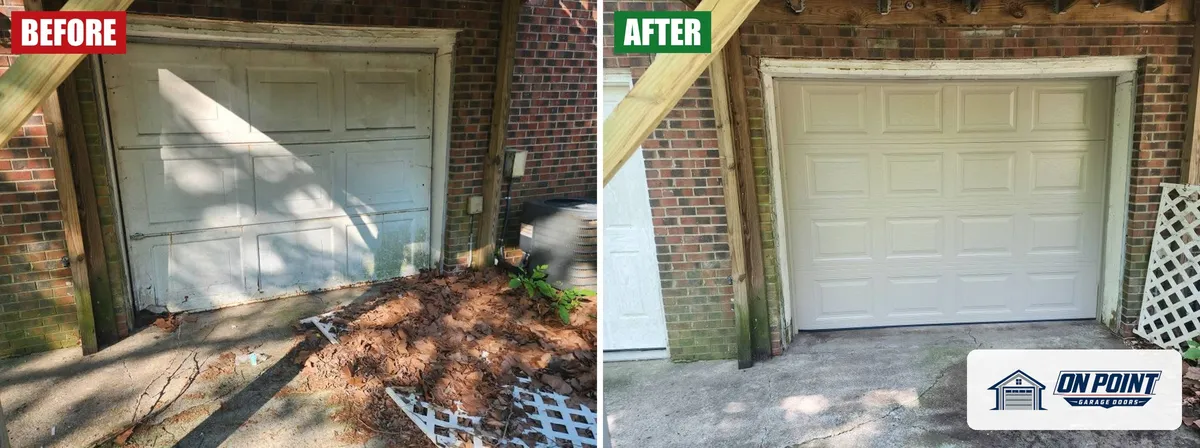
The old drafty door is hauled away the same visit it is replaced.
Where the block loses power in summer storms, an opener with a battery inside still lifts the door so the car can get out.
Avenue businesses. Roll-up doors, gates and their motors, locks and bottom bars.
The beam and the safety edge are tried on every commercial door.
An insulated door helps an attached garage stop pulling the cold into the kitchen or den beside it.
Shared driveways between the houses here are often only one car wide; if a bumper caught the door on the way out, leave it alone until it has been looked at.
A door caught while reversing onto a busy street can twist one track, so it is checked before it moves.
These streets sit on our eastern Queens route along the Nassau line, between the big parkways and the avenues, and the same crews run across Brooklyn and Long Island.
What you mention when you reach us goes straight to the technician.
A trapped car before school or work moves your visit up.
Winter. Cold nights finish off springs that were already near the end.
Plowed snow from the street often lands at the foot of the driveway, and ice packs against the bottom seal of doors that face the curb.
On deep-freeze mornings the bottom rubber may stick to the slab; wait it out rather than straining the opener.
Spring. Rain runs down the long driveways toward the back garages and settles against the bottom of the door, rusting the lowest track.
Summer. Strong sun bakes the rubber seal on doors facing the street.
Fall. Before winter is the right moment to swap a tired spring on your own schedule.
He opens and closes the door to see how it behaves, then goes through the springs, cables, drums, rollers, hinges, track and opener.
He tells you plainly what wore out and why, then writes a free estimate with every part on a line of its own.
Springs are sized to the door as it weighs today, which on an old wood door after years of paint is more than the day it went up.
He has the springs, cables and rollers most of these doors take.
He shows you the door stopping and backing up when something is in its path.
Old doors and parts leave in his truck.
Each door is opened and closed for you before he leaves.
Shops along the avenue can have their doors worked on before they open for the day.
You get a call as he heads over.
Nothing is swapped on the door until you have said yes to it.
Twice-a-day family use is what wears these doors down.
Once a spring has snapped, nothing is holding the weight of the door, so leave it closed and give us a call.
Springs rated for more cycles make sense for families who open the door many times a day.
Lift cables rust and fray at the bottom corners first, where winter slush sits, so both sides are renewed together.
Drums and spring-bar bearings are inspected at the same visit.
Photo eyes are fixed solidly, low on the tracks, away from bikes and recycling bins.
Track nudged by a bumper is trued up before the door runs again.
On garages framed with old lumber, brackets that have worked loose are moved into sound wood before the track is set again.
The opener is run with the door unhooked, so the gears, the logic board and the motor are judged one at a time and only a failed part is changed.
Quiet belt drives suit garages tucked under a bedroom.
Tell us whether the garage is attached to the house, tucked under it, or out back at the end of the shared driveway.
Every estimate is free.
Not for the door itself, but the truck may need to stand in the shared driveway for part of the visit. If the driveway is one car wide, let the household next door know, or tell us when you book so the technician can park on the street and carry the parts in.
Often, yes. If the sections are solid and the rot is only at the bottom rail, new hinges, rollers and springs sized for the real weight keep it running for years. When the wood has split along several panels he will show you, and an insulated steel or wood-look door is offered instead.
Those are extension springs, common on the older houses here. They work, but each one needs a safety cable through the middle so a snapped spring cannot whip across the garage. If yours have none, cables are added, and many owners switch to a torsion spring above the door once both are worn.
Yes. Early visits are planned for shops on the main avenues so the gate is working when customers arrive. Tell us how wide the storefront is, whether the gate is a solid curtain or an open grille, and whether the motor or the hand chain still turns anything.
In most of these capes and Tudors, yes. The garage shares a wall or a floor with living space, and a thin uninsulated door lets the winter cold straight into that room. An insulated door with a fresh bottom seal and side seals keeps the garage noticeably milder, and quieter too.
Describe what the door did the last time you ran it and choose a visit that fits the commute and the kids' mornings; the estimate is free.
Call us at (929) 429-2429.
Tell us what the door is doing and where the garage sits; a free estimate comes back either way.