Takes 30 seconds. We call you back to set a time.
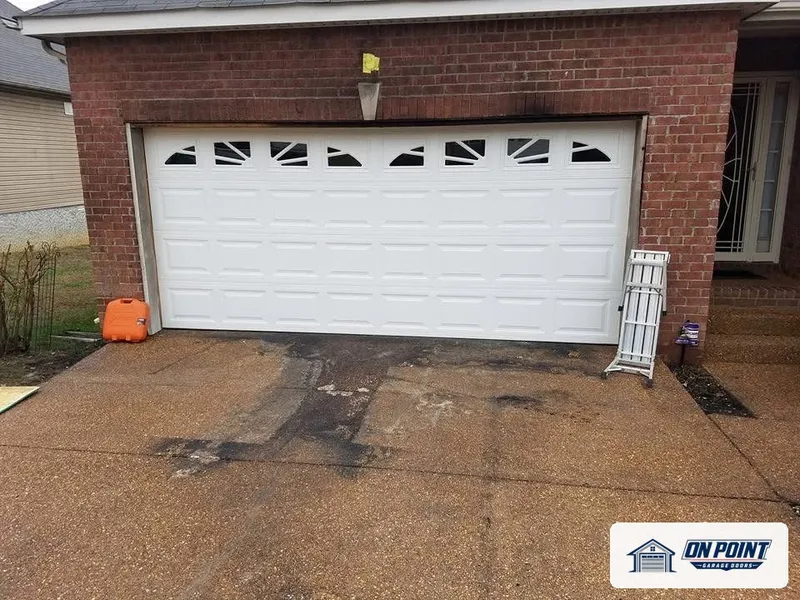
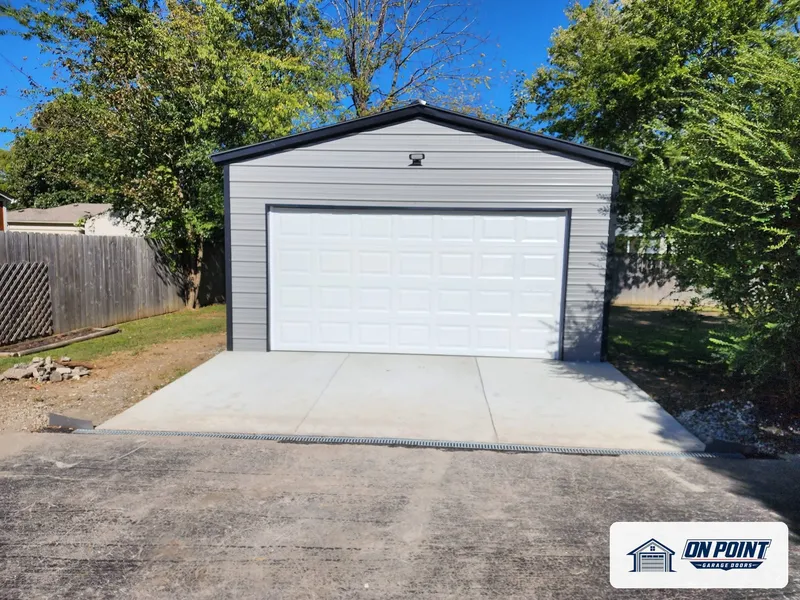
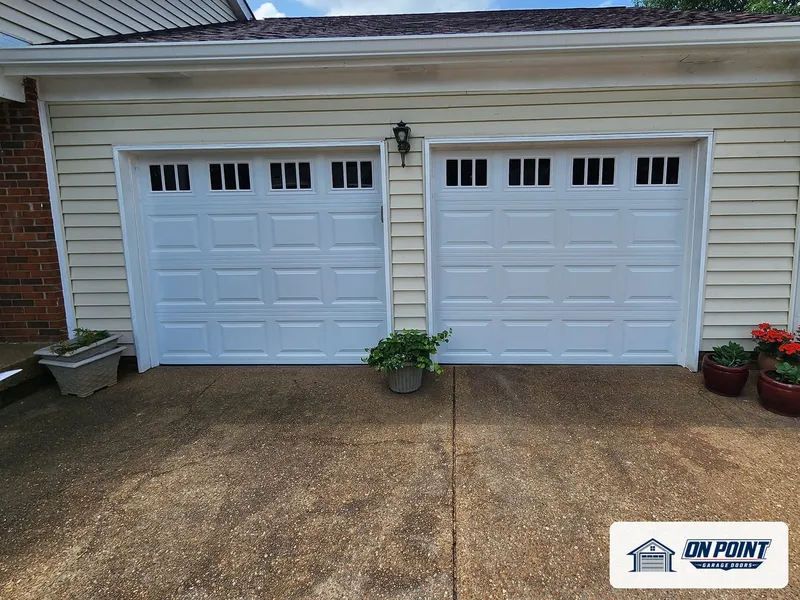
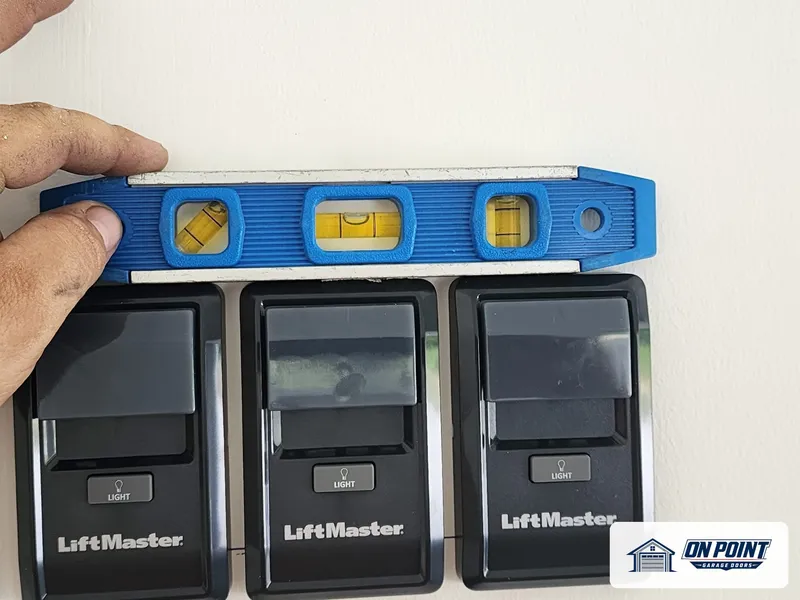
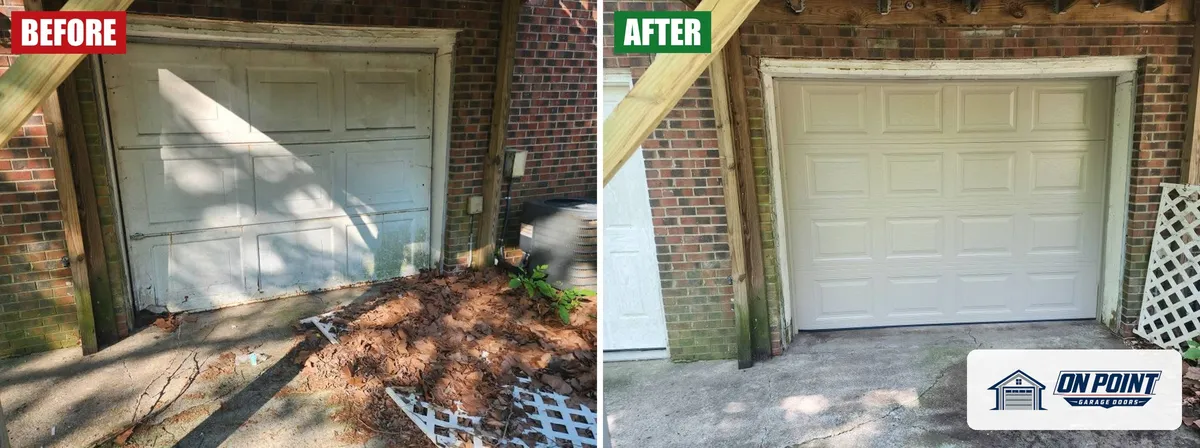
These photos are from our own jobs, with our logo on them.


Garage door repair in Woodhaven for the wood-frame and brick houses with garages at the end of side driveways, the attached homes, the auto shops and the shop gates along the avenue beneath the elevated train. Free estimate first.
Many of the old frame houses, a good share of them with porches and the turrets of another century, have a narrow driveway along one side that leads back to a small garage.
Those garages are often older than the house's newer siding and windows, and their doors have been patched over the years.
A plain steel door with a row of windows, or a carriage pattern, sits well with the porches and the wood siding of these houses.
The driveways are tight, so cars pass close to the house and the garage jambs.
Fences, gas meters and side steps leave even less room, and a mirror or a bumper finds the door frame sooner or later.
Clipped jambs and bent tracks are among the most common things found on a visit.
Shops along the main avenue under the elevated tracks pull their gates down every night, and grit and vibration wear the guides.
If a shop cannot get its gate down at night, that call goes to the front of the line.
Trains rumbling overhead along the avenue shake loose hardware on nearby gates and garages.
Grit drifting down from the elevated structure settles in gate guides and on the bottom bars, so they drag long before the motor is to blame.
Auto repair shops and body shops near the boulevard run wide doors all day.
Their springs, rollers and operators are chosen for heavy use, since a bay door at a busy shop may run dozens of times between opening and closing.
Some rear garages now hold workshops or storage and rarely open, and idle springs can still fail.

House garage, auto shop or storefront, every door is looked over before anything is priced.
On an old rear garage that look includes the frame, because rotted jambs and a sagging header are as common as worn springs.


Rear garages. Broken springs, worn rollers, frayed cables and old one-piece doors.
One-piece doors on worn hardware get a straight answer on a sectional replacement.
A door that has grown hard to lift points to weak springs, so that is where he starts.
Attached homes. Openers under bedrooms, noisy doors and weak springs.
The brick attached rows nearer the southern end have garages built into the front, and their doors face the street and the plows.
Swapping to a belt drive and nylon rollers takes most of the racket out.
Auto shop doors. Heavy springs, cables, rollers and bent sections from bumpers.
On shop doors the operator, the beam and the bottom safety edge are all tried before he leaves.
Store gates. Slats, springs, locks, bottom bars and motors.
Owners tired of cranking a gate by hand can have a motor added.
Insulated doors make rear garages used as workshops more comfortable.
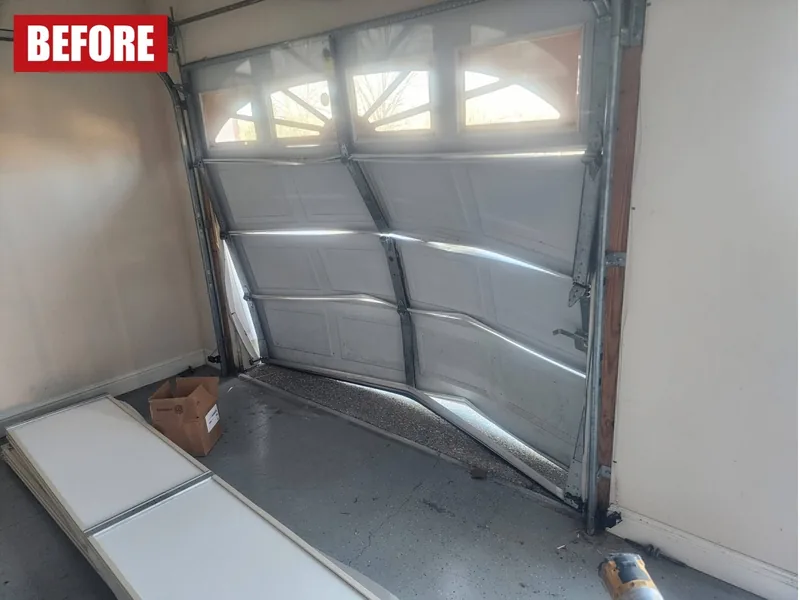
Any door that a car has struck should be checked before it moves again.
When a car clips the jamb on the way in, the track beside it is usually pushed out of line too, so the two are judged together.
Our crews know these side driveways well and cover the rest of Queens, Brooklyn and Long Island from the same trucks.
Whatever you say about the driveway and the garage goes to him ahead of time.
A car trapped in a rear garage is handled as urgent.
Winter. Cold snaps old springs in rear garages, often on the first freezing morning.
Rear garages in shade stay frozen longer; give the door time rather than forcing it.
A door frozen to the slab and forced by the opener can tear its bottom seal or strip the opener gear in one go.
Spring. Rain runs off the roofs and down the narrow side driveways, and it pools at the garage door, where it rusts the bottom section and the lowest hinges.
Summer. Heat dries out gate slides and bottom seals.
Fall. A check-up before the cold finds the tired spring in a rear garage while it is still a planned job.
The big trees in and around the park also drop leaves and seed pods into the tracks, which the door does not like.
He watches the door make a few full trips, listening, then works over the springs, cables, rollers, hinges, track and opener in turn.
You hear in plain words what failed and what caused it, and the free estimate shows every part on a line of its own.
Springs and hardware match the door's weight, including old one-piece doors.
The springs and cables these doors need are usually on the truck.
The opener has to stop and back up from a box set under the door before the visit is over.
He carries the old parts back down the narrow driveway when he goes.
The door is cycled for you before he leaves.
Gates on the avenue can be seen to before the shutters go up for the day.
A call comes from the technician when he is close, so the car in the driveway can be moved.
Nothing is started until you have said yes to it.
Tight driveways and old rear garages decide what wears first.
When a spring snaps, the door's whole weight is left hanging on the opener, so do not try to raise it by hand.
Big side springs on old one-piece doors are dangerous when they break, and are a reason to replace those doors.
Cables fray at the bottom where puddles sit; both sides are replaced together.
The drums are checked along with the cables, since a worn groove frays a new cable fast.
Sensors in rear garages are often missing or loose and are mounted solidly or added.
Tracks clipped by cars on narrow driveways are straightened or replaced.
Brackets that have worked out of old, dry framing are moved into sound wood before the track is set again.
The opener is tested part by part before anything is replaced.
A worn opener in a rear garage is replaced with a strong chain or belt drive.
Tell us whether the garage sits behind the house at the end of a side driveway, is built into an attached house, or belongs to a shop.
Every estimate is free.
Usually the truck stays at the curb and the parts are carried back, which is no trouble for springs, cables and openers. For a whole new door he checks the driveway width at the estimate, so the sections can be brought in without scraping the house or the fence.
It can. Leaves, seed pods and twigs pack into the bottom of the tracks and under the seal, and the door binds or the opener reads it as something in the way and reverses. He clears the path, checks the rollers, and replaces a torn seal that lets debris slide under.
Those doors swing out on heavy springs mounted along the frame, and when one of those springs or its bracket fails, the door can drop or twist. He checks the springs and the pivots, and if the hardware is worn out he explains what a sectional door would change, so you can decide with the facts in front of you.
The frame is looked at first. Old garages behind the frame houses often lean a little, and the header or the jambs may have rotted where the gutters dripped. Rotted wood is replaced and the opening squared before the new door goes in, so the track stays straight and the door seals at the floor.
Yes. Shops along the avenue under the tracks pull their gates down every night, and the steady shaking and the grit falling from the structure wear the guides, slats and locks faster than on a quiet street. A visit can be set before the shop opens, and a gate that will not lock is moved ahead.
Describe what the door is doing and choose a visit that suits you; there is no bill for the estimate.
Like to talk it over first? Call (929) 429-2429.
Say what the door does and where it is; the estimate is free whether you go ahead or not.