
Leave your name and number and we’ll call you back to set a time.
Electric cars have turned many garages into the place where the car fills up as well as where it sleeps. A wall charger usually goes in near the front of the garage, close to where the car's port ends up, and that is often the same wall the door tracks, springs and opener wiring already share. A thick cord now runs across the floor near the line where the door comes down, and the opener and the charger may want power from the same corner of the panel. This page covers how a charger and a garage door can live together: placement, clearances, the cord and the closing door, power, openers and the comfort of the space. Free estimate at (929) 429-2429.
By Sean Cohen, owner, On Point Garage Doors · Updated
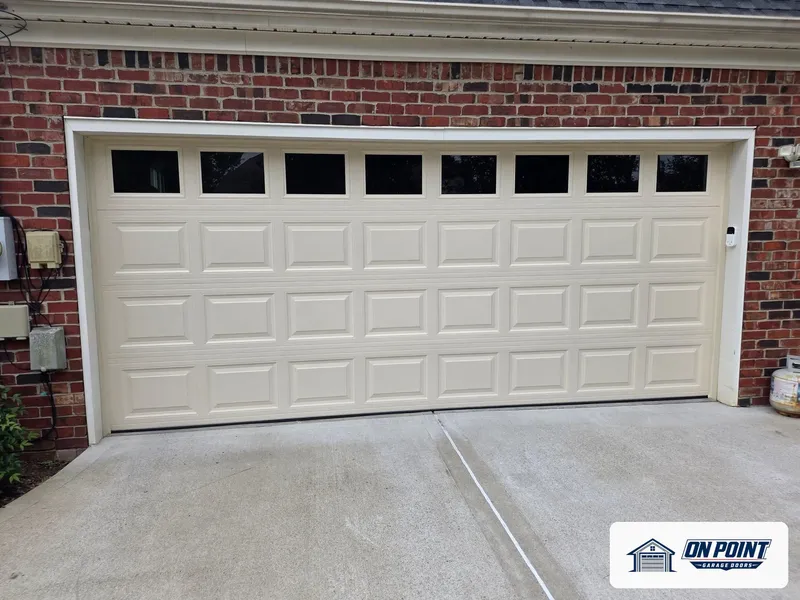
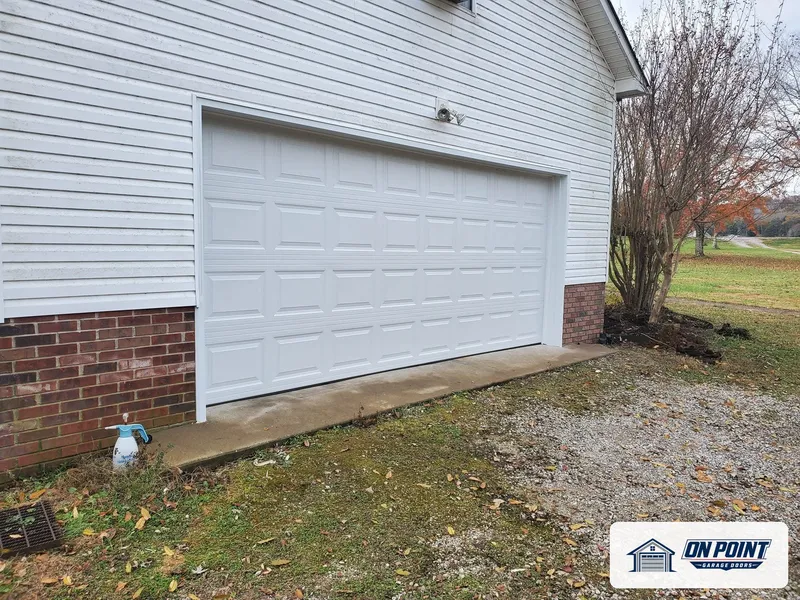
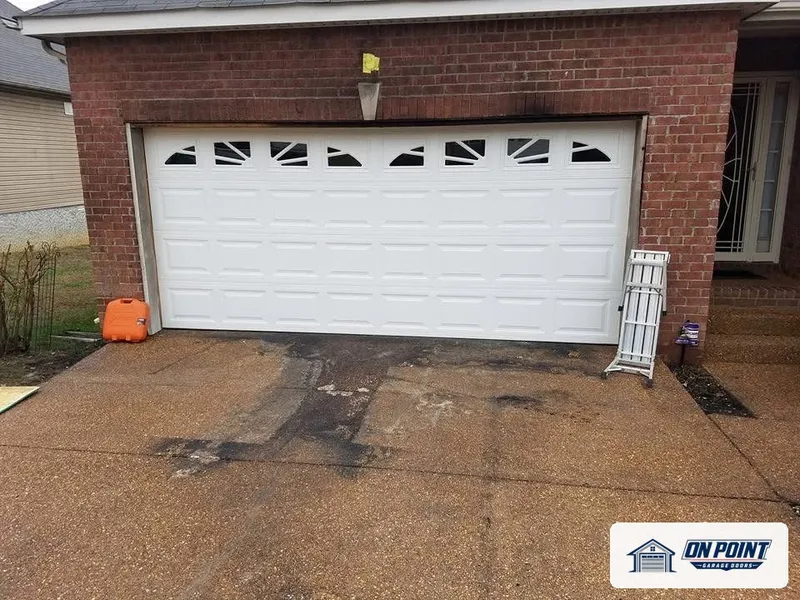
Photos from our own jobs.
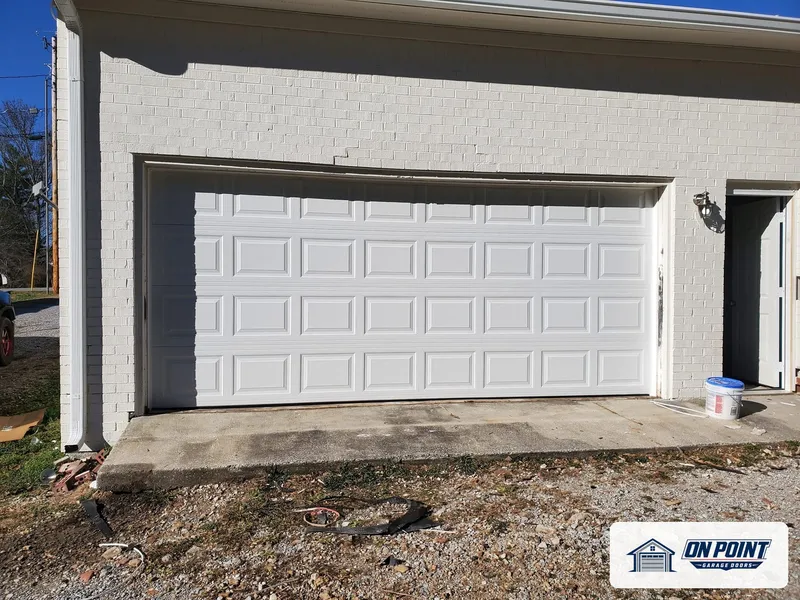
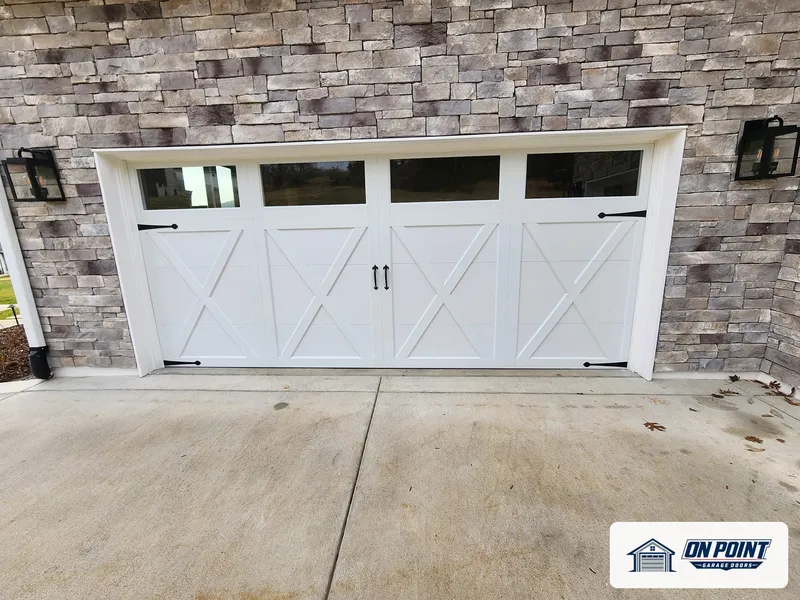
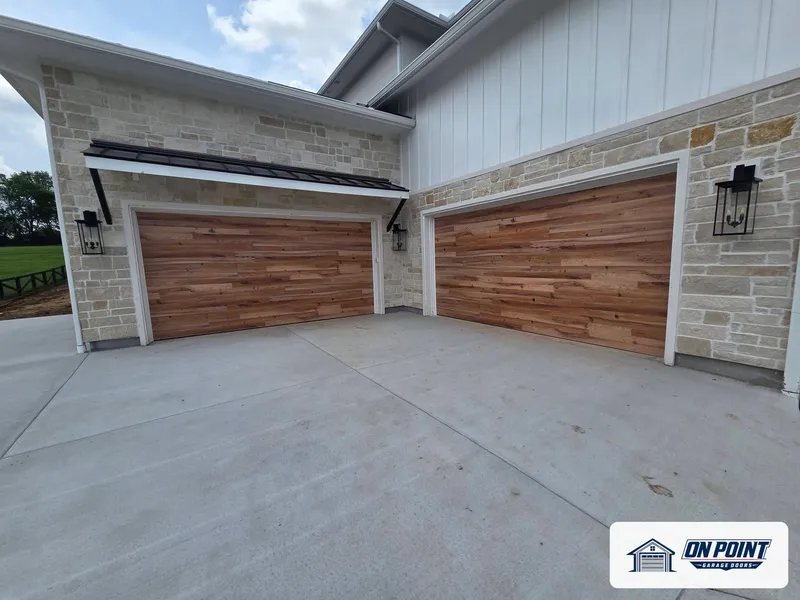
A garage door takes up more of the garage than people notice. The vertical tracks run up both sides of the opening, the horizontal tracks hang from the ceiling deep into the room, and the springs live either on a shaft above the opening or along the tracks on each side. A charger is a box on a wall with a heavy cord. Planning where each sits before the electrician mounts anything keeps the two from fighting over the same few feet of wall.
Most garages have a stretch of side wall or front wall that sits clear of the tracks, and that is usually the best home for a charger. A spot a short step back from the jamb, toward the inside of the garage, keeps the box and its holster away from moving parts while the cord still reaches the car. Some owners prefer a ceiling cord reel or a wall hook so the cord stays off the floor. We can mark the door's working zone on the wall so the electrician knows exactly where not to drill.
The riskiest moment is when someone plugs in the car with its nose out of the garage, or parks half outside, and runs the cord under the open door. The safety sensors are built to see a person, a pet or a bike in the beam, not necessarily a thin cord lying flat on the floor. A door that closes onto a cable can pinch or crush it and damage the bottom seal at the same time. The simple rule is that the door stays open while a cord crosses the threshold, and a cord holder keeps it off the floor the rest of the time.
A charger needs its own dedicated circuit, and that is work for an electrician. The opener also needs a sound outlet near the motor. Where an older garage has one circuit for the lights, the opener and a few outlets, adding a charger is a good time to sort that out so the opener is not sharing power with a large new load. If the opener starts acting oddly after a charger goes in, a tripped breaker, a moved outlet or a loose connection is checked before the opener itself is blamed. Our page on the opener outlet explains what the motor needs.
Many electric models are wider and heavier than the cars they replace, and electric pickup trucks and large crossovers can sit tall. A door that was fine for a small sedan can feel tight with big mirrors and a roof rack. Before a charger fixes where the car parks, it is worth checking the clear width and height of the opening, the headroom under the opener and the room left to walk past the bumper. Where the opening is too small, a taller or wider door can be planned along with the charger.
Many cars, electric or not, have built-in buttons that work with most openers, and some electric models open the door from their own app as the car pulls up. A smart opener with phone alerts is handy in a charging garage, since it shows whether the door is still up when the car has been left plugged in. Any automatic or app-driven closing should be set up with working sensors and the warning features the opener maker calls for, never as a way around them.
Batteries tend to be happier in a garage that does not drop to outdoor winter temperatures, and a garage that stays milder can make winter mornings easier on the car and the driver. An insulated door with good perimeter seals helps an attached garage hold its temperature. It does not heat the space, but it slows the cold coming in through the largest wall in the room. In summer the same door keeps a sun-facing garage from getting as hot.
One quiet benefit of an electric car is that there is no exhaust to clear before the door closes. Garages still collect moisture from wet tires and snow melting off the body, though, and a closed garage with a steel door can sweat in cold weather. Good seals at the floor and sides keep wind and rain out, and a dry, tidy floor near the door helps keep the cord, the sensors and the bottom seal in good shape.
If a charger is part of a larger project, such as a new garage, a renovation or a new door, plan them together. The door maker's track layout, the spring type and the opener choice all decide where wall space stays free. A wall-mount opener on the side of the door, for example, frees the ceiling but takes some side wall, which changes where a charger can go. It is easier to settle that on paper than to move a box later.
We look at the door, the tracks, the springs and the opener first, then the wall and ceiling space around them. We mark the area the door needs, check the sensors, the bottom seal and the opener outlet, and talk through how you park and plug in. If the door or opener should change to suit the new setup, you get a plain written estimate before any work starts. The charger and its circuit stay with your electrician.
Keep it clear of the tracks, the springs and the area the door sweeps as it opens. A spot a step back from the jamb usually works, and we can mark the safe zone.
No. The sensors may not see a thin cord on the floor, and the door can crush the cable and the seal. Leave the door open while a cord crosses the threshold.
A charger needs its own circuit, which an electrician installs. The opener should keep a sound outlet of its own near the motor.
Check the clear width and height of the opening and the headroom under the opener. A taller or wider door can be planned if it is tight.
No, the charger and its circuit are electrician work. We handle the door and opener side and give you a free written estimate for any changes.
Tell us what the door is doing and we’ll set a time that works for you.
Free estimate, call (929) 429-2429.
Tell us what the door is doing and we’ll tell you when we can get there. The estimate is free.
Easier to explain by phone? Call (929) 429-2429.
Tell us what the door is doing. The estimate is free either way.
Where we work
Brooklyn, Queens and Long Island. Tap your town.
 Bay RidgeBrooklyn
 AstoriaQueens
 Valley StreamNassau County
 HuntingtonSuffolk County
 Sheepshead BayBrooklyn
 BaysideQueens
 Garden CityNassau County
 BabylonSuffolk County
 Marine ParkBrooklyn
 FlushingQueens
 MassapequaNassau County
 SmithtownSuffolk County
 CanarsieBrooklyn
 Howard BeachQueens
 LevittownNassau County
 Mill BasinBrooklyn
 Forest HillsQueens
 FreeportNassau County
 BensonhurstBrooklyn
 Long BeachNassau County
 Park SlopeBrooklyn
 HicksvilleNassau County
 WantaghNassau County
 SeafordNassau County