Serving Brooklyn, Queens and Long Island(929) 429-2429Open six days a weekFree estimateGuaranteed work
On Point Garage Doors
Open 24 hours Sun-Thu, Fri until 5 pm Free estimate Springs, openers, cables We come to you
Emergency?Call nowBook free estimate
New York, NY - open six days a week

Garage door clearance: the space a door needs

Free estimateSame-day serviceCommon parts on board
  • Free estimate
  • Same-day service
  • Common parts on board
Emergency garage door repair★★★★★ 5.0 on Google · 42 reviews

Book your free estimate

Takes 30 seconds. We call you back to set a time.

Or just call (929) 429-2429 and talk it through.

Home › Garage Door Clearance

A garage door needs room to work. When it opens, it rolls up and back along the ceiling, and the springs, tracks and opener all need their own space around it. In older homes, garages were often built with little room above the door, a pipe or beam in the way, or a wall right against the opening. Before a new door or opener goes in, three measurements tell us what will fit: headroom, side room and backroom. Getting them right is the difference between a door that runs smoothly and one that rubs, binds or will not open fully. Free estimate at (929) 429-2429.

By Sean Cohen, owner, On Point Garage Doors · Updated

Real jobs. Real photos.

These photos are from our own jobs, with our logo on them.

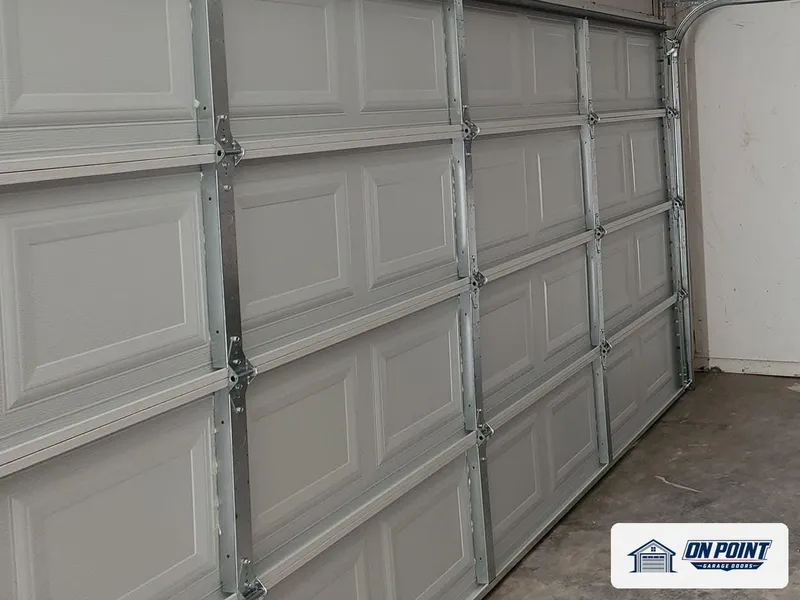
Tracks inside a garage, from one of our jobs
Tracks inside a garage
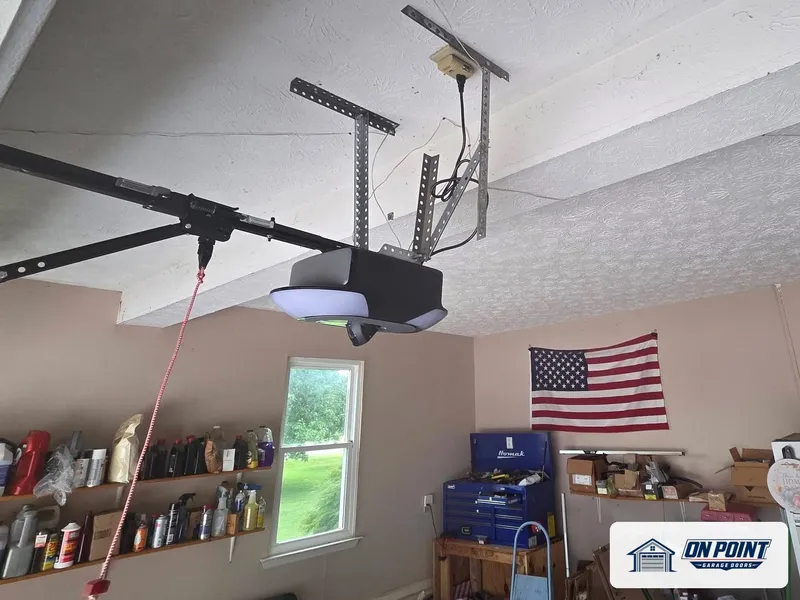
Opener on the ceiling, from one of our jobs
Opener on the ceiling
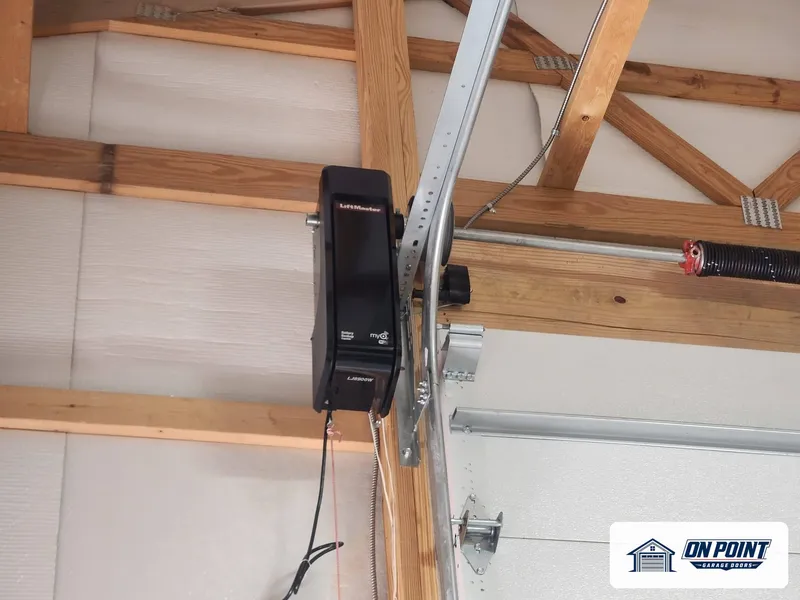
Wall-mounted opener beside a door, from one of our jobs
Wall-mounted opener beside a door

Headroom

Headroom is the space between the top of the door opening and the ceiling, or the lowest thing hanging from it, such as a beam, a pipe or a duct. It has to hold the spring bar, the curve of the track and the top of the door as it turns to run along the ceiling. A standard track setup needs a fair amount of headroom. A low-headroom track uses a second, lower track for the top section so the door can turn in a much tighter space.

Side room

Side room is the wall space on each side of the opening, from the edge of the opening to the side wall or the nearest obstacle. The vertical tracks and their brackets sit there, and on torsion doors, the cable drums and end bearing plates do too. Side room is often tight on semi-attached homes and in garages where a staircase, a boiler or a doorway sits right beside the opening.

Backroom

Backroom is the depth from the door opening back into the garage. The horizontal tracks run back along the ceiling, and the open door rests on them. An opener needs even more depth, because its rail runs behind the open door to the motor unit. Short garages, often built for smaller cars or carved down by an added room at the back, can be too shallow for a standard opener.

What gets in the way

When headroom is tight

  1. Low-headroom trackA double-track kit lets the top section turn in a smaller space.
  2. Rear-mounted torsion springsThe spring bar moves back from the door to free space above the opening.
  3. Extension springsOn some doors, springs above the side tracks avoid the bar over the door entirely.
  4. Wall-mounted openerSits on the side wall and turns the spring bar directly, with no rail on the ceiling.

A wall-mount opener also frees the ceiling, since nothing hangs over the middle of the garage.

When side room is tight

Narrow side room may call for special brackets, a different drum setup or a spring system that keeps the hardware away from the sides. In some garages, a small change such as moving a light switch or a pipe clamp gives the room the track needs. We look for the simplest fix first.

When the garage is short

A shallow garage may not fit a standard rail opener. A wall-mounted opener solves that, because it sits beside the door. Shorter track kits exist for some doors. Sometimes the answer is a door with fewer, taller sections, which changes how far back it travels.

Clearance for tall vehicles

If you drive a tall work vehicle, a truck with a rack or a tall SUV, the question is how high the door lifts out of the opening when it is open. A door that sags into the opening at the top, or an opener that stops short, can catch a roof rack. A high-lift track raises the door higher on the wall before it turns, giving more room under the open door where the ceiling is tall enough.

The page on garage doors for tall vehicles goes through the options one by one.

Why clearance matters for safety

A door that rubs against a pipe, a beam or a light fixture wears its parts quickly and can come off track. A spring bar mounted too close to an obstacle can catch on it. An opener jammed into too little space strains its rail. Getting the clearance right at installation prevents those problems.

Measuring before you buy

Many new doors and openers are ordered to fit, so measurements need to be exact. We measure the opening, headroom, side room and backroom, note every obstacle, and pick the track, springs and opener that suit the space. If something in the garage has to move, such as a light or a shelf, we tell you before the door is ordered.

The numbers change with the door: see single garage doors, oversized garage doors and custom garage doors.

What a visit includes

The technician measures every clearance, looks at the ceiling, walls and anything hanging near the door, and explains which door and opener setups will fit. You get a free estimate before anything is ordered.

Questions we get asked

What is headroom on a garage door?

The space between the top of the door opening and the ceiling or the lowest obstacle above it.

What if my garage does not have enough headroom?

A low-headroom track, rear-mounted springs or a wall-mounted opener can make a door fit.

What is backroom?

The depth from the opening back into the garage. The tracks and the opener rail need it.

Can a door fit if a pipe runs near the ceiling?

Often yes, with a different track or spring setup. We check before anything is ordered.

Is the estimate free?

Yes. We measure and explain what will fit before any work starts.

Booking takes a minute

Across Brooklyn, Queens and Long Island, tell us what the door is doing and we set a visit that fits your day.

Free estimate, call (929) 429-2429.

Tight garage? We will measure it

Tell us what the door is doing and we will give you an honest arrival time. The estimate is free.

Easier to explain by phone? Call (929) 429-2429.

Two minutes to a free estimate

Tell us what the door is doing. The estimate is free either way.

Or just call (929) 429-2429 and talk it through.

The other six things that go wrong