Takes 30 seconds. We call you back to set a time.
Run a hand across an older garage door and it may come away dusty white, even after a wash. The color that was deep brown or charcoal may now look gray and flat, with one side paler than the other. That is fading and chalking, the slow breakdown of a finish under sun and weather. It is mostly about looks, but it can also tell you how close the steel or wood underneath is to losing its protection. This page explains what is happening to the finish and the choices that come next. Free estimate at (929) 429-2429.
By Sean Cohen, owner, On Point Garage Doors · Updated
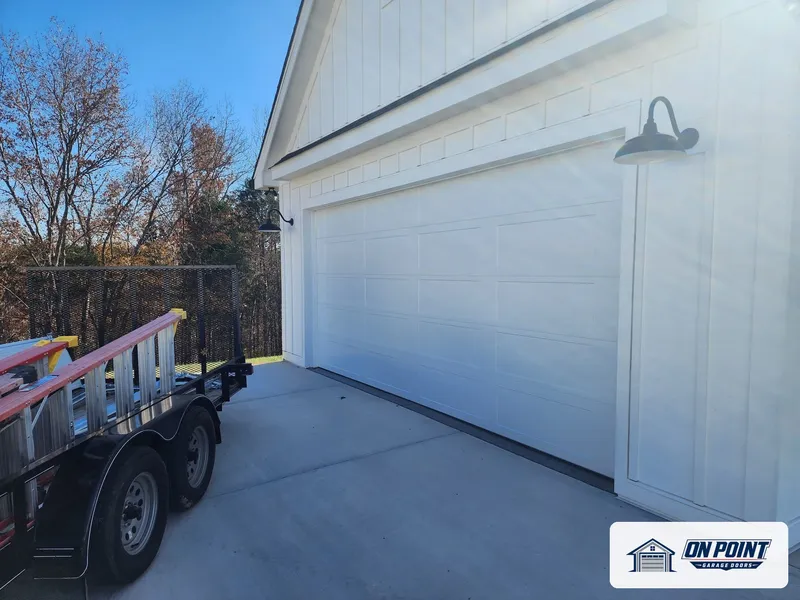
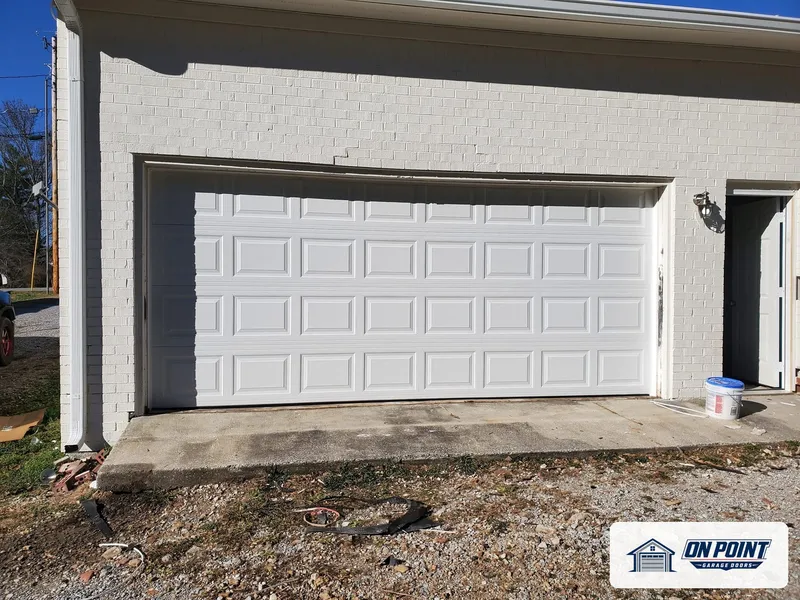
These photos are from our own jobs, with our logo on them.


A paint or factory coating is made of color pigment held in a binder. Sunlight, mainly its ultraviolet part, slowly breaks the binder down at the surface. As it goes, loose pigment is left sitting on top as a fine powder, which is the chalk you feel. Fading is the same process seen from across the street: the surface scatters light differently and the color looks lighter and duller than it did.
Chalking and fading show up in a few typical ways on a garage door.
A door that faces south or west takes the most direct sun and usually fades first. Doors under a deep overhang or facing north can keep their color far longer. On the same door, the raised parts of each panel catch more light than the recesses, so the pattern of fading can follow the panel design. A door shaded at one end by a tree or a neighbor's wall can fade unevenly.
Dark doors absorb far more heat and light than white or almond ones, so their finishes work harder. Black, charcoal, deep brown and dark wood tones show chalking sooner and more clearly, because a pale film over a dark color is easy to see. Some door makers limit which dark colors they offer on certain door types, or ask for a specific finish, for that reason.
Most steel doors leave the factory with a baked coating over a primer and galvanized steel. A good factory finish holds its color for a long time, but it still chalks eventually. A door that was painted later carries a field coat that may not have been made for steel or for a moving door, and those coats often chalk, peel and fade sooner. Knowing which you have helps decide what comes next.
Many wood-look steel doors use a printed or layered grain pattern under a clear protective layer. When that layer chalks or wears, the grain loses depth and contrast, and the door looks flat. Painting over it hides the grain entirely. Some of these finishes cannot be renewed in the field without losing the look, which is worth knowing before any refinishing is planned.
Doors with vinyl, composite or fiberglass skins carry color in or on the material instead of a simple paint layer. They can still fade in strong sun, and fiberglass in particular can show the fibers near the surface as its outer layer wears. Each material has its own rules on cleaning and refinishing, set by the maker, so we check what the door is before suggesting anything.
Near the water, salt in the air settles on the door and speeds up wear on the finish. Strong cleaners, abrasive pads and high pressure water can strip the surface faster than the sun does. A door that faded quickly after a hard cleaning may have lost part of its coating, not just its shine. Gentle care keeps a finish longer, but cannot bring back one that is gone.
Chalking on its own is a cosmetic issue. The concern starts when the finish wears through: bare steel at the edges of panels, rust spots along the bottom section, or wood that turns gray and starts to check. At that point the protection is going, and water can reach the metal or wood. Rust along the bottom and soft wood are signs to look at the door as a repair question, not only a color question.
A sound door with light chalking can be cleaned and refinished by a painter who knows coatings for steel or wood, with the moving parts and seals masked off. A single badly damaged section can be swapped, though a new section will look brighter beside faded ones. A door that is faded, dented and worn in its hardware is often better replaced, and a new door comes with a fresh factory finish chosen for the sun it will face.
If a new door is on the table, ask about the finish as much as the style. Lighter colors and quality factory coatings hold up best on sunny fronts. Wood-look finishes vary widely in how well their grain survives the sun. On a west-facing garage, a medium tone may be a better long-term choice than near-black. We bring samples so the choice is made with the house in view.
We look at the finish, the bottom section, the panel edges and any rust, and check the springs, rollers, hinges and opener, since a door that is being refreshed should also work well. You get an honest view of whether refinishing, a section or a new door makes sense, with a written estimate for any door work.
That is chalking. Sunlight breaks down the binder in the finish, leaving loose pigment on the surface as a fine powder.
On its own it is cosmetic. It becomes a concern when the finish wears through and bare steel, rust or gray wood starts to show.
Dark colors absorb more sun and heat, and a pale film shows clearly on them. South and west-facing doors fade first.
Often, by a painter using coatings meant for that material. Some printed wood-look finishes lose their grain if painted over.
Yes. We look at the finish and the door and give you a written estimate for any door work.
Across Brooklyn, Queens and Long Island, tell us what the door is doing and we set a visit that fits your day.
Free estimate, call (929) 429-2429.
Tell us what the door is doing and we will give you an honest arrival time. The estimate is free.
Easier to explain by phone? Call (929) 429-2429.
Tell us what the door is doing. The estimate is free either way.