Serving Brooklyn, Queens and Long Island(929) 429-2429Open six days a weekFree estimateGuaranteed work
On Point Garage Doors
Open 24 hours Sun-Thu, Fri until 5 pm Free estimate Springs, openers, cables We come to you
Emergency?Call nowBook free estimate
New York, NY - open six days a week

Garage door safety sensors: how they work and why they fail

Free estimateSame-day serviceCommon parts on board
  • Free estimate
  • Same-day service
  • Common parts on board
Emergency garage door repair★★★★★ 5.0 on Google · 42 reviews

Book your free estimate

Takes 30 seconds. We call you back to set a time.

Or just call (929) 429-2429 and talk it through.

Home › Garage Door Sensor Repair

The two small sensors near the floor on either side of a garage door send an invisible beam across the opening. If anything breaks the beam while the door is closing, the opener stops and reverses. When the sensors are out of line, dirty, wet, in direct sun or have a damaged wire, the opener refuses to close the door at all, and that is one of the most common garage door calls there is. Free estimate at (929) 429-2429.

By Sean Cohen, owner, On Point Garage Doors · Updated

Real jobs. Real photos.

These photos are from our own jobs, with our logo on them.

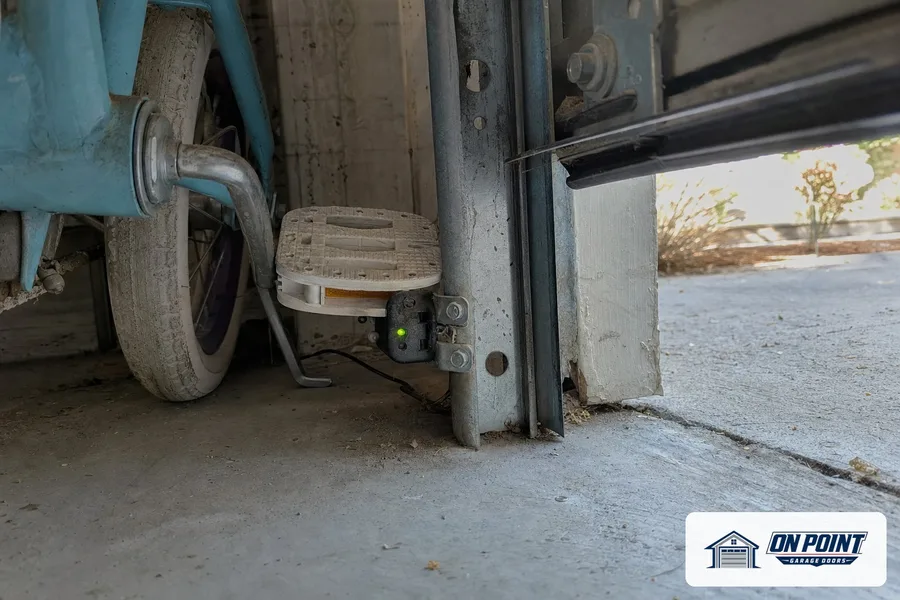
Safety sensor on the track, from one of our jobs
Safety sensor on the track
Opener on the ceiling, from one of our jobs
Opener on the ceiling
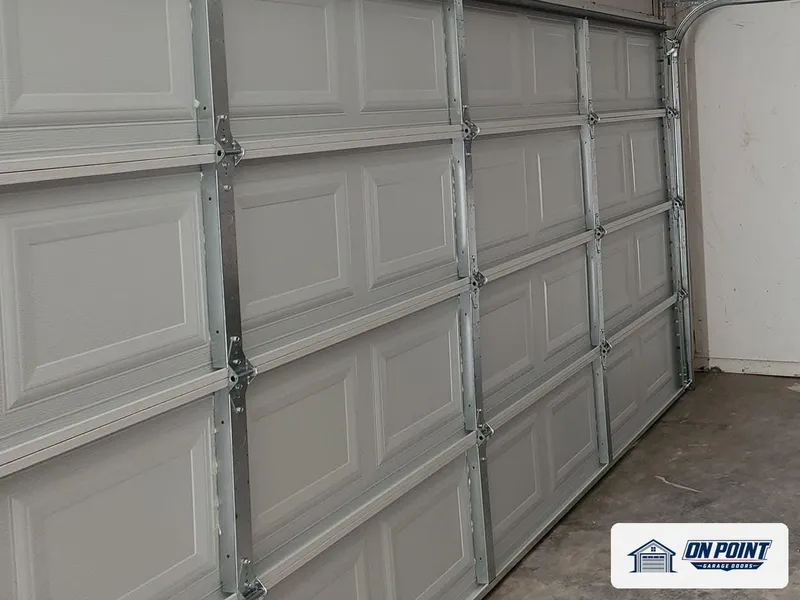
Door track inside, from one of our jobs
Door track inside

How the sensors work

One sensor sends the beam and the other receives it. Each has a small light. When both lights are steady, the beam is clear. When the receiving light is off or blinking, the beam is broken or the sensors cannot see each other. If the sensors check out and the door still will not shut, see our page on a garage door that won't close.

The sensors are a required safety feature on modern openers. They are what stops a closing door from coming down on a child, a pet or a car.

Why they fail

  1. Knocked out of lineA bike, a bin or a kick can turn one sensor slightly, and the beam misses the other side.
  2. Dirt, cobwebs or waterAnything on the lens can block the beam, and so can water after a storm.
  3. Direct sunlightLow sun shining into the receiving sensor can blind it at certain times of day.
  4. Damaged wiringThe thin wires run along the wall to the opener and can be pinched, chewed or corroded.
  5. A failing sensorSensors wear out, especially in damp garages.

Signs it is the sensors

What the technician checks

Alignment, the lens, the mounting brackets and the wiring from each sensor to the opener. If a sensor has failed, it is replaced with a matching one, and both are lined up so the beam is clean. Then the door is closed with the beam blocked to prove the opener reverses.

The safety reverse is never disabled or bypassed. A door that will not close is annoying; a door that will not reverse is dangerous.

Sensors and sunlight

Doors that face east or west can catch low sun straight into the receiving sensor for part of the day. The sensor reads the sunlight as a broken beam and the door will not close.

Swapping the sensors from side to side, or fitting a sun shield, often fixes it. The technician checks which side the sun hits before deciding.

Sensors after a storm or flood

The sensors sit inches from the floor, so they are the first part of the opener system that water reaches. Wet or corroded sensors and wiring stop the door from closing.

After water gets into a garage, the sensors and the wire back to the opener are checked end to end.

Why sensors are required

Sensors became a standard safety feature on openers because closing doors injured children and pets. They work together with the opener's force setting, which reverses the door if it presses on something the beam missed.

Both are tested on every visit: the door is closed with the beam blocked, and again onto an object on the floor.

Wiring problems that look like sensor problems

The sensors connect to the opener with thin low-voltage wire that runs along the wall and ceiling. It gets stapled, pinched behind shelving, chewed or corroded where it passes near the floor.

A damaged wire can make the sensors flicker on and off, so the door closes some days and not others. The technician traces the wire from each sensor to the opener, not just the sensors themselves.

When to replace the sensors

Sensors that are cracked, corroded or simply old can fail even when they are perfectly aligned. Replacement sensors must match the opener so the opener recognizes them.

If the opener is very old and its parts are hard to find, you hear whether a new opener with a modern safety system makes more sense.

Busy garages and storage

Garages packed with bikes, bins and tools are where sensors get knocked most often. A small change in angle is enough to break the beam.

Keeping a clear space at each side of the door, near the floor, prevents most of these calls.

Sensors on doors that open onto the street

In row houses where the garage opens straight onto the sidewalk, people walking past, delivery carts and blowing trash can break the beam as the door closes. The door does exactly what it should and reverses.

If it happens often, the technician checks whether the sensors are mounted at the right height and angle for that opening.

Questions we get asked

Why will my garage door not close but the light blinks?

On many openers, a blinking light means the safety sensors cannot see each other. A blocked, dirty or misaligned sensor is the most common reason.

Why does my door only close when I hold the button?

Holding the wall button overrides the sensors on many openers. It means the sensors are not working and need to be checked.

Can sunlight affect garage door sensors?

Yes. Low sun shining directly into the receiving sensor can stop the door at certain times of day.

Can sensors be bypassed?

They should never be bypassed. They are the safety feature that keeps a closing door from hitting a person or a pet.

Is the estimate free?

Yes. You hear what is wrong with the sensors and what the fix involves before any work starts.

Booking takes a minute

Across Brooklyn, Queens and Long Island, tell us what the door is doing and we set a visit that fits your day.

Free estimate, call (929) 429-2429.

Not sure what is wrong? We will come and look

Tell us what the door is doing and we will give you an honest arrival time. The estimate is free.

Easier to explain by phone? Call (929) 429-2429.

Two minutes to a free estimate

Tell us what the door is doing. The estimate is free either way.

Or just call (929) 429-2429 and talk it through.

The other six things that go wrong