Takes 30 seconds. We call you back to set a time.
Almost every garage door opener has a red handle on a cord hanging from the rail near the door. It is the emergency release. It disconnects the door from the opener so the door can move without the motor, for example during a power outage or if someone is trapped. It is a safety feature, but it is also one of the most misunderstood parts of a garage, and using it at the wrong moment can be dangerous. Free estimate at (929) 429-2429.
By Sean Cohen, owner, On Point Garage Doors · Updated
These photos are from our own jobs, with our logo on them.


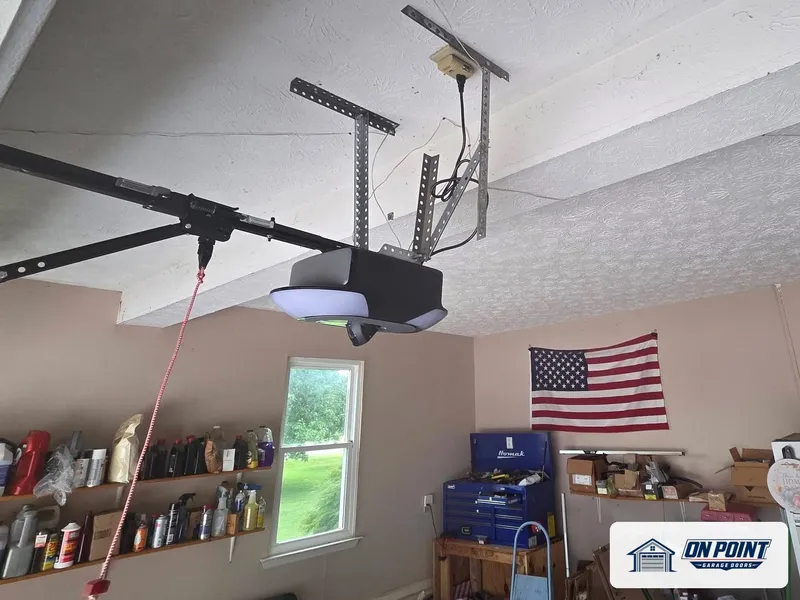
The opener moves the door through a trolley that rides along the rail and connects to an arm on the top of the door. The red handle unlatches that trolley. Once it is released, the opener and the door are no longer connected: the motor can run without moving the door, and the door can move without the motor.
It is there for emergencies: a power outage, a person or pet trapped under the door, or an opener that has failed with the door closed.
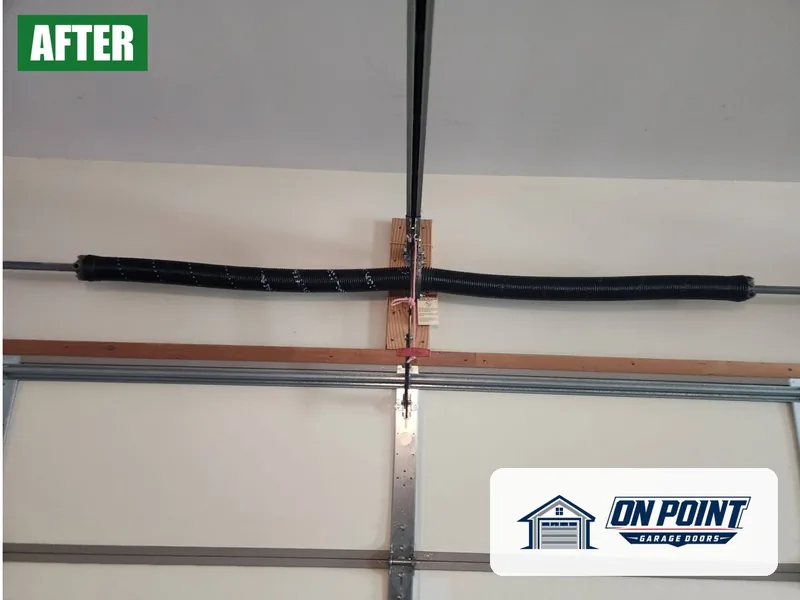
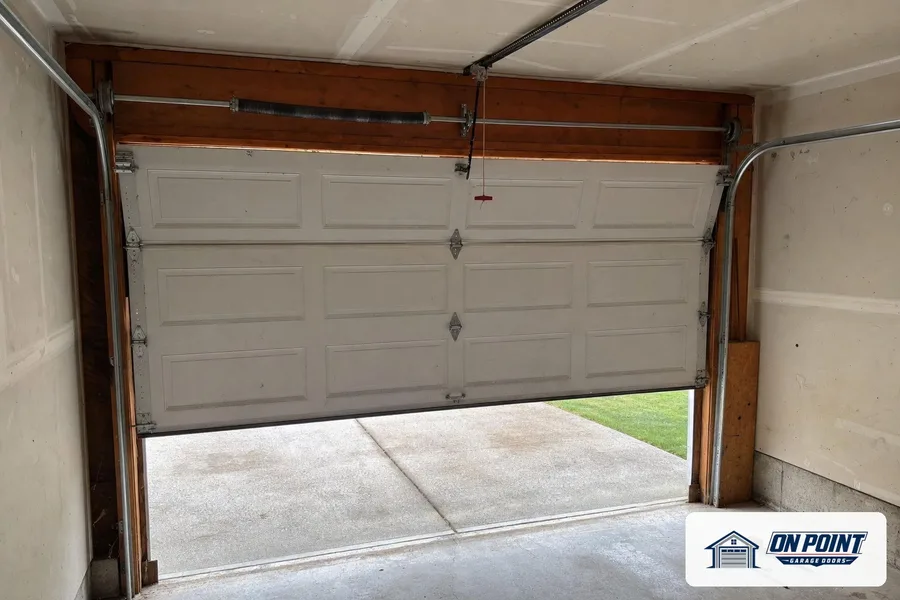
The springs are what hold a door's weight. If they are healthy, a released door stays where it is. If a spring has broken or weakened, the opener may have been the only thing holding the door up. Releasing it then lets the door come down hard. That is how fingers, feet and car hoods get hurt.
If you are not sure the springs are fine, leave the handle alone and call.
After the release has been used, the trolley has to latch back onto the opener's drive before the remote works again. On many openers it happens when the opener runs, on others it needs a reset of the trolley. When the door is crooked, heavy or partly open, or the trolley is damaged, it may not reconnect.
We reconnect it safely, check why the release was needed, and make sure the opener and door work together again.
During an outage, the release lets a healthy door be opened by hand so a car can get out. Openers with battery backup avoid the need entirely. If you use the release during an outage, close the door again before leaving the garage unattended, because a door on the release cannot be locked by the opener.
On some garages, a thief can reach the release from outside by fishing through the top of the door. A small shield or a release that needs a key from outside closes that gap. We can fit one during a visit and show you how it works.
The handle should hang where an adult can reach it, but high enough that a car roof rack, a tall vehicle or a child cannot catch it. A handle caught by a passing car can release the door unexpectedly. If yours hangs too low, the cord is shortened during a visit.
Very old openers sometimes have a release that is missing, frayed or seized. A release that does not work is a safety problem, because there is no way to free a trapped person or a car in an outage. Replacing the trolley or the opener fixes it.
The technician reconnects the door to the opener, checks the springs, cables and rollers, tests the release so it works when needed, sets the handle height and checks the safety reverse. If a spring or cable is the reason the door was stuck, that is fixed first. You get a free estimate before any work starts.
Call if the door is crooked, partly open or very heavy, if a spring or cable looks damaged, if the release does not let go, or if the door will not reconnect. A trapped car in a garage with a broken spring is a common call, and it is handled safely without anyone lifting a heavy door.
It disconnects the door from the opener so the door can move without the motor, for example during a power outage.
Only when the door is closed and the springs and cables are intact. With a broken spring, the door can drop.
The trolley has to latch back onto the drive. If the door is crooked, heavy or the trolley is damaged, it may not.
On some garages, yes. A shield or a keyed release closes that gap.
Yes. You see what is wrong and the fix before any work starts.
Across Brooklyn, Queens and Long Island, tell us what the door is doing and we set a visit that fits your day.
Free estimate, call (929) 429-2429.
Tell us what the door is doing and we will give you an honest arrival time. The estimate is free.
Easier to explain by phone? Call (929) 429-2429.
Tell us what the door is doing. The estimate is free either way.