Serving Brooklyn, Queens and Long Island(929) 429-2429Open six days a weekFree estimateGuaranteed work
On Point Garage Doors
Open 24 hours Sun-Thu, Fri until 5 pm Free estimate Springs, openers, cables We come to you
Emergency?Call nowBook free estimate
New York, NY - open six days a week

Garage door frame repair: jambs, header and the opening

Free estimateSame-day serviceCommon parts on board
  • Free estimate
  • Same-day service
  • Common parts on board
Emergency garage door repair★★★★★ 5.0 on Google · 42 reviews

Book your free estimate

Takes 30 seconds. We call you back to set a time.

Or just call (929) 429-2429 and talk it through.

Home › Garage Door Frame Repair

The frame around a garage door opening, the two side jambs and the header across the top, is what the door's tracks, springs and seals attach to. When the wood rots, a corner gets hit, or an old garage settles, the frame stops holding everything square. The door binds, leaks at the sides or the springs and tracks pull loose. Free estimate at (929) 429-2429.

By Sean Cohen, owner, On Point Garage Doors · Updated

Real jobs. Real photos.

These photos are from our own jobs, with our logo on them.

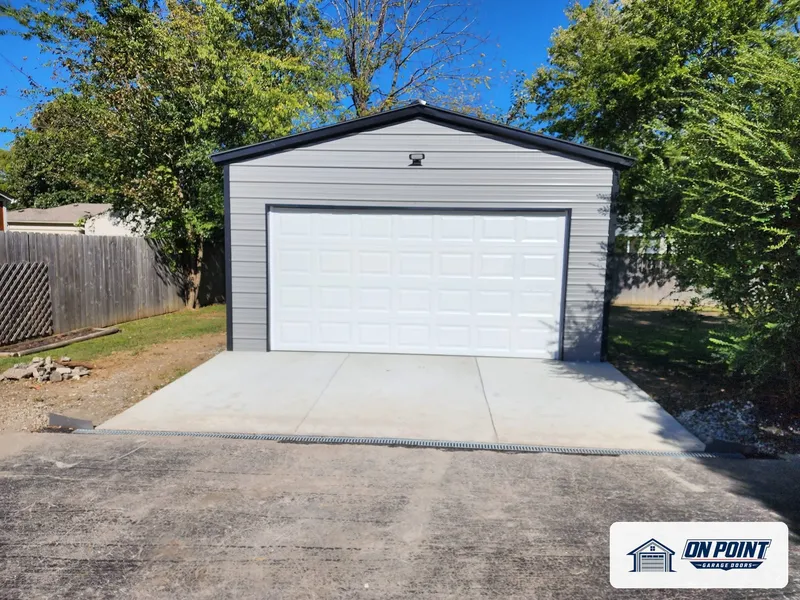
Detached garage with a new door, from one of our jobs
Detached garage with a new door
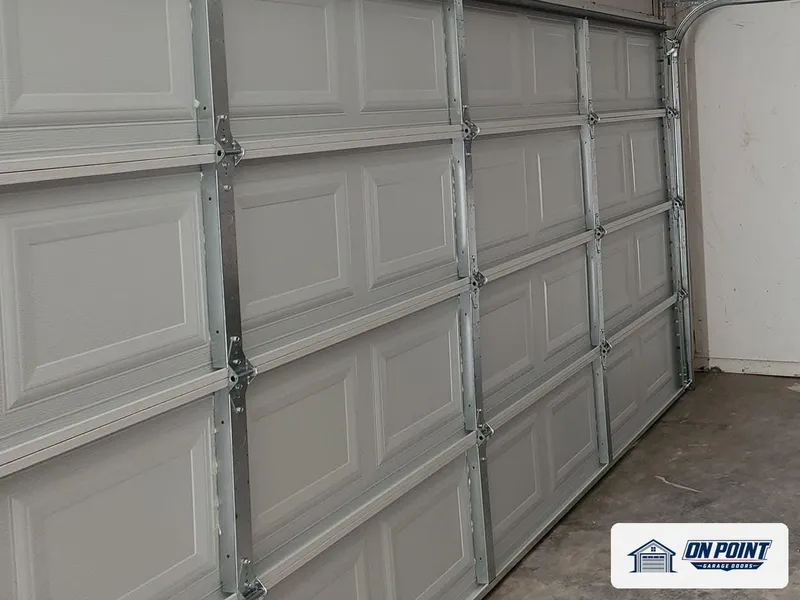
Tracks mounted to the jambs, from one of our jobs
Tracks mounted to the jambs
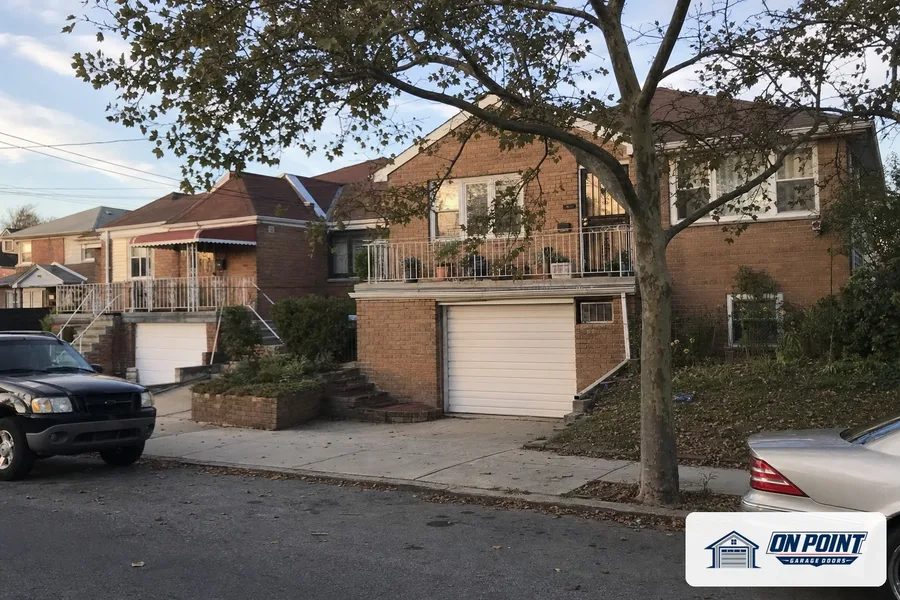
Garage under a stoop, from one of our jobs
Garage under a stoop

What the frame does

The side jambs carry the vertical tracks and the weather seal along the sides. The header above the door carries the spring anchor plate on a torsion system, which takes the full force of the springs. If the header is weak, the spring system is too.

The frame also sets how square the opening is, which decides whether the door seals evenly and runs smoothly.

Signs of a frame problem

Why frames fail

  1. RotThe bottom of the jambs sits near the floor where water and snow collect.
  2. ImpactA car clipping the corner of the opening cracks or shifts the jamb.
  3. SettlingOld garages settle, and the opening slowly goes out of square.
  4. InsectsCarpenter ants and termites hollow out damp wood.
  5. Old conversionsOpenings built for swing-out doors were never framed for a sectional door.

Frame work and new doors

When a new door goes into an old opening, the frame is checked first. Rotted jambs are replaced, a weak header is reinforced, and the opening is shimmed so the new door seals along every edge.

Fitting a new door to a bad frame wastes the door: it will bind, leak and wear out early.

What the technician checks

The jambs and header for rot and damage, the opening for square, the spring anchor point, and every track bracket's hold on the wood. You hear what can be repaired and what needs replacing, with a free estimate.

On masonry openings in brick garages, the mounting points are checked for cracked brick or loose anchors.

Brick and block garages

Many garages here are brick or block, with wood jambs fastened to the masonry. Where those fasteners have worked free or the wood behind the trim has rotted, the tracks can shift.

New jambs are anchored to the masonry so the tracks and seals stay put.

Keeping the frame sound

A good bottom seal and side seals, clearing snow away from the door, and paint or cladding on the jambs keep water out of the wood. Catching soft wood early keeps the repair small.

Header and spring anchor

On a torsion spring system, the center bracket that holds the springs is bolted into the header above the door. That point takes the full twisting force of the springs every time the door moves.

If the header is rotted, cracked or only a thin board, the bracket can tear loose. That is a dangerous failure, so the header is checked closely on every spring job.

Out-of-square openings

An opening that is wider at the top than at the bottom, or leans to one side, makes the door rub, leaves gaps for drafts and water, and strains the tracks. Shimming the jambs and resetting the tracks brings it back to square.

On very old garages, the frame may need to be rebuilt before a new door can seal properly.

Trim and weather seal

The trim around the outside of the opening holds the side and top weather seal. When that trim rots or pulls away, the seal stops touching the door and lets in water and cold air.

New trim and new seal close those gaps and protect the jambs behind them.

Frames on detached garages

Detached garages at the back of a lot often have the oldest framing on the property, and the bottom of the jambs sits in damp soil or wet leaves. Soft wood there is common, and it is worth checking before a new door or opener goes in.

Damage from vehicles

A car that clips the side of the opening while backing out can crack a jamb or push it out of line even when the door itself looks fine. The vertical track bolted to that jamb then sits crooked, and the door starts to rub or bind on that side.

After any impact near the opening, the jamb, the track brackets and the door are checked together.

Questions we get asked

Can a rotted garage door frame be repaired?

Yes. Rotted sections of the jambs can be replaced, and the opening squared so the door seals and runs properly.

Why is my garage door rubbing on one side?

Often the jamb has shifted or the opening is out of square, or a track bracket has pulled loose from the wood.

Does a new garage door need a new frame?

Not always, but the frame is checked first. A rotted or out-of-square frame is fixed before a new door goes in.

Is a weak header dangerous?

It can be. On torsion systems the springs anchor to the header, so it must be solid.

Is the estimate free?

Yes. You hear what the frame needs before any work starts.

Booking takes a minute

Across Brooklyn, Queens and Long Island, tell us what the door is doing and we set a visit that fits your day.

Free estimate, call (929) 429-2429.

Not sure what is wrong? We will come and look

Tell us what the door is doing and we will give you an honest arrival time. The estimate is free.

Easier to explain by phone? Call (929) 429-2429.

Two minutes to a free estimate

Tell us what the door is doing. The estimate is free either way.

Or just call (929) 429-2429 and talk it through.

The other six things that go wrong