Takes 30 seconds. We call you back to set a time.
A commercial door opens far more often than a home garage door, sometimes hundreds of times a day, and it is usually bigger and heavier. The motor that drives it, called an operator, is built for that work. When it stops, deliveries stop, cars are trapped and the building may be left open. We repair and install commercial operators on sectional doors, rolling steel doors and parking garage doors across Brooklyn, Queens and Long Island. Free estimate at (929) 429-2429.
By Sean Cohen, owner, On Point Garage Doors · Updated
These photos are from our own jobs, with our logo on them.


An operator is chosen for the door's size and weight and for how many times it opens each day. A parking garage door under an apartment building or a busy loading door needs a high-duty operator. A storage door that opens a few times a day needs much less. Undersized operators overheat and wear out quickly.
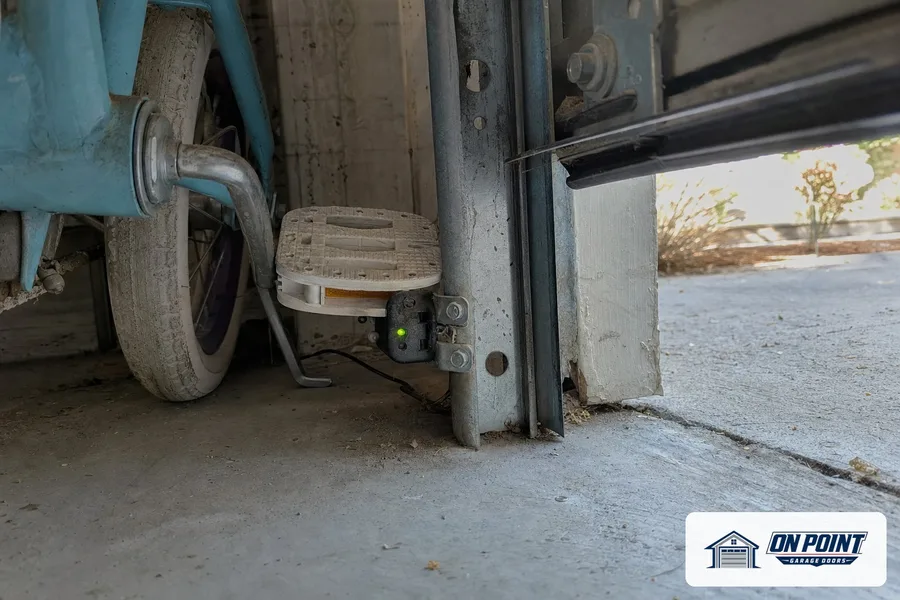
Commercial doors must stop and reverse when they meet a person, a car or a forklift. A rubber reversing edge on the bottom of the door and photo eyes across the opening do that job. They take a beating in busy bays and are tested every visit. A door that closes with a failed safety device is a serious hazard.
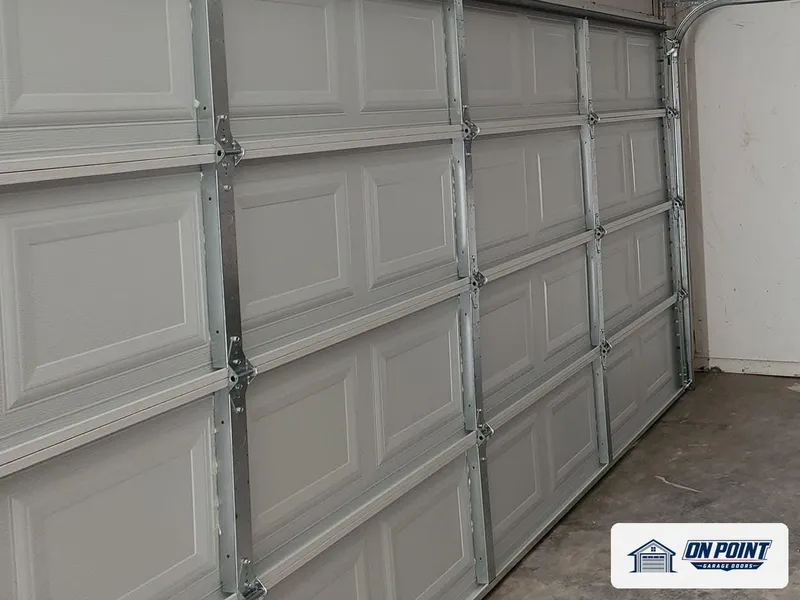
Like any opener, a commercial operator lasts longest on a balanced door. Weak springs, worn rollers, bent guides and dragging bottom bars make the operator work harder on every cycle. Before an operator is replaced, the door is checked and fixed, so the new unit is not fighting it.
Every commercial operator should have a way to open the door during a power outage: a chain hoist, a release or a battery backup. Staff should know how to use it safely. We check that the backup works and show them.
Parking garage doors under apartment and office buildings cycle all day. They often have loop detectors in the pavement, card readers, remotes for residents and timers. When the door fails, many cars are trapped at once. We work with building managers to keep these doors running and schedule work around traffic.
More on those doors, and what building staff can watch for, is on the parking garage door repair page.
Shops, restaurants and service businesses use operators on rolling gates, roll-up doors and service doors. A door that will not close at night leaves the business exposed. Those calls are handled as urgent.
For shop gates see storefront roll-down gate motors, and for the door itself see rolling steel door repair.
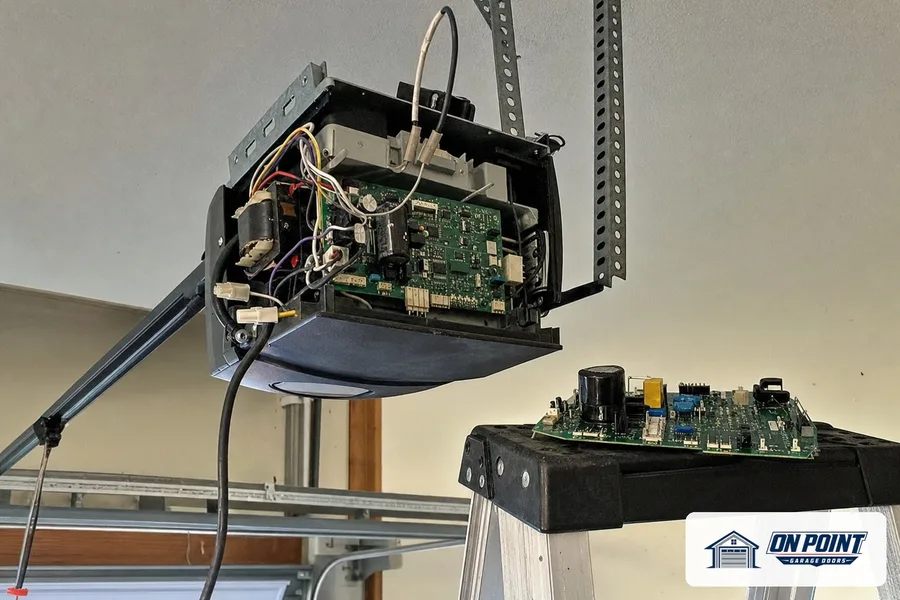
Boards, limit switches, brakes, motors and safety devices can often be repaired. When an operator is old, parts are no longer made, or it is undersized for how the door is used now, a new one is the better choice. You get a free estimate on both.
Doors and operators that run all day benefit from regular service: checking springs, cables, rollers, guides, the operator's brake and limits, and the safety devices. Catching wear early keeps the door from failing in the middle of the working day.
The technician runs the door, checks the operator, controls and safety devices, inspects the door's springs, cables, rollers and guides, and explains what is wrong with a free estimate. After the repair, the limits and force are set and the safety devices are tested.
Work can be planned before opening, after closing or between deliveries, so the door is down for as little of the working day as possible. Tell us when you are busiest when you call.
Some commercial buildings have doors that must close automatically in a fire, with their own release devices and testing rules. Those are handled differently from ordinary operators, and the building's requirements are followed. If your door is part of a fire system, tell us when you call.
How those doors close by themselves, and why they get tested, is explained on the fire-rated rolling door page.
Staff remotes, keypad codes and card access are set up so each person can open the door they need, and access can be removed when someone leaves. Lost remotes are cleared from the operator's memory.
The motor unit that drives a commercial door, built for heavier doors and many more daily cycles than a home opener.
Usually a photo eye or reversing edge fault, a limit or force setting, or a door that binds.
No. Commercial doors need operators sized for their weight and daily cycles.
Yes, including operators, loop detectors, card readers and residents' remotes.
Yes. You see what is wrong and the options before any work starts.
Across Brooklyn, Queens and Long Island, tell us what the door is doing and we set a visit that fits your day.
Free estimate, call (929) 429-2429.
Tell us what the door is doing and we will give you an honest arrival time. The estimate is free.
Easier to explain by phone? Call (929) 429-2429.
Tell us what the door is doing. The estimate is free either way.