
Leave your name and number and we’ll call you back to set a time.
A garage door kit is a new door sold in a box: the sections, the tracks, the springs, the cables and the hardware, ready to be put together on site. The door part is not hard to understand. The springs are the problem. They hold the whole weight of the door under tension, and setting them up is the step that hurts people, so for most homes the kit is better installed by a trained technician. Free estimate at (929) 429-2429.
By Sean Cohen, owner, On Point Garage Doors · Updated
Photos from our own jobs.
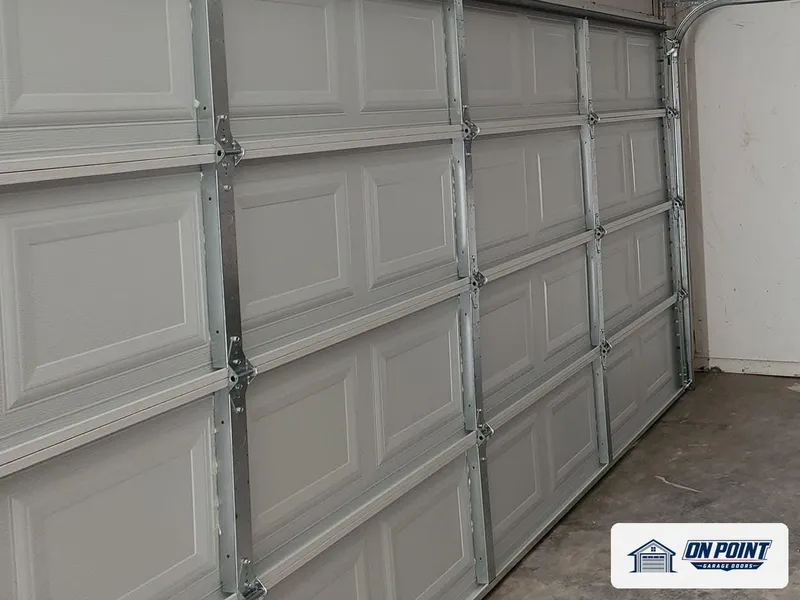
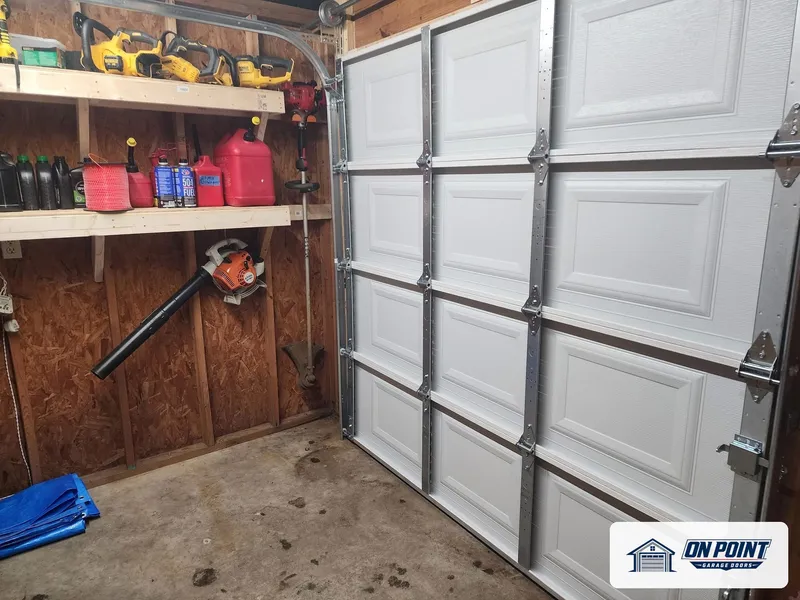
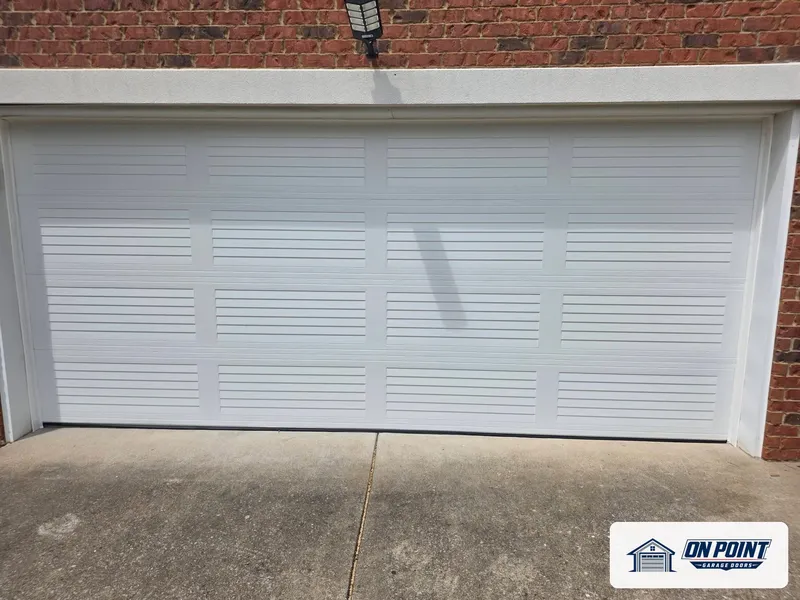
Most kits are a sectional door packed flat. The box usually holds:
An opener is almost never part of the door kit. It is bought on its own and has to suit the door's weight and the springs. There are also smaller kits with the same name: opener rail extension kits, window insert kits, lock kits and opener conversion kits. Those add to a door you already have. This page is about a whole new door.
We hear the same reasons on calls. A homeowner sees a door they like online and wants it shipped. A contractor on a renovation orders a door with the rest of the materials. Someone wants to pick the exact style and color and is not sure an installer carries it. Or the old door is failing and a boxed door looks like the fastest way out.
Those are fair reasons. The catch is that the door in the box is only half the job. The other half is fitting it to your opening, your framing and your ceiling, and getting the springs balanced to that exact door.
A garage door is heavy. The opener does not lift it and neither do you. The springs do. When the door is balanced, the springs carry almost all of its weight, so it moves easily and stays put halfway up.
To do that, a torsion spring is wound tight on its bar, and an extension spring is stretched along the track. Either way it holds a lot of stored force. If a winding tool slips, a cable comes off a drum, or the wrong spring goes on the door, that force lets go all at once. Spring injuries to hands, arms and faces are the main reason we tell people not to set springs on their own.
Kits also come with springs picked for the door as it leaves the factory. A door with an added window section, extra insulation or a heavier bottom seal can need a different spring. A technician weighs that up on site before the door is tensioned.
Springs and cables are not a DIY job. If a new door will not stay up, or a cable looks loose or frayed, leave it alone, keep people clear of it and call.
These are the problems we see when we are called to a door that was put in from a kit:
Most of these come back to the start of the job: the measurements, the framing and the balance.
If you already bought a kit, tell us the make and the door size when you call. The technician looks at the box and the opening and tells you plainly what can be done with it. If the old door is the problem and you have not bought anything yet, we can show you doors that fit your opening and your house.
A kit does not mean a worse door. Many kits are the same door an installer would hang. The difference is who measures, who sets the springs and who stands behind the result.
With an installed door, the measuring, the fit, the balance and the opener setup are part of one job, and the old door is taken away. With a kit, all of that lands on whoever opens the box. For a homeowner without spring tools and training, that is the risky part.
See how a new door goes in on our garage door installation page, or what to do when a spring has already gone on our broken spring repair page. You get a free estimate before any work starts.
It is a new garage door sold in a box with its sections, tracks, springs, cables and hardware, to be put together on site. An opener is usually sold on its own.
The sections and tracks are not the hard part. The springs are. They hold the weight of the door under high tension and can cause serious injury if a tool slips or the wrong spring goes on. We tell homeowners to leave the spring setup to a trained technician.
Most do, matched to the door as it is shipped. If the door gets a window section, insulation or a heavier seal, the springs may need to change. A technician checks the balance before the door is used.
Not always. Many kits are the same doors installers hang. What changes is the fit to your opening, the spring setup and who is responsible if it is not right.
Yes. Call with the make and the door size. The technician checks the box against your opening and tells you what can be done before any work starts.
Yes. You hear what the job takes before anything is done, whether it is a kit you have or a new door from us.
Tell us what the door is doing and we’ll set a time that works for you.
Free estimate, call (929) 429-2429.
Tell us what the door is doing and we’ll tell you when we can get there. The estimate is free.
Easier to explain by phone? Call (929) 429-2429.
Tell us what the door is doing. The estimate is free either way.
Where we work
Brooklyn, Queens and Long Island. Tap your town.
 Bay RidgeBrooklyn
 AstoriaQueens
 Valley StreamNassau County
 HuntingtonSuffolk County
 Sheepshead BayBrooklyn
 BaysideQueens
 Garden CityNassau County
 BabylonSuffolk County
 Marine ParkBrooklyn
 FlushingQueens
 MassapequaNassau County
 SmithtownSuffolk County
 CanarsieBrooklyn
 Howard BeachQueens
 LevittownNassau County
 Mill BasinBrooklyn
 Forest HillsQueens
 FreeportNassau County
 BensonhurstBrooklyn
 Long BeachNassau County
 Park SlopeBrooklyn
 HicksvilleNassau County
 WantaghNassau County
 SeafordNassau County