Takes 30 seconds. We call you back to set a time.
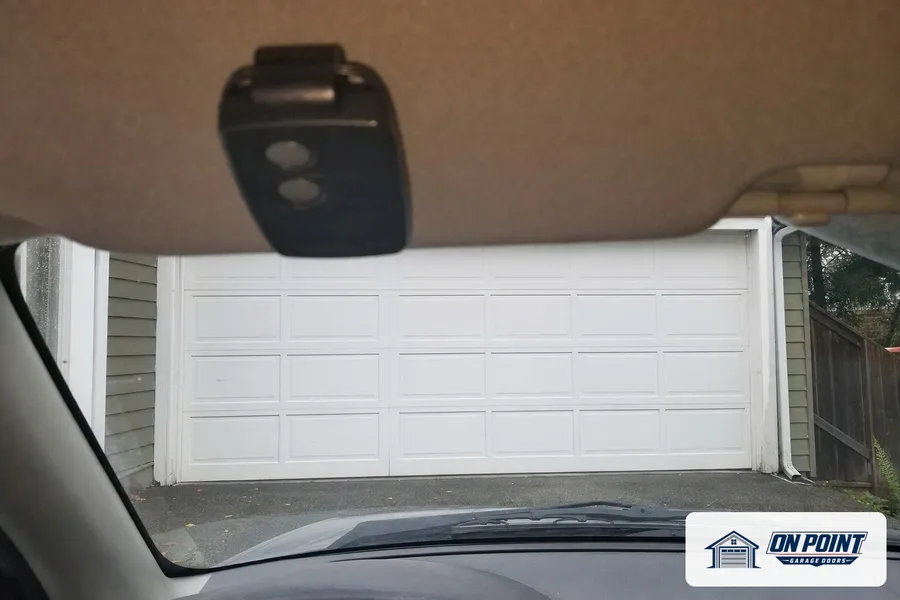
A key fob is a small remote that hangs on a keychain. For a house, it does the same job as the larger remote clipped to a car visor, but it goes everywhere you go, which makes it handy for walking up to the garage or for a car you do not always drive. In apartment and co-op buildings, key fobs often control the parking garage door, the gate or both, and each resident has their own. When a fob stops working, the cause can be the fob, the opener, the receiver or the way the door was set up. Free estimate at (929) 429-2429.
By Sean Cohen, owner, On Point Garage Doors · Updated
These photos are from our own jobs, with our logo on them.


When you hold the button, the fob sends a coded radio signal. The opener's receiver checks the code, and if it matches one it has learned, it moves the door. Most modern openers use rolling codes, which change every time so the signal cannot be copied. That also means a fob has to match the opener's brand and code system, or it will not work no matter how often it is tried.
If the fob, the visor remote and the keypad all stop working together, the fob is rarely the cause. The problem is more likely in the opener: the receiver, the logic board, the safety sensors or a lock-out setting that blocks remotes. A technician tests the opener first before suggesting any new remotes.
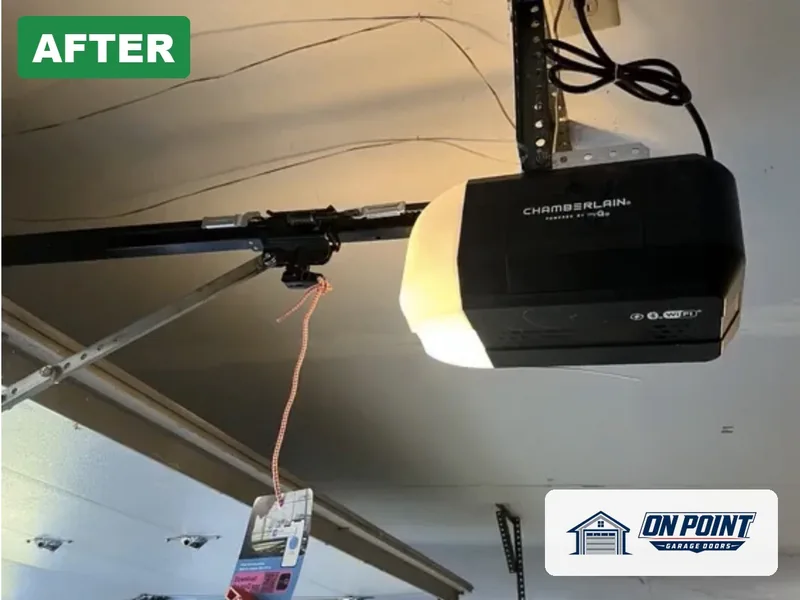
Many families want a fob for each driver, a teenager, a caregiver or a dog walker. A new fob has to be the right type for your opener and then paired with it. Some openers hold only a limited number of remotes, so when the list is full, older ones may drop off. If you are not sure what opener you have, a photo of the motor unit and its label is enough for us to tell you which fobs will work.
If a fob goes missing, anyone who finds it can open your garage. The safe step is to clear the opener's memory and pair only the fobs and remotes you still have. That shuts out the missing one. It is worth doing whenever a fob is lost, an old tenant moves out or a house changes hands.
In co-ops, condos and rental buildings, the garage door or gate usually runs on a commercial operator connected to a receiver or an access system. Residents get their own fobs, and managers add and remove them as people move in and out. When fobs stop working for many residents at once, the cause is often the receiver, its antenna or its power supply. When the door itself is slow, noisy or reverses, the problem is in the door or the operator.
We repair and replace commercial operators, receivers and safety edges on parking garage doors and gates, and we make sure the door responds to the building's fobs and remotes after any repair. The access software and the list of who has a fob usually stay with the building's manager or security company, and we work alongside them.
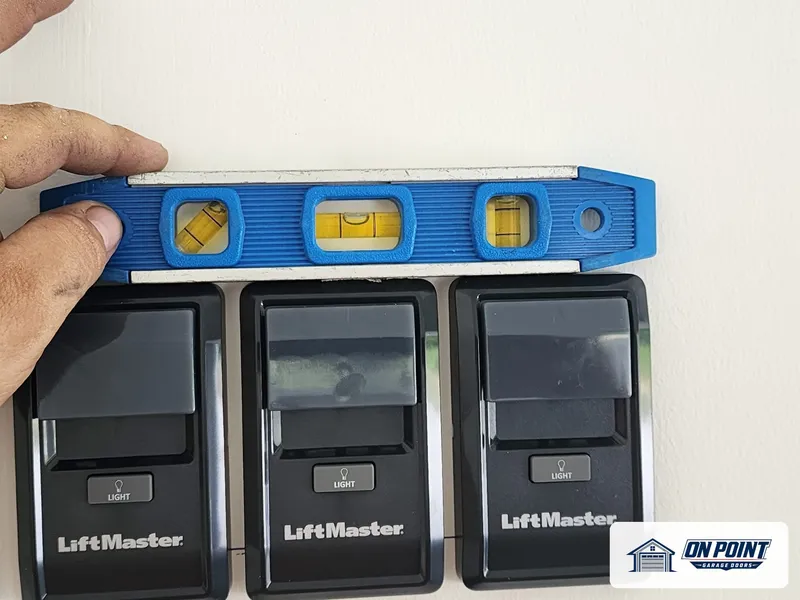
A fob is only one way in. A keypad beside the door lets someone in without carrying anything. A smart opener lets you open, close and check the door from your phone and share access with family. Many households use all three: a fob on the keychain, a keypad for kids and guests, and the phone as a backup.
If a fob works only when you stand right at the door, the opener's antenna may be hanging the wrong way, a metal duct may be in the way, or a new light bulb may be making noise on the same band. Moving the antenna, switching to bulbs made for openers or adding an external antenna usually brings back the range.
The technician tests the opener, the receiver and every remote, fob and keypad you have, finds the reason one is not working, and pairs any new fobs. You get a free estimate before any work starts.
A small keychain remote that opens a garage door, or a tag that opens a building garage through an access reader.
A weak battery, the wrong fob type, a cleared opener memory or a signal problem near the opener are the usual causes.
No. It has to match your opener's brand and code system before it can be paired.
Have the opener's memory cleared and pair only the remotes you still have, so the lost one no longer works.
Yes. You hear what is wrong and the options before any work starts.
Across Brooklyn, Queens and Long Island, tell us what the door is doing and we set a visit that fits your day.
Free estimate, call (929) 429-2429.
Tell us what the door is doing and we will give you an honest arrival time. The estimate is free.
Easier to explain by phone? Call (929) 429-2429.
Tell us what the door is doing. The estimate is free either way.