Takes 30 seconds. We call you back to set a time.
A garage door can be locked in several ways: a manual lock bar that slides into the track, a keyed handle on the outside, the opener holding the door down, or an automatic lock that engages when the door closes. A lock that sticks, a lock that has been left engaged, or a missing lock on a door with no opener are all common reasons a door will not move or will not stay secure. Free estimate at (929) 429-2429.
By Sean Cohen, owner, On Point Garage Doors · Updated
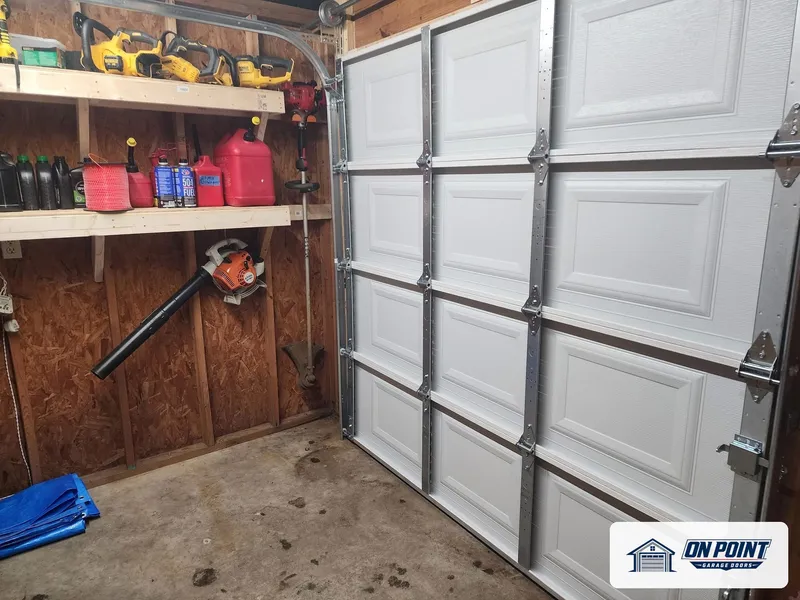
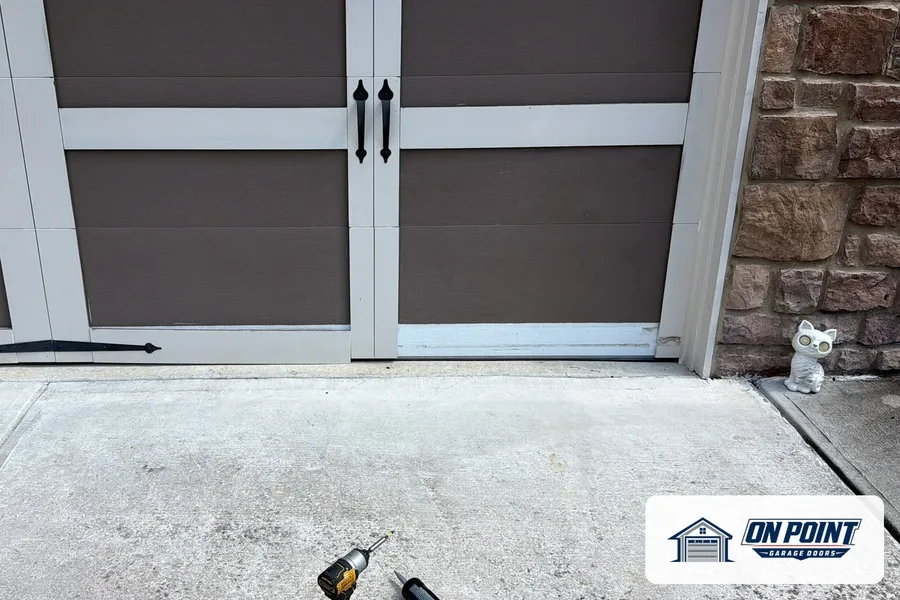
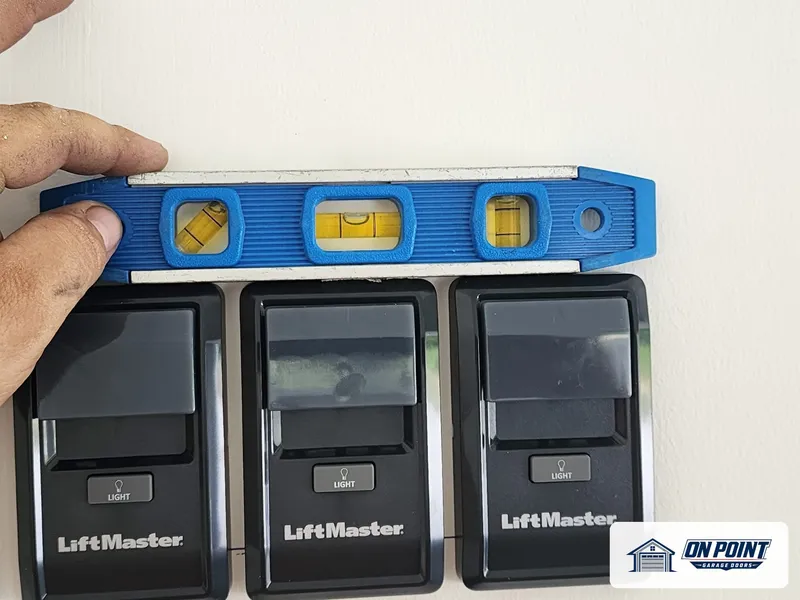
These photos are from our own jobs, with our logo on them.


When an opener strains and stops, or the door will not lift at all, a lock bar that was left engaged is a common cause. Running the opener against a locked door can bend the top section, crack hinges or strip the opener's gear.
If the door suddenly will not open, check whether a lock or bolt is engaged before running the opener again.
Detached garages at the back of a lot often have no opener, so the lock is the only thing keeping the door closed. A rusted or bent lock bar that no longer reaches the track leaves the garage open.
Replacing or adding a lock, or adding an opener that holds the door down, closes that gap.
The lock mechanism, its bars and the slots in the track, whether the bars line up when the door is closed, and whether the opener and the lock work together. Bent or rusted bars are straightened or replaced, and the door is tested locked and unlocked.
If an automatic lock is a good fit for your opener, you hear the option.
Many break-ins into garages use the emergency release, which can be reached through a gap at the top of the door. A shield on the release, a closed door that seals at the top, and an opener with rolling codes make a big difference.
Lighting, a camera on the opener and alerts when the door is left open help too.
Roll-up doors on storefronts, storage units and workshops lock differently: a slide bolt into the guide, a padlock through the bottom bar, or a center lock on the bottom rail. Salt and rust make those locks seize.
When a roll-up door will not lock at night, the bottom bar, the guides and the lock itself are checked so the door secures properly.
An outside keypad lets family members open the garage without a remote, and many smart openers let you open it from a phone or share access with someone for a set time.
Those features make it less tempting to hide a remote in a car or under a mat, which is a real security risk.
The lock is tested locked and unlocked, the bars or bolts are lined up with the track slots, any rusted or bent parts are replaced, and the opener is tested so it never runs against a locked door. You see the door lock and unlock before the technician leaves.
Outside handle locks on older doors seize from rust or wear, and keys get lost over the years. Replacing the handle lock with a new keyed set, or switching to a keypad, solves both problems. If the door has an opener, the manual lock is often removed to prevent the opener from ever running against it.
A manual lock bar left engaged is a common cause. Running the opener against it can damage the door and the opener.
The opener holds a closed door down. If you also use a manual lock, never run the opener while it is engaged.
Usually yes. A side lock or a handle lock can be added to most sectional doors.
A motorized bolt that drops into the track when the opener closes the door and lifts out when it opens.
Yes. You hear what is wrong with the lock and what the fix involves before any work starts.
Across Brooklyn, Queens and Long Island, tell us what the door is doing and we set a visit that fits your day.
Free estimate, call (929) 429-2429.
Tell us what the door is doing and we will give you an honest arrival time. The estimate is free.
Easier to explain by phone? Call (929) 429-2429.
Tell us what the door is doing. The estimate is free either way.