Serving Brooklyn, Queens and Long Island(929) 429-2429Open six days a weekFree estimateGuaranteed work
On Point Garage Doors
Open 24 hours Sun-Thu, Fri until 5 pm Free estimate Springs, openers, cables We come to you
Emergency?Call nowBook free estimate
New York, NY - open six days a week

Garage door parts explained, one by one

Free estimateSame-day serviceCommon parts on board
  • Free estimate
  • Same-day service
  • Common parts on board
Emergency garage door repair★★★★★ 5.0 on Google · 42 reviews

Book your free estimate

Takes 30 seconds. We call you back to set a time.

Or just call (929) 429-2429 and talk it through.

Home › Garage Door Parts Explained

When a garage door breaks, the person on the phone often hears about a bang, a grinding sound or a door that sits crooked, and the owner has no idea what the part is called. That is normal. A garage door is a set of parts that work together, and most of them sit high up or out of sight. Knowing what each part does makes it easier to describe a problem, understand an estimate and spot wear before it turns into a breakdown. This guide walks through a standard sectional door, from the springs at the top to the seal at the bottom. Free estimate at (929) 429-2429.

By Sean Cohen, owner, On Point Garage Doors · Updated

Real jobs. Real photos.

These photos are from our own jobs, with our logo on them.

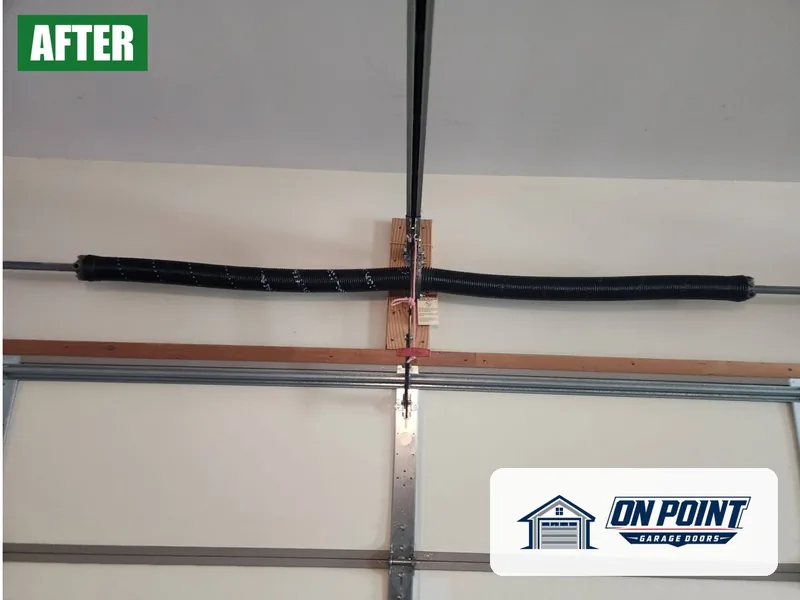
New garage door spring installed by On Point Garage Doors
Springs and cables on a job
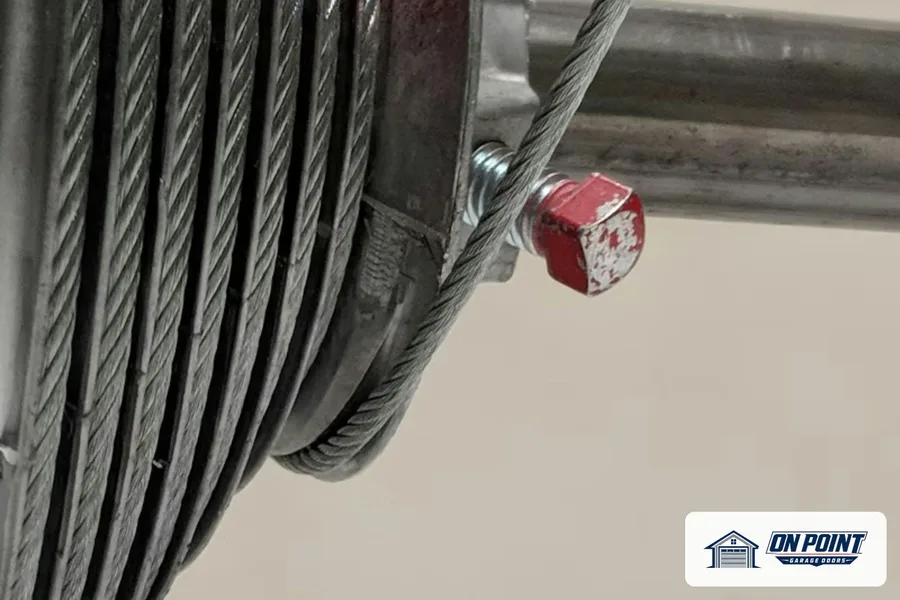
Torsion spring and cable drum, from one of our jobs
Torsion spring and cable drum
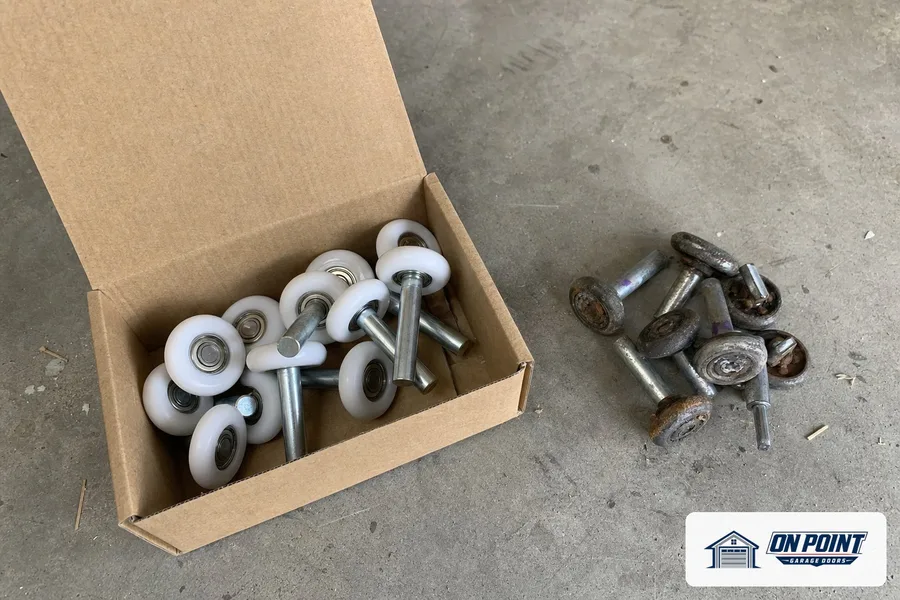
New and worn rollers side by side, from one of our jobs
New and worn rollers side by side

The sections

Most doors are made of horizontal panels called sections, joined by hinges. As the door opens, each section turns the corner of the track one after another. The top section takes the pull of the opener and the bottom section holds the seal and the lifting points for the cables.

Springs

Springs do the heavy lifting, not the opener. Torsion springs sit on a steel bar above the door and twist to store energy as the door closes. Extension springs run along each side above the tracks and stretch instead. Either way, a balanced spring set makes a heavy door feel light. When a spring breaks, the door suddenly feels like dead weight, and it is one of the most common calls we get.

Cables and drums

Lift cables run from the bottom corners of the door up to the spring system. On torsion doors, they wind onto grooved drums at each end of the spring bar. If a cable frays, slips off its drum or snaps, the door hangs crooked or drops on one side. Cables are replaced in pairs so both sides lift evenly.

Bearings and plates

The spring bar turns in bearings held by a center plate above the middle of the door and end plates at each side. Worn bearings make a grinding or squealing sound when the door moves and let the bar wobble, which wears the springs and cables faster.

Tracks and rollers

  1. Vertical trackRuns up each side of the opening and guides the door as it rises.
  2. RadiusThe curved piece where the track turns from vertical to horizontal.
  3. Horizontal trackRuns back along the ceiling and holds the door when it is open.
  4. RollersSmall wheels on stems that ride inside the tracks. Nylon rollers run quietly; worn steel rollers rattle and grind.
  5. Track bracketsHold the track to the wall and the ceiling. A loose bracket lets the track shift and the door bind.

Hinges

Hinges join the sections and let them fold as they turn the corner. They are numbered by position so each one holds its roller at the right distance from the track. A cracked hinge lets a section sag and can push a roller out of the track. Hinges on busy doors wear at the pin and in the screw holes.

Brackets top and bottom

The bottom brackets hold the lift cables to the bottom corners of the door. They are under full spring tension, which is why only a trained technician should work on them. The top brackets hold the top rollers and let the top section tip in at the right angle when the door closes.

Struts

A strut is a steel brace fastened across a section, most often the top one. It keeps wide doors from bowing, stops the opener from bending the top section and stiffens doors that flex in the wind. Wide double doors and heavy wood doors often have a strut on several sections.

Seals

The opener and its parts

An opener has a motor unit hanging from the ceiling, a rail running toward the door, and a trolley that rides the rail and connects to the top section through an arm. A header bracket fixes the rail above the opening. Safety sensors near the floor on each side stop and reverse the door if something is in the way. An emergency release lets the door come off the opener during a power cut. Remotes, wall buttons and keypads tell the opener what to do.

Locks and the frame

Many doors have a slide lock or a handle lock on the inside. The frame around the opening, made of the header above and the jambs at each side, holds the track brackets and the seals. Soft or rotted wood in the frame makes brackets pull loose and seals gap.

What a visit includes

The technician works the door through a few cycles, then checks every part on this page and tells you plainly what is worn, what is fine and what can wait. You get a free estimate written by part before any work starts.

Questions we get asked

What part of a garage door breaks most often?

Springs. They wear with every cycle and are the most common reason a door suddenly will not lift.

What does the spring do on a garage door?

It balances the door's weight so the door feels light. The opener only guides and starts the movement.

What are the wheels on a garage door called?

Rollers. They ride inside the tracks on each side and wear out over time.

Why do cables get replaced in pairs?

Both sides lift together. A new cable on one side and an old one on the other can make the door lift unevenly.

Is the estimate free?

Yes. You see what is worn and what each repair covers before any work starts.

Booking takes a minute

Across Brooklyn, Queens and Long Island, tell us what the door is doing and we set a visit that fits your day.

Free estimate, call (929) 429-2429.

Not sure which part is broken? We will find it

Tell us what the door is doing and we will give you an honest arrival time. The estimate is free.

Easier to explain by phone? Call (929) 429-2429.

Two minutes to a free estimate

Tell us what the door is doing. The estimate is free either way.

Or just call (929) 429-2429 and talk it through.

The other six things that go wrong