Takes 30 seconds. We call you back to set a time.
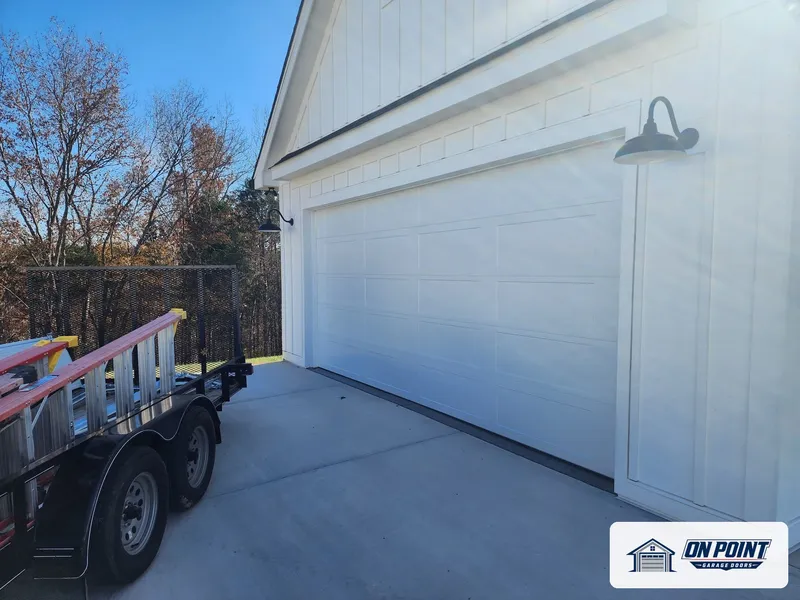
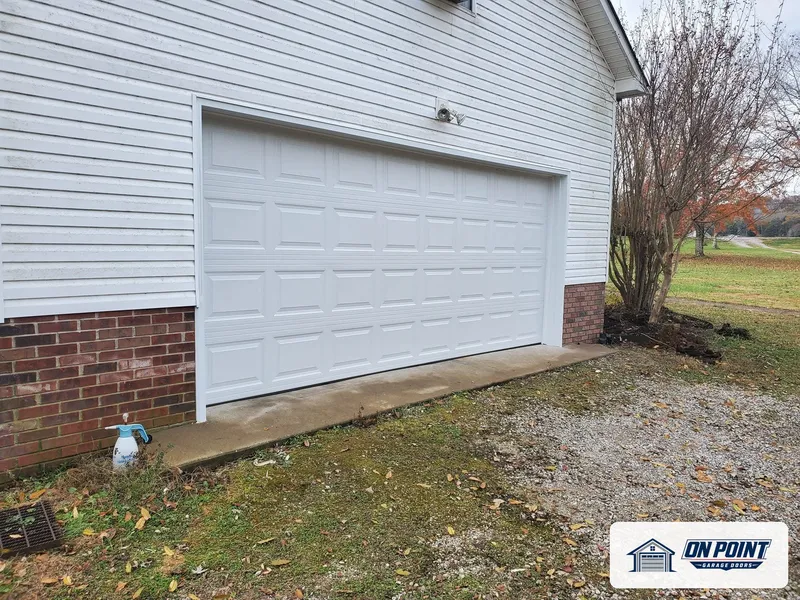
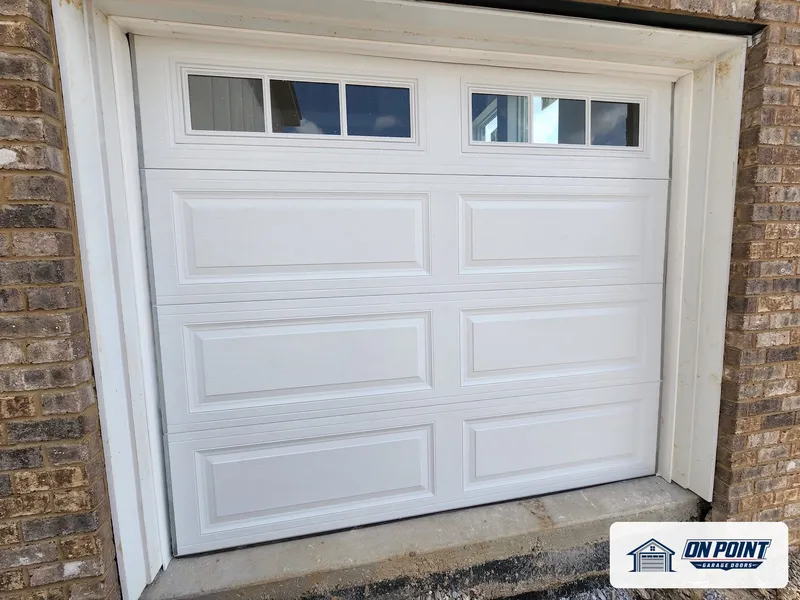
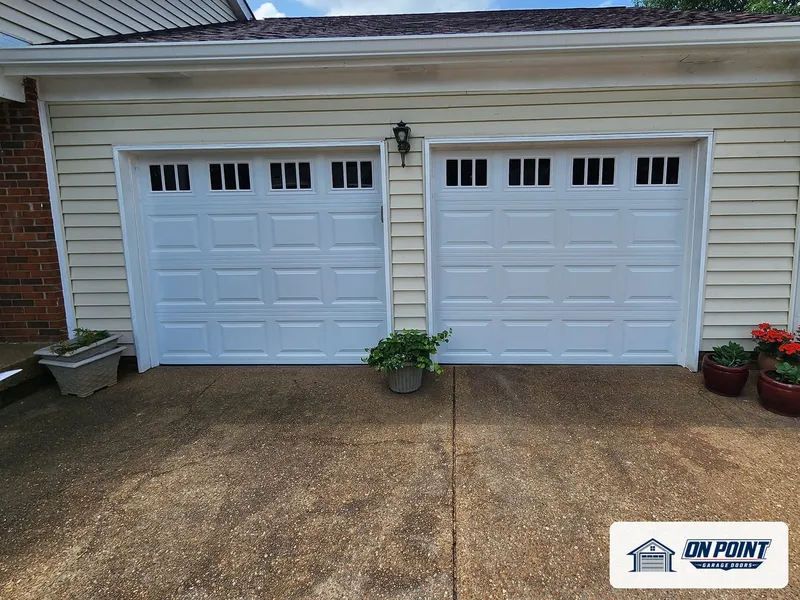
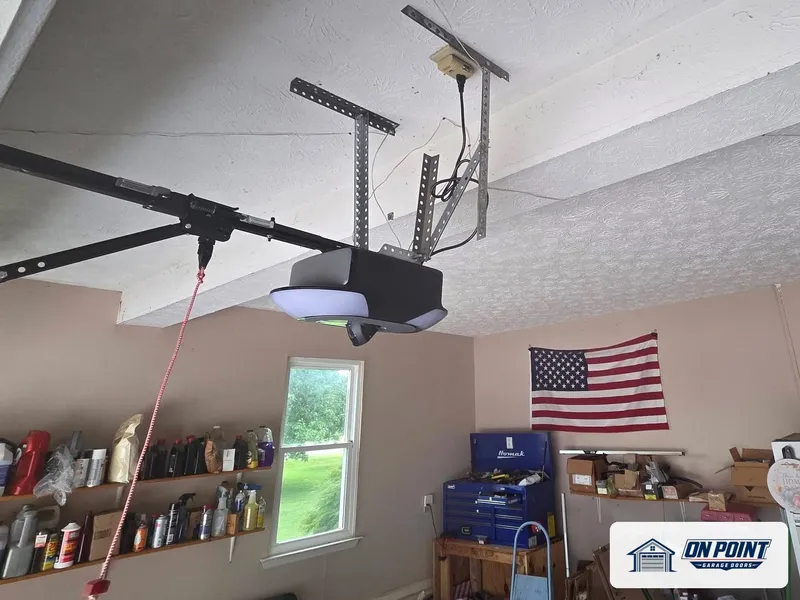
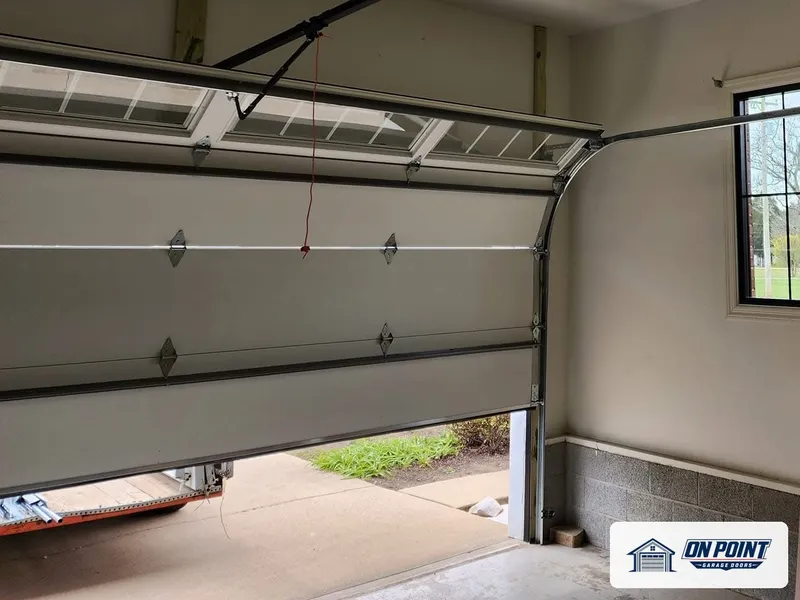
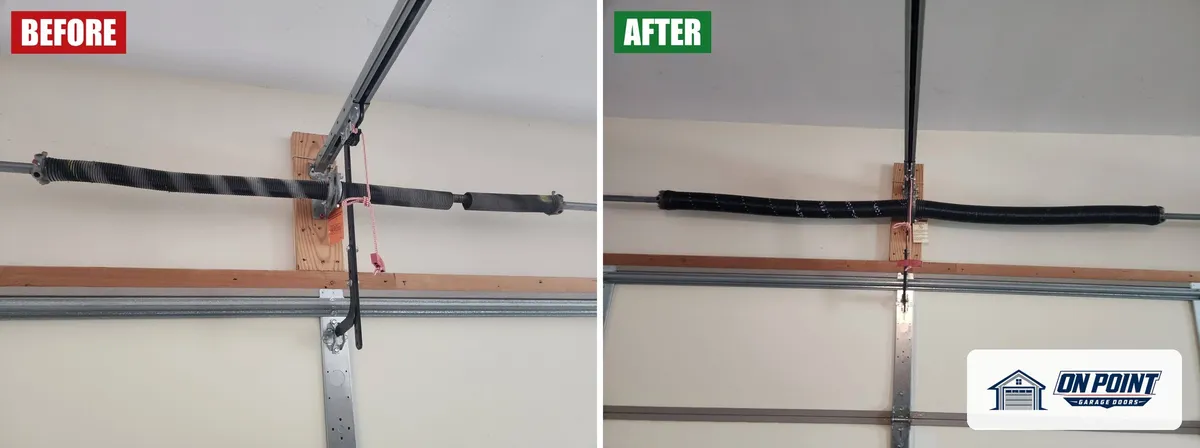
These photos are from our own jobs, with our logo on them.


Garage door repair in Copiague for the capes, ranches and two-family homes on the inland streets, the canal homes near the bay, and the shops and businesses along the main roads. Free estimate first.
Many homes here are two-family houses, with the garage shared by the owner and a tenant or by two generations of one family.
Others split the space, with storage for one household in front and the car of the other behind it, which makes a dependable door everybody's business.
Two sets of drivers can double the trips, and every trip spends a little of the life in the coils, the wheels and the opener's drive.
A plain steel door with one row of glass brings daylight into a garage that several people walk through, and it sits well on a Cape or a two-family front.
Remotes multiply in shared garages and get lost when tenants move.
Clearing the opener's memory and setting up new remotes keeps access under control.
Down toward the bay, canal homes have damp, salty garages and docks out back.
American Venice was laid out in the twenties with canals, arched bridges and columns in imitation of its namesake, and the blocks of Amity Harbor are threaded with water as well.
Rust on springs, cables and brackets is common there, and rust-resistant parts are recommended.
Weekend traffic to the bay, the parks and the shopping strips brings a lot of cars past driveways and garage doors.
Montauk Highway, Great Neck Road and the streets by the station hold repair shops, contractors and small stores behind roll-up doors and gates.
Those openings may run from the first delivery until well after dark.
A roll-up that will not come down when the shop is locking up is put ahead of routine work.
Some two-family homes have a garage so full of both households' things that boxes end up blocking the sensors.

Two-family home, canal house or business, every door gets inspected before any estimate.
When a tenant moves out, the old remotes can be cleared and a new keypad code set on the same visit, so the next household starts fresh and the last one no longer has access.


Shared garages. Springs and openers worn out by heavy use from two households.
Coils rated for extra trips and an opener built for steady work are sensible on such doors.
A shared door that has started to labor gets a balance test, and only afterward is the motor judged.
Canal homes. Rusted springs, cables, bottom brackets and seals.
Zinc-coated track, cable and fixtures buy extra years on the blocks along the canals.
Single-family capes and ranches. Broken springs, worn rollers and noisy openers.
For a bedroom over or beside the garage, a belt drive in place of an old chain unit takes away most of the overhead rattle.
Roll-up door motors are matched to the door's size and use.
Business doors and gates. Springs, slats, bottom bars, locks and operators.
The beam and the rubber safety edge on the bottom are tried out each time he is there.
Insulated doors help garages that share a wall with an apartment stay quieter.
After any bump from a car or a boat trailer, leave the door alone until we have looked at it.
A trailer tongue hits low and square, exactly where the cable fixtures are.
A door clipped on a short driveway can twist the track, so the track is checked before it runs again.
Copiague is in the south shore area we cover at the western edge of Suffolk, and so are Nassau, Queens and Brooklyn.
If you mention the tenant, the dock or the shop when you reach us, he knows before pulling up.
When a tenant cannot get the car out for work, or a shop cannot lock up, say so and we come sooner.
If both households are stuck with cars inside, tell us and the visit is moved up.
Winter. Cold snaps springs on shared doors that open all day.
Wind off the Great South Bay has an open run up the canals, and doors at the end of them feel it first.
In the coldest weeks a bottom seal can freeze to the slab; let the door come free on its own rather than forcing it.
Spring. A full-moon tide with an onshore wind can push water up through storm drains and leave the lowest garages standing in a salty film.
Summer. Heat and salt dry out bottom seals and gate guides.
Fall. Before the cold, a check-up on doors two families use finds the tired spring before it lets go.
He asks who uses the door, gives it several trips from each of their controls, and then goes part by part from the coils down to the rubber at the floor.
Owner and tenant can both hear the explanation, and the free estimate is written so either one can read what each part is for.
Spring size is worked out from what the door weighs and how many trips two households put on it.
Springs, cable, wheels and hinges for ordinary residential sizes ride on the truck.
A box goes under the closing door to prove it stops and rises again before he signs off.
Old parts are hauled away.
Each household's remotes are tested with you there before he leaves.
Shop doors along the main roads can be done before the first customers.
He calls before he arrives.
The choice is always yours.
Shared use and salt air decide what fails first here.
A broken coil means nobody in either household should run or lift that door.
Pass that along to the other family, who may not have heard the bang.
Doors used by two households benefit from longer-life springs.
Where brackish air reaches them, lift cables rot from the bottom loop, so the pair is renewed at once.
He looks over the drums and the bearings at the same time.
Sensors are mounted solidly so bikes and bins do not knock them out of line.
Tracks bumped on short driveways are straightened before the door runs.
Rusted bottom track near the canals is replaced.
The opener gets its own test on every control in use, so a lost signal is not mistaken for a dead motor.
Each household's remotes are paired and tested after any opener work.
Tell us whether the garage is shared, near the water or at a business.
If the person calling is the tenant, have the owner's approval ready, since the owner decides on the estimate.
Every estimate is free.
Either person can call to describe the trouble, but the owner normally approves work on the building. The visit goes fastest when both are reachable: the tenant often knows exactly when the fault started, and the owner can say yes to the estimate. How the two of you split it is between you. The technician simply makes sure both households have working controls before leaving.
The opener's memory is cleared, which drops every remote, car button and keypad code stored in it, and the current ones are then paired again. Collect all of them before the visit so no one is locked out afterward. On connected openers the phone accounts need removing separately. Older units with fixed-code switches are less secure, and the technician will point it out if yours is one.
One that tolerates water and air movement. Breakaway walls and flood openings under a raised house are governed by the elevation plans, so the door must not block what those call for. Galvanized hardware, an opener mounted high and a bottom section that can be replaced by itself are practical choices. Bring the plans or the engineer's note if you have them, and the measuring follows those.
Measure the highest point of the boat as it sits on the trailer, including the windshield, rails and raised motor, then compare it with the clear opening while the door is up, which is lower than the frame. High-lift track can recover space above a door when the ceiling allows, but it does not enlarge the hole in the wall. The technician checks both, plus the angle of the driveway.
With whatever holds weight: the springs and their bearings, the cables, the bottom fixtures and the brackets that tie track to framing. Surface rust on a hinge can wait, while a cable with broken strands cannot. The estimate separates those two groups so you can decide in order. Replacement parts are coated where they are available, and wiring at floor level is moved up out of the damp.
Name the door and the symptom, choose when someone from either household can be home, and the estimate is free.
Call us at (929) 429-2429.
Say who uses the door and what it has begun to do; the free estimate is yours whether or not work follows.