Takes 30 seconds. We call you back to set a time.
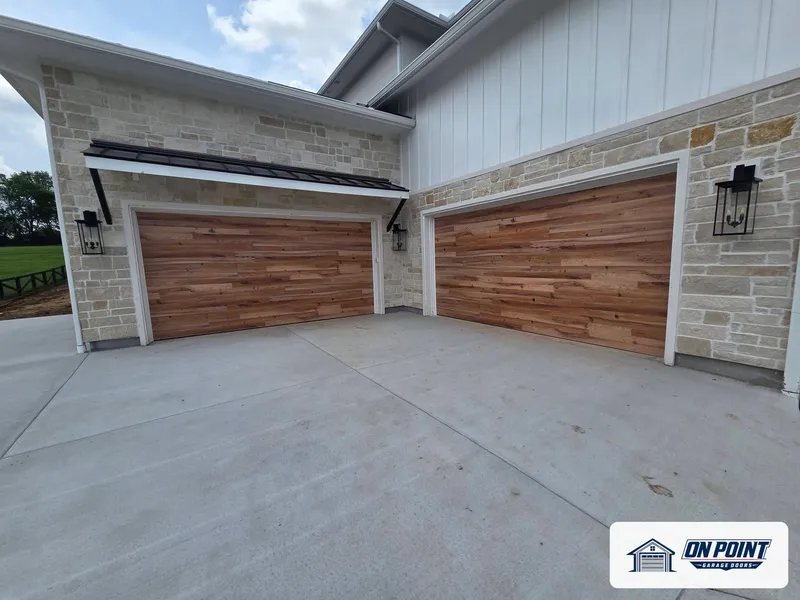
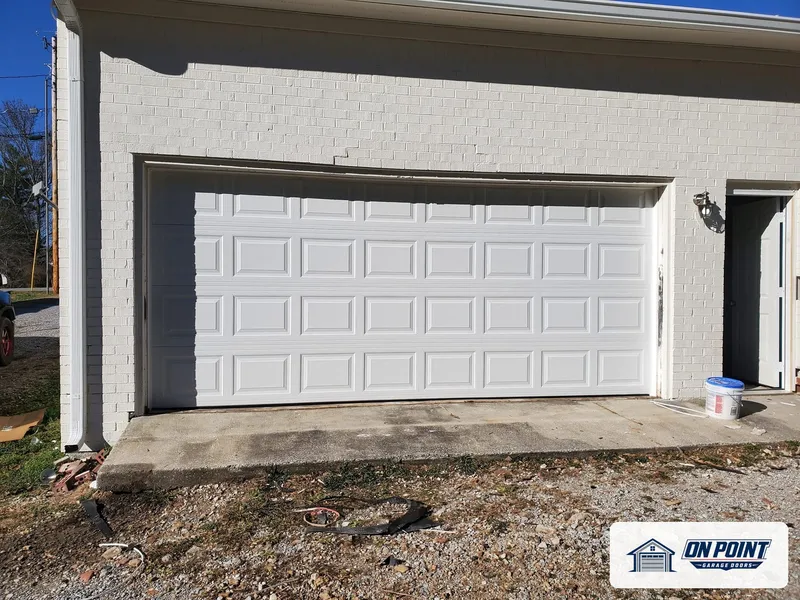
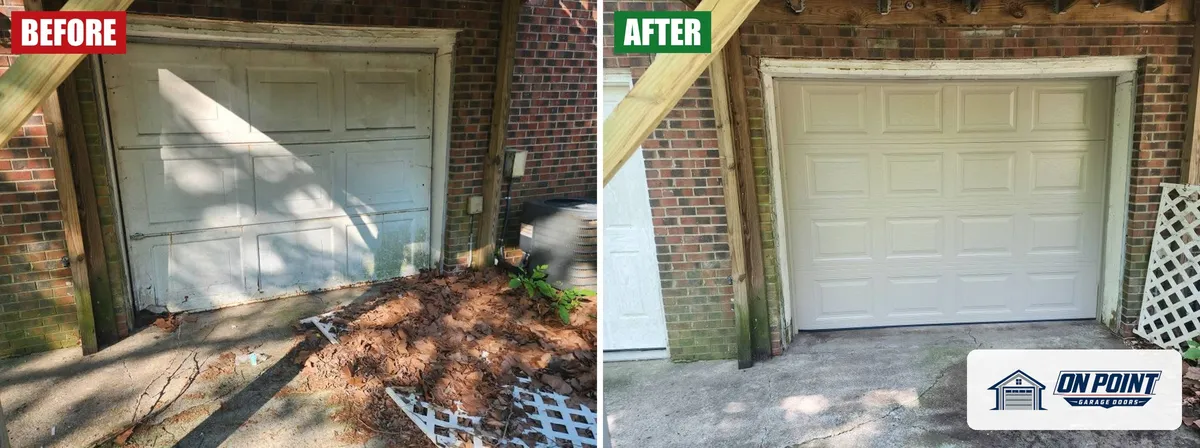
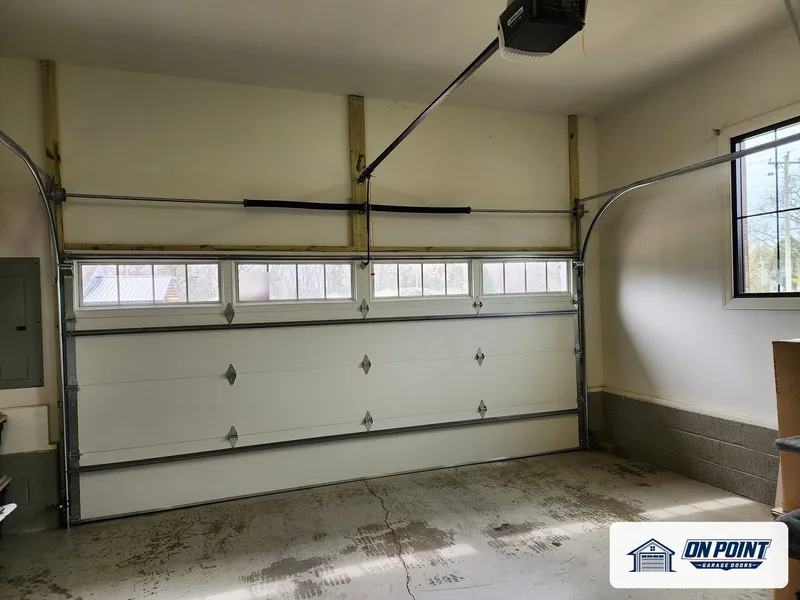
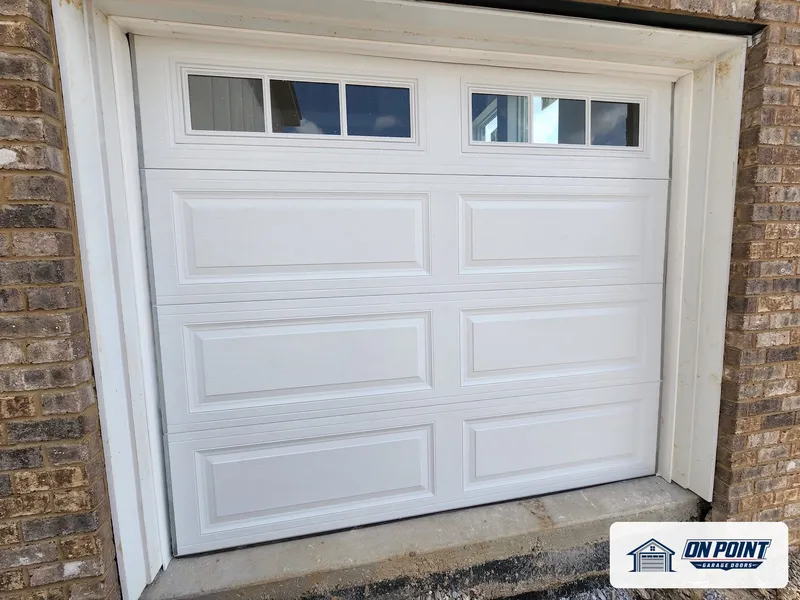
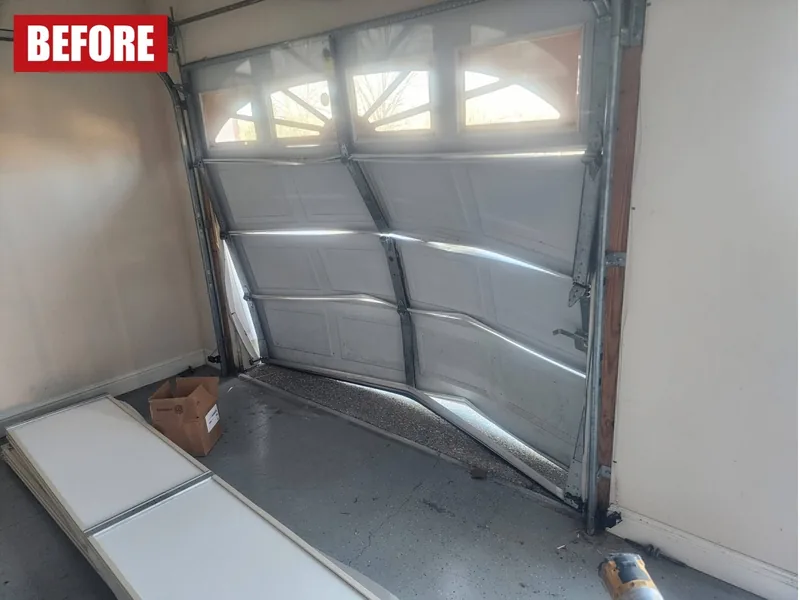
These photos are from our own jobs, with our logo on them.


Garage door repair in Holbrook for the high ranches, split-levels and capes on the curving side streets, the newer homes on the cul-de-sacs, and the shops, offices and warehouses near the airport. Free estimate first.
Most blocks were built in the sixties and seventies, and the high ranch is the house you see most, with the garage tucked under the bedrooms.
That garage is usually a single door on the low side of the house, sharing a wall with a den or a laundry room.
White raised panels suit most of the high ranches, and the colonials often carry wood-look steel.
Split-levels and capes fill in the older streets, while cul-de-sacs added later carry two-story colonials with two-car garages.
Many of those newer doors are reaching the age where springs and openers start to give out together.
Planes from the airport next door pass low over the south side, and the shaking shows up in loose opener rails and rattling panels.
Office parks and warehouses near the airport run loading doors and roll-ups through the whole working day.
Weekday traffic on the two highways makes the side streets the quicker way across.
Sunrise Highway and Veterans Memorial Highway frame the hamlet, with strip centers and car lots along the way.
The Sachem schools draw families who stay for decades, so many doors have never been replaced.
Plenty of the high ranches still run a chain-drive opener from the day the family moved in.

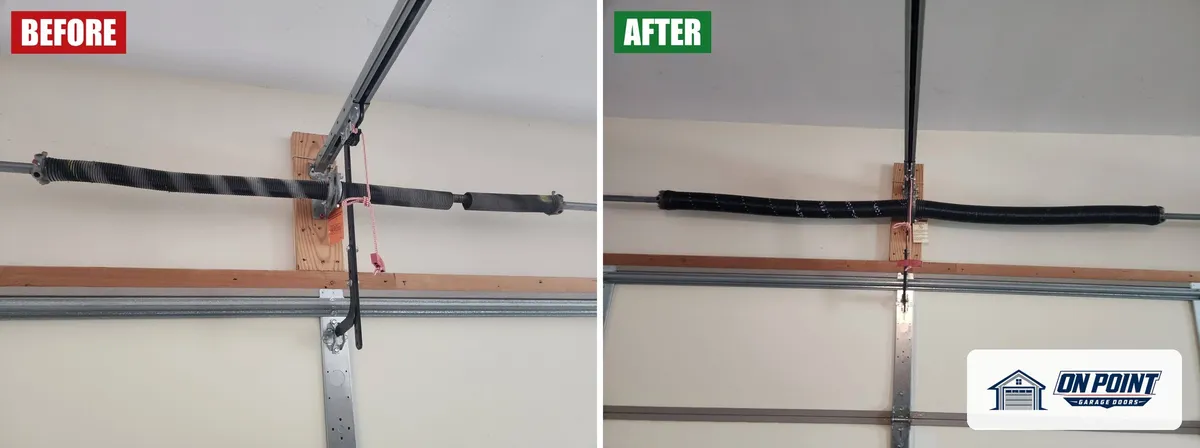
High ranch, colonial on a cul-de-sac or warehouse bay, we look at the door in person before naming any number.
Families who redo the front of a high ranch often change the garage door at the same time.


Garages under high ranches. Low headroom and openers bolted under a bedroom floor.
A belt drive or a wall mount unit keeps the noise out of the room above.
A door that slams the last stretch to the floor is usually on a spring near the end of its life.
Two-car colonials. Doors from the eighties and nineties with original springs and nylon rollers worn to the core.
We replace the parts that are worn and leave the rest.
Split-levels. Short driveways that slope toward the door and send water to the seal.
A new bottom seal and threshold keep the slab dry.
With a keypad on the jamb, children walking home from the Sachem schools let themselves in.
Warehouses and office parks. Roll-up doors and sectional dock doors run by commercial operators.
Heavy-use springs and fresh safety edges suit those doors.
An insulated door keeps the bedroom over a high ranch garage warmer in January.
If a door under a bedroom has dropped hard and the opener strains, leave it closed until we have seen it.
Short driveways mean cars pull in close, and a bumper tap bends the bottom panel and the end hinge.
Holbrook sits on the Islip and Brookhaven line in our Suffolk service area, and we also cover Brooklyn and Queens.
Notes about the house, the slope or the bay go to the technician before he heads out.
Bays jammed open near the runways and cars trapped under a high ranch are seen first.
A warehouse roll-up that sticks open as a shift ends should be mentioned when you book.
Winter. Plow ridges from the curving streets end up at the foot of the garage and freeze there.
Water that pools at the low side of a split-level freezes the seal to the slab overnight.
Spring. Rain runs down sloped driveways and soaks the bottom section of split-level doors.
Summer. Heat builds in garages under the house, and the opener has to fight sticky rollers.
Fall. Leaves from the street trees ride the wind into the track.
He runs the door with the opener first, then on its own, listening for the spring and rollers.
Under high ranches he checks the headroom before suggesting any opener.
He points to every tired part and writes it into a free estimate.
New springs are wound for the weight this door carries after decades of paint.
On high ranches, the opener mounting is checked so it stops shaking the floor above.
He closes the door onto a piece of wood to prove it backs off.
The snapped spring and frayed cable ride off in his truck.
At the end the remote is yours, and he follows the door up and down from beside the track.
If the driveway is shared with a second car, let us know.
He calls when he is a few streets away.
No part is changed until you say yes.
A door that only needs springs and rollers is not talked into a new one.
Doors under living space and doors that run all day make up most of the work here.
A snapped spring turns the door into dead weight for the opener; leave it shut and call.
Longer-life springs make sense on garages used as the main way into the house.
Cables fray at the bottom brackets where water sits on the slab, so both are renewed together.
The drums and the end bearing plates are checked at the same visit.
Photo eyes are mounted firmly and kept clear of the recycling bins parked beside the door.
Track rattled loose by the planes overhead is re-fastened to solid framing.
A rail that sags under the bedroom floor gets new hangers.
Gear, logic board and travel limits are checked one by one before any swap.
A backup battery keeps the opener alive when a thunderstorm drops the lines.
Tell us if the door sits below the bedrooms or off to the side of the house.
Getting the estimate is free.
Explain what the door does, settle on a time, and there is nothing owed for the estimate.
Call us at (929) 429-2429.
Describe the squeal, the bounce or the stall, and a free estimate comes back.