Takes 30 seconds. We call you back to set a time.
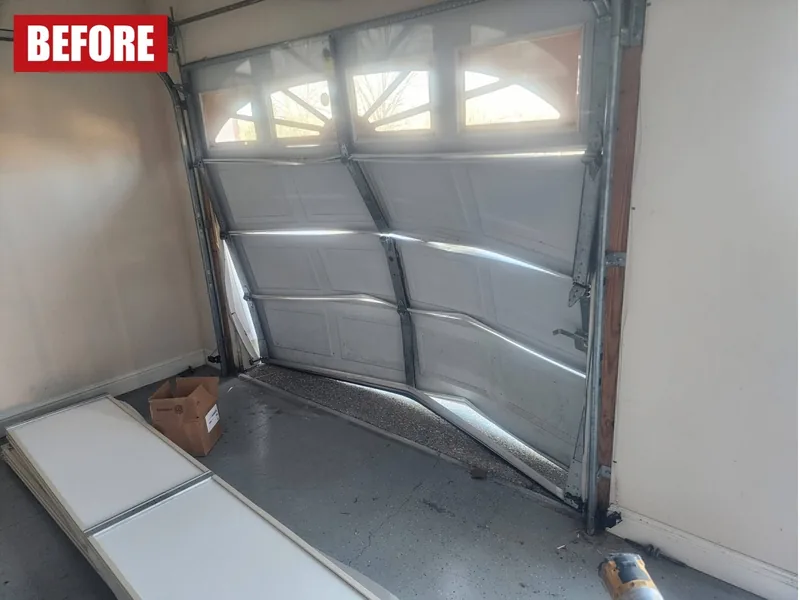
These photos are from our own jobs, with our logo on them.


Garage door repair in Sound Beach for the old summer bungalows turned year-round homes, the ranches and capes tucked into the wooded hills, the newer houses that replaced cottages, and the few shops near the main road. Free estimate first.
The hamlet began in the nineteen twenties as a colony of small lots sold to city newspaper readers for summer cottages on the bluffs.
Over the years most cottages were winterized, raised or rebuilt, so one short street can hold a tiny bungalow, a cape and a new colonial.
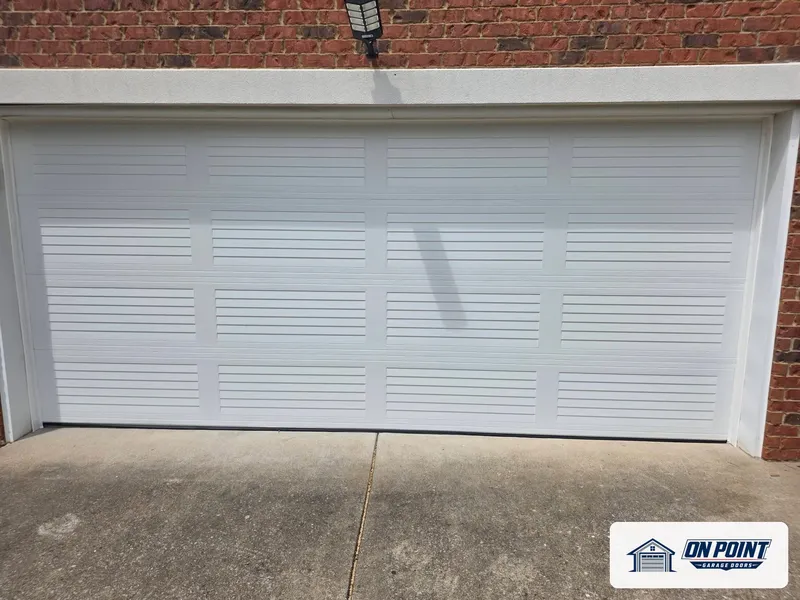
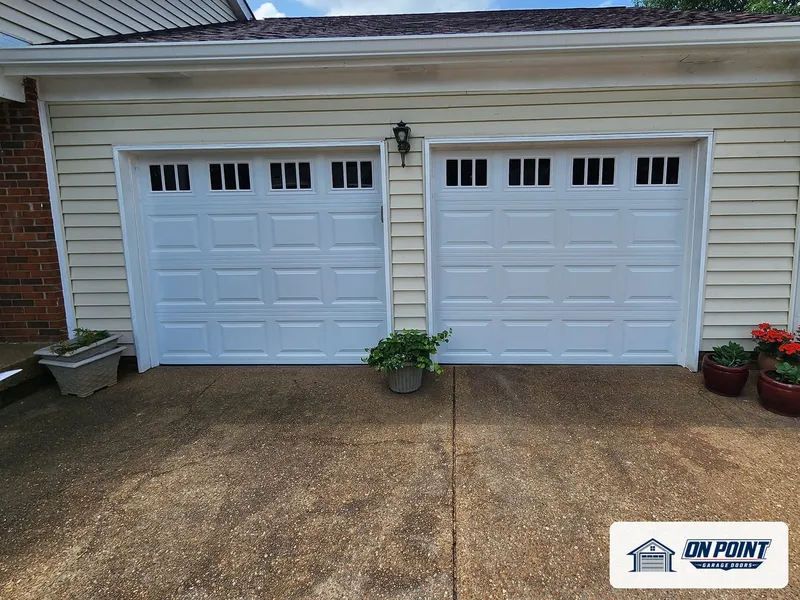
Cottages here mostly wear plain or painted doors, while the rebuilt homes lean toward carriage-look steel with windows.
Garages came late to many of these lots: a single detached box at the back, a carport closed in, or a bay added under a raised house.
Those add-on garages often have odd openings, light framing and doors picked from whatever fit at the time.
The streets are narrow and steep, winding through oaks down toward the bluffs above the Sound.
Wooden stairs lead from the top of the bluff down to a stony beach, and the bluff edge is fenced where it keeps eroding.
Summer weekends bring beach traffic down the narrow lanes, so the truck picks its way in slowly.
Some lanes are so tight that two cars cannot pass, and the truck waits at the corner.
Most lots are small and wooded, so a car parked in the drive often sits right against the garage door.
A handful of shops, a firehouse and a post office sit up near the main road, with the hamlet spreading north of it.
A few original cottages still have no garage at all, just a shed with a hinged door.
Where a garage was added later, the floor is often a separate slab that has settled on its own.

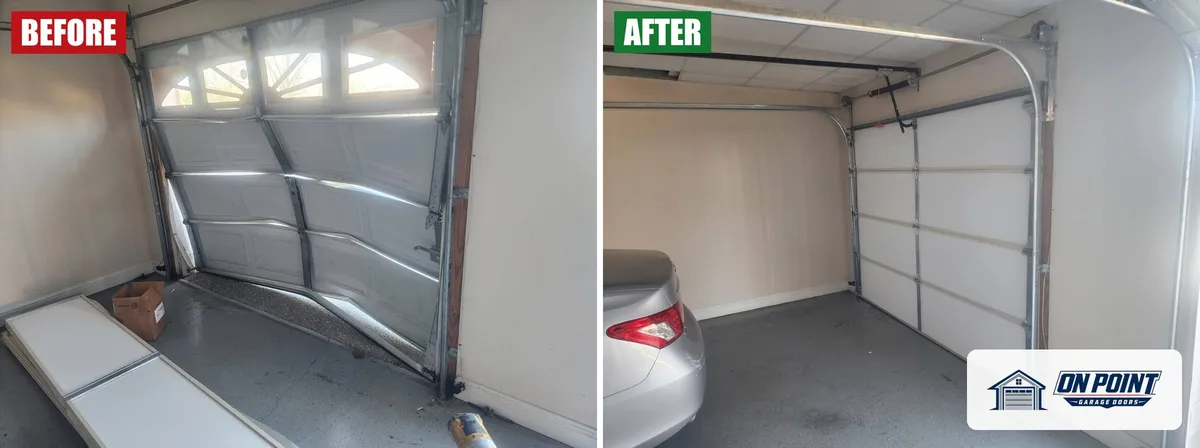
Old cottage with an add-on garage, rebuilt home on a hill or a shop by the main road, the door is checked before any figure is given.
Owners rebuilding an old cottage often want the garage door to match the new siding.


Converted bungalows. Small detached garages with soft sills and single doors that were never sized for a modern car.
He tells you plainly whether the frame can carry new track and springs.
A door that drifts down from halfway is usually telling you a spring has tired.
On a small single door the spring is often older than the house's last renovation.
Rebuilt and raised homes. Garages under the living space with new doors and openers that see daily use.
A quiet opener and firm ceiling hangers keep the bedrooms above calm.
Lots near the bluff. Wind and salt off the water on every spring and hinge pin.
Galvanized hardware and a snug bottom seal last longer that close to the edge.
A keypad helps when someone walks back up from the beach without a remote.
Shops near the main road. Rear doors and small roll-ups used for stock and trash.
Solid locks and heavier hinges suit those back doors.
An insulated door keeps a garage under a raised house from chilling the floor above it.
If a door on an old detached garage has jumped its track on the slope, leave it where it is and call.
Cars squeezed into an old garage built for a smaller car rub the jamb and bend the end hinge.
A bent bottom section from a bumper tap is one of the most common things found here.
Sound Beach is one of the bluff hamlets on our Brookhaven route, between the pine woods and the Sound, and our crews also cover Brooklyn and Queens.
Whatever you tell us about the slope, the cottage or the shop goes to the technician.
A door frozen open on a winter night by the bluff, or a car shut in behind a dead opener, goes to the front of the list.
If a cottage garage door has swelled shut after rain, mention it when you call.
Winter. Steep, narrow streets ice over, and cars slide into garage doors at the bottom of short drives.
Sand carried up the beach stairs ends up in the bottom track and grinds at the rollers.
Spring. Rain runs down the hills and pools in front of garages set below the street.
Summer. Kayaks, beach chairs and fishing gear fill the garage and crowd the photo eyes.
Fall. Acorns and oak leaves pack the bottom track and freeze into the seal later on.
He looks at the framing around the opening first, then runs the door and lifts it with the opener unhooked to feel the springs.
Where a lane tilts across the front of the garage, he measures the gap under each corner of the door before picking a seal thick enough for the low side.
Every worn spring, roller or cable is shown to you and written on a free estimate.
Springs are matched to the cottage door you actually have, which may be heavier than it looks after years of paint.
On add-on garages he checks the header and the jambs before anything is hung on them.
A short board laid on the slab shows the door still backs off when it meets something.
Old springs and cables leave in his truck, not by the curb.
At the end you hold the remote while he stands by the track and watches the door make a full trip.
If the street is too tight to park on, tell us where the truck can stop.
He phones as he starts down the hill toward the water.
Not a single bolt is swapped until you have read the estimate and said yes.
When a cottage door only wants new springs and quieter rollers, that is all that goes on the paper.
Old add-on framing, salt off the bluffs and doors on steep drives are behind most calls here.
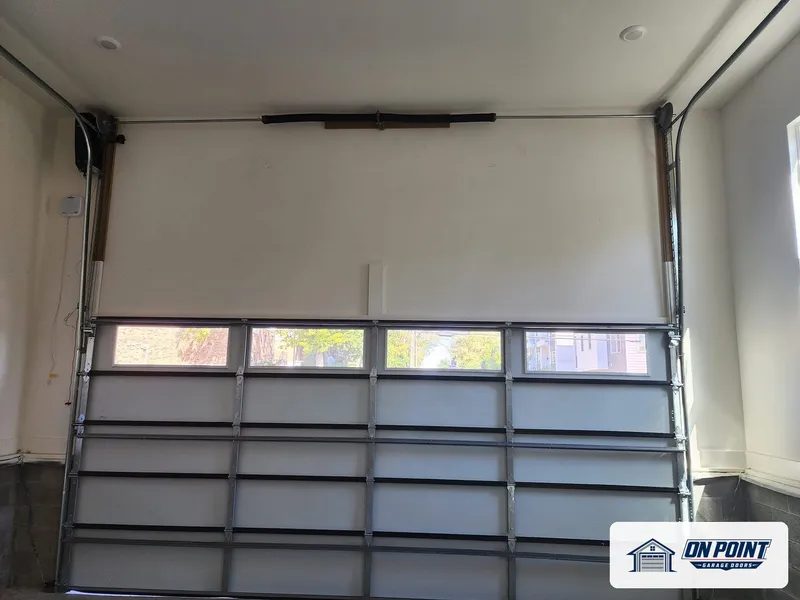
A broken spring leaves even a single door too heavy to lift safely; keep it down and call us.
Longer-life springs suit a garage that has become the main way into the house.
Cables near the bluff rust where they meet the bottom brackets, so both sides are renewed together.
The drums and the center bearing are looked at on the same trip.
Photo eyes are fastened solid and aimed past the beach carts and coolers kept by the door.
Track knocked crooked when a car slid down an icy lane is bent back true or swapped for a new length.
Brackets on soft old wood are moved into sound framing.
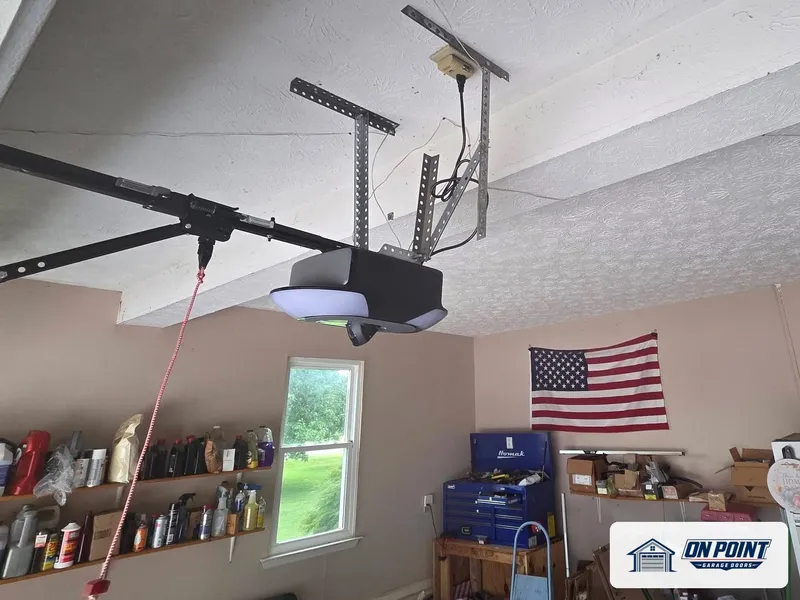
The opener is run with the door unhooked first, so a good motor is not swapped for a stiff door.
A wall-mount opener frees room in a low garage under a raised house.
Tell us whether the garage is a detached add-on or built under the house.
The estimate is free.
Usually yes, but the framing decides it. Add-on garages here were often built with light lumber, and the header or the jambs may be too soft to hold track brackets. He checks the wood first and tells you if a piece of framing needs to be added before a door is hung.
A thicker bottom seal shaped to the slope stops most of it, and a threshold strip on the slab can turn the rest. If the bottom section has already swelled or rusted from standing water, he will show you and list that section on the estimate by itself.
It does wear them. Springs, cables and hinge pins near the water rust sooner, which makes them weaker and noisier. Galvanized or coated parts last longer here, and he looks at the cables at the bottom brackets first because that is where rust starts.
Yes. Tell us when you book, and the technician will park at the corner or wherever there is room and carry the parts in. Most spring, cable and opener jobs need only what he can bring by hand.
Often it is. Old wood doors on cottages can weigh far more than a modern insulated steel door. A lighter door needs smaller springs and is easier on the opener, and carriage-look steel can keep the cottage style.
Tell us what the cottage or house door is up to, pick a slot, and the estimate comes free with the visit.
Call us at (929) 429-2429.
Describe how the door behaves on the hill, and a written free estimate is sent back.