Takes 30 seconds. We call you back to set a time.
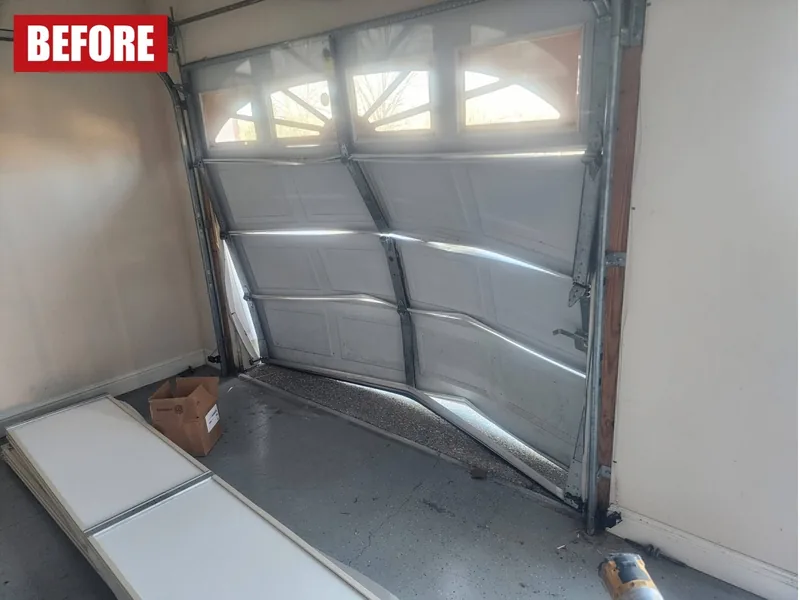
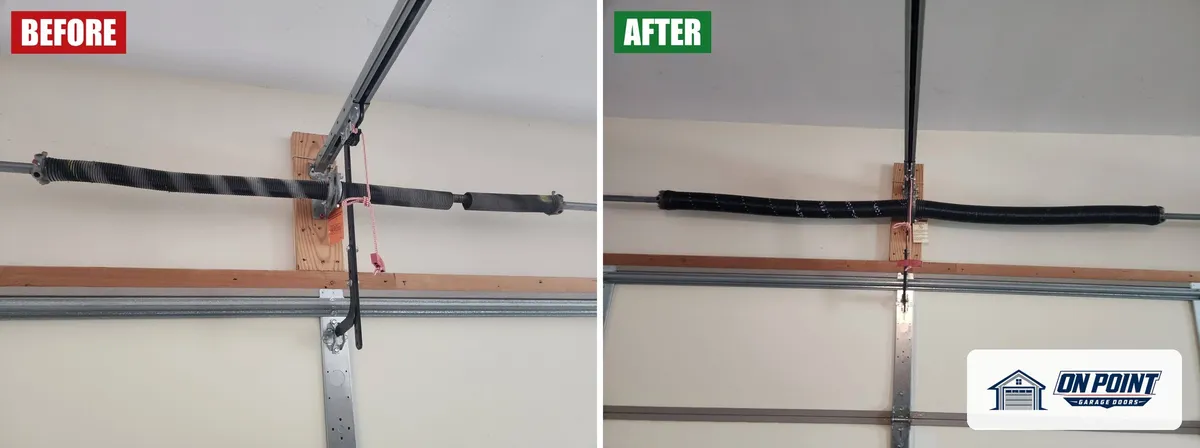
These photos are from our own jobs, with our logo on them.


Garage door repair in Huntington Station for the capes and ranches on the side streets, the two-family homes near the train, the newer townhouses, and the stores and auto shops along New York Avenue. Free estimate first.
Many blocks are lined with capes and ranches on modest lots, most with a one-car garage at the side or under the house.
Near the station, older two-family homes often share a driveway, and the garage at the back serves both units.
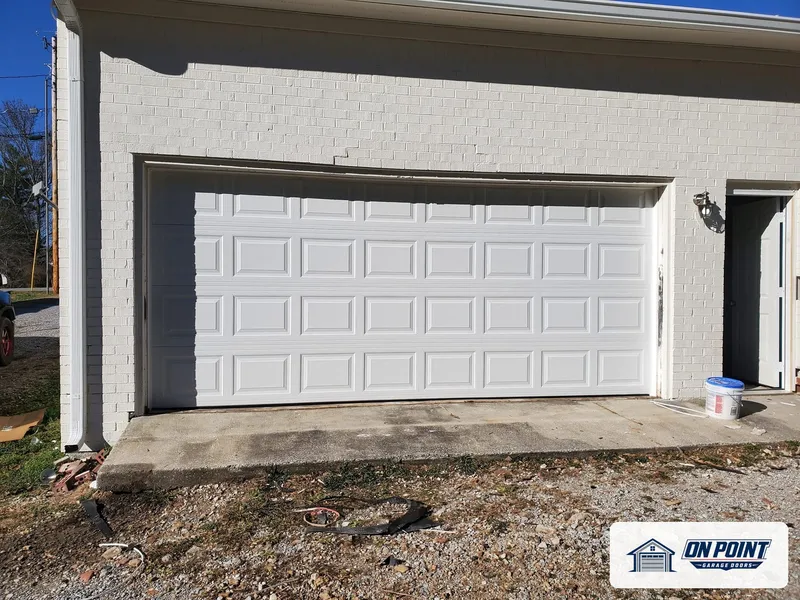
Plain white raised panels are common, with darker doors on the newer townhouses.
Newer townhouse rows and garden apartment complexes have their own banks of garage doors, run by a board or a manager.
Those doors are all the same size and age, so when one fails, others are often close behind.
New York Avenue runs north and south through the middle, lined with stores, restaurants, car dealers and repair shops.
Shop bays and dealer service doors there open and close all day long.
The avenue jams up at the turnpike crossing, especially on weekend afternoons.
The train station on the Port Jefferson line draws commuters from across the town, with large parking lots around it.
The big mall on the turnpike and the poet's birthplace nearby bring weekend traffic.
Shared garages wear out remotes and wall buttons faster than most.

Side-street cape, shared garage or service bay, we look at the door before naming any number.
Owners renovating a cape or a two-family home often update the garage door too.


Shared garages behind two-family homes. Doors run by two households and openers worn out early.
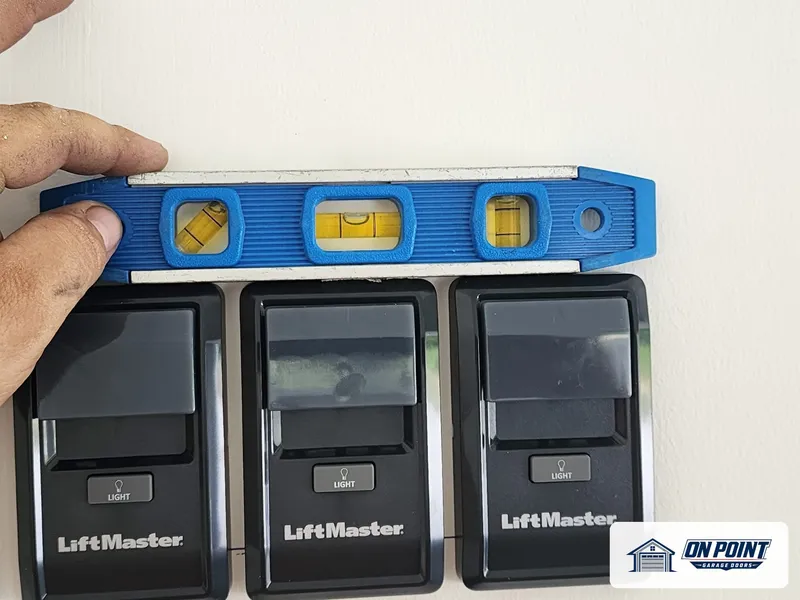
Remotes are set up for everyone who uses the garage.
A door that feels heavy when lifted by hand is usually short on spring strength.
Townhouse and complex garages. Rows of matching doors and springs wearing out together.
We can look at several doors in one visit.
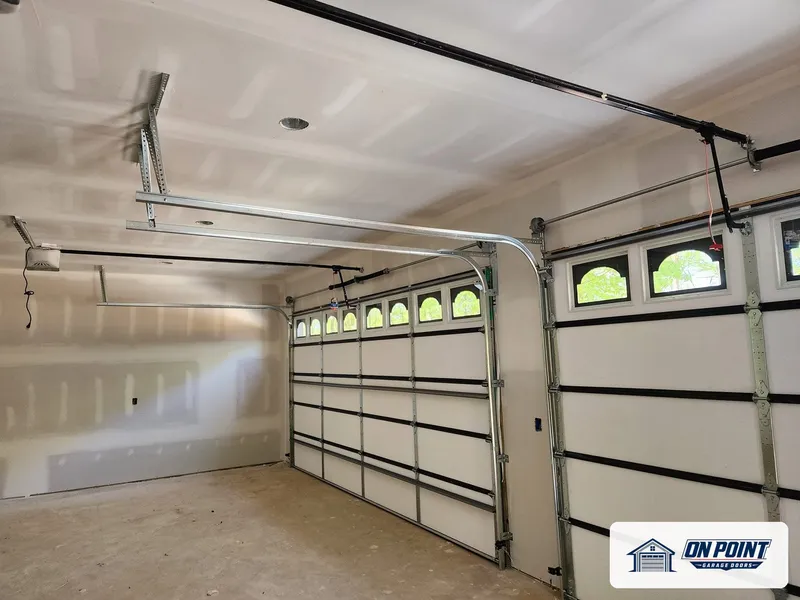
Garages under split-levels. Low ceilings and openers that shake the room above.
Belt drives and wall mount openers keep it quiet.
A keypad lets both households in a two-family home use the garage without sharing remotes.
Auto shops and dealer bays. Doors cycled constantly and bumped by cars.
Heavy-use springs and commercial operators go on these doors.
An insulated door keeps the room over a split-level garage more comfortable.
If a car has hit the door, leave it closed until it has been checked.
Cars squeezing into a shared driveway clip the jamb, so the end hinge and track are inspected.
Huntington Station is on the North Shore side of our Suffolk route, and we also cover Brooklyn and Queens.
What you share about the home, the complex or the shop reaches the technician first.
A shop that cannot open, or a door stuck open overnight, goes to the front.
If several doors in a complex are failing, tell us how many so he can plan the visit.
Winter. Plowed snow piles at the end of short driveways and against the door.
Road salt and grit from the avenue gather at the bottom seal and rust the lower track.
Spring. Rain runs down the sloped driveways and pools at the seal.
Summer. Garages double as workshops and stay open through the day.
Fall. Wet leaves and grit from the avenue collect at the bottom of the door.
He runs the door a few times with the opener, then checks how it moves on its own.
On shop bays he looks at the operator, the safety edge and the track for damage from cars.
Each worn part is shown to you and listed on a free estimate.
Springs are matched to the door's weight now, not when it was new.
On shared garages, the remotes are set for both households.
He tests the safety reverse with a board under the door.
He hauls away the old parts.
He has you work the door from the remote and the wall button before he leaves.
Tell us if the driveway is shared or blocked, and he plans around it.
A call comes when he is nearly there.
Work starts only after you approve it.
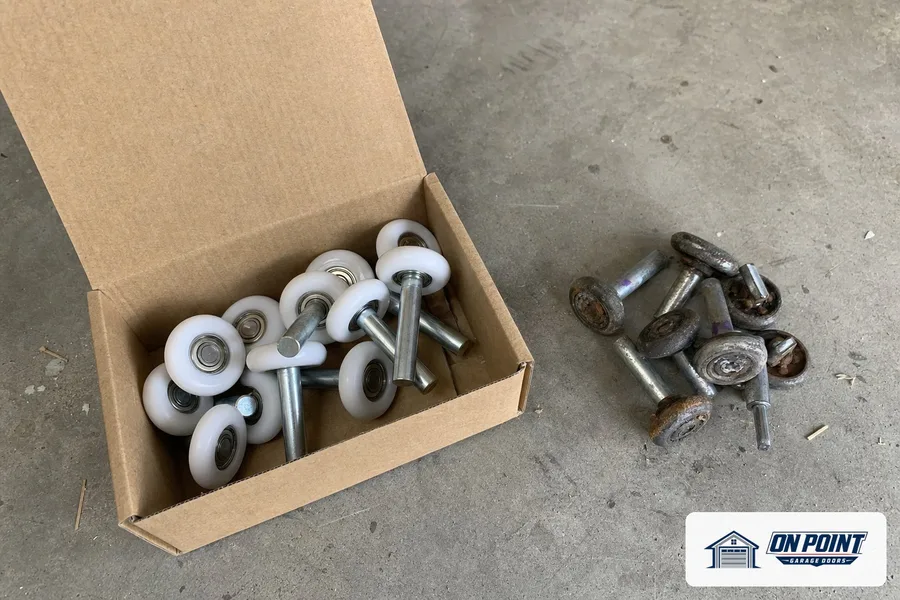
If a door only needs rollers and a spring, he will not push a new one.
Busy driveways and busy doors decide what fails first here.
A broken spring leaves the opener straining against the whole door; keep it down and call.
Higher-cycle springs suit shared and commercial doors.
Cables fray at the bottom corners and are changed as a pair.
Drums and center bearings are checked during the same visit.
Photo eyes are fastened tight and set where bins and bikes will not knock them.
Track bent by a car is straightened or replaced.
Loose brackets are fastened back into solid framing.
The opener is tested alone before anything is replaced.
On shop doors, the safety edge and the sensors are checked too.
Say whether it is a house, a townhouse row or a business.
The estimate is free.
Tell us what the door does, pick a time, and you will get a free estimate.
Call us at (929) 429-2429.
Describe the sound or the stuck spot, and a free estimate follows.