Takes 30 seconds. We call you back to set a time.
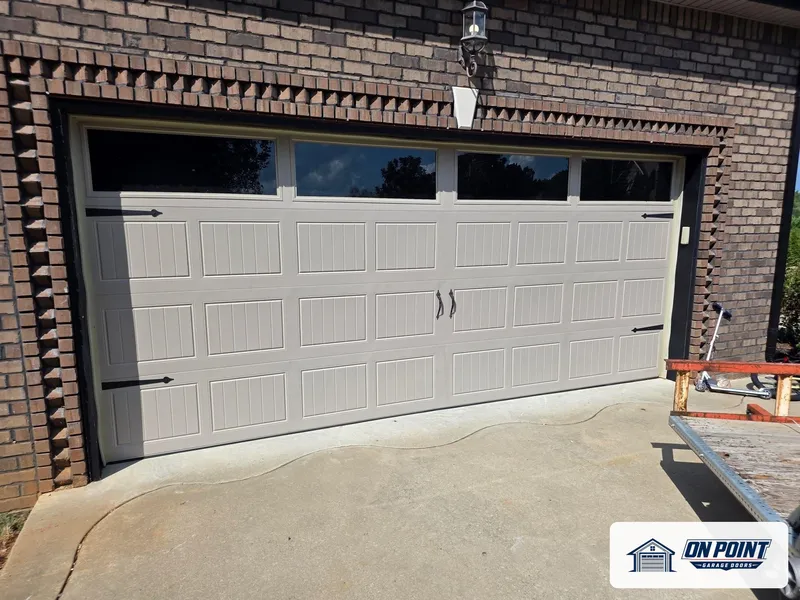
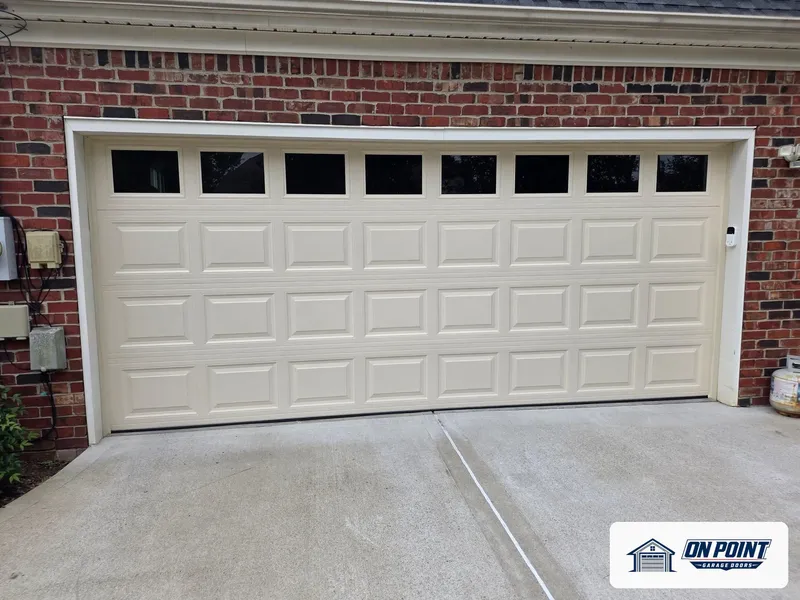
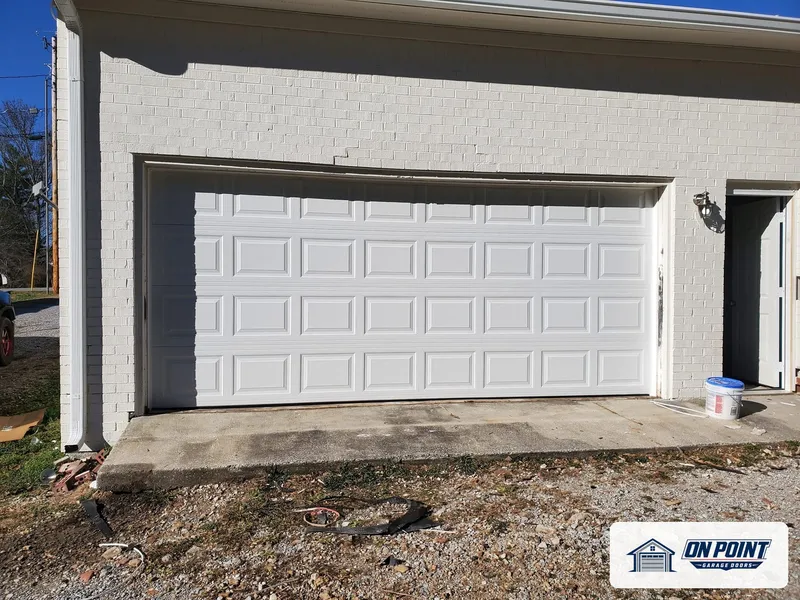
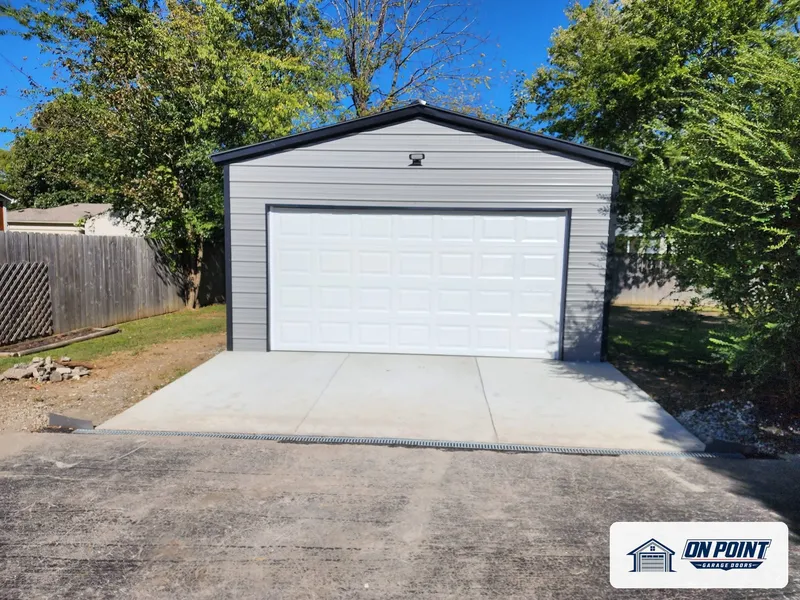
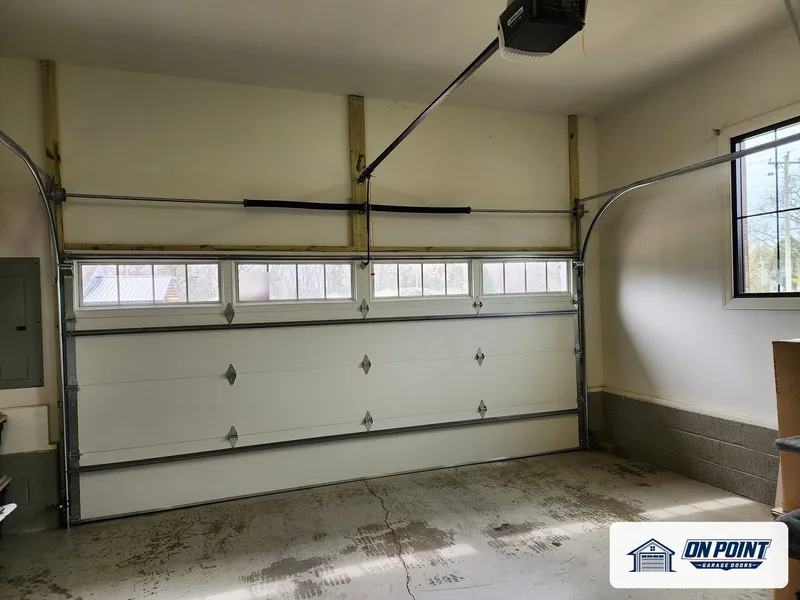
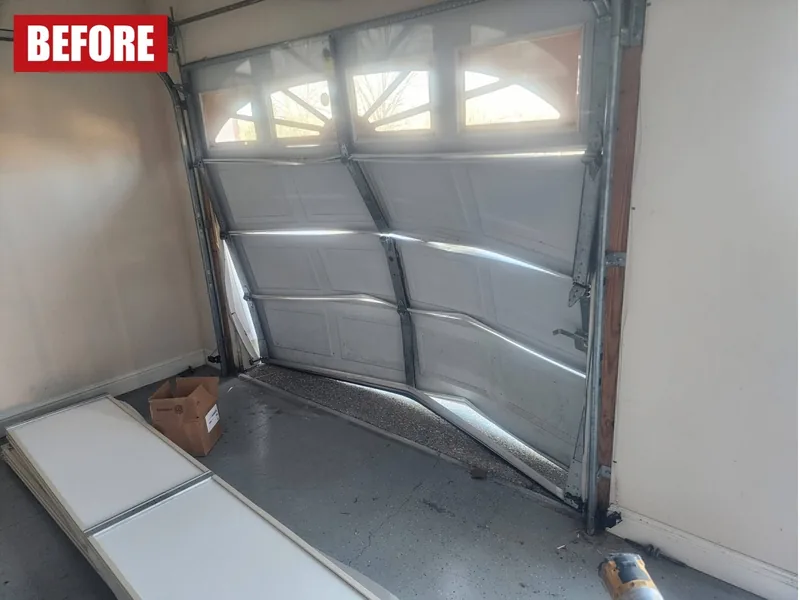
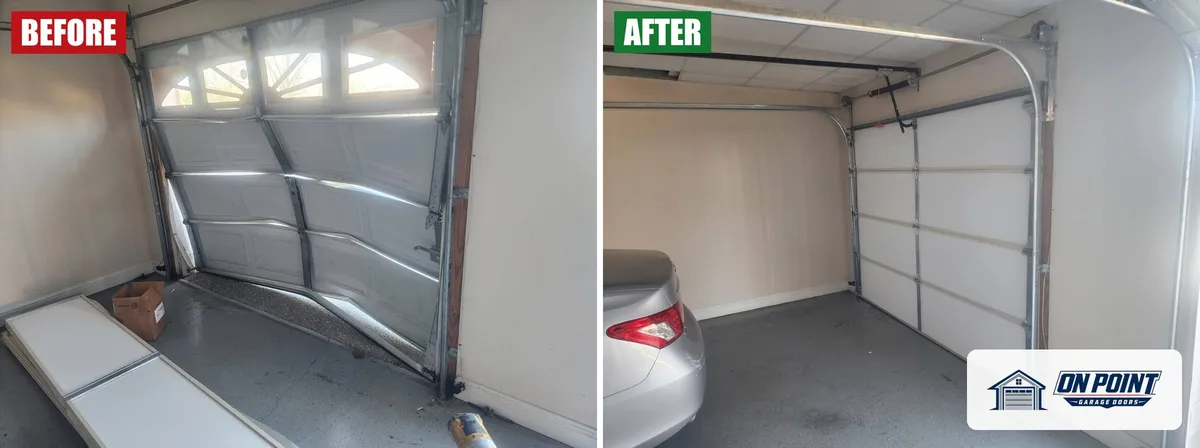
These photos are from our own jobs, with our logo on them.


Garage door repair in Lindenhurst for the canal-front homes south of the highway, the houses raised after past storms with garages underneath, the capes and ranches on the village streets, and the shops along the main avenue. Free estimate first.
After past storms flooded the low streets near the canals, many owners raised their houses, and the garage now sits at ground level beneath the living space, sometimes with new framing around an older door.
Those garages are built to let floodwater through, so the door, the tracks and the springs live in damp, salty air.
On canal lots, springs, cables and hinges made to stand up to salt air last noticeably longer than plain steel ones.
Canal-front lots are narrow and deep, with the garage facing the street and the boat dock behind the house.
On many of them the garage is the only way to carry gear from the street to the water, so the door opens and closes all summer.
Boat trailers, kayaks and fishing gear crowd the garage, and the door gets bumped more than most.
North of the highway, the village streets are lined with capes, ranches and small two-family homes with older single-car garages.
Many of those still run on extension springs that need safety cables.
Some of the smallest houses began as summer bungalows and were made year-round later, and their garages kept the low ceilings and narrow doors of that time.
Bulkheads, docks and boat lifts behind the houses mean many owners also store marine gear and outboard motors in the garage, close to the door.
Shops and restaurants along the main avenue and near the train station use rolling gates and back service doors every day.
A storefront gate that will not lock at closing is moved ahead of routine visits.

Lifted house, canal lot or village street, the door is looked at end to end before any estimate is written.
South of the highway that look starts low, at the brackets and rollers that sit closest to the salt.


Garages under raised houses. Rust on springs, cables and bottom brackets from salt and damp air.
Galvanized and coated parts are recommended, and flood vents in the walls are left clear.
A door that has grown heavy usually means a spring weakened by rust, so the springs are tested before anyone blames the opener.
Canal-front garages. Tracks and bottom sections bent by trailers and boat gear.
Bent sections are straightened or replaced, and the tracks set back in line.
Village garages. Old extension springs, worn rollers and openers without safety sensors.
Safety cables and modern sensors are added where they are missing.
Wall-mounted openers free the ceiling for kayaks and paddleboards.
Storefront gates. Slats, barrel springs, locks and motors on the gates by the station and along the main avenue.
Back service doors are checked for bent guides from deliveries.
Insulated doors help garages under raised houses keep the floor above warmer.
When a trailer or a car has knocked the door, leave it where it stopped and keep it off the opener until it has been checked.
A boat trailer backed in crooked can catch a track low down, so the track, the bottom bracket and the lowest section are judged together.
We work along the south shore here and across Suffolk, Nassau, Queens and Brooklyn.
Anything you tell us about the garage, a lifted house or a canal lot, reaches the technician before he sets off.
A door stuck open with a storm coming in off the bay, or a car shut in before the commute, moves ahead of routine visits.
Winter. Wet cold blowing off the bay finds the spring that rust has already weakened, and it lets go on a freezing morning.
Spring. Moon tides and long rains leave puddles at the foot of the low garages near the canals, right against the bottom seal.
Summer. Boat season fills garages with gear and puts the door through extra trips.
Fall. With the storm season still running, it is wise to be sure the door closes tight and the opener has a battery.
Leaves from the old trees on the village streets also pile up in the tracks, and a quick clear-out keeps the door from reversing.
He runs the door through a few full trips, then goes over the springs, cables, rollers, track, seals and opener, with an eye out for rust under the paint.
You hear plainly what has worn out and why, and the free estimate lists every part on its own line.
Rust-resistant springs, cables and hardware are offered on homes near the water.
The usual springs and cables ride along on the truck.
He blocks the doorway with a box to prove the opener backs off before he leaves.
Worn parts go with him.
Before he goes you watch the door rise, come down and press its seal flat against the slab.
Visits can be planned around boat days and tides.
He calls on his way.
Not one part is changed until you have said yes.
Salt and standing water decide which parts give out first on these blocks.
Up in the village, where the doors are older but drier, it is more often worn rollers and tired openers than rust.
Once a spring breaks, the door has nothing holding its weight. Leave it down and keep clear.
Rust between the coils shortens a spring's life, so springs near the water are checked every year.
Cables rust from the bottom bracket up; the pair is replaced together.
Bottom brackets rusted thin are replaced at the same visit, because they hold the spring force.
Photo eyes in flood-prone garages are mounted as high as the rules allow, away from standing water.
The bottom of the track rusts through first in damp garages; that section is renewed.
Track brackets that worked loose in wet framing are anchored into solid wood.
Openers in damp garages are checked for corrosion on the board and wiring.
Battery backup openers keep the door working when storms knock out power.
Tell us whether the house sits on a canal, has been lifted, or is up in the village, and what the door has been doing.
Every estimate is free.
Usually, if there is room above the door for a rail. Many of the old cottages have low ceilings and narrow single garages, so he measures the headroom and the side room first. Where a ceiling rail will not fit, a wall-mounted opener beside the door often will.
They do. A taller door weighs more and needs springs wound for that height and weight, along with longer cables and taller tracks. When a house was lifted, the door was sometimes put back together from mixed parts, so he checks that the springs really suit the door hanging now.
A new bottom seal that meets the floor across its full width keeps out wind-driven rain and puddles from the driveway, but it is not a flood barrier. He checks the slab for low spots, sets the door so it presses the seal evenly, and tells you honestly what a seal can and cannot hold back.
Yes. Storefront gates near the station and along the main avenue go up and down every day, and their springs, slats, guides and locks wear with it. Visits can come before the shop opens, and a gate that will not lock at night is moved ahead of routine calls.
Rust between the coils makes a spring grind against itself on every trip, and it weakens the steel long before it snaps. Heavy rust is a good reason to renew springs on your schedule rather than wait for the bang, and coated springs hold up far better in salt air.
Describe the door, pick a visit that works around the tides and the boat, and the estimate is free.
Easier to talk it through? Call (929) 429-2429.
Say how the door is behaving; the estimate stays free whatever you decide.