Takes 30 seconds. We call you back to set a time.
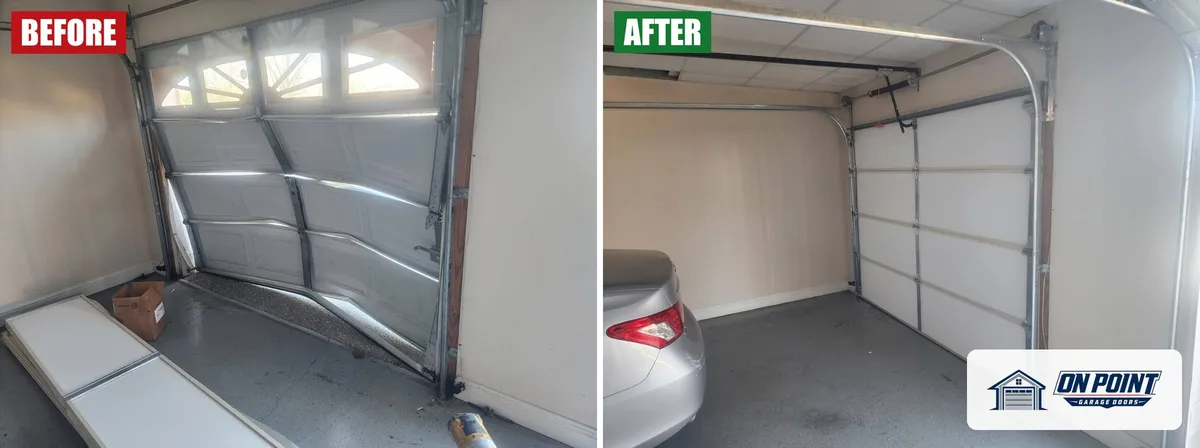
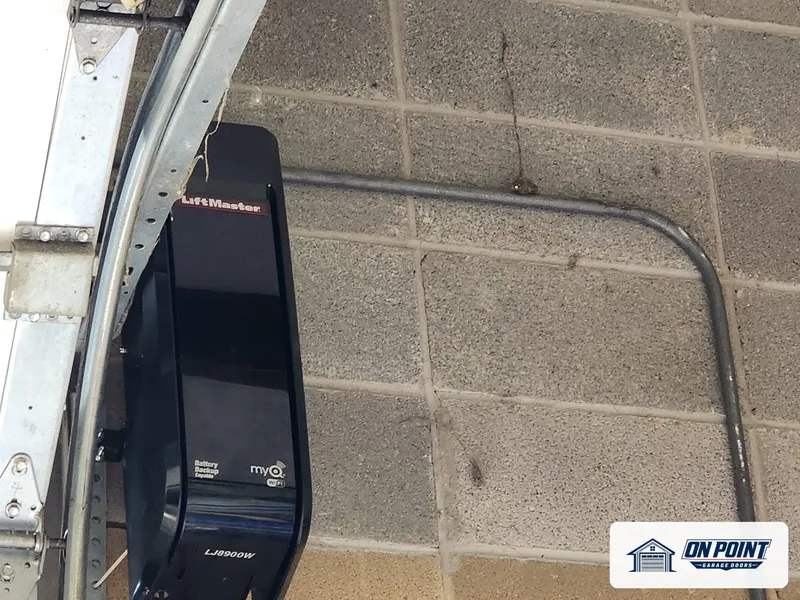
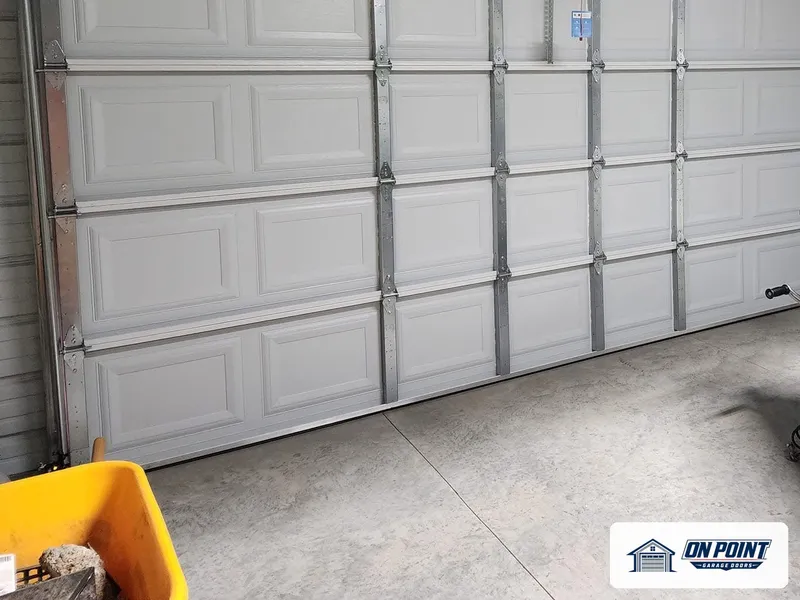
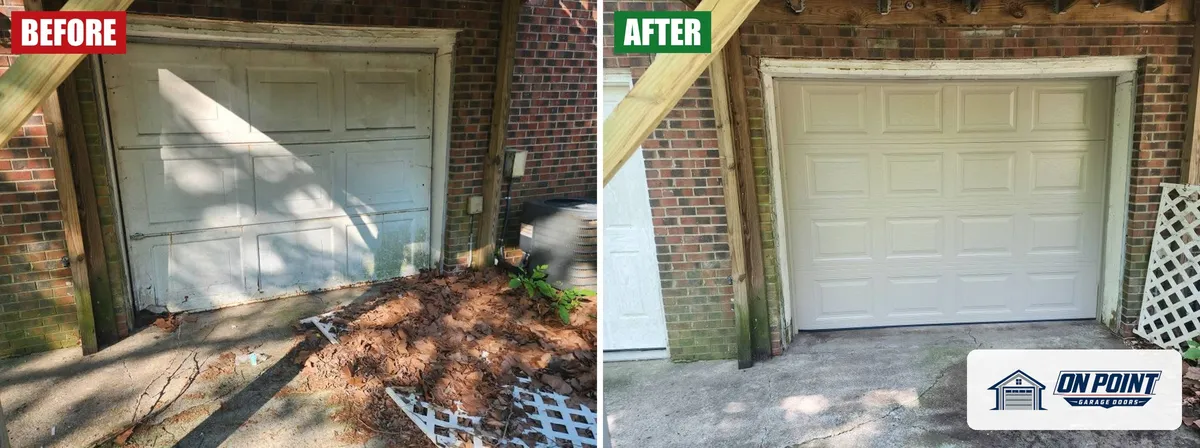
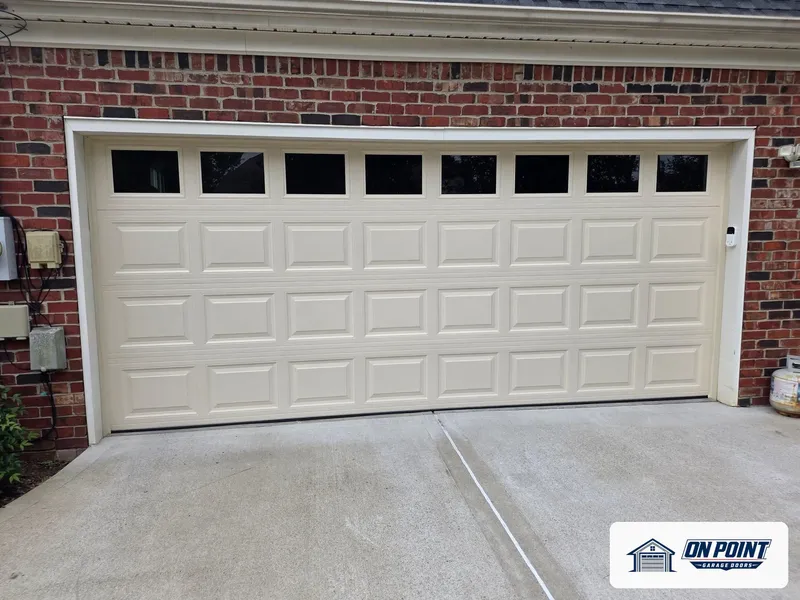
These photos are from our own jobs, with our logo on them.


Garage door repair in Hauppauge for the colonials, splanches and high ranches on the residential streets, and for the loading doors, dock doors and service doors across the large industrial park. Free estimate first.
The industrial park here is one of the largest business areas on the island, with warehouses, manufacturers and distributors running loading doors from morning to night.
Those doors take far more cycles than any house door and need heavier springs, rollers and operators.
Original two-car doors are often heavier than they look, and springs are sized to their real weight.
The residential side is mostly colonials, splanches and high ranches with two-car garages, many still on the doors and springs they were built with.
Original springs on those doors are often well past their working life.
A wide two-car door hangs its whole weight from a pair of springs and runs on a single opener, so all three are looked at together.
When one spring breaks, both are replaced so the door stays balanced.
Plenty of the residential blocks back onto woods, and oak leaves and acorns end up packed into the tracks and against the floor seal each fall.
The county government buildings and the state offices bring early commuters, and a garage door that will not lift before work leaves a car stuck.
Early visits can be arranged for urgent calls.
Splanches often have the garage half a level below the main floor, with a steep short driveway that sends rain toward the door.

House on a cul-de-sac or warehouse off Motor Parkway, the door is seen in person first, and the estimate comes after.


Broken springs. One loud snap, then a two-car door that will not budge, is the spring. Leave the door down and call.
Longer-life springs are offered for busy family doors.
When the opener labors on a wide door, the springs are tested first, since a tired spring is the usual reason.
Wide double doors. Heavy two-car doors strain their springs, cables and opener.
The door is balanced by hand before an opener is chosen, and the opener is sized to what that door weighs.
Loading and dock doors. Springs, cables, rollers and operators on warehouse doors are sized for heavy daily use.
On dock doors the photo eyes and the safety edge along the bottom are tried on each visit, along with the dock seals.
Commercial operators are matched to door size and to how many times the door runs each shift.
Roll-up service doors. Doors that drag or will not lock need spring, slat or guide work.
Bottom bars bent by forklifts and trucks are replaced.
Insulated doors keep garages under bedrooms warmer through the winter.
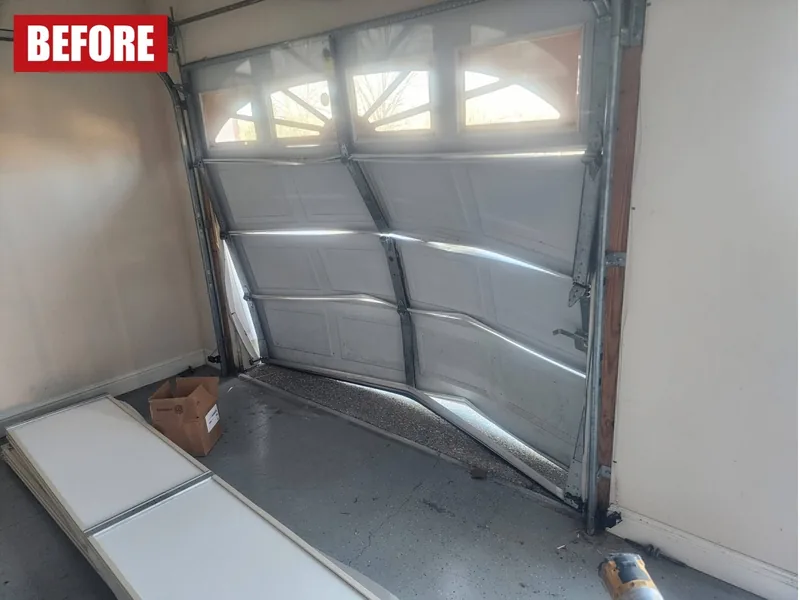
A door that a car, truck or forklift has struck is left where it is until the technician has looked it over.
Backing out of a steep splanch driveway at an angle can clip the door and twist the track with it, so the two are checked as a pair.

The residential streets and the industrial park are both regular stops on our Suffolk route, which also runs through Nassau, Queens and Brooklyn.
Tell us on the call which building, which bay or which side of the house, and that note rides along with the technician.
A car shut in a garage, or a loading door that will not come down at the end of a shift, moves to the front of the list.
Winter. Cold breaks tired springs at home and freezes dock door seals to the ground.
Ice also locks dock seals and house door seals to the concrete; a frozen door is left to let go on its own, not run against the opener.
Spring. Rain runs off long driveways and loading aprons and rusts the bottom of tracks.
Summer. Heat dries out the seals on dock doors and on house doors facing the sun.
Fall. A checkup before the first freeze finds worn springs and flat rollers while the work can still be planned around the season.
He starts by running the door, then goes through springs, drums, cables, rollers, track, seals and the opener or dock operator one by one.
What failed is explained without jargon, and you get a free estimate that lists each part on its own line.
Springs and operators are chosen for what the door actually weighs and for how many trips it makes in a day.
The springs, cables and rollers that house doors and dock doors here usually need are already in the truck.
Before he leaves, the safety reverse and every safety edge on the door are tried again.
Old springs, cables and rollers are hauled away in his truck, not left by the curb.
Each door he touched is run up and down while you watch, so you see it working before he goes.
Warehouse visits are timed to stay out of the way of the loading schedule.
You hear from the technician as he heads your way.
No part is changed until you have agreed to it.
On doors that move all day, wear decides the schedule.
Once a spring breaks, nothing holds the door's weight. Keep people and cars away from it and call.
Coils pulling apart with gaps between them are a sign the spring has little life left.
Cables fray where they meet the bottom bracket, and the pair is changed on both sides at once.
Drums worn down by old cable are swapped at the same visit, so the new cable is not chewed up.
Photo eyes near busy loading aprons get knocked by pallets and hand trucks, so they are set where traffic will miss them.
A track bent by a truck or a car makes the door bind, and the door stays put until the track is trued or replaced.
Brackets that have worked loose are bolted back into sound wood or steel.
The opener or dock operator is tested part by part, so only what failed is replaced.
An opener past saving is swapped for a quiet house unit or a heavier dock operator, whichever the door needs.
Say whether it is your home or a building in the park, and describe what the door does when you try to run it.
Every estimate is free.
Tell us how the door is acting and when suits you; you get a free estimate either way.
Call us at (929) 429-2429.
Say what the door is doing when it runs, and a free estimate comes back to you.