Takes 30 seconds. We call you back to set a time.
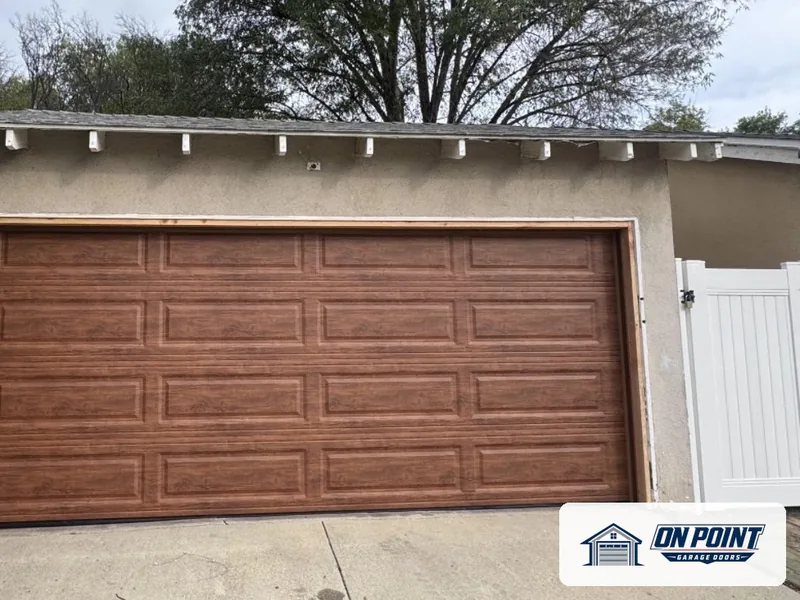
These photos are from our own jobs, with our logo on them.


Garage door repair in Stony Brook for the colonials, ranches and split-levels on the wooded streets, the homes near the harbor and the old mill, the houses rented to students and hospital staff, and the shops on the village green. Free estimate first.
Most homes were built from the fifties through the eighties: ranches, split-levels and center-hall colonials on wooded lots.
The state university moved here in the early sixties, and whole tracts of family houses filled the woods around it in the years that followed, while the streets by the harbor keep far older homes.
Some can still have a first steel door, with an opener added years later and springs old enough to deserve a careful look.
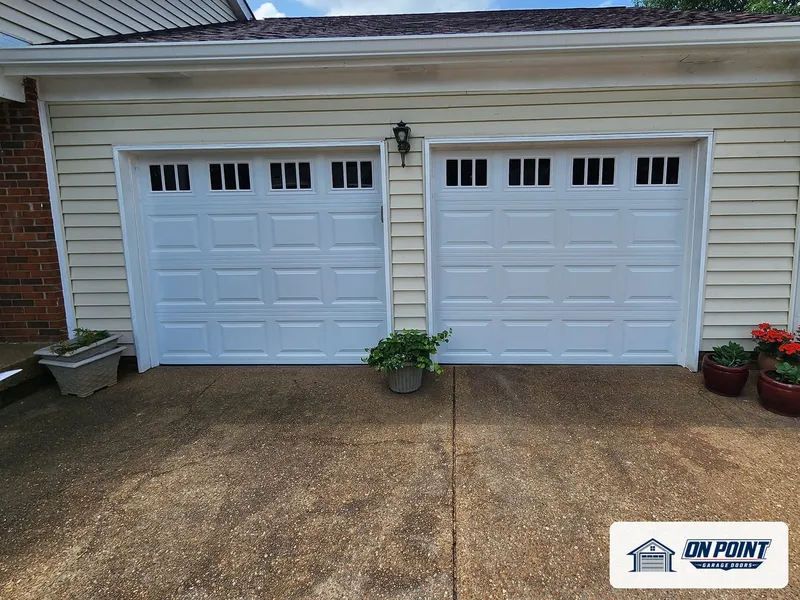
On a low, long ranch a plain steel door with few lines looks at home, while a center-hall colonial with a two-car garage can take raised panels and a row of small-pane windows.
Plenty of houses near the campus are rented to students, researchers and hospital workers, with many drivers sharing one garage.
A door used by several households wears its rollers and opener far faster than one used by a single family.
It also collects remotes. Over a few leases an opener can end up remembering clickers that left with people who graduated, so clearing its memory is worth asking for when the lease turns over.
The state university and its large hospital sit on the south side, with a train station beside the campus.
Thousands of students, staff and patients drive in each day, and side streets fill with their cars.
The county road past the hospital and the state route by the station back up around classes and shift changes, so it helps to know which side of the tracks your street is on.
The colonial-style village shopping green near the harbor holds shops, a post office and an old inn.
It was laid out as a crescent in the early forties, and the eagle over the post office is a mechanical one built to flap its wings, so anything that faces that green has a look to live up to.
Close by stand the old grist mill, the museum of carriages and art, and the harbor with its marshes and boat ramp.
A violent August downpour broke the dam at the mill pond in recent years and washed away the road beside it, a reminder of how much water comes down these hills toward the harbor.
Some homes near the campus were split into rooms for several tenants, all sharing one garage.
In those houses one person may park inside while the rest store bikes, mattresses and boxes along the walls, right where the vertical track and the sensor wires run.

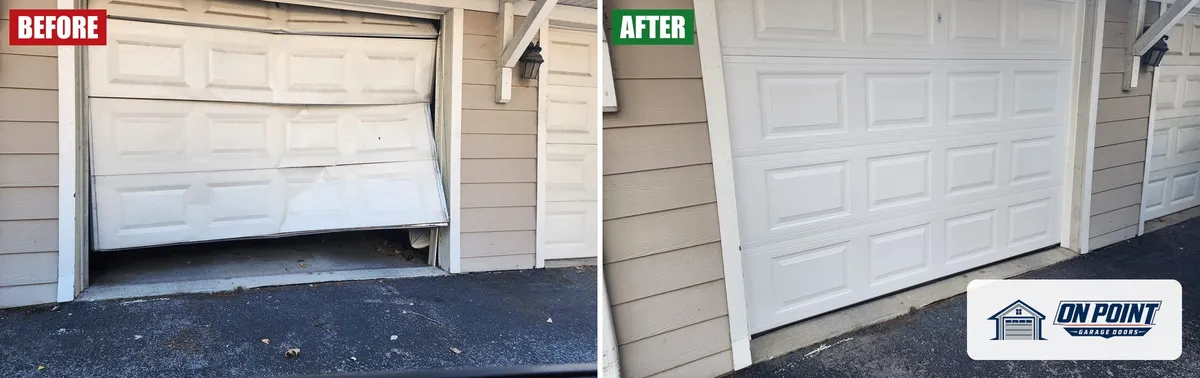
A ranch with its first door, a colonial full of graduate students or a back door behind the green: each gets a full look before a repair is suggested.
The owner of a rental does not have to live nearby for that. The findings can be photographed and put in a written estimate to read from wherever they are.
The gap between leases is a convenient moment for a full check, because the garage is empty and every hinge, bracket and roller can be reached.


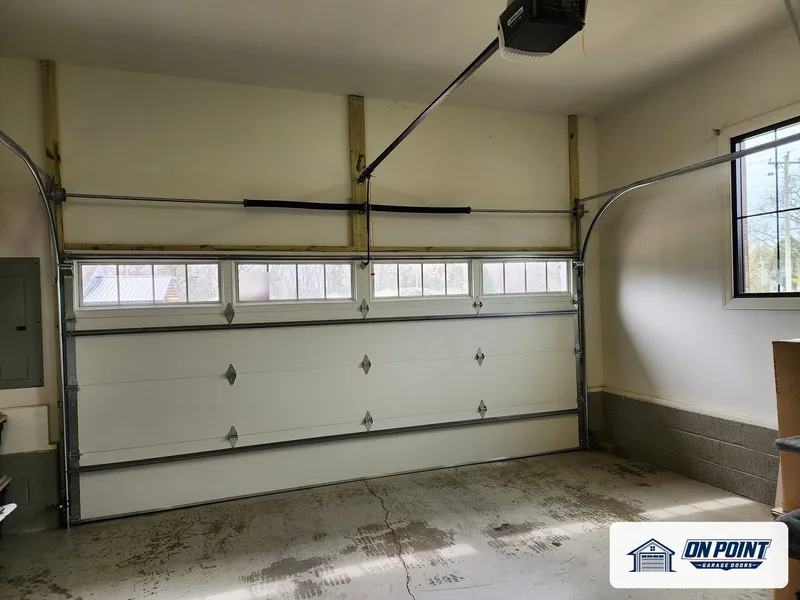
Ranches and split-levels. A first-generation door can still hang on its stretch springs beside the horizontal tracks, and those should have safety cables threaded through them.
When a fresh pair of springs and a set of rollers would carry that old door onward, the estimate says exactly that and stops there.
A door that creeps open or slams shut is often out of balance from a weak spring.
Rentals near campus. Doors run by many drivers, remotes lost and openers worn.
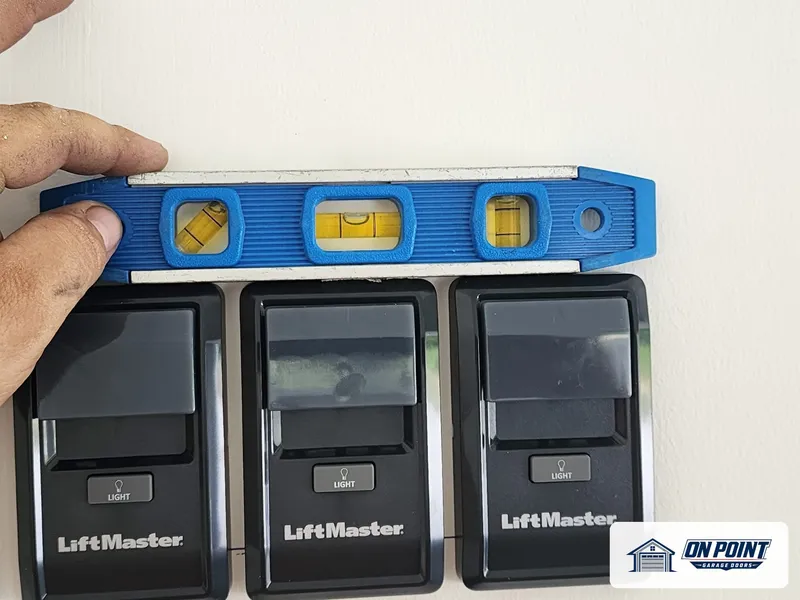
A keypad outside spares a landlord the hunt for clickers each August, since a new group of renters only needs a new code.
Homes near the harbor. Marsh air and salt off the Sound settle on spring coils and hinge pins, and a coil pitted with rust tends to crack sooner.
Rust-resistant hardware lasts longer there.
A keypad code can be changed when tenants move out.
Shops on the green. Small rear doors used for deliveries.
Good locks and solid hinges suit those back doors.
Where half the garage has become a study or a music room, a foam-core door and an unbroken seal around it take the bite out of a January evening.
When a door in a shared house jumps its track, tell every housemate to leave the opener alone, and keep cars and bikes out from under it until it is secured.
With housemates juggling cars in one driveway, a bumper nudges the jamb sooner or later, and the vertical track on that side moves with it.
The sign is a roller that clicks at the same height on each trip, and that is worth a look before the roller climbs out of the rail.
We cover Stony Brook along with the rest of Suffolk, Nassau, Queens and Brooklyn.
Say who owns the house, who lives in it and who can open up; those notes go along with the technician.
A garage standing open on a student street, or a car a nurse needs for a shift shut behind a dead door, moves ahead of routine work.
If a rental door is stuck open between tenants, tell us when you book.
Winter. Plows heap snow across driveway mouths, and meltwater that creeps under a door on a shaded lot can freeze the rubber to the concrete.
Low streets toward the marsh stay damp through the cold months, and orange staining on a bottom bracket is the early warning to act on.
That bracket holds the lift cable and sits under the full pull of the spring, so it is a part for the technician and nobody else.
Spring. The oaks drop yellow dust and tassels over everything, and a film on a sensor lens can be enough to send a closing door back up.
Summer. Move-out and move-in weeks send furniture and boxes through every rental garage.
Fall. Acorns and oak leaves collect in the corners of the opening, so the door lands on a pile, reads it as an object and lifts again.
He starts with the door on the motor, then disconnects it and feels the balance, which tells him whether the springs or the machine is to blame.
In a garage packed with a house full of belongings, he first makes sure there is a safe space to work under the spring line.
On split-levels he checks that the opener rail clears the low ceiling.
Whatever is tired gets pointed out to whoever is home, tenant or owner, and is listed on a free estimate.
A door that gained insulation or a heavier section since the sixties gets springs chosen for that weight, not for the door as first built.
In a rented house he also goes through the keypad and each remote the tenants hand him, and notes any that are missing.
The reversal is proven with a piece of lumber in the opening, while one of the residents watches it work.
What came off the door goes into the truck, so no coil of old spring is left leaning in a tenant's corner.
To wrap up, he watches the door make one full trip while you work the remote.
If the home is a rental, tell us who will let him in.
Expect a call while he is on the way, which gives a student or an owner time to get to the house.
Work starts only once you agree.
There is no push toward a new door where the sections are sound and the fault is in the hardware.
Two things age a door in this hamlet: decades of service on an original installation, and a houseful of drivers sharing one opening.
Once a spring lets go the motor is asked to lift what it was never built to lift, so leave the door shut and let everyone in the house know.
For a house where five drivers come and go, springs rated for more trips are sensible, and the estimate can show that choice beside the standard pair.
A cable with broken strands near its lower loop is renewed along with its twin, so the two sides keep lifting evenly.
While the tension is off he turns each drum and the middle bearing to feel for grit and wobble.
The photo eyes are fixed solidly and kept clear of the bicycles, recycling bins and lab bags that gather beside a student garage door.
Track bent by a car in a crowded garage is straightened or swapped.
Track brackets shaken out of old framing by constant use are moved into sound lumber.
The motor is also run alone, because a tenant who reports a loud opener may really be hearing dry hinges or a worn roller.
Under a bedroom where somebody sleeps after a night shift at the hospital, a belt-drive unit and nylon rollers make the kinder pairing.
Say whether you live in the house, rent it or manage it for someone else, and what the door has started doing.
The estimate is free.
No. A tenant, a manager or anyone you name can open the garage. The technician goes through the door, shares what is worn in photos and puts it on a written estimate. You approve the work from where you are, and nothing beyond securing an unsafe door goes ahead until you have agreed.
The opener can be cleared so that no old remote or car button works, and the keypad gets a new code afterward. On a very old opener that uses little switches inside the remote, the technician explains the weaker security and what an upgrade to a rolling-code receiver or a newer opener would change.
Look for rust streaks at the two lower corners, a seal that stays wet, white powder on aluminum trim and a spring that has turned rough and orange. If storm runoff has ever crossed the garage floor, mention it, because the sensor wiring, the bottom section and the lowest rollers sit right in its path.
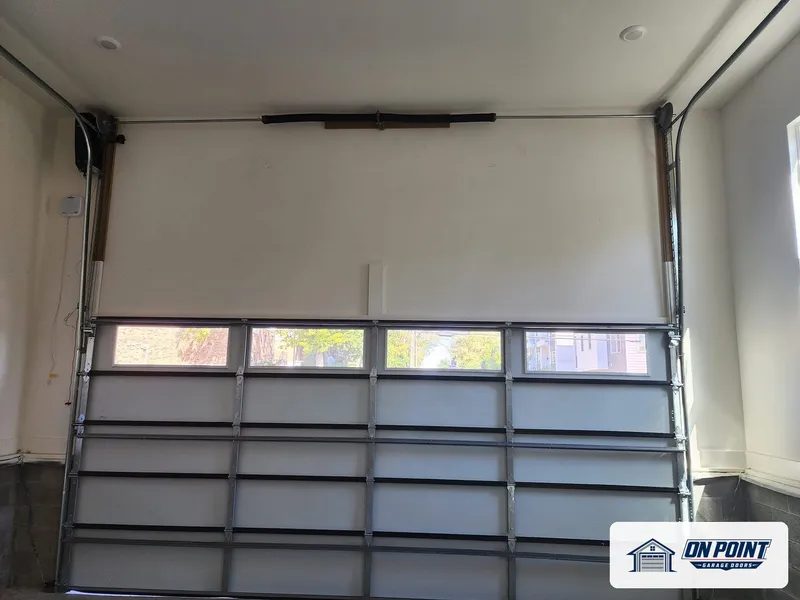
Frequently it can. A low-headroom track brings the door closer to the ceiling, and a wall-mount opener beside the spring shaft removes the rail altogether where the door has torsion springs. Pipes, beams and the side clearance decide which layout fits, so those are measured on the visit before anything is ordered.
Yes. Carriage-style steel and composite doors come with overlay boards, small-pane glass and dark strap hardware that sit well on an older clapboard house. If your property falls under a historic review, find out what it allows before ordering, and the proposed style and color can be written out on the estimate for that purpose.
Describe the fault, add the name of whoever will open up, and pick a slot. Looking at it and writing the estimate are free.
Owners out of town and tenants alike can reach us at (929) 429-2429.
Write down the symptom and whether tenants share the garage, and a free estimate follows.