Takes 30 seconds. We call you back to set a time.
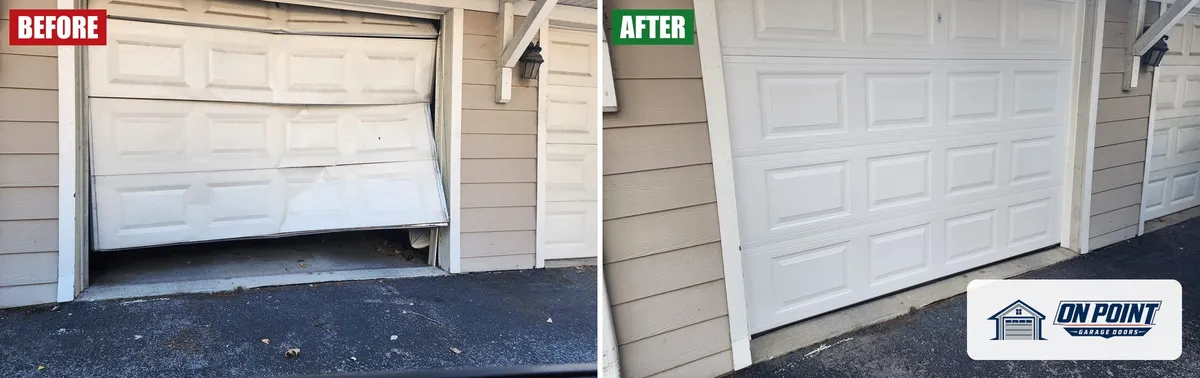
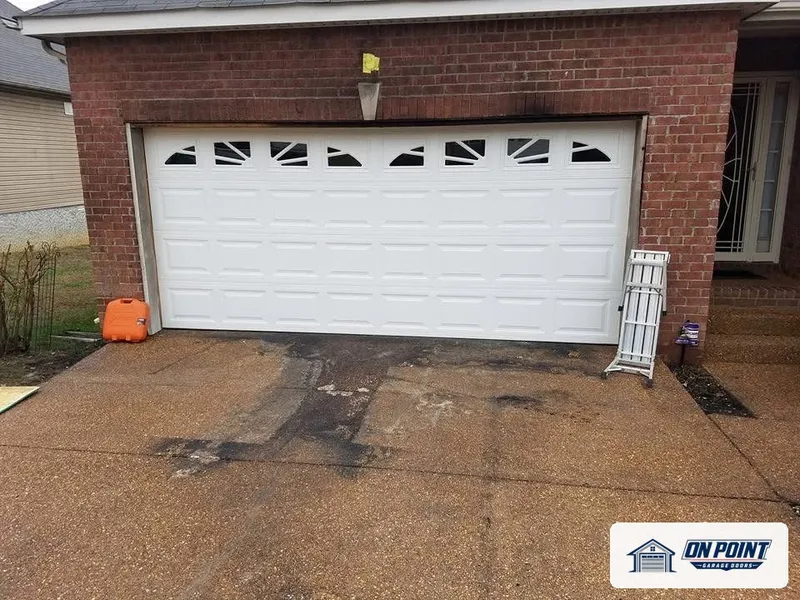
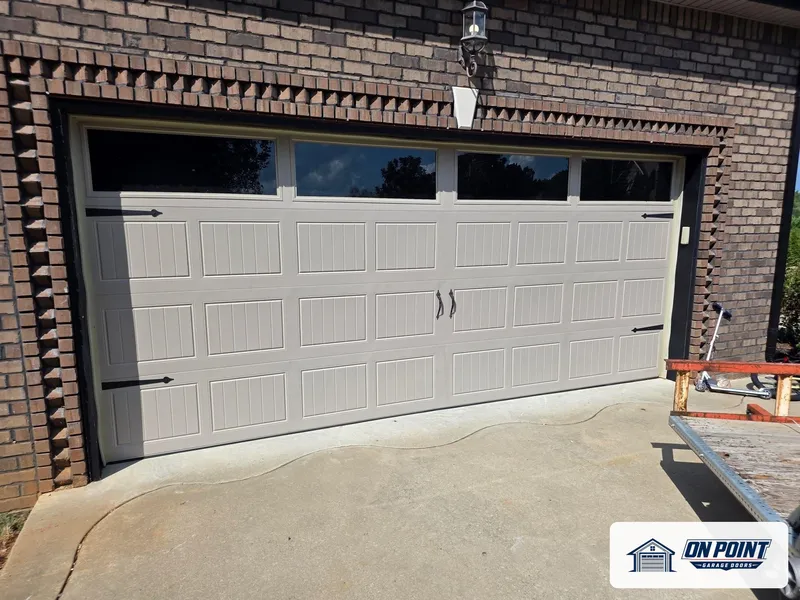
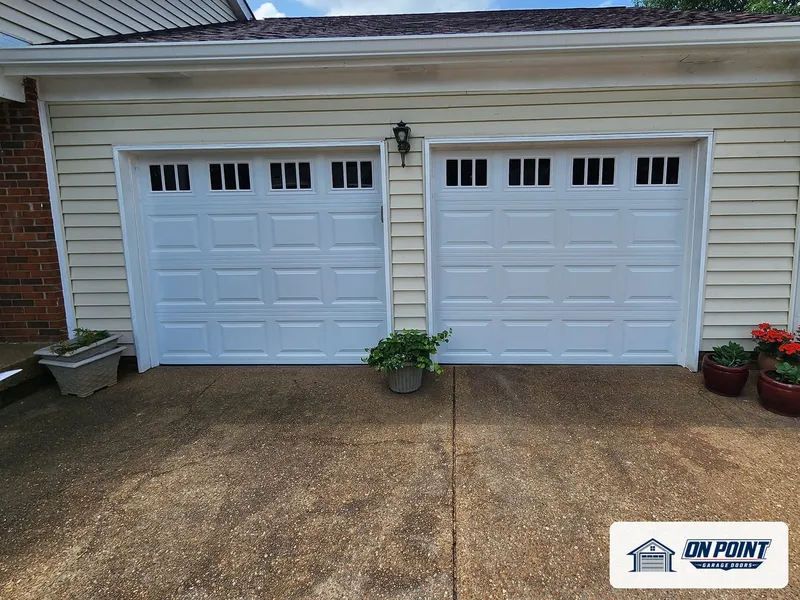
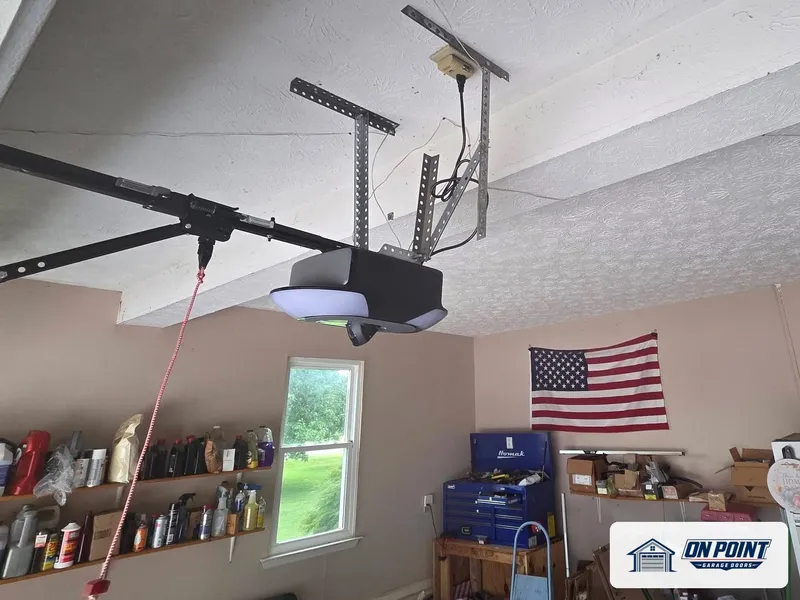
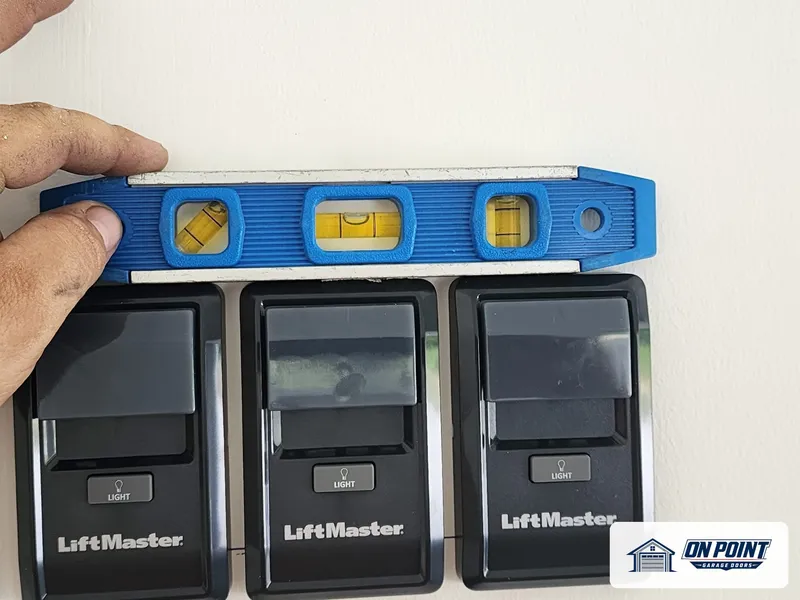
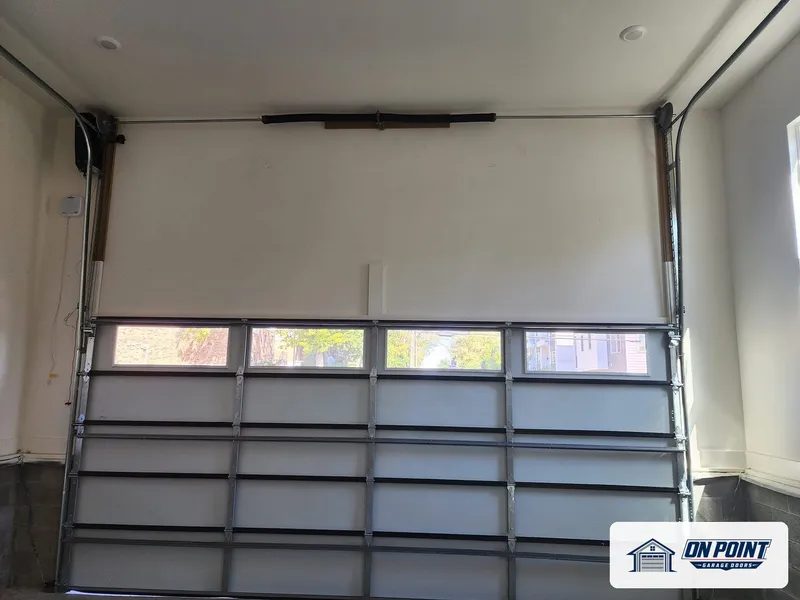
These photos are from our own jobs, with our logo on them.


Garage door repair in Coram for the attached garages in townhouse and condominium communities, the colonials and ranches on wooded subdivision streets and the commercial bays near the crossroads of Middle Country Road and the highway down to Patchogue. Every job opens with a free estimate.
A large share of housing here went up from the seventies onward, and much of it came as planned communities: rows of units with matching doors, a single bay apiece and an association that has a say over anything visible from the road. Around them are ordinary subdivisions of colonials, ranches and expanded capes.
Doors installed as a whole phase of construction tend to share a model, a spring size and an age. That is useful when one fails, because the neighbor's door is a working reference for how the original was set up. It also means color and panel pattern may have to be matched rather than chosen.
The hamlet is one of the old settlements of central Suffolk, known for the Davis house and the Revolutionary raid that burned the British hay stores, but the garages are mostly modern. Their usual enemies are age, builder-grade hardware and the needles, sand and pollen that come with living among pitch pines.
Builder-grade is not an insult, just a description. Thin hinges, short-stem plastic rollers, a light strut and the smallest spring that will balance the door are common in production housing. Replacing those pieces as they wear often transforms a door that its owner had given up on.

An owner in a townhouse row has neighbors through both walls and rules about the outside. A shop on the highway has deliveries waiting. He finds out which situation he has walked into, then examines the door.


Townhouse single doors. These are light, so owners tend to lift and shove them when the opener quits, which skews the cables. A short spring on a short shaft also gives less warning as it fades: the motor simply gets slower until one day the door stays where it is.
Condo garages with an association. Before a replacement section or a whole door is ordered, he notes the maker, profile, window style and finish so you have something exact to send to the board. Inside hardware such as springs, rollers and openers seldom changes the appearance, though it is still worth knowing who maintains what.
Shared walls carry sound into the next unit. If noise is the complaint, the mounting of the rail and the condition of the rollers are judged before the motor is blamed.
Colonials on the wooded streets. A two-bay front with either one wide door or a pair of singles is typical. With a pair, the door used for the car wears out while the one in front of the lawn mower sits still and corrodes. He can test both on one visit and write separate lines for each, so the idle door is not forgotten until the day it is needed.
Bent sections. In tight community lots a moving truck, a guest backing out or a basketball hoop in a gust can crease a panel. A crease across the stile where a hinge attaches weakens the whole door, whereas a shallow dimple in the middle may only be a matter of looks.
Central Suffolk sits within our Long Island coverage, along with Brooklyn and Queens, and we take both household and commercial doors.
Include the building or unit letter, any gate procedure and the name of the community, since identical rows are easy to mistake once the truck is inside.
A door that has dropped with a car under it, or a unit that cannot be secured because the garage is its way in, is an urgent call. Use those words when you phone.
Winter. Away from the moderating water, the middle of the island can turn sharply cold overnight. Grease stiffens, marginal springs snap and a bottom rubber that sat in slush bonds to the apron. Let the opener rest if the door will not break free.
Spring. Yellow pine pollen coats everything, including the lenses near the floor and the inside of the tracks. Associations often walk their communities for exterior repairs at this time, so a dented or faded door may land on a list.
Summer. Cars, mowers and bikes compete for a single bay, and stored items creep toward the door. A handlebar resting in a track or a tote against a bracket is enough to stop the travel and make the opener reverse.
Fall. Needles fall steadily and knit into a mat along the threshold, holding moisture against the steel. It is a good season to have the bottom edge, the seal and the spring balance looked over before the nights freeze.
Outside, he looks at how the door sits in its opening and records the style. Inside, he follows the load from the bottom brackets up the cables to the drums, across the shaft and into the center plate, then tests the opener as a separate machine.
The estimate is written so it can be forwarded: what failed, what is proposed and whether anything outside will look different. That wording saves a second round of questions if a property manager has to approve the work, and it is free to receive.
Ordinary spring sizes, sealed rollers, heavier hinges, cables and many opener components are carried. A colored section or a window insert for a particular production model generally comes from the manufacturer, and he explains that step instead of substituting something that nearly matches.
At the end the door is paused partway to prove it floats, reversed against a test object and stopped by a blocked beam. Remotes and the wall control are tried from where you actually use them.
He leaves the neighbor's side of the pavement clear throughout and takes the failed hardware with him when the job is closed out.
Community parking can be limited to the driveway and a few visitor spaces, and some associations restrict contractor work on certain days. Let us know those rules in advance. He would much prefer to plan around them than to stand in a fire lane with a spring in his hands.
Whether you own outright or answer to a board, the decision on each line is yours to take back to them or approve.
In production-built housing the lightest original parts surrender first, and they often do it in clusters. Knowing the likely order lets an owner fix two weak items in one appointment instead of meeting them separately.
Springs. A single short spring on a townhouse door works near its limit on every trip. When it goes there is a crack like a dropped board and a visible break in the coil. Where the shaft has room, a longer spring of the correct strength will last through more trips.
Cables. Light doors let cables go slack when they hit an obstacle, and slack cable hops off a drum. If one corner is higher than the other, stop there. Running it again is how a small rewinding job becomes a bent top section.
Safety eyes. In a one-car bay the sensors share their few inches with bins, tires and strollers. He secures both at equal height, protects the wire along the wall and confirms that the indicator stays steady while the motor vibrates.
Tracks and rollers. Plastic rollers without bearings flatten and drag, and the opener hides the problem by pulling harder. The track itself is usually fine on these doors; it is the wheels in it and the screws holding it that give up.
Openers. A modest motor is adequate for a light balanced door. Gear kits, capacitors, boards and receivers fail with age, and each can be tested. A replacement is discussed when the safety features are outdated or the parts have disappeared, not just because the unit is old.

For booking, give the community and unit or the street, tell us who approves repairs and describe what happened the last time the button was pushed.
We give free estimates to unit owners, house owners, managers and businesses in and around the hamlet.
Your documents decide that, so check them or ask the manager. Commonly the owner handles springs, rollers and the opener, while the visible door falls under exterior rules, but communities differ. The technician can write an estimate that separates hidden hardware from anything that shows, which makes the conversation with the board much simpler.
Often, if the maker still produces that profile and color. A fresh section may look brighter than sun-faded neighbors for a while. He records the brand, panel pattern, thickness and window layout, then confirms availability. When the model has been discontinued, you get the closest options to show the association before anything is ordered.
They can over time. A wet mat of needles keeps the bottom rail damp, hardens around the seal and can hold the door just high enough that the opener thinks it met an obstruction. Keeping the threshold clear helps, and a worn rubber or a rusting rail can be inspected while he is there for other work.
It might, if both are original and see similar use, but it is not a certainty. A door that feels heavy halfway up, will not stay put or makes the opener struggle is giving earlier warning. A balance test and a look at the coils tell you far more than the age of the building does.
Quiet usually comes from several small things: bearing rollers, sound hinges, a balanced door, hangers on framing and rubber isolation where the motor hangs. A belt drive helps once those are right. He listens to a full trip with you and points out which noises are traveling through the shared structure.
Choose a time when you can open the garage, pass along any association instructions and the technician will take it from there with an inspection and a free estimate.
Call us at (929) 429-2429.
List the community, the door and the problem; you receive a free estimate you can forward.