Bayside homes, salt air and a lot of detached garages. Springs, openers, cables and off-track doors, same day.
Tell us what the door is doing. The estimate is free either way.
Blue Point runs from Montauk Highway down to the Great South Bay, and the closer a garage is to the water the harder its door works to stay in shape. The housing is a mix: older bayside cottages with detached one-car garages, mid-century ranches and capes with attached doors, and newer colonials on the north side with double doors.
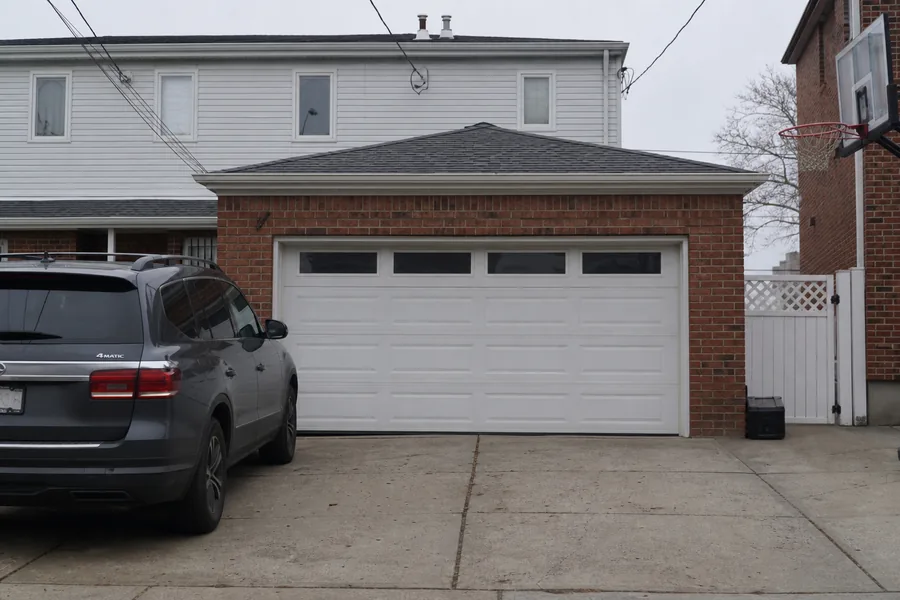
Detached garages are a Blue Point particularity. They were often built later than the house, on a slab that has settled, with a door hung by whoever was handy. Uneven tracks, undersized springs and openers mounted to a ceiling joist that has moved are the usual finds, and they are all fixable without a new door.
Openers here fail in the way waterfront openers do: sensors fogged or misaligned, boards taken out by summer storms, and remotes that stop pairing after a power blink.

The same six jobs as everywhere else we work, with the parts for the doors common here already on board.


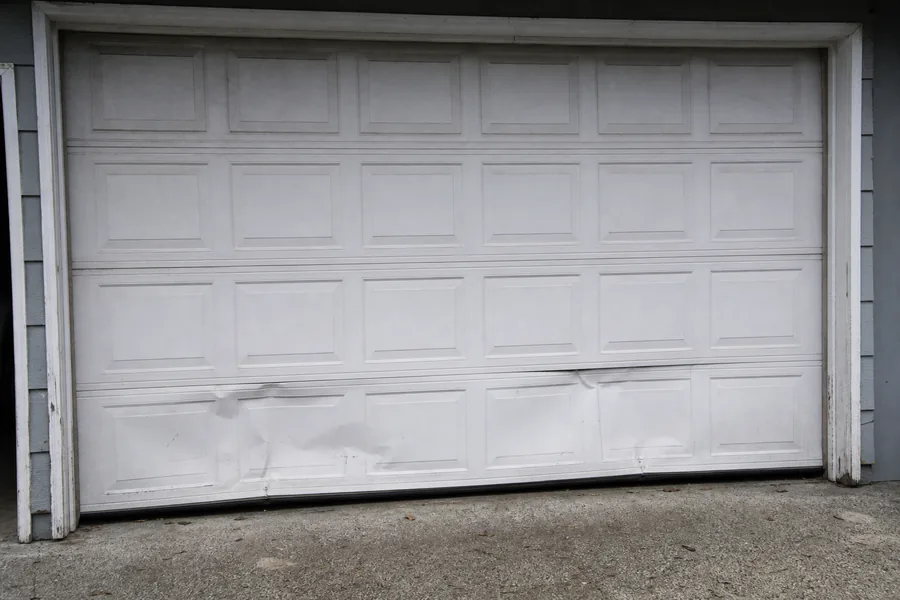
Salt air and standing water rot the bottom section and the bottom brackets first. A single replacement section and new stainless brackets save the door when the rest is sound.
Settled slabs tilt the tracks out of plumb and the rollers ride out. Re-plumbing the tracks and replacing bent rollers puts the door back without new panels.
Many Blue Point doors are on their first springs decades in. They go without warning; both are replaced and the door rebalanced the same visit.
Summer storms off the bay take out logic boards. The board is replaced; the opener stays.
Water, in every form: salt air from the bay, humidity that never quite leaves the garage, and the occasional tidal flood that reaches the low blocks near the marina. Steel parts corrode from the bottom up and openers see more surges than inland.
The fix is not a special door. It is coated springs, stainless cables and brackets, a good bottom seal, and a balance check every year or two.
Blue Point, Bayport, Patchogue, East Patchogue, Sayville, West Sayville, Bohemia, Holbrook and Oakdale. Not listed? Call; the map is drive time, not lines.
A two-hour window, a call when the technician is on the way, and a balance test at the door before anything else. On a detached garage the technician also checks the slab and the track plumb, because a door that has gone off track on a settled slab will do it again if only the rollers are replaced.
Rust is assessed honestly. A bottom section rotted through with a sound door above it gets a new section and stainless brackets; a door rusted through in two or three sections is measured for replacement and you hear that plainly rather than after a repair that will not hold.
Openers that failed in a storm are tested for the board first; the motor is almost always fine. Remotes and keypads are re-paired before the technician leaves.
Single steel doors on detached garages from the 1950s to the 1980s, insulated double doors on the newer colonials north of Montauk Highway, and a fair number of wood doors on the bayside cottages that owners want kept rather than replaced. Chain-drive openers dominate; belt drives and battery-backup units are the usual replacement when a storm takes one out.
Coated springs, galvanized cables and stainless brackets are the right parts within a few blocks of the water, and they are what goes on when a Blue Point door is repaired.
Blue Point's garage doors take the brunt of nor'easters off the Great South Bay and the summer thunderstorms that roll across Suffolk. Wind loads on a wide door are real; a door with worn hinges or loose track bolts flexes in a gust and jumps its track. Before storm season, a check of the hinges, the track bolts and the bottom seal keeps the door where it belongs, and a battery-backup opener means the door still opens when the power goes out with the car inside.
After a storm, the usual calls are a door off track, an opener that will not respond, and a keypad that has drowned. All three are same-day work.
Clear the floor in front of the door and anything leaning on the tracks inside a detached garage; a bike or a rake in the beam of the safety sensors is the cause of more reversing doors than any part. If the door has come off its track, leave it where it is rather than forcing it back. If the bottom of the door is rusted, a photo of the bottom section and the brackets lets the technician bring the right section on the first trip.
Have the opener's make ready for the call. Flood-prone blocks near the marina: mention if the garage has taken water; it changes which brackets and hardware go on.
Yes. Most of what we do in Blue Point is on detached garages, including re-plumbing tracks on settled slabs.
Usually not. A replacement bottom section and new brackets fix it when the rest of the door is sound.
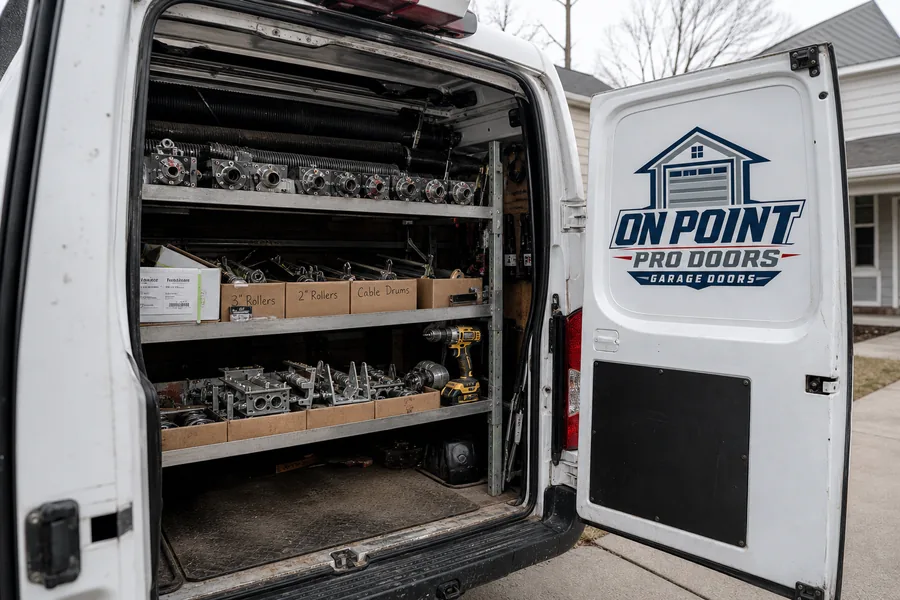
Most days, yes. Springs, cables and common opener parts are on the truck.
Often the board or the receiver. It is replaced without replacing the opener, and remotes are re-paired on the spot.
Yes. No is a complete answer.
Around Brooklyn, one call gets you a two-hour slot and a heads-up call before the technician sets off. We don't buy leads and nobody on a phone judges a door they can't see.
Free estimate across Brooklyn, NY and the towns around it.
Describe the fault and we'll give you an honest arrival time. The visit and the estimate is free, anywhere in Kings County.
Easier to explain by phone? Call (929) 429-2429.
Tell us what the door is doing. The estimate is free either way.