Takes 30 seconds. We call you back to set a time.
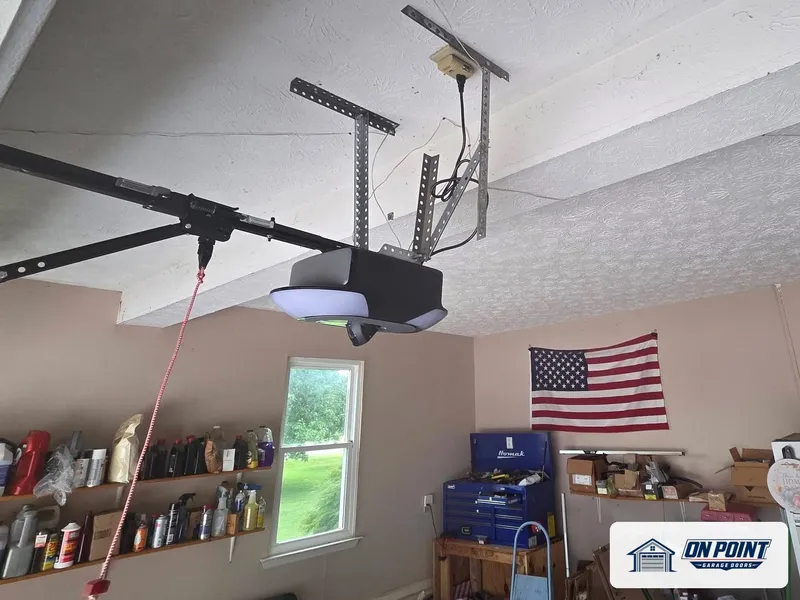
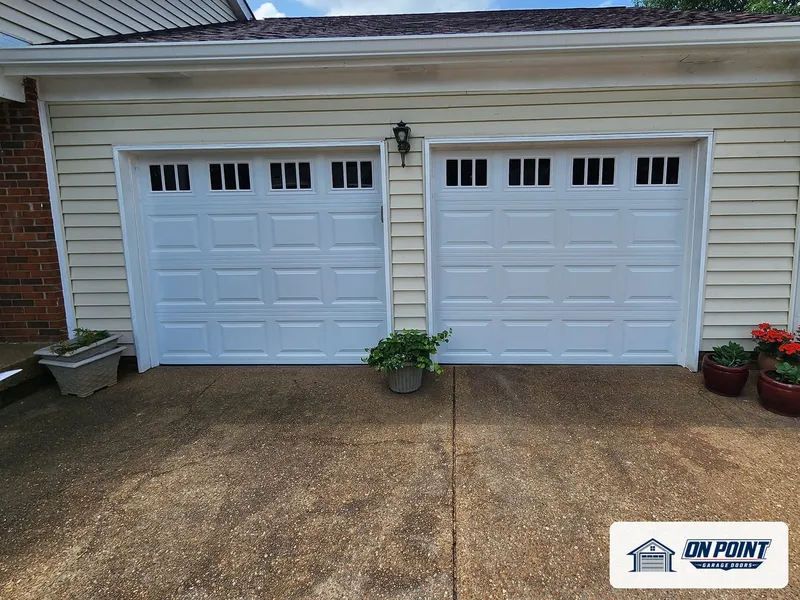
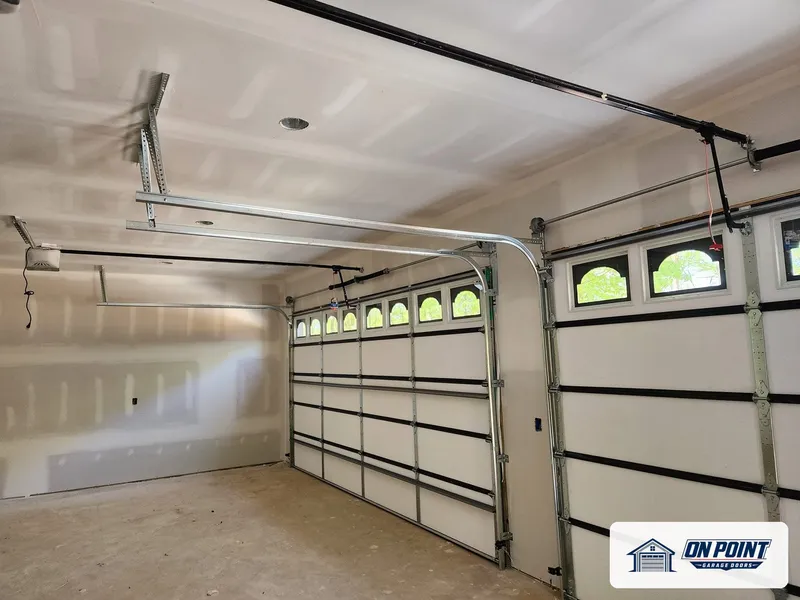
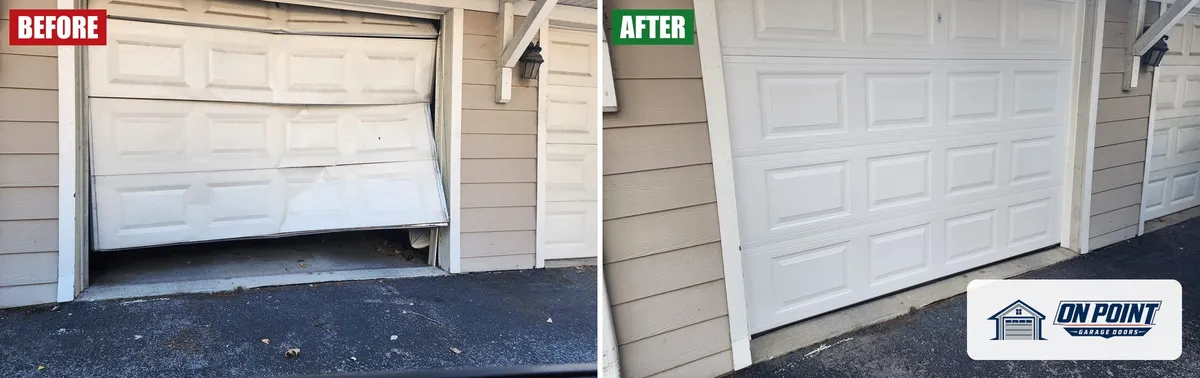
These photos are from our own jobs, with our logo on them.


Garage door repair in Dix Hills for the side-entry and multi-bay garages on wooded acre lots, the farm ranches, colonials and contemporaries off Vanderbilt and Deer Park avenues and Half Hollow Road, and the gates at the head of long driveways. The estimate is free.
One-acre zoning shaped this part of Huntington. Houses stand back among tall trees on hilly ground, and the garage is usually attached at the side, turned away from the street, with two, three or more bays. Doors are bigger and heavier than the Long Island average, and many were picked as part of the architecture.
That weight changes the engineering. A carriage door with real wood overlay, a tall arched opening or a glass-and-aluminum front on a contemporary can need paired springs, larger drums, heavier track and an operator rated for the load. An undersized part does not fail at once; it just fails repeatedly.
Custom work also means paperwork. The manufacturer's label, a section drawing or an old installation sheet can save a great deal of guessing when one panel of a special door is damaged. If you have any of it, set it out for the visit, and if not he measures and photographs the details.
The other fact of life is distance. The garage may be a long way from the curb, up a grade and out of sight of the road, so remote range, keypad placement, camera and app signal all behave differently than they would on a small lot. Those are tested where you use them, at the turn of the driveway.

On a property with several openings, the failed door is rarely the only one with something to say. He repairs what you called about and, if you wish, rates the others so you can plan without surprises.


Wood and overlay carriage doors. Moisture and finish coats add pounds over time, and fastenings in a composite face can let a decorative board creep. Balance is taken from the present weight. Any loose overlay is secured or flagged, because a falling board and a closing door are a bad combination.
Oversized and high-lift doors. A bay built for a lift or a sports car collection may carry its tracks up the wall before they turn. Those use tapered or extended drums and their own cable math, and a spring chosen from the opening height alone will never balance one.
Matching bays are compared side by side, since a healthy twin is the best evidence of how the struggling one ought to run.
Glass and contemporary doors. Aluminum frames with large panes are strikingly heavy and unforgiving of twist. If one cable slips, the frame racks and a pane can crack. He looks at the center and end stiles, the glazing strips, the operator arm's attachment and whether the top section has enough reinforcement for the rail that pulls on it.
Accidental hits. A curved approach to a side-entry garage invites a corner of the car into the jamb, and deliveries reverse into doors they cannot see. With a custom front, resist pushing a bent section back, since a careful assessment may save the rest of the door.
These hills are part of the western Suffolk side of our coverage. Homes and businesses across Long Island, Brooklyn and Queens can book us.
Tell us how many bays there are, what the problem door is made of and how to get through any entry gate, so the technician arrives with a plan and suitable springs.
A heavy door resting crooked over a car, or an estate left open because a bay will not descend, is urgent. Keep people out from under it and describe exactly that when you call.
Winter. The grades ice over, and a car that slides on the apron finds the door. Shaded side entrances hold snow for weeks against the bottom seal, while a heated garage on the other side of the same panel keeps it wet. Power failures from downed limbs leave big doors stranded.
Spring. Meltwater runs down the slopes toward whichever bay is lowest. Wood faces show their winter here as lifted finish or dark bottom edges, and it is far easier to reseal early than to replace a rotted rail.
Summer. Deep shade keeps some doors damp while sun bakes their neighbors, so two identical bays can fade and move differently. Pool gear, mowers and visiting cars put seldom-used doors back into service all at once.
Fall. Oak leaves are measured in truckloads on these lots and they bank against side-entry doors. Ahead of storm season, test the backup battery under the real load of the door, since a tired one may manage a light door and not yours.
He begins with weight, width, lift type and construction, then reads the hardware against them: shaft, bearings, drums, cable, track gauge and struts. Only with that picture does he judge whether the part that broke was worn out or was wrong for the door from the start.
The explanation comes with evidence, whether a scale reading, a worn bearing in his hand or a drum that does not suit the lift. The free written estimate is divided by bay, so you can approve the disabled door today and hold the notes on the others.
Large doors are repaired with commercial-grade or high-cycle hardware where the load calls for it, and special sections, glass and finishes are ordered from their makers. If a second technician or a return visit is the safe way to handle the weight, that is planned openly.
Each repaired bay must hold at several heights, travel without twisting and reverse from both the beam and contact tests. He then tries remotes and any keypad from the far end of the approach.
Protective attention is given to finished floors, vehicles and stone veneer while he works, and all removed hardware is hauled away afterward.
A house like this often has staff, a caretaker, a working parent and an alarm company all involved in who may open what. Tell us who will meet the technician, whether gate and alarm arrangements are needed and which cars must be moved. Settling that at booking keeps the visit on the door.
Preserving a handsome original door is a respectable answer whenever its structure allows, and you decide after reading the estimate.
On big doors the load is the whole story. Every component between the bottom corner and the spring anchor carries more than usual, so modest wear that a small door would tolerate becomes the start of a failure.
Springs. Pairs and even sets of four share the lift on the heaviest doors here. When one breaks its partners cannot hold the weight. They are evaluated and generally renewed together, matched by wire, diameter and length to the weighed door.
Cables. Heavy doors use thicker cable, and it must suit the groove of the drum. Flattened spots, birdcaged strands or uneven tension between sides are reasons to stop using that bay until both have been corrected.
Safety eyes. Wide openings separate the pair by a long distance, so a slight bend in one bracket moves the beam well off target. Landscaping crews and stored equipment cause many of those bends, and solid mounts cure most repeats.
Bearings and tracks. End plates, center bearings and long shafts quietly wear under the load and begin to grind or whip. Horizontal track on a deep garage needs sturdy rear hanging, or it sags and lets the rollers run downhill.
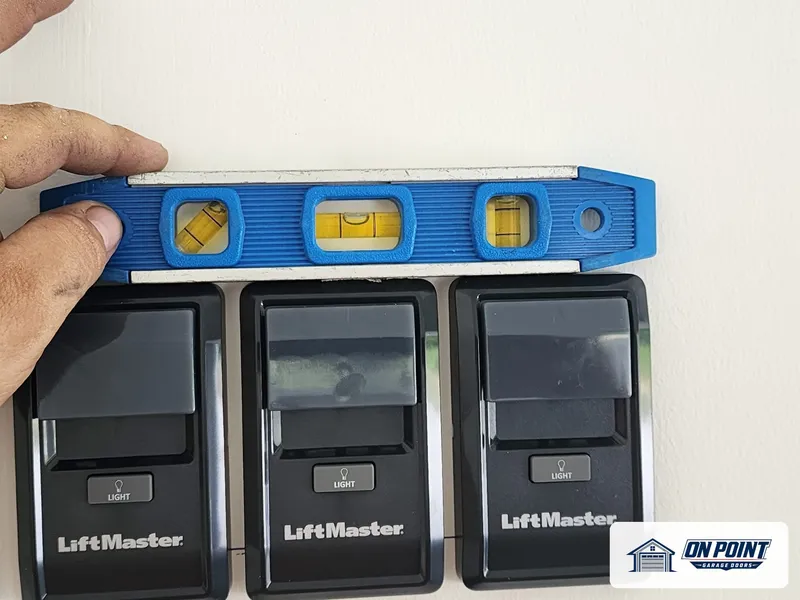
Openers and controls. Shaft-mounted or heavy-duty trolley operators are matched to weight and lift, one for each bay. He can also sort out which remote runs which door, add smart control where the signal reaches and test that the gate and garage controls do not interfere.
A useful call includes the number and material of the doors, any label visible on the inside edge and how the technician gets from the road to the garage.
We provide free estimates for single bays, whole sets of doors and the driveway gates that go with them.
Repeated breakage usually means a mismatch. Wood doors gain weight from moisture and refinishing, and replacement springs are sometimes copied from the old ones instead of calculated. Worn bearings and drums add to the load. The technician weighs the door, checks the shaft hardware and sizes the set for what is hanging there now.
In most cases, if the operators are compatible. A multi-button remote can assign a button to each bay, and several smart systems show multiple doors in one app. Older or mixed-brand units may need a receiver or a newer opener. He identifies each unit and confirms the signal where the cars actually approach.
Often. Trees, metal doors, foil insulation and interference from LED bulbs or electronics all shorten range. A fresh remote, a repositioned antenna or an external receiver can help, and a keypad can go where the car pauses. He tests from the driveway rather than beside the motor before recommending hardware.
Not if the maker or a millwork source can reproduce that piece and the surrounding structure is straight. Labels, drawings and finish information make matching easier. Arched top sections are the hardest to duplicate. He documents the profile and dimensions, checks the hinges and stiles nearby and then presents the practical choices.
It depends on ceiling height and how the track runs. Converting to high lift carries the door up the wall and frees space over the car, but it needs new drums, cables, springs and usually a shaft-mounted operator. Bring the lift's dimensions to the inspection so the door work and the lift do not collide.
Set a time with whoever controls access, tell us which bay has failed and we will inspect it properly and write the estimate free.
Call us at (929) 429-2429.
Name the bays and the fault; a free estimate, separated by door, follows the inspection.