Takes 30 seconds. We call you back to set a time.
Schools, churches, synagogues, mosques and temples rarely think of themselves as places with overhead doors, yet many have a row of them: a maintenance garage, a bay for the bus, a parish house garage full of tables, a kitchen shutter, a grille across a hallway. They are used by many hands, looked after by a custodian or a volunteer, and surrounded by children. That mix changes what a good door setup looks like. This page covers the doors these buildings tend to have and how to keep them safe and working. Free estimate at (929) 429-2429.
By Sean Cohen, owner, On Point Garage Doors · Updated
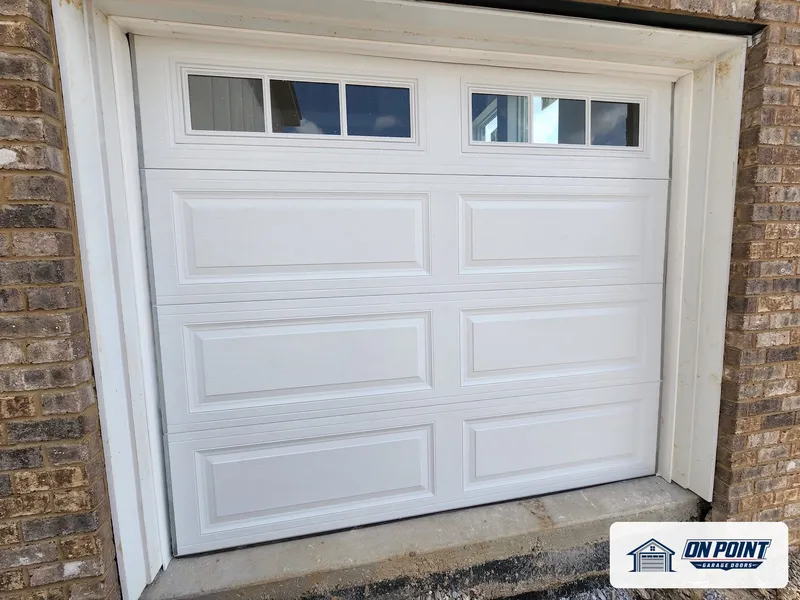
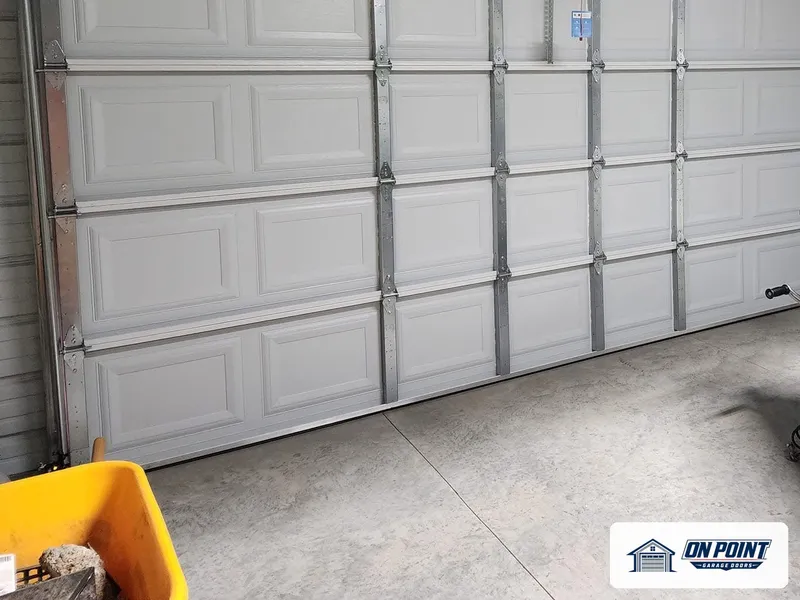
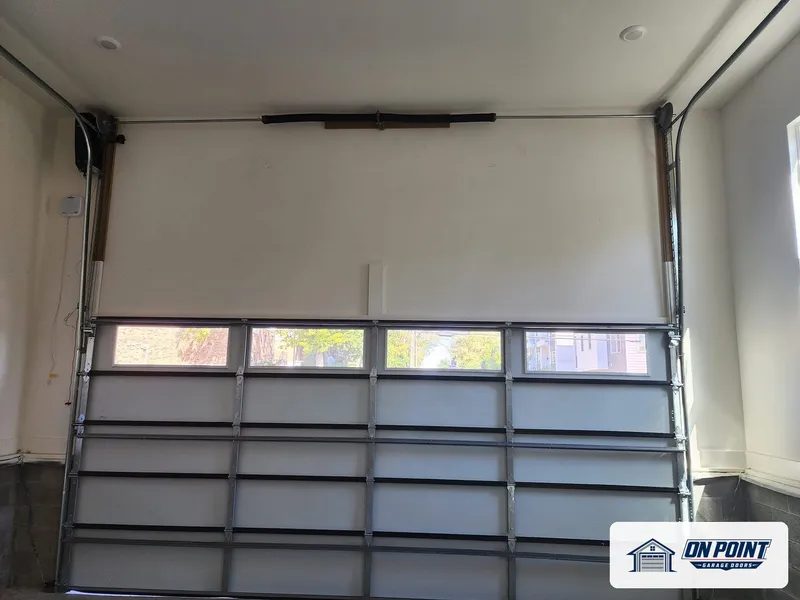
These photos are from our own jobs, with our logo on them.


Take a walk and count, because the total is often a surprise.
A home door has one family that learns its moods. A congregation's garage has youth leaders, food pantry volunteers, caterers, coaches and the snow crew. People who do not know a door will force it, run it into a stored ladder or walk away from it half open. Simple labeled controls, a short written note on what to do when it sticks, and one named person to report to prevent much of the damage.
Children treat a moving door as a game. On motorized doors the photo eyes, sensing edges and reverse have to work, and the controls belong where the operator can see the whole opening and where small hands cannot get to them. Constant-contact controls, which move the door only while held, suit some openings near play areas. Hand-run doors need sound pinch points, no dangling ropes at neck height and a balance that will not let them drop.
Remotes and codes wander. A volunteer from years back may still have one, and so may a former contractor. Key switches, keypads with codes that get changed, or an access system tied to the rest of the building give the office control again. When we service an operator we can clear its memory and pair only the devices on the list you give us. Doors that open into occupied parts of a school deserve the strictest list.
Buses and vehicles with lifts need height and width to spare, and mirrors are the first thing to find a jamb. A bay door that runs at every departure and return wears like a commercial door, so residential springs and openers age fast there. High-cycle springs, a commercial operator, posts beside the guides and a light or window so the driver can see all add up to fewer failures.
A counter shutter or hallway grille is small, and when it will not close the whole room cannot be secured. Grease and food reach the guides in kitchens, and trays and chair carts bend the bottom bars in halls. Both run on springs hidden in a barrel, just as larger roll-up doors do, so a curtain that has turned heavy is not one to wrestle. Report it and keep hands out of the guides.
Some rolling doors and shutters in these buildings are fire-rated and built to close by themselves in a fire. They must not be propped, blocked, painted shut or rewired to stay open, and their testing follows rules that the building's fire safety contact keeps track of. If you are not sure which doors these are, look for a label on the door or guide, and ask before any work is booked on it.
A stone church or an old brick school can have a garage with wood sections, a swing pair or a tilt-up door from generations ago, set in masonry with little headroom. Some can be repaired and kept. Others have rot at the bottom rail or hardware that is no longer safe. Where the look of the front matters to a congregation or a landmark rule, a new door can often echo the old panel pattern, once the trustees know what approvals apply.
The building has days it cannot be disturbed: services, the Sabbath, holy days, exams, dismissal, weddings and funerals. Planned work fits best into school breaks and quiet weekdays, and noisy drilling can be kept away from classes and prayer. Tell us those dates when you book, along with any sign-in or escort rules for people working near students, and the visit is planned around them.
The person who meets the technician often is not the person who approves the work. We write the estimate door by door, with photos where they help, so it can be forwarded to a principal, a facilities office, trustees or a property committee and still make sense. Safety items are marked apart from improvements, which lets a board act on the first and take the second to its next meeting.
Summer break, or the quiet stretch after the holidays, is a natural time to check every door at once: springs, cables, rollers, guides, anchors, locks, operators and safety devices. Doing the rooms and garages on one visit also builds a simple list of what the buildings have, which helps the next custodian as much as it helps the door.
Yes. Give us the calendar when you book and we plan the visit for school breaks, quiet days or times when the rooms are empty.
Yes. The operator's memory can be cleared and only the remotes, keypads and codes on your current list paired again.
On a lightly used rectory garage it can be. A bay that runs many times a day, or a large heavy door, calls for a commercial operator.
Stop pulling on it, keep hands out of the guides and the barrel area and have it looked at. A spring, a bent bar or packed guides are common causes.
Yes. We look at the doors and give you a written estimate that can go straight to your board or office.
Across Brooklyn, Queens and Long Island, tell us what the door is doing and we set a visit that fits your day.
Free estimate, call (929) 429-2429.
Tell us what the door is doing and we will give you an honest arrival time. The estimate is free.
Easier to explain by phone? Call (929) 429-2429.
Tell us what the door is doing. The estimate is free either way.