Takes 30 seconds. We call you back to set a time.
A counter shutter is a small rolling door built to close over a counter or a service window. You see them over takeout windows, deli and coffee counters, school cafeterias, pharmacy windows, ticket booths, concession stands and reception desks. They work like a full-size rolling steel door, with a curtain of slats, a spring in a barrel and guides on each side, only at a smaller scale and usually lifted by hand. This page explains how they work, what tends to go wrong and what we look at when one stops rolling smoothly. Free estimate at (929) 429-2429.
By Sean Cohen, owner, On Point Garage Doors · Updated
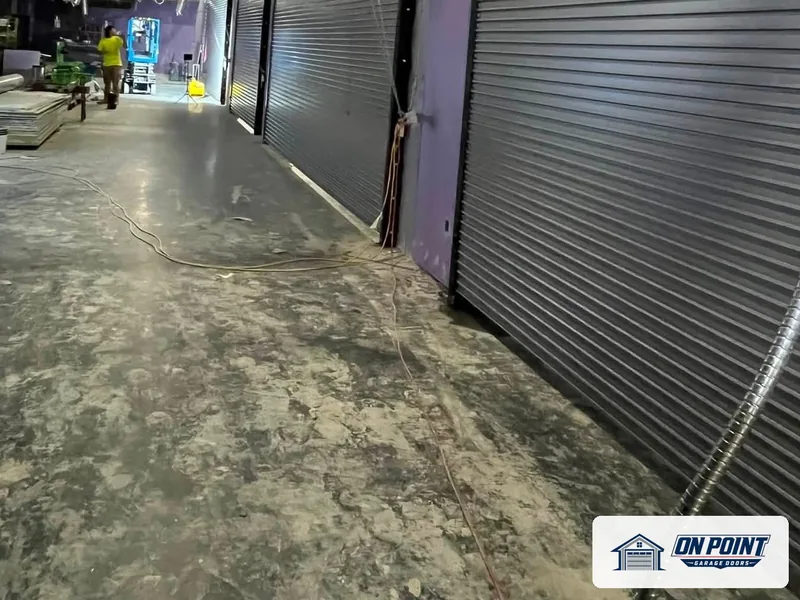
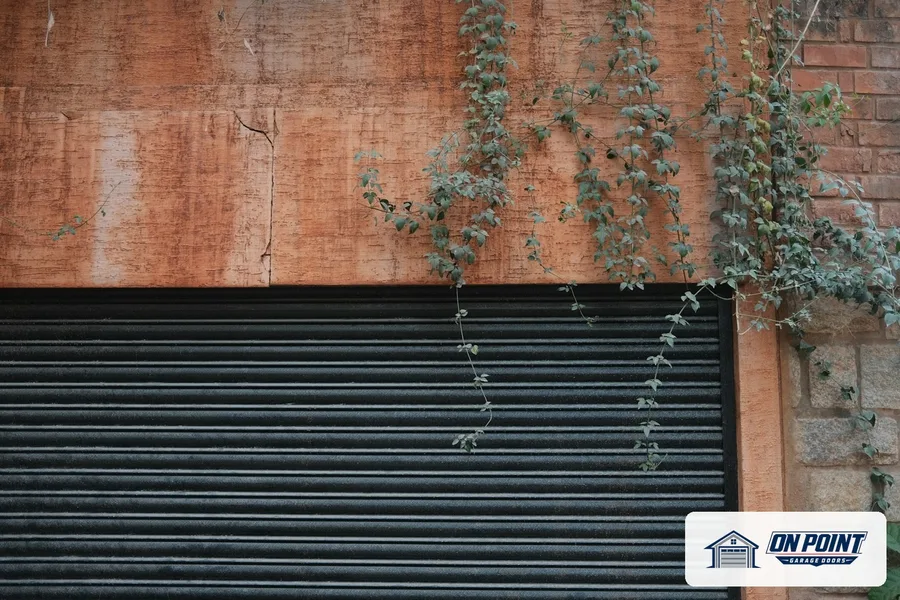
These photos are from our own jobs, with our logo on them.


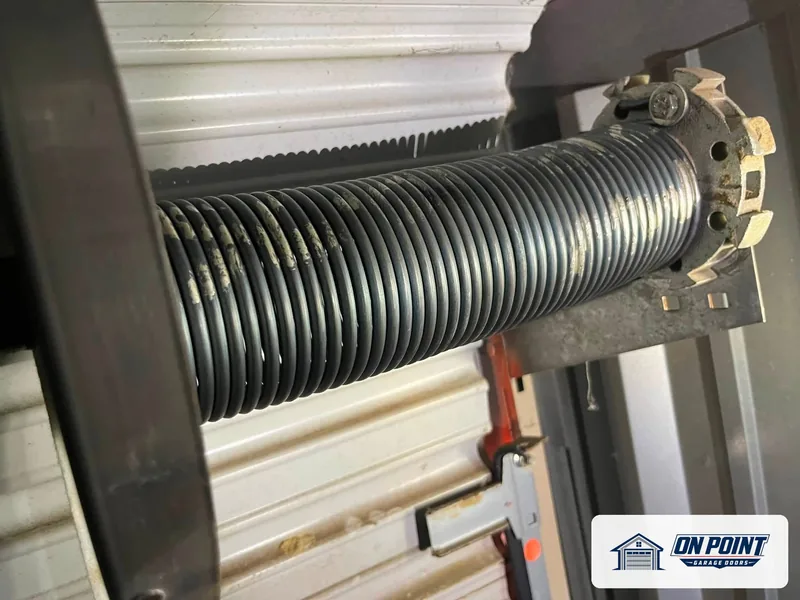
The curtain is made of narrow slats, often steel, aluminum or stainless, that roll up around a barrel inside a small hood above the opening. A spring inside the barrel balances the curtain, so a person can lift it with one hand. The curtain runs in a guide on each side and comes to rest on the counter, where a bottom bar closes it off. Some have a lock in the bottom bar and some lock at the sides.
When the curtain feels heavy, the spring in the barrel has lost tension or broken. Over many years every spring tires, and a shutter that once floated up begins to fight back. Forcing it strains the slats, the bottom bar and the person lifting. Spring work on a counter shutter is still spring work: the barrel holds stored force, and it is a technician job.
If the curtain creeps down when you let go, the spring is too weak for the curtain. Staff often prop it with a pole or tie it off, which is a risk at a busy counter. Restoring the right tension lets it stay where it is left. Sometimes a stop or a holder is worn as well and needs replacing.
Counters get knocked by carts, trays, deliveries and customers leaning in. A bent guide or a bent end slat makes the curtain catch on the way up or down. Grease, food and dust build up in the guides of food service shutters and make the curtain drag. Straightening or replacing the guide, or the damaged slats, gets the curtain running freely again.
The bottom bar takes a beating each time the shutter is brought down on the counter. When it bends, the lock no longer lines up with its keeper, so the shutter will not lock at closing time. Worn cylinders and lost keys are common too. A new lock, a straightened bar or a new keeper usually fixes it.
Larger counter shutters, and ones that are used many times a day, sometimes have a small motor in the barrel with a key switch or a button. When a motorized shutter stops, the cause may be the motor, the limits, the switch or simply a curtain that is binding in the guides. The curtain is checked first, so a good motor is not blamed for a bent slat.
Some counter shutters, such as those over kitchen pass-throughs or between a lobby and a stairwell, are fire-rated. They are built to close on their own in a fire, often with a fusible link or an alarm-linked release. These doors have their own testing and service needs. Our page on fire-rated rolling doors covers how those systems work in general.
Shutters over food counters live with steam, grease and frequent washing. Stainless or aluminum slats hold up better than painted steel there. Keeping the guides free of buildup and having the shutter looked at during regular kitchen maintenance helps it last. Our technicians work around the business, before opening or after closing, when the counter can be cleared.
Most counter shutter problems are springs, slats, guides and locks, and those can be repaired. A new shutter makes sense when the curtain is badly damaged, the barrel is rusted through or the business wants a different finish, a motor or a fire-rated unit. We measure the opening and tell you which way makes sense.
The technician checks the curtain, the slats, the guides, the bottom bar, the lock, the barrel and the spring, and the motor if there is one. You get a written estimate before any work starts, and the shutter is run and locked after the work to make sure it closes the way it should.
A small rolling door that closes over a counter or service window, such as a takeout window or a pharmacy counter.
Usually the spring in the barrel has lost tension or broken, so the curtain is no longer balanced.
The bottom bar is often bent, so the lock no longer lines up with its keeper. Worn locks are common too.
Often yes, on shutters that are large or used many times a day.
Yes. We check the shutter before any work starts.
Across Brooklyn, Queens and Long Island, tell us what the door is doing and we set a visit that fits your day.
Free estimate, call (929) 429-2429.
Tell us what the door is doing and we will give you an honest arrival time. The estimate is free.
Easier to explain by phone? Call (929) 429-2429.
Tell us what the door is doing. The estimate is free either way.