Serving Brooklyn, Queens and Long Island(929) 429-2429Open six days a weekFree estimateGuaranteed work
On Point Garage Doors
Open 24 hours Sun-Thu, Fri until 5 pm Free estimate Springs, openers, cables We come to you
Emergency?Call nowBook free estimate
New York, NY - open six days a week

Garage doors for warehouses

Free estimateSame-day serviceCommon parts on board
  • Free estimate
  • Same-day service
  • Common parts on board
Emergency garage door repair★★★★★ 5.0 on Google · 42 reviews

Book your free estimate

Takes 30 seconds. We call you back to set a time.

Or just call (929) 429-2429 and talk it through.

Home › Warehouse Garage Doors

A warehouse depends on its doors. Trucks back up to the dock doors, forklifts run through the inside doorways, and the drive-in door at the side takes the box trucks and pickups that do not use the dock. When one door fails, freight piles up, staff work around it and the building sits open to the weather. Warehouses in Brooklyn, Queens and Long Island range from old brick buildings with a single street door to modern distribution buildings with a long row of docks. This page covers the doors we see most often in those buildings and what keeps them working. Free estimate at (929) 429-2429.

By Sean Cohen, owner, On Point Garage Doors · Updated

Real jobs. Real photos.

These photos are from our own jobs, with our logo on them.

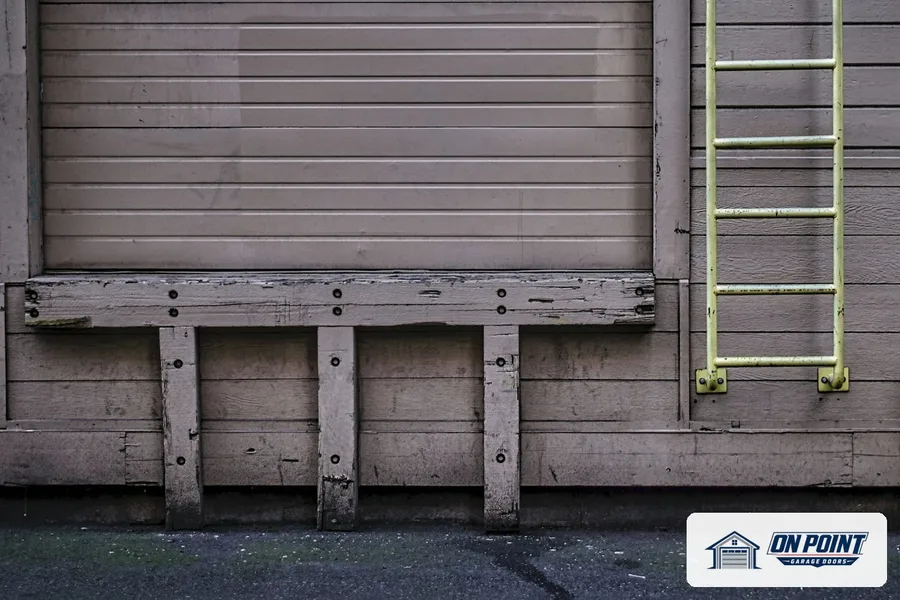
Roll-up door at a loading dock, from one of our jobs
Roll-up door at a loading dock
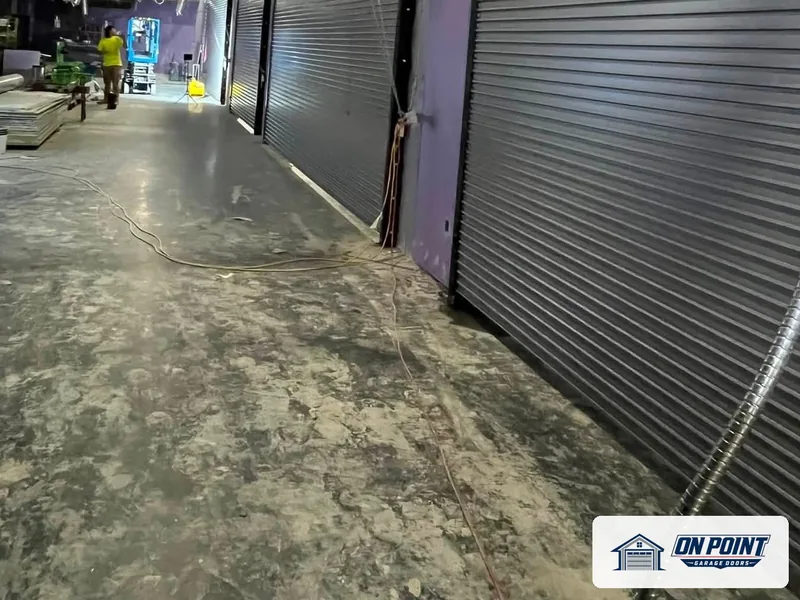
Rolling doors on a commercial building, from one of our jobs
Rolling doors on a commercial building
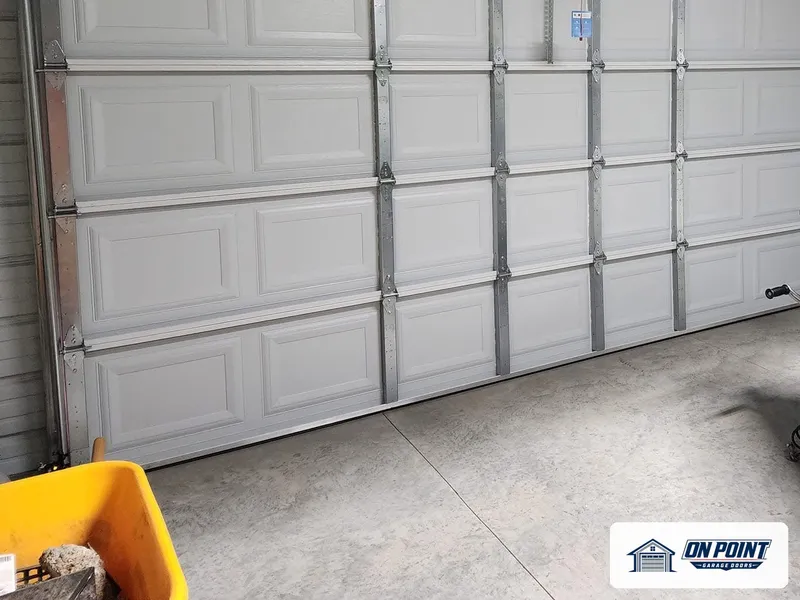
Steel building door on a job, from one of our jobs
Steel building door on a job

Dock doors

The doors at the loading dock open and close with every truck. Most are sectional steel doors, often insulated, sometimes with a vision panel. They work with dock levelers, bumpers and seals or shelters around the opening. When the door does not line up with the seal or the bottom does not close on the leveler, heat, cold and rain get in around every trailer. Our page on dock seals and shelters covers the parts around the door.

Drive-in doors

Many warehouses also have one or two drive-in doors at floor level for box trucks, pickups and the forklift that takes freight out to the yard. These are usually larger sectional or rolling steel doors. They are the doors most likely to be hit by a vehicle, so strong tracks or guides, good bumpers and a bottom bar that can take a knock all matter.

Inside doorways

Between the dock area and the warehouse floor, or between a cold room and the rest of the building, there are often doors that stay open most of the day. Fabric high-speed doors, rolling doors and strip curtains are common there. The right choice depends on how often forklifts pass and whether the doorway separates temperatures. Our page on high-speed roll-up doors covers those doors in detail.

Rolling steel or sectional

Warehouses use both. Rolling steel doors coil above the opening and leave the ceiling clear for racks and lights, and they are tough and secure. Sectional doors insulate better and are easy to repair panel by panel after a forklift strike. Many buildings use sectional doors at the docks and rolling doors at the drive-ins and the street. Our comparison of commercial sectional and rolling steel doors goes into the trade-offs.

Forklift strikes

Forklift and truck strikes are the most common reason a warehouse door stops working. A bent bottom section, a track pushed out of line, a guide knocked off the wall or a kinked rolling curtain can leave the door stuck open or shut. Some strikes are minor and can be fixed on the first visit. Others need parts. Our page on commercial door impact damage covers what usually happens to each kind of door.

Springs and heavy use

Warehouse doors cycle many more times than a home door, so springs wear out sooner. Standard springs on a busy dock door can fail long before anyone expects. High-cycle springs, chosen for the door's real use, last much longer. When we replace springs on a warehouse door, we ask how often it opens and size the springs for that.

Operators and controls

Most warehouse doors are motorized. Operators range from trolley and jackshaft types on sectional doors to hood-mounted operators on rolling doors. Controls may include three-button stations, remotes, pull cords for forklift drivers, loop detectors in the floor and connections to the building's access system. A door that will not respond is often a control or safety device problem rather than a motor problem. Our page on commercial door openers covers the operator side.

Security when the building closes

When the building closes, every door has to lock up tight. Rolling steel doors with locking bottom bars, sectional doors with slide locks or operator locks, and well-lit, camera-covered dock areas all help. A door that does not fully close or a lock that no longer lines up is a security gap, and it is worth fixing quickly.

Weather, heat and cold

A warehouse door left open for loading lets out heat in winter and lets it in during summer. Insulated door panels, good perimeter seals, dock seals that fit the trailers and doors that close as soon as the forklift is through all help. In older buildings near the water, wind and salt air add rust and wear on tracks and hardware.

Planned service

A warehouse with many doors does best with planned visits. We look at every door on a schedule, find the worn springs, loose tracks, frayed cables and failing sensors, and fix them before they leave a door stuck. Our page on commercial garage door maintenance explains what those visits cover.

What a visit includes

The technician checks each door that needs attention, its tracks or guides, springs, cables, rollers, bottom bar, seals, operator and safety devices, and tells you what is wrong and what it will take. You get a written estimate before any work starts, and we plan the work around loading so the building keeps moving.

Questions we get asked

What kind of door is best for a warehouse dock?

Most docks use insulated sectional steel doors that work with dock levelers and seals. Rolling doors are common at drive-ins.

Why do the springs on our dock door keep breaking?

Dock doors open many times a day and standard springs wear out quickly. High-cycle springs sized for that use last longer.

A forklift hit our door. Can it be repaired?

Often yes. Bent sections, tracks and bottom bars can usually be repaired or replaced without a whole new door.

Can you service all the doors in our building on a schedule?

Yes. Planned visits catch worn parts before they leave a door stuck.

Is the estimate free?

Yes. We check each door before any work starts.

Booking takes a minute

Across Brooklyn, Queens and Long Island, tell us what the door is doing and we set a visit that fits your day.

Free estimate, call (929) 429-2429.

Warehouse door down? We will get it moving

Tell us what the door is doing and we will give you an honest arrival time. The estimate is free.

Easier to explain by phone? Call (929) 429-2429.

Two minutes to a free estimate

Tell us what the door is doing. The estimate is free either way.

Or just call (929) 429-2429 and talk it through.

The other six things that go wrong