Serving Brooklyn, Queens and Long Island(929) 429-2429Open six days a weekFree estimateGuaranteed work
On Point Garage Doors
Open 24 hours Sun-Thu, Fri until 5 pm Free estimate Springs, openers, cables We come to you
Emergency?Call nowBook free estimate
New York, NY - open six days a week

Garage doors for food plants

Free estimateSame-day serviceCommon parts on board
  • Free estimate
  • Same-day service
  • Common parts on board
Emergency garage door repair★★★★★ 5.0 on Google · 42 reviews

Book your free estimate

Takes 30 seconds. We call you back to set a time.

Or just call (929) 429-2429 and talk it through.

Home › Food Plant Doors

In a bakery, commissary, meat or seafood house, beverage plant or produce distributor, a door is part of the process. It holds temperature, keeps pests and dust outside, separates raw from finished and moves pallets all shift. It also gets hosed, chilled, heated and hit. A door that would last for many years in a dry warehouse can fail quickly here for reasons that are easy to miss. This page follows the product from the dock to the cold room and looks at what each opening needs. Free estimate at (929) 429-2429.

By Sean Cohen, owner, On Point Garage Doors · Updated

Real jobs. Real photos.

These photos are from our own jobs, with our logo on them.

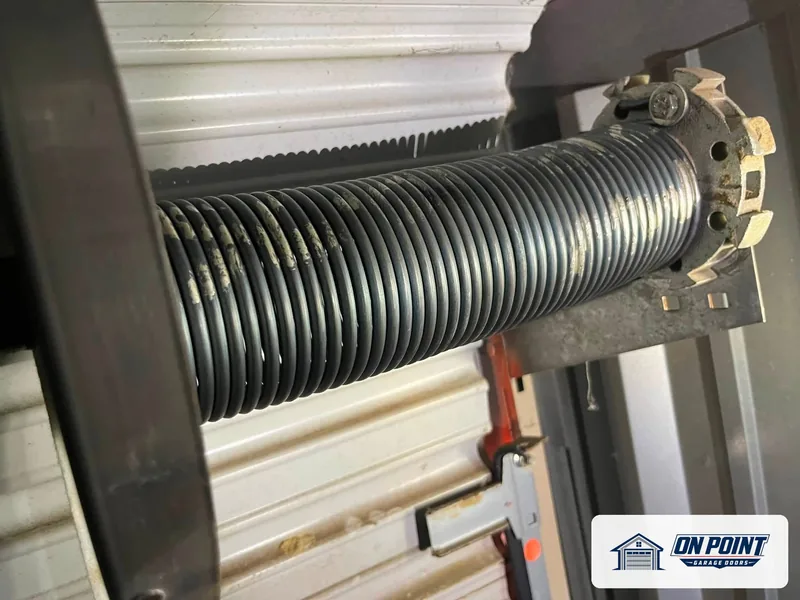
Roll-up door spring and bracket, from one of our jobs
Roll-up door spring and bracket
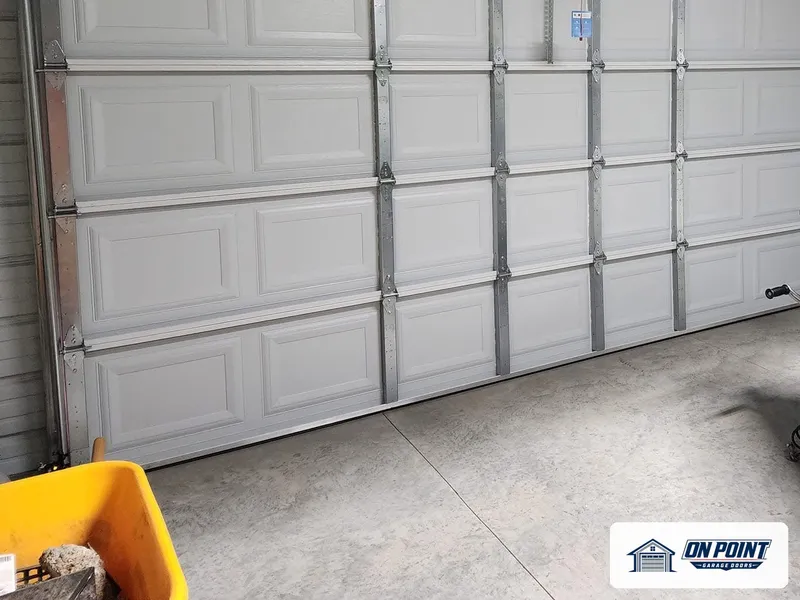
Sectional door on a steel building, from one of our jobs
Sectional door on a steel building
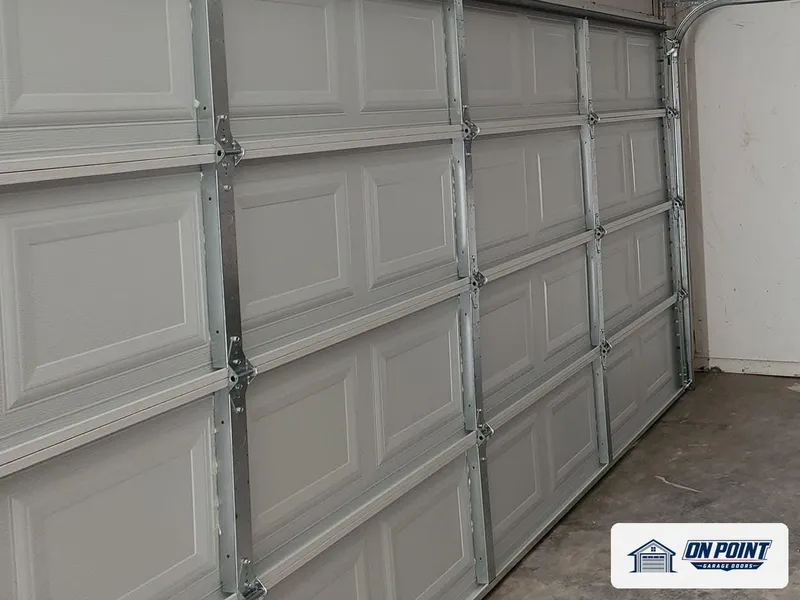
Tracks inside a new door, from one of our jobs
Tracks inside a new door

Each opening has a different job

One plant can need several kinds of door, and treating them alike is where trouble starts.

Washdown is hard on doors

Hot water, foam and sanitizer reach everything. Plain springs, cables and fasteners rust, bearings lose their grease and operators take water through conduit openings. Where rooms are hosed, look at stainless or galvanized hardware, sealed bearings, fabric or coated curtains and operators with enclosures rated for that exposure. Tell the technician which chemicals are used, since some attack aluminum and galvanizing more than steel.

Cold rooms and moving air

Whenever warm, damp air meets a cold opening it leaves water, and in a freezer that water is ice. Ice in guides, on photo eyes and along the sill makes doors stop, reverse or tear their seals. The cause is frequently a door that stays open too long, a worn seal or an activation device set to fire when nobody is passing through. Fixing the ice without fixing that brings it straight back.

Fast doors inside the building

High-speed fabric or rigid doors cut the time an opening stands open, which is why they turn up between rooms at different temperatures. The speed comes with more electronics: controllers, light curtains, loops and breakaway curtains that reset. When one starts faulting, the sensors and the reset track are looked at before the drive. Our high-speed door page explains those systems in detail.

Gaps are invitations

A mouse needs very little space and an insect needs less. Torn astragals, daylight at the corners of dock doors, missing side seals, a bent bottom section and holes where old hardware was removed are the openings we look for. Dock levelers and their pits are another route in. Seals on a food plant are wearing parts, and replacing them on a schedule is easier than explaining the gap later.

Materials and surfaces

Ledges collect product. Smooth-faced sections, curtains without deep ribs and hardware that can be reached for sanitation are kinder to a room where food is exposed. Wood doors and bare rusting steel do not belong near open product, and flaking paint over a line is its own problem. Your food safety lead knows the standard the plant is held to. Share it before a door is chosen, and we work from it.

Forklifts and pallet jacks

Wet floors and tight corners mean impacts. A struck dock section lets warm air in along the bend, and a clipped guide jams a rolling curtain. Bollards at the jambs, impactable bottom sections, knock-out panels on sectional doors and good sight lines all lower the damage. Drivers should never duck under a door that is still rising, because the forks or mast often arrive before the gap does.

Cycles add up quickly

A door that opens for every pallet can go through a spring's working life in a fraction of the time a storage door takes. High-cycle springs, sized to the true weight of the insulated door, make sense on the busy openings. So does counting: if the same door needs attention again and again, the answer may be a different door type for that opening instead of the same repair repeated.

Doors with fire or hygiene duties

Some openings are fire-rated, and some are interlocked so two doors cannot stand open at once. Neither should be altered to get through a busy shift. A bypassed interlock or a propped fire door is easy to stop noticing, so both are worth a look on every walk-through. We note them and leave decisions about the system to the people responsible for it.

Working without stopping the line

Repairs near product need planning. We can schedule between production runs or on sanitation days, follow the plant's rules for sign-in, hairnets and tools, and keep count of small parts so nothing is left behind above a line. Metal filings and old grease are cleared from the work area before the room is handed back to your crew for sanitation.

What the estimate looks like

The technician walks the openings with maintenance or the plant manager and checks structure, springs, cables, guides, seals, operators and safety devices. The written estimate is sorted by door and separates what is unsafe, what threatens temperature or pest control, and what can wait for a planned shutdown. Parts in stainless or special enclosures may need ordering, and that is noted.

Questions we get asked

What doors are used in food processing plants?

Usually a mix: insulated sectionals at docks, high-speed doors between rooms, special doors at freezers and rolling or corrosion-resistant doors in wet areas.

Why does our cooler door keep icing up?

Warm damp air is getting in, often through a worn seal or a door that stands open too long or triggers when nobody is there. The ice is the result.

Can operators survive washdown?

Only if they are built or enclosed for it. Standard operators and control boxes take on water, so the rating should match how the room is sanitized.

Can you work between production runs?

Yes. Tell us the production and sanitation schedule and any plant rules, and the visit is planned around them.

Is the estimate free?

Yes. We go through the openings with you and write up each door before any work begins.

Booking takes a minute

Across Brooklyn, Queens and Long Island, tell us what the door is doing and we set a visit that fits your day.

Free estimate, call (929) 429-2429.

Door holding up production? Tell us where it is in the plant

Tell us what the door is doing and we will give you an honest arrival time. The estimate is free.

Easier to explain by phone? Call (929) 429-2429.

Two minutes to a free estimate

Tell us what the door is doing. The estimate is free either way.

Or just call (929) 429-2429 and talk it through.

The other six things that go wrong