Serving Brooklyn, Queens and Long Island(929) 429-2429Open six days a weekFree estimateGuaranteed work
On Point Garage Doors
Open 24 hours Sun-Thu, Fri until 5 pm Free estimate Springs, openers, cables We come to you
Emergency?Call nowBook free estimate
New York, NY - open six days a week

Garage doors for marinas and boatyards

Free estimateSame-day serviceCommon parts on board
  • Free estimate
  • Same-day service
  • Common parts on board
Emergency garage door repair★★★★★ 5.0 on Google · 42 reviews

Book your free estimate

Takes 30 seconds. We call you back to set a time.

Or just call (929) 429-2429 and talk it through.

Home › Marina and Boatyard Doors

A marina is hard on doors. The air is salty, the ground is wet, the wind has open water to build over, and the openings are tall because boats on trailers are tall. Then there is the calendar: some doors barely move in summer and run constantly at haul-out and launch, while the service bay never rests. From the winter storage shed to the parts room and the ship's store, this page goes through what those buildings ask of an overhead door and what we check when one lets a yard down. Free estimate at (929) 429-2429.

By Sean Cohen, owner, On Point Garage Doors · Updated

Real jobs. Real photos.

These photos are from our own jobs, with our logo on them.

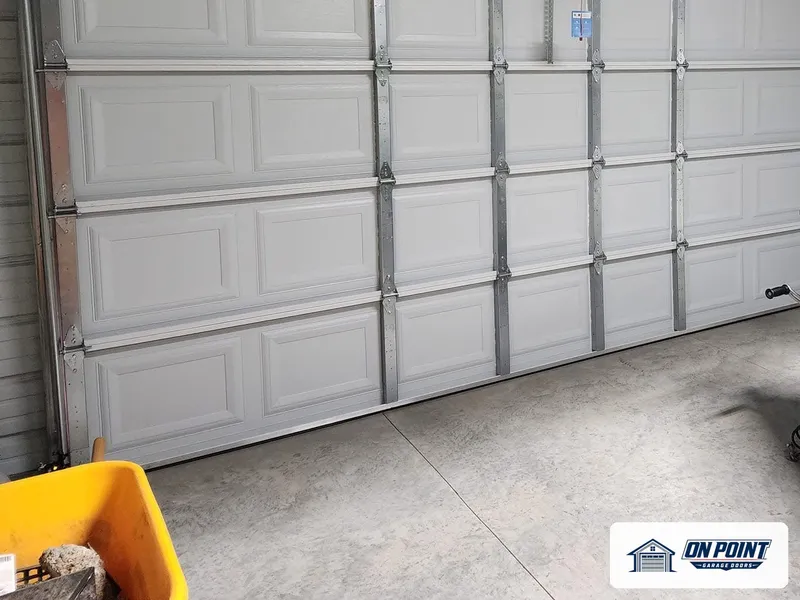
Door on a steel building, from one of our jobs
Door on a steel building
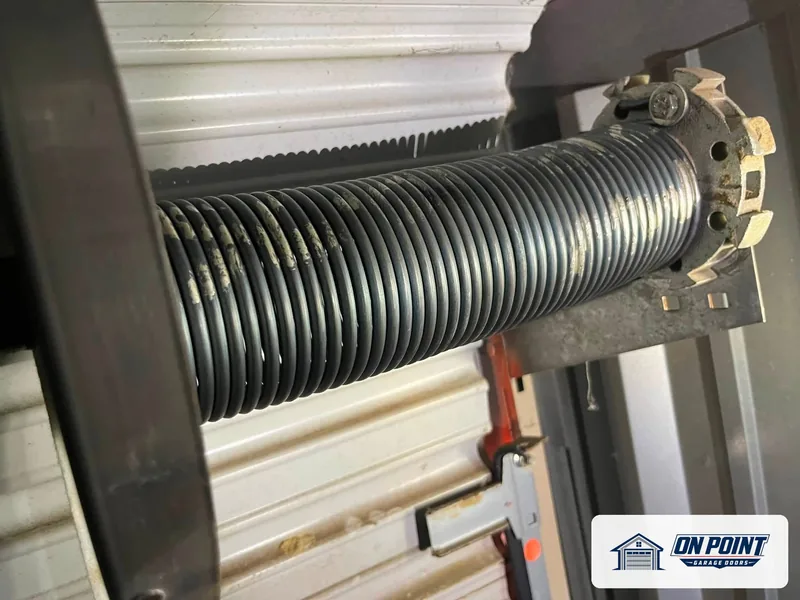
Roll-up door spring and bracket, from one of our jobs
Roll-up door spring and bracket
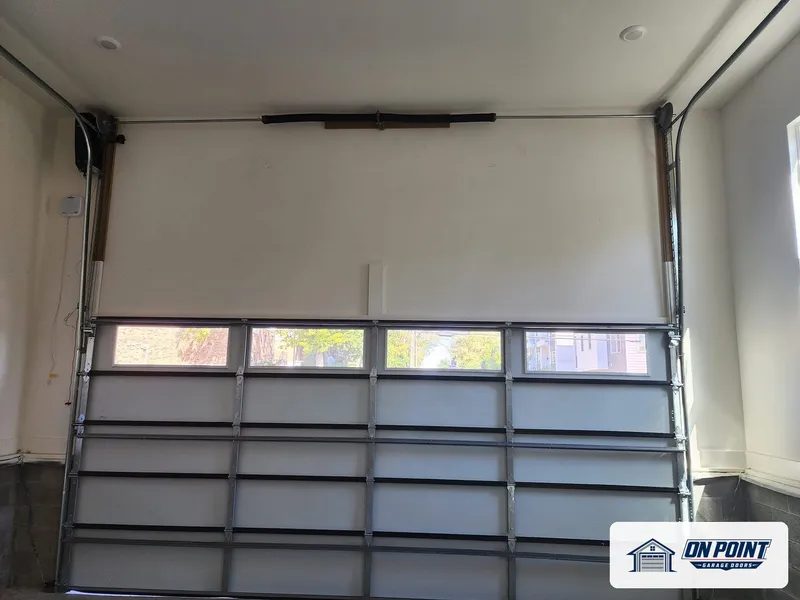
A glass row seen from inside, from one of our jobs
A glass row seen from inside

The buildings in a yard

Few marinas have one kind of door. A storage shed may have a very tall steel sectional or a wide rolling door. The engine shop often has a sectional with a row of windows for light. The parts room has a small roll-up, the store a security gate, and the fuel or pump shed a little steel door that everyone forgets until it seizes. Each fails in its own way, so we list them by building before we talk about fixes.

Salt gets into the hardware first

The face of a coated steel door can look fine while the parts that carry it are going. Salt settles on springs, cables, bearings, hinge pins and the lowest brackets, then stays damp. Cable strands rust from inside the bundle. Bearings grow stiff and make the shaft drag. Galvanized or stainless cable, coated springs, sealed bearings and nylon-wheeled rollers all slow that down, and we note where each is worth using.

Metals that do not get along

Yards are full of aluminum, stainless and plain steel, and salt water lets those metals eat each other where they touch. A stainless screw through an aluminum track or a steel bracket on an aluminum door can corrode around the fastener and work free. When we replace hardware near the water we look at what is bolted to what, and separate metals where it helps.

Height for boats on trailers

A boat rides high on its trailer, and towers, rails, antennas and outboards add to it. The clear opening is what matters, which is less than the hole in the wall once the hanging door, bottom bar and tilt of the trailer on a ramp are counted. High-lift or vertical-lift track keeps a sectional out of the way of a forklift mast or a hoist. Measure the tallest rig as it is really moved.

Wind off open water

A large door is a large sail. Wide sectionals need struts, and the track, jamb brackets and their anchors have to be sound, because in a gust those carry the load into the building. Rolling doors can be ordered with wind locks that hold the curtain in its guides. A door left partly open in a blow is far more exposed than one fully shut, so a door that will not close is urgent before a storm.

Water at the sill

Spring tides, surge and hose water all end up under the door. Standing salt water rusts bottom bars, fills guides with grit and reaches photo eyes, floor-level wiring and low-mounted operators. Controls and junctions should sit as high as the job allows. After a flood, a door that still runs should be looked at before daily use, since damage to cables and bearings shows up late.

Doors that sit all season

A storage shed door can stay shut from launch to haul-out. Seals bond to the slab, rollers flatten, springs rust in one position and birds nest on the shaft. The bad moment to learn this is with a travel lift waiting. A check ahead of each changeover runs the door through its full travel, tests balance and safety devices and catches a stiff bearing while the yard is quiet.

Forklifts, hoists and trailers

Impact is the other great enemy. Forks catch bottom bars, trailer fenders clip guides and a swinging bow finds the track. A bent guide makes a curtain jam and a bent track can let rollers out. Steel posts in front of the jambs, painted edges and a habit of waiting for the door to finish opening prevent a good share of it. Report a hit when it happens, even if the door still moves.

Operators in a wet place

A home opener has no business on a tall yard door. Commercial operators are chosen for the door's size and traffic, and there are enclosures made for damp or washdown settings. Where fuel vapor or solvents may collect, the electrical equipment has special requirements, and the building's electrician or engineer should name them before an operator is chosen. A hand chain is worth having for outages after storms.

Security for boats and gear

Outboards, electronics and tools draw attention, and many yard buildings stand empty at night. Slide locks on both sides, shrouded padlocks, a bottom bar that sits properly on the floor and slats without rot at the edges all count. If the door has an operator, an interlock keeps it from pulling against a lock that someone left on.

Backyard boat garages

The same thinking shrinks down to a canal-side house with a boat in the garage. Those doors are often residential sectionals made as tall as the framing allows, with the same salt and flood exposure. Galvanized hardware, a wall-mounted opener to free the ceiling and a strut or two on a wide door go a long way.

What a visit includes

The technician goes building by building: springs, cables, bearings, guides or track, anchors, seals, locks, operators and safety devices. You get a written estimate sorted by door, with the ones that are unsafe marked first. If a part needs to be ordered in a corrosion-resistant version, the estimate says that too.

Questions we get asked

What kind of door is best for a boat storage shed?

It depends on height, width and wind. Tall steel sectionals and rolling steel doors are both common choices. The rig, the headroom and the side room decide it.

How often should marina doors be checked?

Ahead of launch and haul-out is a sensible rhythm for storage doors. A service bay that runs all day, or any door that has been flooded, needs looking at more often.

Can you use stainless cables and galvanized springs?

In many cases, yes. Both resist salt better than plain steel. We match them to the door's weight and tell you where they are worth it.

Our door still works after a flood. Is it safe?

Not necessarily. Salt water keeps working on cables, bearings, brackets and wiring afterward, so have it inspected before it goes back into daily use.

Is the estimate free?

Yes. We walk the yard's doors with you and put the findings in writing.

Booking takes a minute

Across Brooklyn, Queens and Long Island, tell us what the door is doing and we set a visit that fits your day.

Free estimate, call (929) 429-2429.

Door trouble in the yard? Tell us which building

Tell us what the door is doing and we will give you an honest arrival time. The estimate is free.

Easier to explain by phone? Call (929) 429-2429.

Two minutes to a free estimate

Tell us what the door is doing. The estimate is free either way.

Or just call (929) 429-2429 and talk it through.

The other six things that go wrong