Serving Brooklyn, Queens and Long Island(929) 429-2429Open six days a weekFree estimateGuaranteed work
On Point Garage Doors
Open 24 hours Sun-Thu, Fri until 5 pm Free estimate Springs, openers, cables We come to you
Emergency?Call nowBook free estimate
New York, NY - open six days a week

Rolling security grilles

Free estimateSame-day serviceCommon parts on board
  • Free estimate
  • Same-day service
  • Common parts on board
Emergency garage door repair★★★★★ 5.0 on Google · 42 reviews

Book your free estimate

Takes 30 seconds. We call you back to set a time.

Or just call (929) 429-2429 and talk it through.

Home › Rolling Security Grilles

A rolling grille is the open cousin of the solid roll-down gate. Instead of solid slats it is made of rods and links in a pattern you can see through, so a closed store, a pharmacy counter, a lobby or a parking entrance stays visible and gets light and air while it is locked. Grilles are common on storefronts, in malls, at school and office lobbies, and across garage entrances in apartment buildings. We repair, motorize and install rolling grilles across Brooklyn, Queens and Long Island, and we keep the parts that fail most often on our trucks. Free estimate at (929) 429-2429.

By Sean Cohen, owner, On Point Garage Doors · Updated

Real jobs. Real photos.

These photos are from our own jobs, with our logo on them.

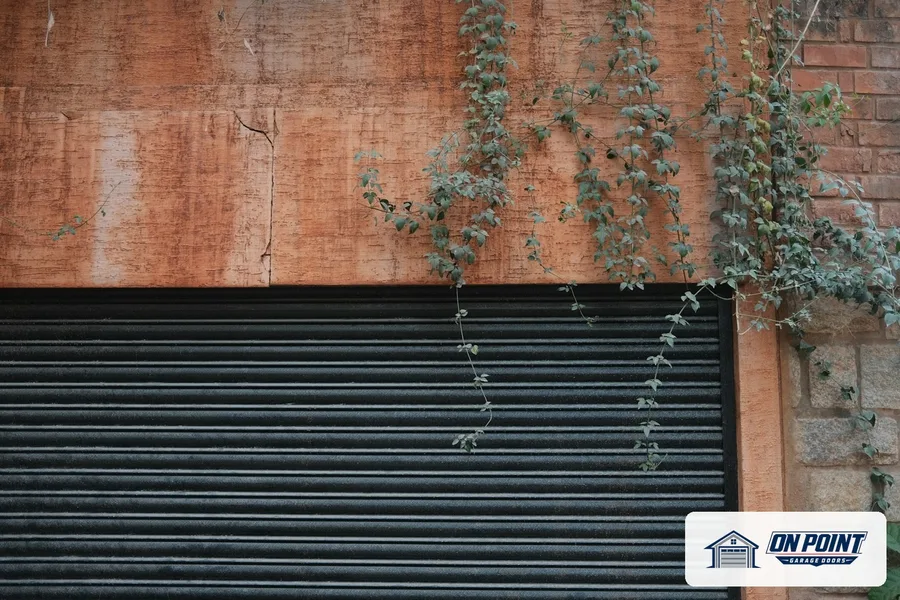
Rolling gate on a brick storefront, from one of our jobs
Rolling gate on a brick storefront
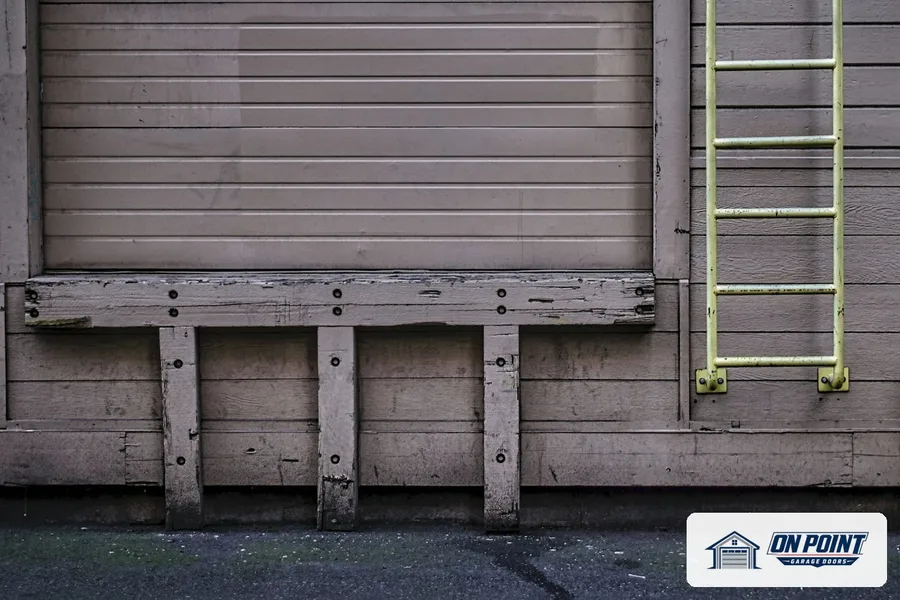
Commercial roll-up opening, from one of our jobs
Commercial roll-up opening
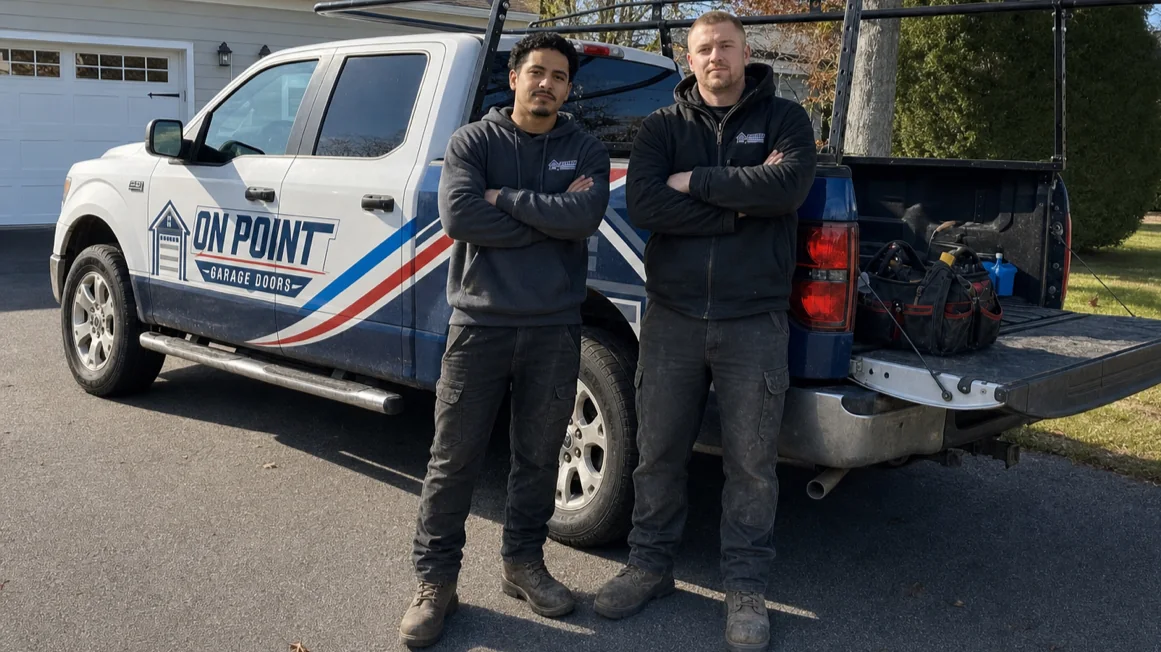
Our truck on a storefront call, from one of our jobs
Our truck on a storefront call

How a grille is built

A rolling grille has the same main parts as a solid rolling gate: a barrel at the top with springs inside it, a curtain that coils around the barrel, guides on each side, a bottom bar and a lock. The difference is the curtain. On a grille it is a lattice of straight rods joined by links or tubes, set in a brick, straight or staggered pattern. That makes it lighter than many solid curtains of the same size, but it also gives it more joints that can wear, bend or come apart.

Where grilles make sense

Grilles suit openings where people should still see in after closing. Stores use them to keep window displays visible at night. Pharmacies and counters inside larger stores use them to close one section while the rest stays open. Apartment buildings put them across parking ramps where air has to move. Lobbies and malls use them so a closed space does not look like a blank wall. Where a solid curtain would block a view, a vent or a sprinkler, a grille is often the better fit.

The problems we see most

Springs carry the weight

Even an open grille is heavy across a wide storefront, and the springs in the barrel do most of the lifting. When they lose tension, a manual grille starts to feel like dead weight and a motor grille strains and slows. The springs are under real tension and are a job for a technician, never a screwdriver. We set the springs to the weight of the curtain so a hand-lifted grille rises with steady effort and stays where you leave it.

Bent rods and broken links

Because a grille is a lattice, damage is often local. A hit in one corner bends a few rods and pulls a few links, and the rest of the curtain is fine. In many cases we can replace the damaged rows instead of the whole curtain, which keeps the grille matching and the store open. When the damage runs across the curtain or the pattern has stretched out of shape, a new curtain on the existing barrel can be the better answer.

Locks, bottom bars and security

A grille is only as strong as its lock and its bottom bar. We see bars bent from forced entry, locks rusted solid from rain, and side locks that no longer line up with the holes in the guides. We replace bars, locks and keepers, and we can add a center lock or side locks where the opening is wide. If a grille has been forced, we check the guides and the barrel too, because a pry bar often bends more than the lock.

Motorizing a hand-lifted grille

Wide or tall grilles are tiring to lift every morning and every night, and staff often leave them half open to avoid it. A motor mounted to the barrel, with a key switch or a remote, turns that into one push. We look at the barrel, the springs and the headroom to see which operator fits, and we make sure the grille still has a manual backup for when the power is out.

Grilles inside buildings and malls

Indoor grilles at counters and inside shopping centers face less weather but more people. They get leaned on, hung on and pushed with carts. They are also often close to ceilings, sprinkler pipes and light fixtures, so the barrel and hood must sit just right. We plan around the busiest trading times in shared buildings and coordinate with the building's management when access to the space above the ceiling is needed.

Weather and rust outside

Outdoor grilles collect rain in every joint, and salt from the sidewalk and the street eats the bottom rows first. Rusted links stiffen, rods seize in their tubes, and the curtain stops coiling neatly. We look closely at the lower part of the curtain and the bottom of the guides, and we suggest galvanized or aluminum parts for grilles near the water or on busy salted corners.

Installing a new grille

For a new grille we measure the opening, look at how the barrel can mount on the face of the wall or between the jambs, and choose a pattern, finish and operation that suit the space. We give a written estimate first, and on install day we hang the barrel and hood, set the curtain and springs, mount the guides and locks, and test the grille through several full cycles before we leave.

What a visit includes

The technician runs the grille up and down, feels the spring tension, looks at every row of the curtain, checks the guides, the bottom bar and the lock, and tests the motor and its controls if there is one. You get a clear explanation of what is worn and a written estimate before any part is changed.

Questions we get asked

What is the difference between a rolling grille and a rolling gate?

A rolling gate usually has a solid or perforated slat curtain. A grille has an open lattice of rods and links, so you can see and feel air through it when it is closed.

Can one bent section of a grille be fixed?

Often, yes. Damage from a cart or a bumper usually affects a few rows, and those rows can be replaced without changing the whole curtain.

My grille is hard to lift. Is it the springs?

Most of the time it is. Springs inside the barrel lose tension over the years, and the grille starts to feel heavy and drift down. A technician resets or replaces them.

Can you add a motor to my grille?

Usually. We check the barrel, the springs and the room above the opening, then fit an operator with a key switch or a remote and keep a manual backup.

Is the estimate free?

Yes. We look at the grille and the opening before recommending any work.

Booking takes a minute

Across Brooklyn, Queens and Long Island, tell us what the door is doing and we set a visit that fits your day.

Free estimate, call (929) 429-2429.

Grille stuck or hard to lock? We will come and look

Tell us what the door is doing and we will give you an honest arrival time. The estimate is free.

Easier to explain by phone? Call (929) 429-2429.

Two minutes to a free estimate

Tell us what the door is doing. The estimate is free either way.

Or just call (929) 429-2429 and talk it through.

The other six things that go wrong