Takes 30 seconds. We call you back to set a time.
Restaurants use garage doors in more places than most people notice. A glass sectional door turns the front of a dining room into an open wall on a warm evening. A steel door at the back takes deliveries and keeps the alley out. A rolling gate covers the storefront after closing, and a counter shutter closes the takeout window. Each one lives a harder life than a door at home: grease, steam, constant use and people nearby. This page covers the doors restaurants in Brooklyn, Queens and Long Island ask us about, and what keeps each one working. Free estimate at (929) 429-2429.
By Sean Cohen, owner, On Point Garage Doors · Updated
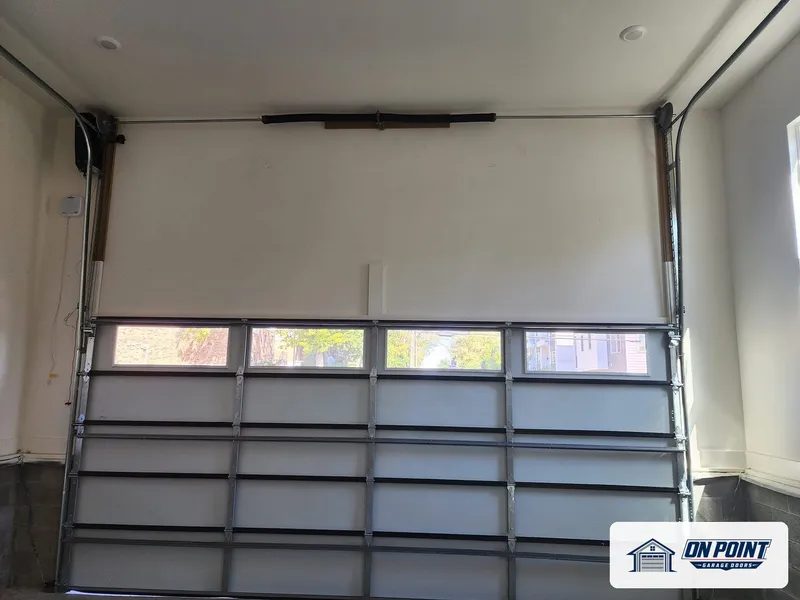
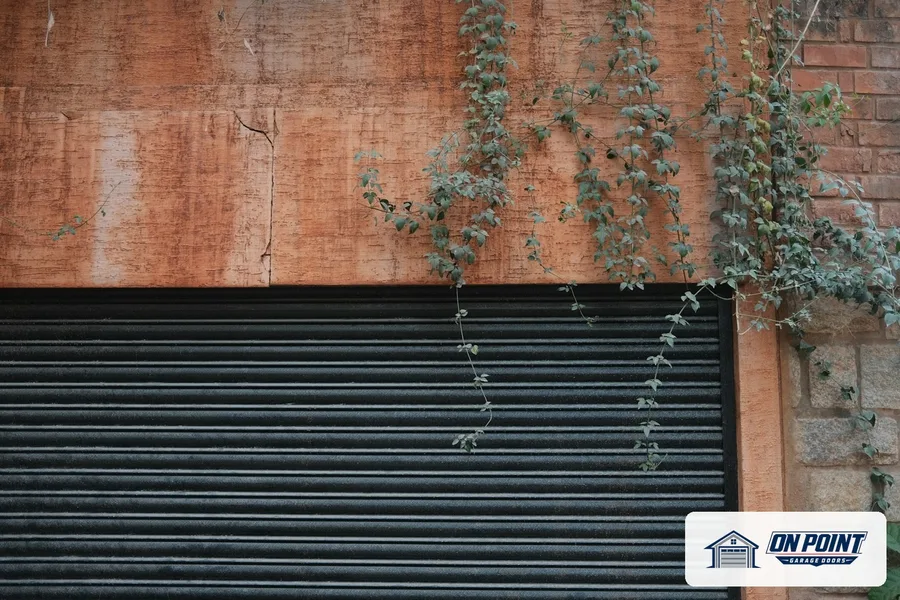
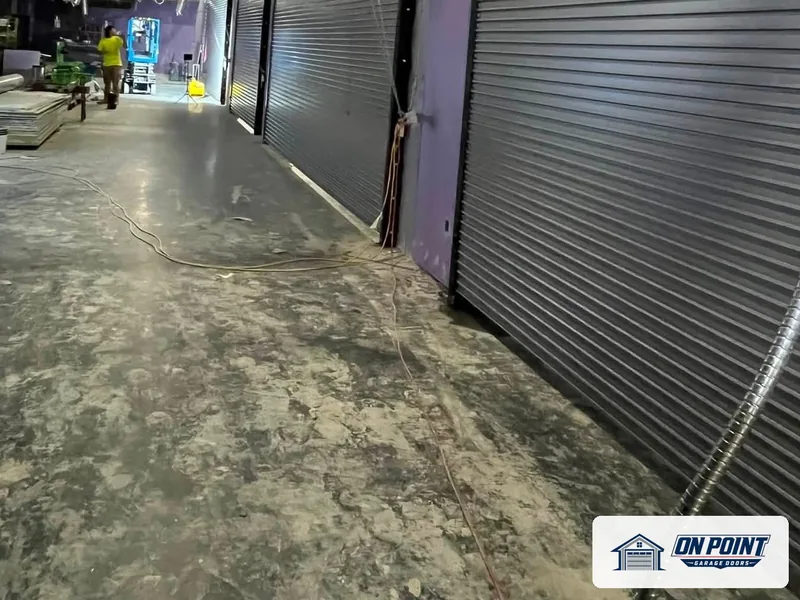
These photos are from our own jobs, with our logo on them.


The best-known restaurant door is the full-view glass sectional door across the front of the room. Open, it brings the sidewalk in. Closed, it still lets in light and lets passersby see the room. These doors are usually aluminum frames with tempered or laminated glass, often with an anodized or painted finish to match the storefront. Our page on glass garage doors covers frames, glass types and finishes in more detail.
A sectional door needs room above the opening and along the ceiling for the tracks, the springs and the door itself when it is open. In a restaurant, that space often already holds lights, speakers, sprinklers, ductwork or a decorative ceiling. We measure and check what is in the way before anything is ordered. A high-lift track or a wall-mount operator can sometimes keep the door tight to the wall and leave more of the ceiling free.
When the door is open, the dining room is open to wind, rain and street dust. When it is closed, the seals at the sides, the top and the floor decide whether a winter draft blows across the nearest tables. Good perimeter seals and an insulated frame make a big difference to comfort near the door. In windy spots, a wind-rated door with stronger struts helps the door stay put.
A restaurant door moves close to tables, chairs, strollers and children. Photo eyes across the opening, a reversing edge on the bottom of the door and an operator set to the right force are not optional here. We set the operator so the door stops and reverses on contact, and we place the controls where staff can see the opening while the door moves.
The back door of a restaurant takes deliveries, carries out trash and sometimes doubles as a fire exit route. It is often a rolling steel door or an insulated sectional door. These doors get opened and closed all day, often by different people, and get hit by hand trucks and bins. Strong bottom bars, good guides, solid locks and springs rated for heavy use keep them running.
Most street-level restaurants have a rolling gate over the front at night. Gates take abuse from weather, graffiti, delivery bikes and the occasional car. A worn gate motor, a broken spring in the barrel or a bent slat can leave the business unable to close up. Our pages on rolling gate repair and storefront gate motors cover those problems.
Takeout windows, bar pass-throughs and coffee counters are often closed with a small rolling counter shutter. Shutters near cooking lines live in steam and grease, so stainless or aluminum slats and guides kept clear of buildup last longer. Our page on rolling counter shutters covers how they work and what wears out.
Doors near the kitchen collect grease in the tracks, on the rollers and inside the guides. Staff wash floors and walls with hot water and strong cleaners, which can reach the bottom of the door and the operator. Over time this wears seals, rusts hardware and makes rollers stick. Stainless or coated hardware, sealed operator housings and regular service visits help these doors keep running smoothly.
Nobody wants a technician on a ladder in the middle of a dinner rush. We plan installs and repairs before opening or after closing whenever we can, and we keep the work area clear and tidy. If a door breaks while the restaurant is open, we make it safe and secure first, then plan the full repair at a quieter time.
The technician measures the opening, the headroom and the ceiling, looks at the storefront, the gate and any service doors, and talks through how each door will be used. You get a written estimate before anything is ordered, and every door is run and tested with its safety devices after the work.
Often yes. A full-view glass sectional door is common, as long as the opening has room for the tracks and the landlord approves.
A door with good perimeter seals and an insulated frame keeps drafts down a great deal when it is closed.
Service doors open all day and take hits from carts and bins. Springs rated for heavy use and strong bottom bars help.
Yes. We plan restaurant work before opening or after closing whenever we can.
Yes. We measure and look at every door before anything is ordered.
Across Brooklyn, Queens and Long Island, tell us what the door is doing and we set a visit that fits your day.
Free estimate, call (929) 429-2429.
Tell us what the door is doing and we will give you an honest arrival time. The estimate is free.
Easier to explain by phone? Call (929) 429-2429.
Tell us what the door is doing. The estimate is free either way.