Serving Brooklyn, Queens and Long Island(929) 429-2429Open six days a weekFree estimateGuaranteed work
On Point Garage Doors
Open 24 hours Sun-Thu, Fri until 5 pm Free estimate Springs, openers, cables We come to you
Emergency?Call nowBook free estimate
New York, NY - open six days a week

High-speed roll-up doors

Free estimateSame-day serviceCommon parts on board
  • Free estimate
  • Same-day service
  • Common parts on board
Emergency garage door repair★★★★★ 5.0 on Google · 42 reviews

Book your free estimate

Takes 30 seconds. We call you back to set a time.

Or just call (929) 429-2429 and talk it through.

Home › High-Speed Roll-Up Doors

A high-speed roll-up door opens and closes many times quicker than a standard rolling steel door. It is built for doorways that open dozens or hundreds of times in a shift: between a loading area and a warehouse floor, at the entrance of a busy parking garage, or between a cold room and the rest of a food plant. These doors keep heat, cold, dust and noise where they belong while forklifts and people move through. They are also more complicated than an ordinary rolling door, so they need someone who understands the drive, the controls and the safety devices. This page explains how they work, where they fit and what usually goes wrong. Free estimate at (929) 429-2429.

By Sean Cohen, owner, On Point Garage Doors · Updated

Real jobs. Real photos.

These photos are from our own jobs, with our logo on them.

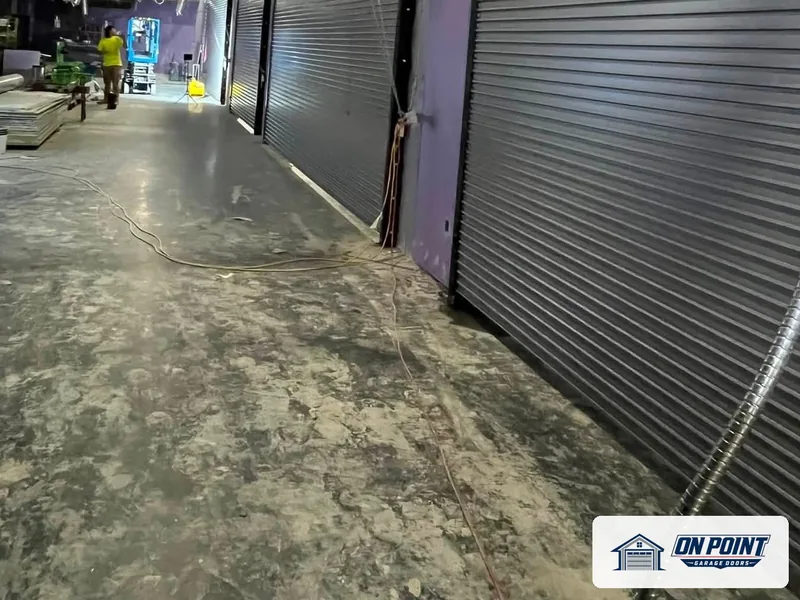
Rolling doors on a commercial building, from one of our jobs
Rolling doors on a commercial building
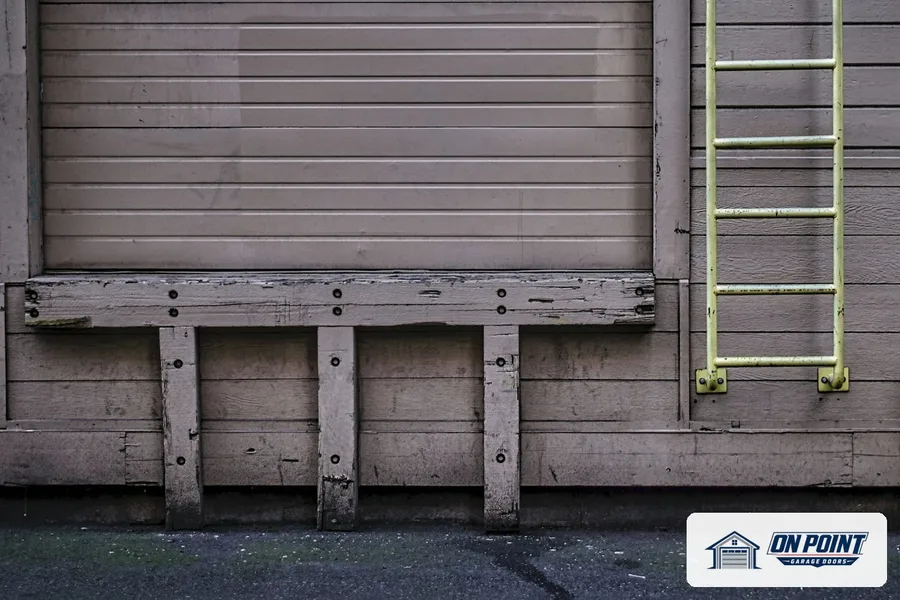
Roll-up door at a loading dock, from one of our jobs
Roll-up door at a loading dock
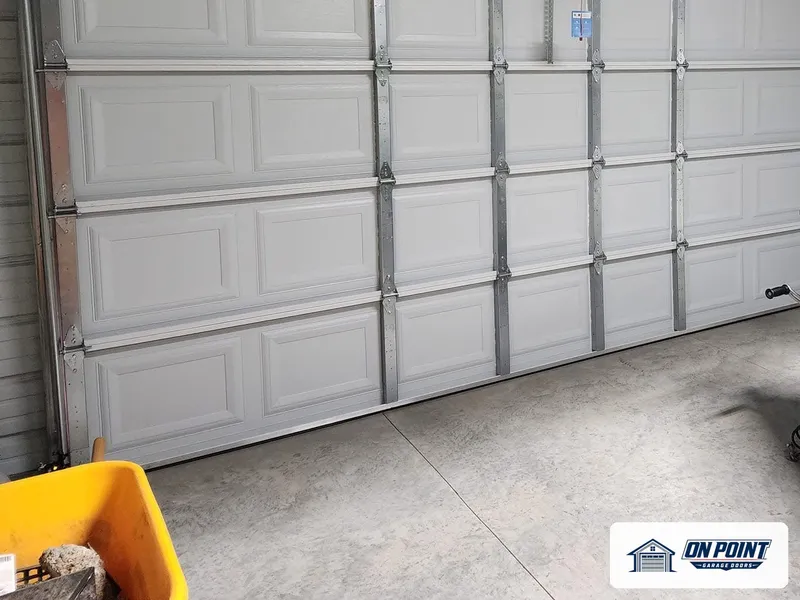
Steel building door on a job, from one of our jobs
Steel building door on a job

How a high-speed door differs

A standard rolling steel door uses springs in a barrel to balance a heavy curtain, and a motor turns the barrel. A high-speed door usually has a much lighter curtain and a direct-drive motor controlled by a variable speed drive. The drive ramps the motor up, runs it quickly through the middle of the travel, and slows it at the top and bottom. Many models have no counterbalance springs at all. The result is a door that opens in the time it takes a forklift to roll up to it.

Fabric curtain doors

The most common type has a curtain of heavy coated fabric with stiffening bars or a zipper edge that runs in the side guides. Fabric doors are light, quiet and forgiving. Many are built so that if a forklift clips the curtain, it pops out of the guides instead of tearing, and it feeds itself back in on the next cycle. They suit inside doorways, cold rooms, clean areas and spots where the door gets bumped often.

Steel and insulated high-speed doors

For outside openings and security, some high-speed doors use a curtain of light aluminum or steel slats, sometimes insulated. They are heavier and tougher than fabric, and they close the building at night as a security door would. They are a bigger investment and they need more care in the drive and the guides. We often see them at the street entrance of parking garages and at the outside wall of a distribution building.

Where they make sense

Activation: how the door knows to open

High-speed doors are rarely opened with a push button alone. Most use motion sensors over the door, floor loops under the slab, pull cords for forklift drivers, radio remotes or a card reader. When a door opens for no reason or fails to open when a forklift arrives, the activation device is often the cause, not the door. Checking which device asked the door to open is one of the first things we do.

Safety devices

Because these doors move quickly, they rely on safety devices more than a slow door does. A light curtain or photo eyes across the opening stop the door if something is in its path. A reversing edge in the bottom bar stops it on contact. Some models have breakaway bottom bars. When any of these fails, the door either stops working or works without protection, and neither is acceptable in a building with people and forklifts.

What wears out

The curtain takes the hardest life: forklift strikes, wind on outside doors and the constant flexing of the fabric. Bottom bars bend and edges split. Guides get knocked out of line. Inside the head, the motor brake and the drive wear with every cycle, and encoders or limit switches drift so the door stops short or travels too far. Control boards, cables and connectors suffer in freezers, wash bays and dusty rooms. Many of these parts can be repaired on site.

When the door keeps stopping or faulting

Most high-speed doors show a fault code on the control box when something is wrong. A door that keeps stopping halfway, reverses on its own or refuses to close is often reporting a blocked safety device, a position error or a drive fault. The code points us in the right direction, but we still check the curtain, the guides and the sensors, because a code can be the result of a mechanical problem rather than the cause.

Keeping the doorway open while it is down

When a high-speed door fails in a busy building, the doorway often gets propped open and the cold, the heat or the dust gets out. Some doors have a manual crank or a brake release so the curtain can be raised and held. We can secure a damaged curtain, put the door in a safe position and plan the repair around the business, so the work disrupts as little as possible.

A high-speed door or a standard one

High-speed doors are not right for every opening. A doorway that opens a few times a day is usually better served by a standard rolling steel door or a sectional door, which is simpler and tougher. The case for a high-speed door is traffic: many cycles, energy loss through an open doorway, or a process that must stay sealed. We are glad to look at how the opening is used and tell you which door suits it.

What a visit includes

The technician reads the control box, checks the activation devices and the safety devices, looks over the curtain, the bottom bar and the guides, and runs the door through several cycles to see where it hesitates. You get a written estimate before any work starts, and the door is run and tested with the safety devices after the repair.

Questions we get asked

What is a high-speed door?

A roll-up door with a light curtain and a fast drive that opens and closes many times quicker than a standard rolling steel door, for busy doorways.

Why does my high-speed door keep stopping halfway?

Usually a safety device is blocked or out of line, a position setting has drifted, or the drive is reporting a fault on the control box.

Can a torn fabric curtain be repaired?

Small tears and popped edges often can be. A badly torn curtain or a bent bottom bar may need new parts.

Do high-speed doors have springs?

Many do not. They rely on a direct-drive motor and a brake. Some heavier steel models do have counterbalance springs.

Is the estimate free?

Yes. We check the door, the controls and the safety devices before any work starts.

Booking takes a minute

Across Brooklyn, Queens and Long Island, tell us what the door is doing and we set a visit that fits your day.

Free estimate, call (929) 429-2429.

High-speed door acting up? We will come and look

Tell us what the door is doing and we will give you an honest arrival time. The estimate is free.

Easier to explain by phone? Call (929) 429-2429.

Two minutes to a free estimate

Tell us what the door is doing. The estimate is free either way.

Or just call (929) 429-2429 and talk it through.

The other six things that go wrong