Takes 30 seconds. We call you back to set a time.
Townhouse rows, condo complexes and planned communities often have dozens of garage doors that were all hung in the same season by the same builder. They look alike, they wear alike, and they tend to fail one after another. On top of that, there are rules: a board may set the style and color, and the bylaws decide whether the owner or the association looks after the door. This page covers what owners and boards should know about repairing and replacing doors in a community setting. Free estimate at (929) 429-2429.
By Sean Cohen, owner, On Point Garage Doors · Updated
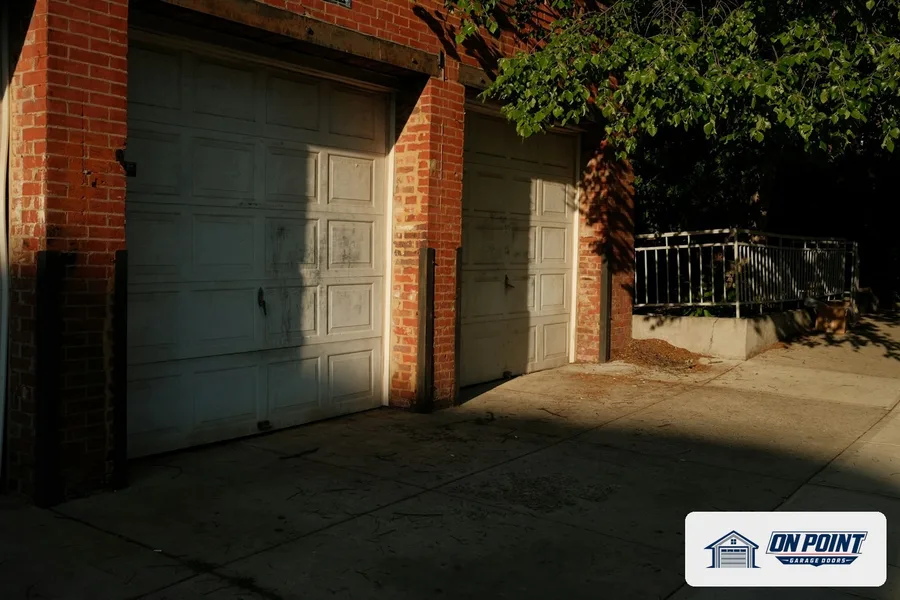
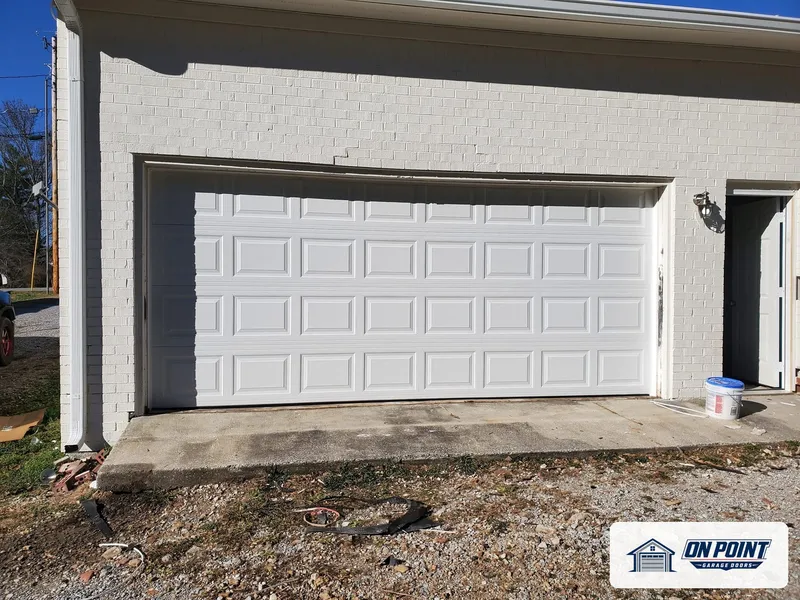
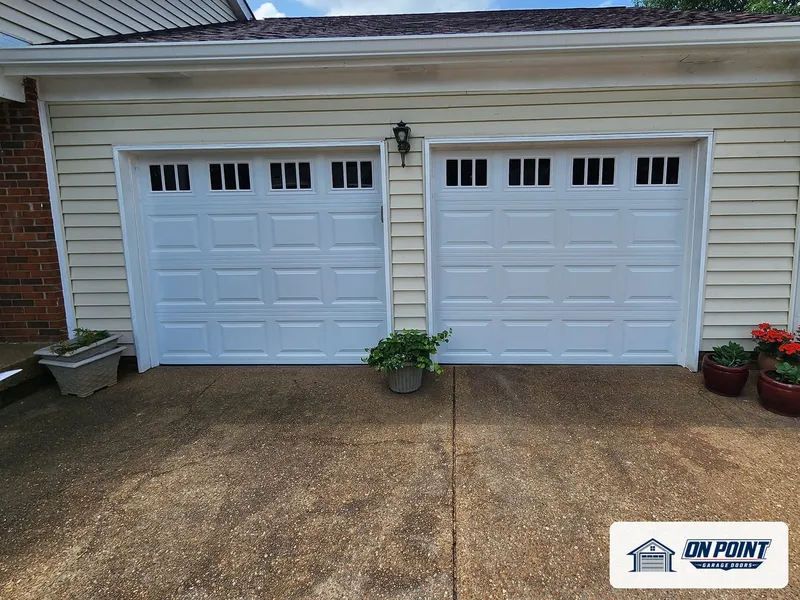
These photos are from our own jobs, with our logo on them.


Before any work, find out whether the door belongs to the owner or to the association. In some communities the owner handles everything behind the door, including springs and the opener, while the board controls the outside panels and color. In others, the association handles the whole door. The bylaws or the property manager can answer this, and it saves arguments over the estimate later.
When every door in a row was hung together, the springs, cables and rollers all start at the same point and make similar numbers of trips. Once a few springs break, others are rarely far behind. Boards that know this can plan for it, instead of handling one emergency call after another.
Most communities want every door to look the same from the street: the same panel style, the same color, the same windows or none. A replacement door has to match its neighbors, which means knowing the maker, the model and the color of the doors already there. We take photos and notes so a new door fits the row.
Many associations require approval before an owner changes a garage door, even when it is a like-for-like swap. Getting the approved style and color in writing before ordering avoids a door that has to come back off. We can provide the door details a board usually asks to see.
Springs, cables, rollers, hinges, tracks and openers are inside the garage and usually do not change the look of the row. They are the most common calls in any community. Matched springs, quiet rollers and a balanced door make the biggest difference in how a door feels day to day.
Townhouse garages often share a wall with the next unit or sit under a bedroom. A noisy chain drive carries through those walls. Belt drives and wall mount openers keep the noise down for the neighbors, which matters in a community where everyone hears everyone.
Some communities have a gate or a shared garage with a commercial door as well as private garages. Remotes and keypads for both need to be set up and kept current as owners move in and out. We program remotes and keypads for the doors we work on and explain how to clear old codes.
Condo buildings with a garage underneath usually have one heavy commercial door that every resident uses. That door runs constantly and needs regular service. We work on those doors and their operators, safety edges and photo eyes, as well as the private doors in the same community.
Rows of garages often face the same direction, so they catch the same wind, rain and sun. Bottom seals on the windward end of a row wear out first, and doors on the sunny side fade faster than the rest. When a board plans repainting or seal work, doing the whole row at once keeps the doors looking matched. The same goes for windows: inserts on the sunny end yellow and craze sooner, and a row looks odd once a few doors have clear glass and the rest do not. Noting which doors face the weather helps a board plan which ones to look at first.
For a single owner, the technician checks the whole door and the opener and gives a written estimate. For a board, we can walk the row, note each door and put the work in writing so the board can decide. Nothing starts until the right person says yes.
It depends on the bylaws. Some associations handle the outside of the door, some the whole door, and some leave it all to the owner.
Many communities require it, even for a like-for-like door. Get the approved style and color in writing first.
Doors hung together wear together. Springs and rollers in the same row reach the end of their life around the same time.
Yes. We can walk a row of doors and put each one's needs in writing.
Yes. We look at the door, or the row, before any work starts.
Across Brooklyn, Queens and Long Island, tell us what the door is doing and we set a visit that fits your day.
Free estimate, call (929) 429-2429.
Tell us what the door is doing and we will give you an honest arrival time. The estimate is free.
Easier to explain by phone? Call (929) 429-2429.
Tell us what the door is doing. The estimate is free either way.