Takes 30 seconds. We call you back to set a time.
Most rolling steel doors on storefronts and warehouses are a single skin of steel slats. They are strong and simple, but they pass heat and cold straight through. An insulated rolling door uses slats with two steel faces and foam between them, so the curtain itself holds back the weather. For a heated warehouse, a shop with staff working near the door or a building with a cold room behind it, that can change how the whole space feels. This page explains how insulated curtains are built, where they make sense and what changes on the rest of the door. Free estimate at (929) 429-2429.
By Sean Cohen, owner, On Point Garage Doors · Updated
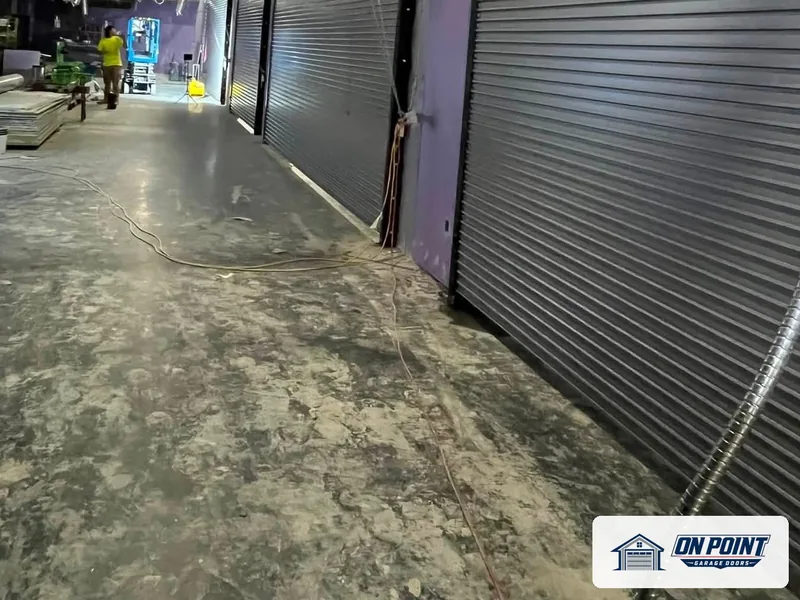
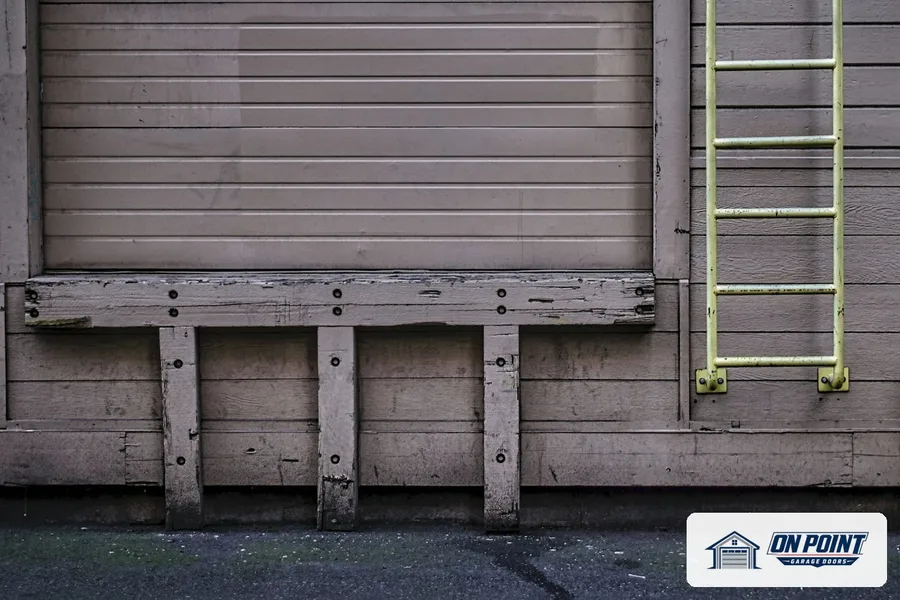
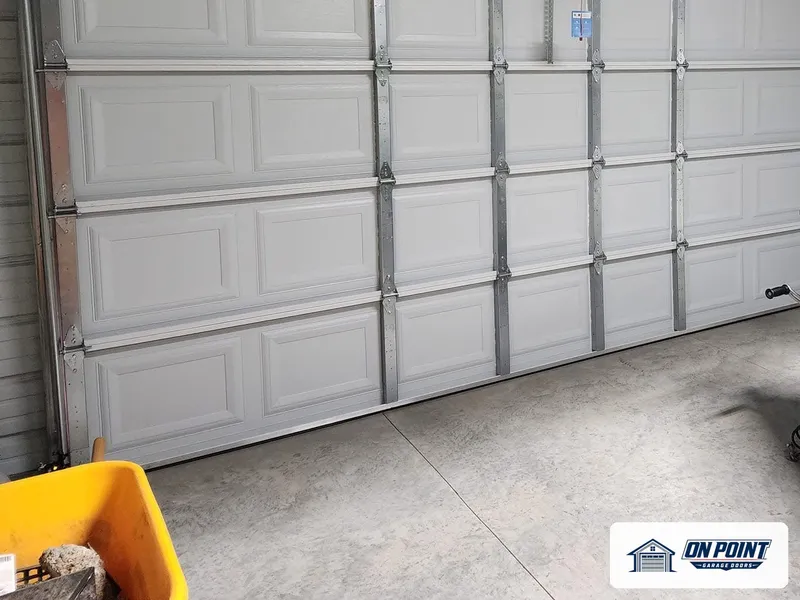
These photos are from our own jobs, with our logo on them.


The door is often the biggest opening in a warehouse wall, and on a cold day a plain steel curtain feels like an open window. Insulated curtains suit heated warehouses, auto shops, garages where people work all day, buildings with offices near the dock and spaces that need to stay cool in summer. On a storage unit that is never heated, a plain curtain is usually all that is needed.
A single-skin door gets very cold on a winter night. Warm, damp air inside the building meets it and turns to water, which runs down the inside of the slats and rusts the bottom bar and the guides. An insulated curtain keeps the inside face warmer, so far less moisture forms on it. Owners who see puddles inside a closed door every morning are often looking at condensation, not a leak.
Foam between steel faces also dulls sound. On a building that faces a busy avenue or sits next to a rail line, an insulated curtain makes the inside quieter. It also rattles less in the wind than thin single-skin slats, which matters on doors that face open lots or the water.
An insulated curtain weighs more than a plain one of the same size. The spring in the barrel has to be sized for that weight, and the barrel, the brackets and the hood have to carry it. A plain door cannot simply have its slats swapped for insulated ones without checking all of that. The coil is also larger, so the hood may need to grow.
A heavier curtain asks more of the operator, the motor and gear box that drive the door. When a door goes from plain to insulated, the operator is checked to make sure it is sized for the new weight and the number of trips a day. Our page on commercial door operators covers how they are matched to the door.
An insulated curtain only helps if the gaps around it are closed too. A good bottom seal, guide seals down both sides and a baffle at the hood stop air from going around the curtain. Our page on rolling door seals covers each one. On older doors, worn seals let out more heat than the curtain does.
A dent in an insulated slat can crush the foam inside and bend both faces. One damaged slat can usually be replaced with a matching slat, as long as the profile is known. Doors that are hit often, such as dock doors, sometimes need guards at the guides or a different door type altogether.
Insulated sectional doors, the kind made of hinged panels that run up into the ceiling, usually hold heat better than an insulated rolling door. Rolling doors win where there is no room overhead for tracks, where security matters most or where the door takes heavy abuse. We look at the opening, the headroom and how the door is used before suggesting one over the other.
The technician measures the opening, checks the curtain, the barrel, the spring, the guides, the hood, the seals and the operator, and looks at the headroom and side room. You get a written estimate before any work starts, for repair of the current door or a new insulated curtain, whichever fits the building.
A rolling door whose slats have two steel faces with foam between them, so the curtain holds back heat, cold and noise.
Sometimes, but the spring, barrel, hood and operator all have to suit the heavier curtain, so they are checked first.
Often condensation on cold steel. Insulated slats and good seals cut it down a lot.
Usually, yes, but rolling doors suit openings without headroom, heavy use and high security.
Yes. We look at the door and the opening before any work starts.
Across Brooklyn, Queens and Long Island, tell us what the door is doing and we set a visit that fits your day.
Free estimate, call (929) 429-2429.
Tell us what the door is doing and we will give you an honest arrival time. The estimate is free.
Easier to explain by phone? Call (929) 429-2429.
Tell us what the door is doing. The estimate is free either way.