Takes 30 seconds. We call you back to set a time.
Being locked out of the garage is a special kind of stuck. Maybe the garage is the only way you use to get into the house, maybe the car you need is inside, or maybe the tools for work are behind a door that will not move. The remote does nothing, the keypad is dead, and the door has no handle on the outside. This page explains the usual reasons it happens, what is safe to try from the outside and what is not, and how a technician gets the door working again. We help homeowners and businesses who are locked out of their garages across Brooklyn, Queens and Long Island. Free estimate at (929) 429-2429.
By Sean Cohen, owner, On Point Garage Doors · Updated
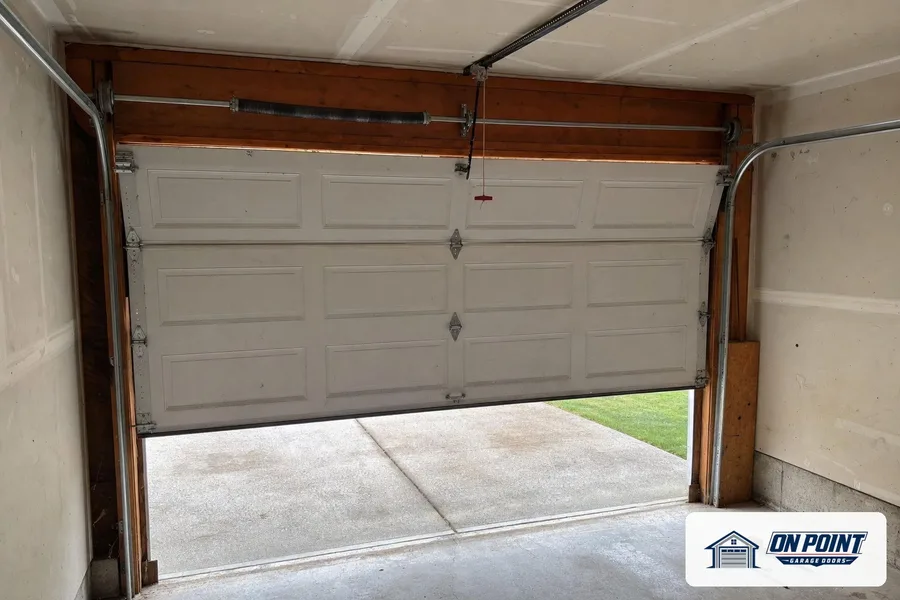
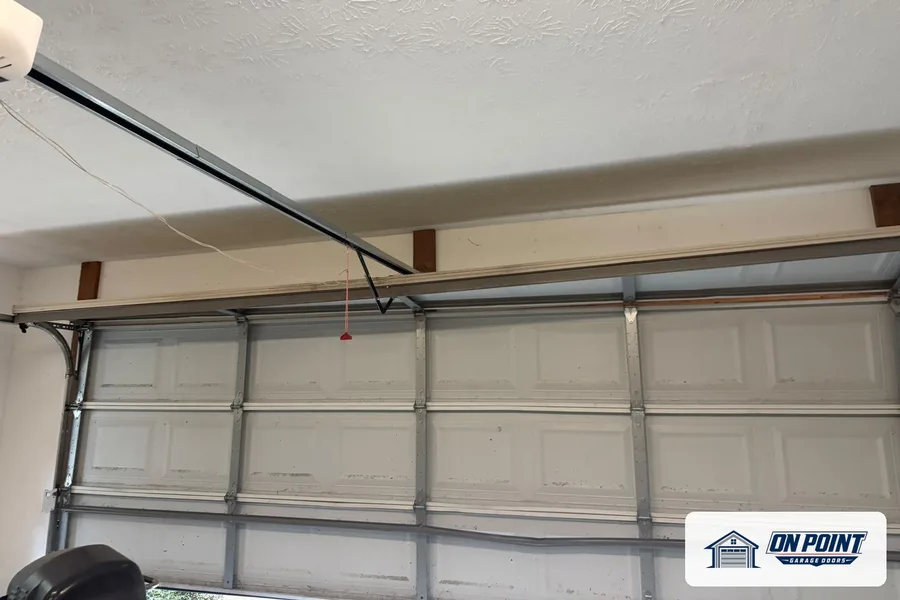
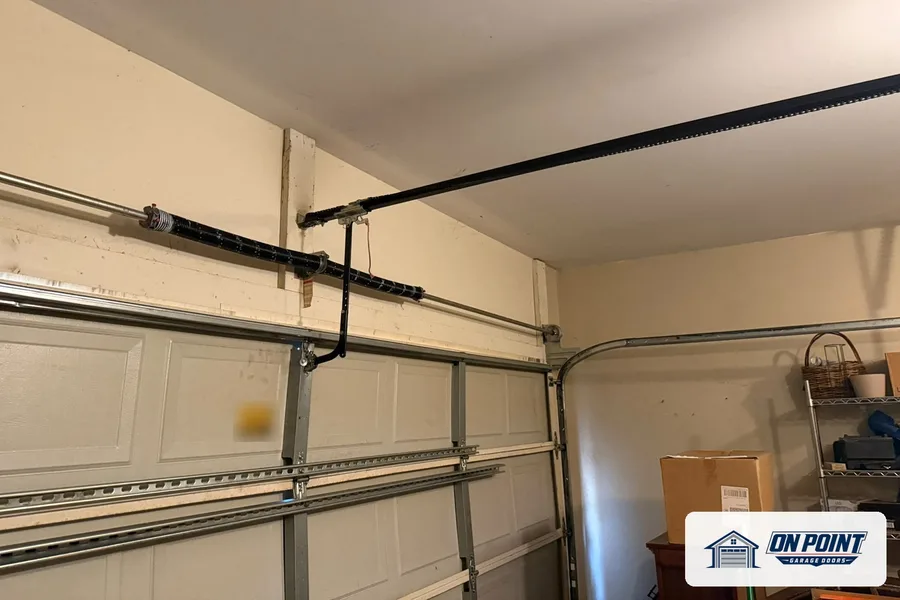
These photos are from our own jobs, with our logo on them.


Most lockouts come down to a small number of causes. The remote battery dies at the worst moment. The keypad outside stops working after rain or cold. The power is out on the block. The opener has lost its settings or its board has failed. Or the door itself has a broken spring, so even a working opener cannot lift it. Knowing which one it is decides whether the fix is simple or needs a technician.
An opener cannot move the door without power unless it has a battery backup. From outside, there is usually no way to open a door that is held closed by its opener, which is how it is meant to work. Some garages have an outside release lock, a small keyed lock on the door that lets the opener be disconnected from outside. If yours has one and you have the key, that is the safe way in. If not, a technician can get the door open without damaging it.
If the door made a loud bang the last time it closed, a spring may have broken. With a broken spring the door is very heavy, and the opener will hum or strain without lifting it. Do not try to force the door up from outside or pry the bottom. A heavy door with a broken spring can drop without warning. This is a call for a technician, who will replace the spring and get the door moving safely.
Outdoor keypads take rain, heat and cold, and they fail more than most people expect. A dead battery, a wet circuit, a worn button or a code that was changed by someone else can all stop it. Once we are inside, we replace or reset the keypad and set a new code, and we look at whether it is mounted where water runs down the wall.
A remote that worked yesterday can stop because of a dead battery, a dropped remote, or an opener that lost its memory after a power surge. Sometimes a new LED bulb in the opener jams the remote's signal. A technician can pair new remotes to the opener in one visit and check the receiver and the antenna while they are there.
When people are locked out, they sometimes try to force the bottom of the door, pry a section with a bar, or break a window in the door to reach inside. All of these can bend the door, break the seals or leave a sharp, unsafe opening, and a door with a broken spring can fall on whoever is under it. It is safer and usually far less damaging to wait for a technician.
Every garage is different, so the approach depends on the door, the opener and why it will not open. Often the fix is outside: powering or replacing the keypad, pairing a remote, or using the outside release if there is one. Sometimes the technician has to reach the opener's release carefully without damaging the door. Once inside, they find the real cause, fix it if they can, and make sure it does not happen again tomorrow.
Shops, workshops and rental garages get locked out too, often when a tenant moves out with the only remote or the code is lost between managers. We pair new remotes, set new keypad codes and clear old ones so former tenants cannot get in. For buildings with several garages, we keep a note of which remotes belong to which door.
The technician finds the safest way into the garage, gets the door working, and looks at the opener, the springs, the remotes and the keypad to find out why it locked you out. You get a clear explanation and a written estimate before any parts are changed.
Only if the door has an outside release lock and you have the key, or the opener has a battery backup. Otherwise a technician can open it safely without damaging the door.
Most often a spring has broken and the door is too heavy for the opener. Do not force it; a door with a broken spring can drop.
Usually, yes. Many lockouts are a dead keypad, a lost code or an opener that lost its memory, and those can be fixed from outside or once the door is open.
A small keyed lock on the garage door that disconnects the opener from outside, so the door can be lifted by hand when the power is out.
Yes. We tell you what caused the lockout and what it will take to fix before any work is done.
Across Brooklyn, Queens and Long Island, tell us what the door is doing and we set a visit that fits your day.
Free estimate, call (929) 429-2429.
Tell us what the door is doing and we will give you an honest arrival time. The estimate is free.
Easier to explain by phone? Call (929) 429-2429.
Tell us what the door is doing. The estimate is free either way.