Serving Brooklyn, Queens and Long Island(929) 429-2429Open six days a weekFree estimateGuaranteed work
On Point Garage Doors
Open 24 hours Sun-Thu, Fri until 5 pm Free estimate Springs, openers, cables We come to you
Emergency?Call nowBook free estimate
New York, NY - open six days a week

Garage door rubbing on the frame

Free estimateSame-day serviceCommon parts on board
  • Free estimate
  • Same-day service
  • Common parts on board
Emergency garage door repair★★★★★ 5.0 on Google · 42 reviews

Book your free estimate

Takes 30 seconds. We call you back to set a time.

Or just call (929) 429-2429 and talk it through.

Home › Garage Door Rubbing on the Frame

A garage door is meant to slide past its frame with a small, even gap on each side. When it starts rubbing, you hear a scrape or a squeal at the same spot each trip, and you may see paint worn off the edge of the door or the stop molding pushed out of shape. Rubbing is not the problem itself. It is a sign that something has moved: the track, the frame, the door or the house around it. This page explains the usual causes and what we check. Free estimate at (929) 429-2429.

By Sean Cohen, owner, On Point Garage Doors · Updated

Real jobs. Real photos.

These photos are from our own jobs, with our logo on them.

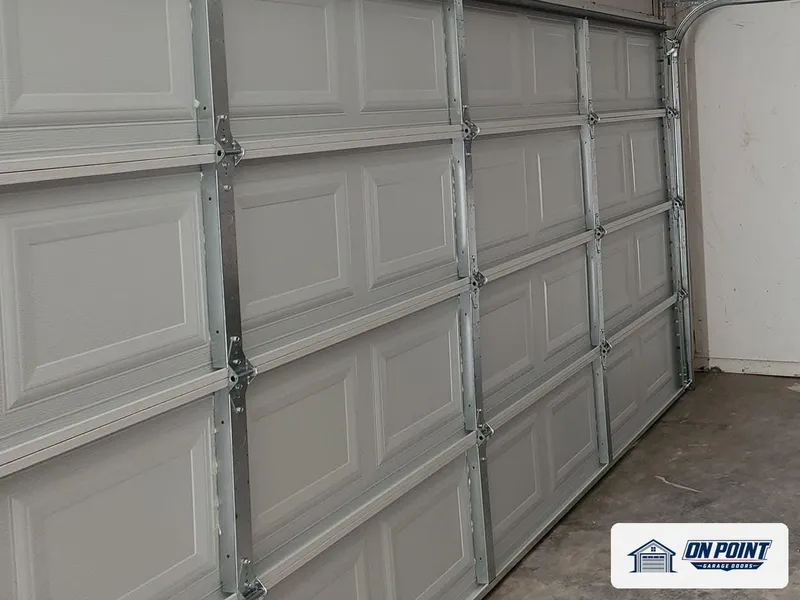
Tracks inside a garage, from one of our jobs
Tracks inside a garage
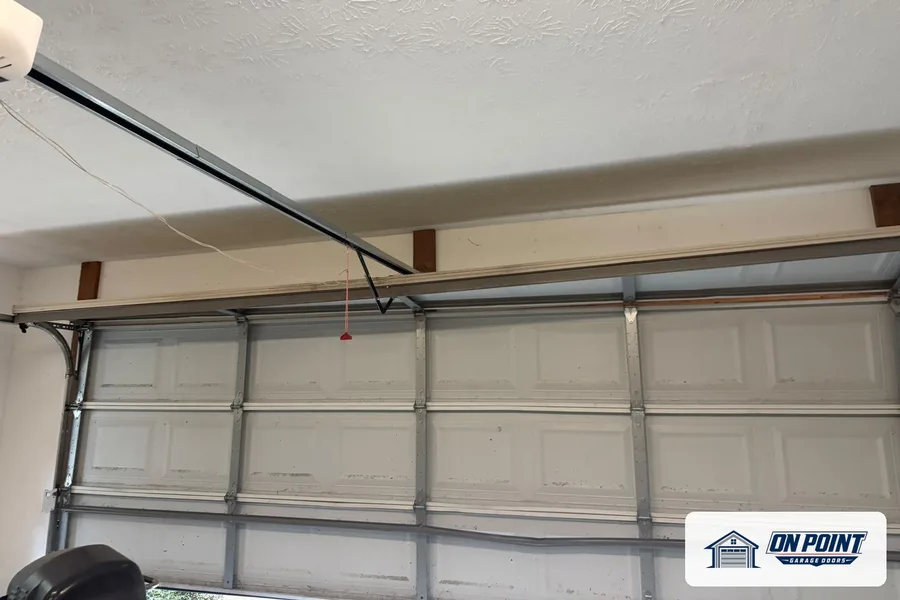
Sectional door and its track, from one of our jobs
Sectional door and its track
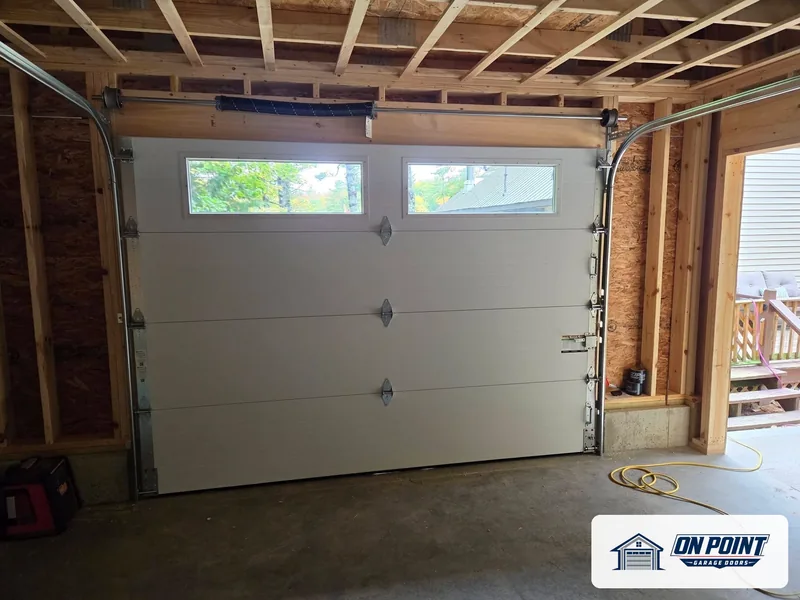
Garage door tracks and rollers seen from inside the garage, an On Point Garage Doors job
Roller in the track

Where the rubbing happens

Track brackets that have shifted

The vertical tracks are bolted to the jambs with brackets. If a bracket works free or the wood behind it softens, the track moves toward the door and pushes it against the frame on that side. A car bumping the track, or years of vibration, can do the same. Re-setting the track and anchoring the brackets into solid wood usually stops the rubbing.

A frame that has moved

Wood jambs can swell in damp weather, rot at the bottom or twist as they age. In older garages, the whole opening can settle out of square. Then a door that once had an even gap rubs at one side and has too much gap at the other. Frame repair, or new jambs, sets the opening right before the door is adjusted to it.

Stop molding set too tight

The stop molding is the strip with a rubber seal fixed to the outside of the jambs. It is meant to touch the door lightly when it is closed. If it was nailed on too tight, or the seal has swollen, it drags on the face of the door each trip. Setting the molding back slightly is a simple fix, but it has to be done without opening a gap that lets weather in.

A door that hangs crooked

If a spring has weakened or a cable has stretched on one side, the door can rise unevenly and drift toward one jamb. Worn hinges and rollers let the door lean as well. The rubbing then happens because the door is out of line, not the frame. We test the balance and look at the hardware on both sides.

Doors that only rub in some seasons

A door that scrapes in summer and runs free in winter is often a wood frame swelling with humidity, or a wood door taking on moisture. Steel doors in full sun can expand a little as well. Seasonal rubbing still wears the paint and the seal, and it usually points to a gap that is set too tight.

What rubbing damages

Constant rubbing wears paint off the door edge and opens the steel or wood to rust and rot. It tears the side seals, so drafts and water get in. It also adds drag the opener has to fight, which wears the gear and the trolley over time. Fixing the cause early saves those parts.

Rubbing after a new door

A new door that rubs from the start was usually hung on a frame that was not square, or the tracks were not set evenly. A good installation checks the opening first and sets the door with an even gap on both sides. If a door you had put in recently is rubbing, it is worth having it looked at.

Doors on brick and masonry openings

Many garages in our area are set into brick or block, with wood jambs fastened to the masonry. Those jambs can pull away from the brick or rot where they meet it, and the track goes with them. We check how the jambs are fastened before moving any track.

Rubbing caused by the opener

Sometimes the door rubs only when the opener runs it and moves freely by hand. That usually means the opener rail is not centered on the door, or the door arm pulls the top section toward one side. The top of the door then leans into the frame each trip. Centering the rail on the door and checking the header bracket fixes that kind of rubbing without touching the tracks.

What a visit includes

The technician runs the door, finds where it rubs, checks the tracks, brackets, frame, hinges, rollers, springs and cables, and explains the cause. You get a written estimate before work starts. Afterward the door runs with an even gap and the seals close properly.

Questions we get asked

Why is my garage door rubbing on the side?

Usually a shifted track, a frame that has moved or swelled, or a door hanging crooked from worn springs or cables.

Is it bad if my garage door scrapes the frame?

It wears the paint and seals, lets weather in and makes the opener work harder.

Why does my door only rub in summer?

Wood jambs and wood doors swell with humidity, so a gap set too tight closes up.

Can the stop molding be moved?

Yes. It can be reset so it touches the door lightly without leaving a gap for weather.

Is the estimate free?

Yes. We find the cause before any work starts.

Booking takes a minute

Across Brooklyn, Queens and Long Island, tell us what the door is doing and we set a visit that fits your day.

Free estimate, call (929) 429-2429.

Door scraping the frame? We will find what moved

Tell us what the door is doing and we will give you an honest arrival time. The estimate is free.

Easier to explain by phone? Call (929) 429-2429.

Two minutes to a free estimate

Tell us what the door is doing. The estimate is free either way.

Or just call (929) 429-2429 and talk it through.

The other six things that go wrong