Takes 30 seconds. We call you back to set a time.
A strut is a steel bar that runs across a section of a garage door to stiffen it. Wide doors, especially thin two-car doors, flex as they move and bow in the wind. Over time that flexing cracks hinges, bends panels and lets the door sag in the middle. Struts keep a wide door straight, quieter and better sealed, and they protect the top section from the pull of the opener. Free estimate at (929) 429-2429.
By Sean Cohen, owner, On Point Garage Doors · Updated
These photos are from our own jobs, with our logo on them.


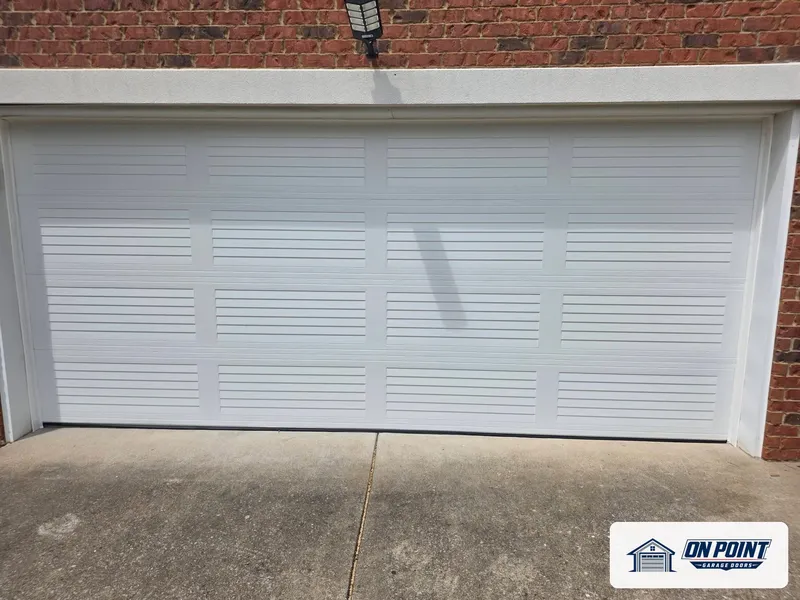
A two-car door spans a long distance with support only at the sides. Thin single-layer doors have little stiffness of their own. Every trip, and every gust of wind, flexes the sections a little. Struts across the sections carry that load and keep the door straight.
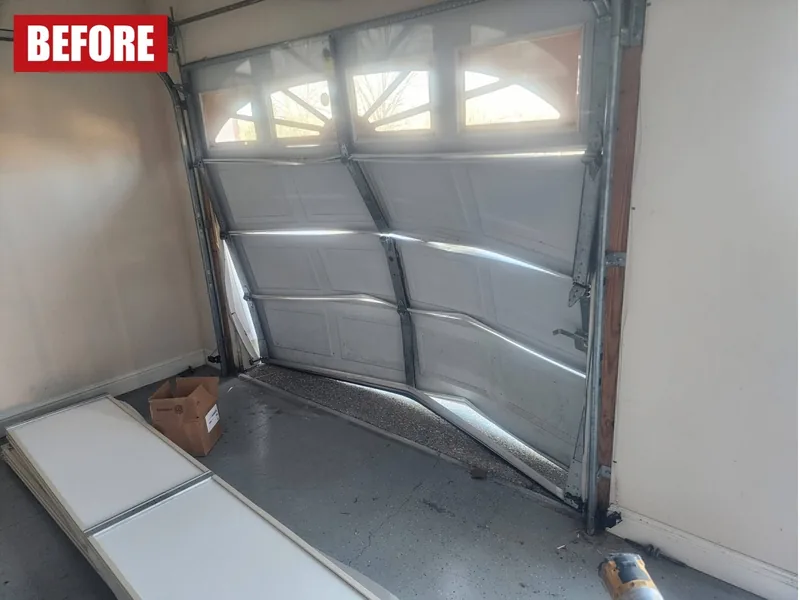
The opener pulls on a bracket at the top center of the door. On thin doors without a strut there, that pull can bend the top section into a V, especially if the springs are weak and the opener is lifting more than it should. A strut across the top section spreads the load. Many new doors come with one; older doors often need one added.
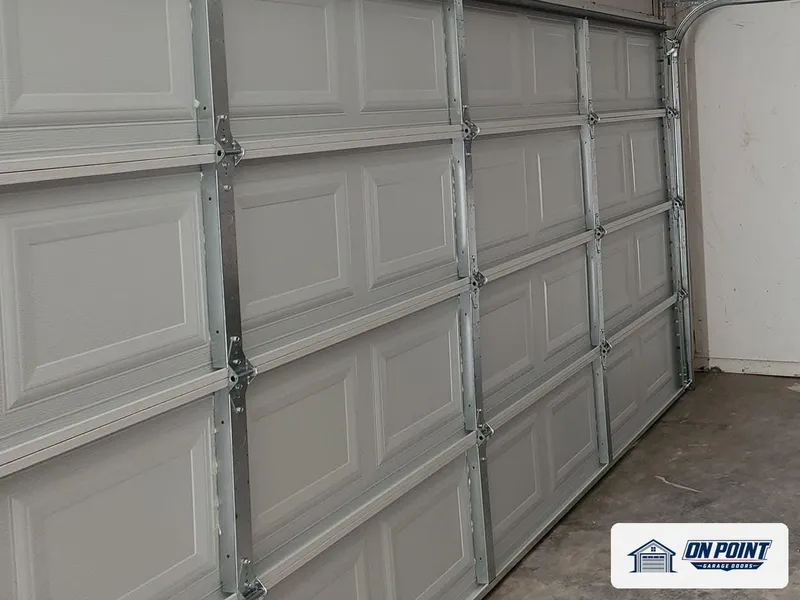
On most wide doors, a strut on the top section is standard, and more are added on other sections depending on the door's width, thickness and wind exposure. Doors near the water and on open lots usually get more. The struts are fastened at every hinge or stile so the section and the strut work as one.
Struts add weight to a door, so the springs must be checked after they are added. A door that was balanced before can become heavy, and the opener then strains. The springs are adjusted or replaced to match, and the door is balanced again.
A section that is already bent, cracked or folded may not straighten with a strut. In that case the section is replaced if a match is available, or the door is replaced. Thin doors that keep bowing even with struts are often better replaced with an insulated door, which is naturally stiffer.
Doors with insulation between two steel faces are much stiffer than single-layer doors and often need fewer struts. When a wide door is being replaced, an insulated door is the long-term answer to bowing and flexing.
Homes by the bay and the canals face strong gusts during storms. Struts, together with heavier hinges, stronger track brackets and tracks anchored into solid framing, help a wide door hold its shape and stay in its tracks.
Commercial sectional doors are often wider and taller than home doors and face trucks and wind. They use heavier struts on more sections. Bent struts on a commercial door are replaced so the door stays straight.
The technician checks the door for sagging, bowing and bent sections, recommends where struts are needed, installs them, checks and adjusts the springs for the added weight, balances the door and tests the opener and safety reverse. You get a free estimate before any work starts.
Keeping the springs balanced is the best protection for the top section, because a balanced door does not need the opener to pull hard. If your opener sounds like it is straining, have the springs checked before the top section bends.
Older doors that were installed without an opener often lack a strut on the top section. When an opener is added years later, that top section takes a pull it was never built for. Adding a strut at the same time as the opener prevents the section from folding.
When a damaged section is replaced, the strut that was on it is transferred or replaced too, so the new section is as stiff as the rest of the door.
Struts are fastened to the section at each hinge or stile with the right hardware, so the section and strut flex as one. Struts that were added with the wrong fasteners can work loose and rattle; those are refastened properly.
A steel reinforcing bar fastened across a section of the door to keep it stiff.
Wide, thin doors flex without struts. A strut keeps the door straight.
The opener's pull can fold a thin top section, especially if the springs are weak. A strut and balanced springs prevent it.
Yes. The springs are checked and adjusted after struts are added.
Yes. You see where struts are needed before any work starts.
Across Brooklyn, Queens and Long Island, tell us what the door is doing and we set a visit that fits your day.
Free estimate, call (929) 429-2429.
Tell us what the door is doing and we will give you an honest arrival time. The estimate is free.
Easier to explain by phone? Call (929) 429-2429.
Tell us what the door is doing. The estimate is free either way.