Booking today in New York(929) 429-2429Open six days a weekFree estimateGuaranteed work
On Point Garage Doors
Open 24 hours Sun-Thu, Fri 7-5 Free estimate Springs, openers, cables We come to you
Emergency?Call nowBook free estimate
New York, NY - open six days a week

Garage door track repair in Brooklyn, Queens and Long Island

Free estimateBent or loose tracksSame day whenever possibleDoor tested before we leave
  • Free estimate
  • Bent or loose tracks
  • Same day whenever possible
Emergency garage door repair★★★★★ 5.0 on Google · 36 reviews

Book your free estimate

Takes 30 seconds. We call you back to set a time.

Or just call (929) 429-2429 and talk it through.

Home › Garage Door Track Repair

Real jobs. Real photos.

Every photo here is from our own work, with our logo on it.

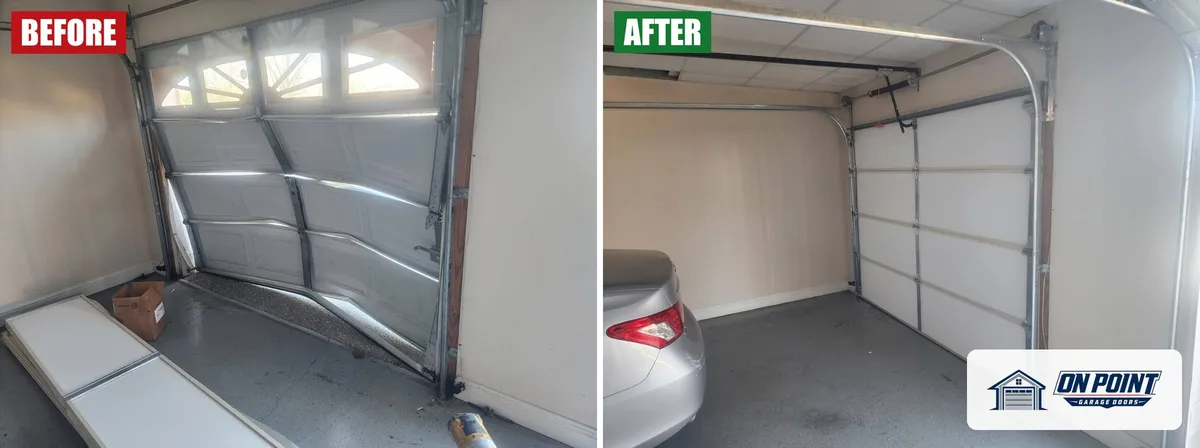
Caved-in door, made new: before and after photo from one of our jobs
Caved-in door, made new
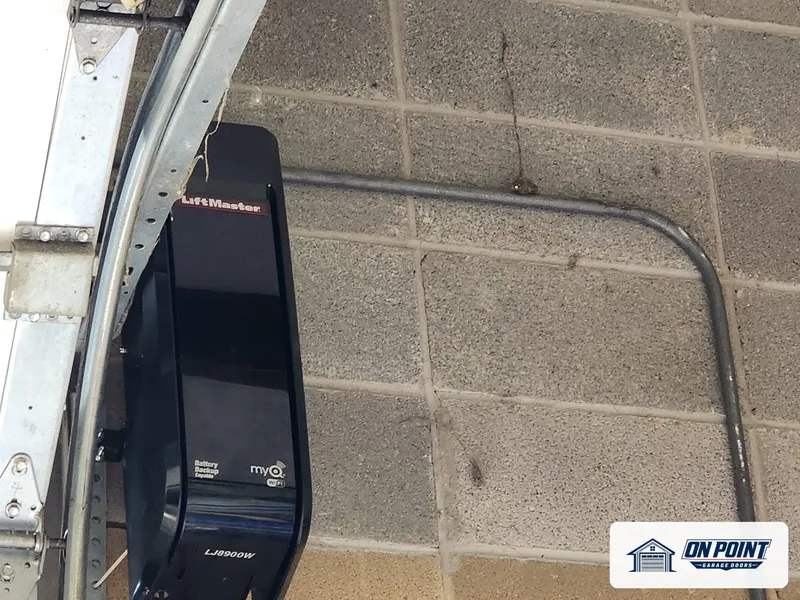
Wall-mount opener installed, photo from one of our jobs
Wall-mount opener installed
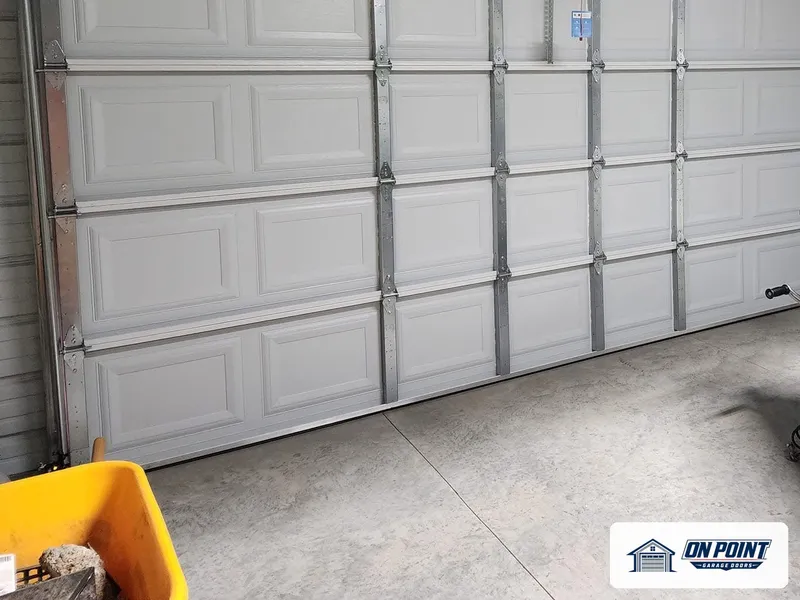
New door, steel building, photo from one of our jobs
New door, steel building

A bent, loose or rusted track is what makes a garage door shudder, scrape or stop partway. On Point Garage Doors repairs and replaces garage door tracks across Brooklyn, Queens and Long Island, and the estimate is free.

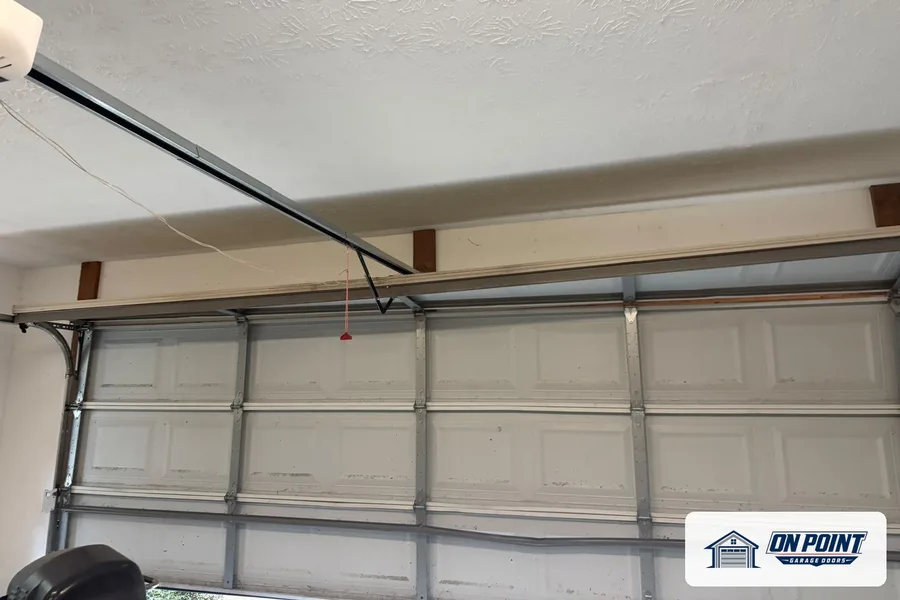
Sectional garage door seen from inside, with its tracks and opener arm

What a bad track looks and sounds like

The track is the steel rail the rollers ride in, one up each side of the door and then back along the ceiling. It has one job: hold the door on its path. When it stops doing that job, you usually notice the sound first. The door scrapes in one spot, thumps as a roller passes a kink, or shudders on the way up while the opener works harder than it should.

Then you start to see it. There is a dent you can spot from the driveway, a gap that opens up between the door and the rail, or a roller leaning out of its channel. Some people find a bracket hanging off the wall, with the bolts pulled out of old wood. Others only notice that the door now closes crooked and leaves daylight on one side.

None of this tends to fix itself. A roller that has to climb over a kink makes the kink a little worse each time, and the door carries the extra strain every trip.

How tracks get damaged

Cars are the most common reason. A bumper that rolls a few inches too far, or a mirror on the way out, is enough to push the lower part of a track in. In a narrow garage under a house, there is very little room between the car and the rail, so it happens more than people think.

Bikes, ladders, snow shovels and storage bins do the same thing more slowly. So does the door itself: a door that was forced while it was stuck, or one that came down hard after a cable let go, can bend the track from the inside.

Then there is what time does. Mounting bolts work loose after years of vibration. Wood behind the brackets dries out or rots, and the anchors lose their grip. On a garage that takes in water and road salt, the bottom foot of the track rusts first, sometimes right through, and the rollers begin to catch on the rough edge.

Why a track problem should not wait

A garage door weighs a lot more than it looks, and the track is what keeps that weight in line. If a roller comes out of a bent section, the door can hang crooked or jam partway up. At that point it is no longer a track repair. It is an off-track door, which is a bigger job and a real hazard to whoever is standing near it.

Running the door on a bad track also wears out other parts. The opener pulls harder, the rollers and hinges take side loads they were not built for, and the cables can start to wind unevenly. Catching the track early usually means fewer parts to replace.

If the door is hanging crooked or a roller is already out, stop using it, keep the car out from under it and call. Our off-track garage door repair page explains what that visit looks like.

What we do on a track repair

The technician starts by finding out why the track moved, because a bent rail is often the symptom. The door is checked by hand with the opener disconnected, so we can feel where it binds. Then the whole path gets looked at: the vertical rails, the curve, the horizontal rails, the brackets and what they are bolted to.

A small bend in sound steel can often be straightened. Loose brackets get re-anchored into something solid, which sometimes means new fasteners or a new mounting point if the old wood has gone soft. A section that is creased, rusted through or twisted gets replaced, because steel that has been kinked hard rarely holds its shape for long.

Tracks also have to be set correctly against each other and against the door. Too tight and the door binds. Too wide and the rollers can drift out of the channel. Once the rail is right, the rollers and hinges that took the abuse get checked, the door gets balanced, and the opener and safety sensors get tested before we leave. Then you get told plainly what was done and why.

Repair the track or replace it

Most of the time, only part of the track needs work, and that is what the estimate covers. A full new set makes sense when rust runs the length of the rail, when the track is too light for the door that hangs on it, or when several sections have been bent more than once.

If the door itself is failing too, that is worth knowing before anyone works on the rails. You will hear that on the visit, with both options laid out, and the choice stays with you. If the door has reached the end of its life, new garage door installation is covered on its own page.

Homes and commercial doors

We work on single and double doors on houses, low-headroom setups in garages under row houses, and the heavier tracks on commercial overhead doors. A commercial door runs many more cycles a week, so a small bend turns into a shutdown faster. If a door at your business has started hanging or banging, see commercial garage door repair or call and describe it.

When you call (929) 429-2429, tell us what the door is doing and whether it still moves. A photo of the bent spot helps. You get an honest arrival time, a free estimate on site, and no work starts until you say yes.

Questions we get asked

Can a bent garage door track be fixed, or does it need replacing?

It depends on the bend. A small bend in sound steel can often be straightened. A track that is creased, rusted through or twisted should be replaced, and you get told which one it is before any work starts.

Is it safe to keep using the door with a bent track?

It is not a good idea. A roller can come out of the bent section and leave the door hanging crooked or jammed. If the door is already crooked, stop using it, keep the car out from under it and call for a free estimate.

Why is my garage door scraping or shaking when it moves?

A bent or misaligned track is a common cause, along with worn rollers or a door that has lost its balance. The technician checks all of these so the right part gets fixed.

What is the difference between track repair and an off-track door?

Track repair fixes a rail that is bent, loose or rusted while the door is still in it. An off-track door has rollers out of the rail, which is a bigger job and needs care because of the weight of the door.

Do you repair tracks on commercial doors?

Yes. We work on tracks on commercial overhead doors as well as doors on houses.

Is the estimate free?

Yes. The track and the door get looked at, you hear what is wrong and what it takes to fix it, and the estimate is free.

Bent or loose track? Tell us what the door is doing

Describe the fault and we'll give you an honest arrival time. The visit and the estimate is free, anywhere in Brooklyn, Queens and Long Island.

Easier to explain by phone? Call (929) 429-2429.

Two minutes to a free estimate on any garage door

Tell us what the door is doing. The estimate is free either way.

Or just call (929) 429-2429 and talk it through.

The other six things that go wrong