Takes 30 seconds. We call you back to set a time.
The hinges on a sectional garage door join the panels together and hold the rollers that ride in the tracks. Each section bends at its hinges as the door turns the curve at the top. When a hinge cracks or works loose, the door sags, binds and wears its rollers and tracks unevenly, and a small part can lead to a bent section or a door off its track. Free estimate at (929) 429-2429.
By Sean Cohen, owner, On Point Garage Doors · Updated
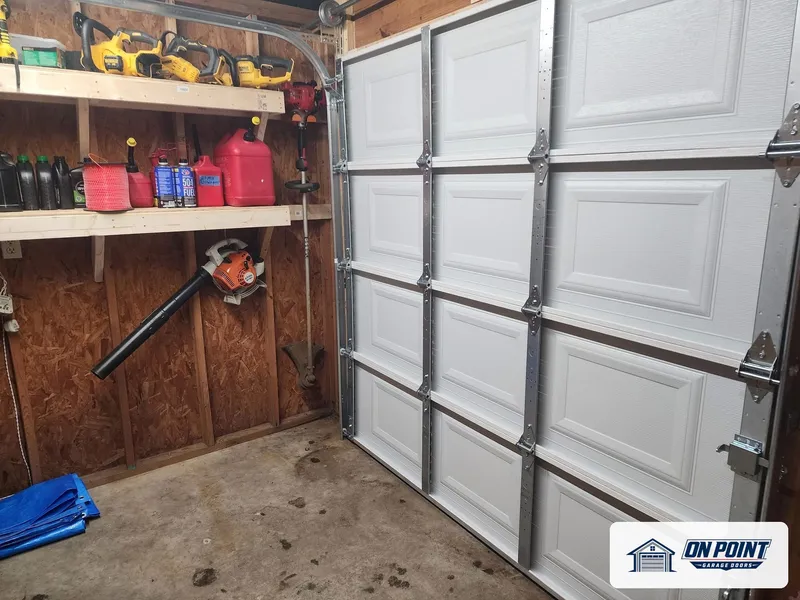
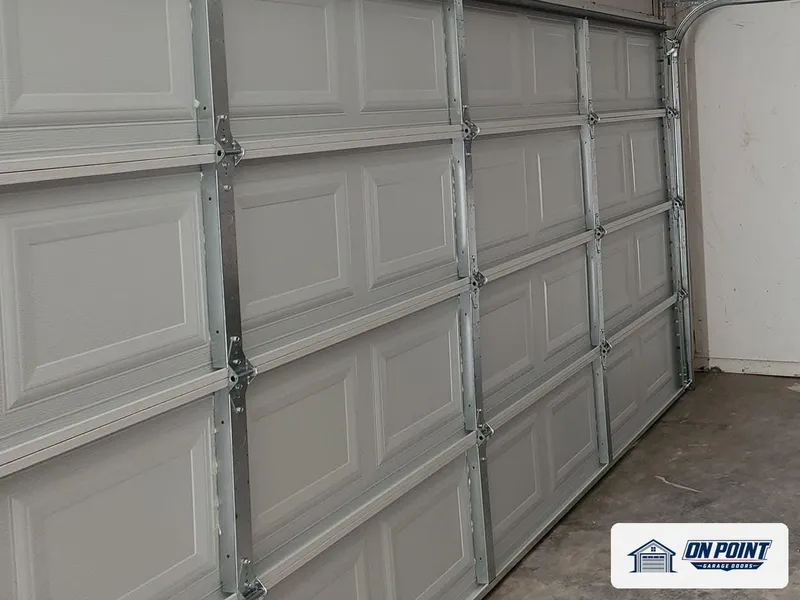
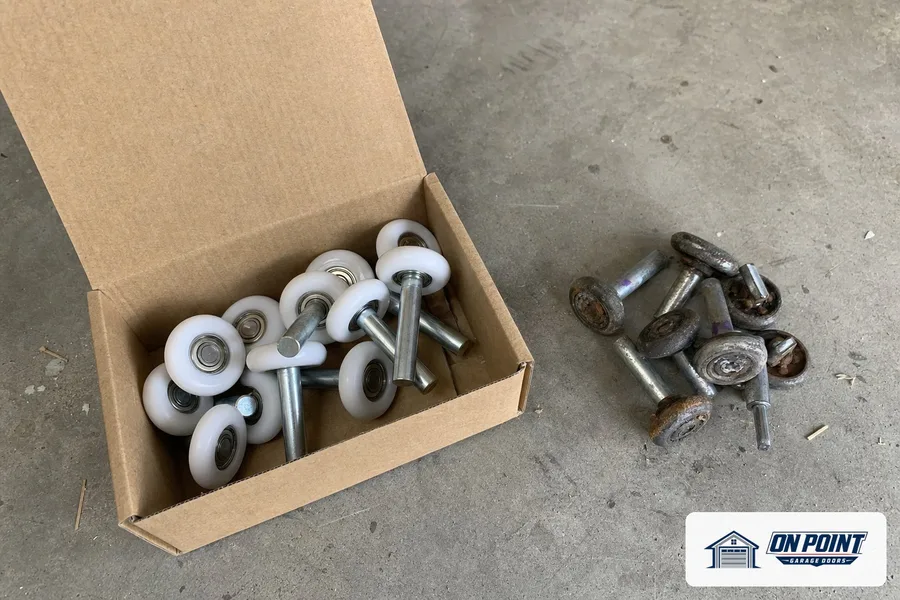
These photos are from our own jobs, with our logo on them.


A sectional door has several horizontal panels. Hinges connect them so the door can bend as it rolls up and over. The hinges at the edges also hold the roller stems, so they carry part of the door's weight into the tracks.
Hinges are numbered by position: the ones nearer the top sit further out so the door curves cleanly. Using the wrong hinge in the wrong place makes the door bind.
Every hinge is checked for cracks, bends and loose fasteners, and the matching rollers are checked at the same time. Cracked or bent hinges are replaced with the correct size for their position. Torn screw holes in the panel are reinforced so the new hinge holds.
Then the springs are checked, because a door that cracks its hinges is often a door that is out of balance.
Wood doors, carriage doors and doors with heavy glass put more load on each hinge. Heavier-gauge hinges suit them better, and the technician explains when an upgrade makes sense.
On older doors, hinges are often replaced as a set so the door runs evenly.
A cracked hinge lets a section flex every time the door moves. That bends the panel, tilts the roller out of the track and can eventually jam the door halfway. Replacing a hinge early is a small repair; replacing a bent section is a bigger one.
The hinges at the bottom corners also connect to the brackets that hold the lift cables, and those are under spring tension. Leave them to a technician.
Worn hinges knock and pop as the door turns the curve, and they are one of the main sources of a noisy door. New hinges with new rollers make a door noticeably smoother and quieter.
The opener arm bolts to a bracket on the top section, right next to the top hinges. Every time the door opens, the opener pulls there first. If the springs are weak, that pull gets harder and the top hinges and the top section take the strain.
A reinforcing strut across the top section spreads that load. The technician checks whether your door has one and whether it is still straight.
A bump from a bumper bends the hinges on the struck sections even when the panel itself looks fine. The door then binds as those sections turn the curve.
Any door that started clunking after a bump is checked hinge by hinge before it is used again.
Hinges come in different gauges, or thicknesses, and in numbered positions from the bottom of the door to the top. Each position sets the roller slightly further out so the door curves cleanly at the top of the track.
A replacement hinge must match both the gauge and the position, or the door will bind as it turns the curve. Worn hinge knuckles are one of the most common repairs on Clopay doors, covered on our Clopay door repair page.
Every hinge and roller is checked, cracked or bent hinges are replaced to match their position, torn screw holes are reinforced, and the springs are checked for balance. The door is then run through its full travel.
Look for a crack, usually on the top hinges, a section that sags, or a door that clunks and binds at the same spot each time.
Yes. A cracked hinge lets the roller tilt, and the door can bind and come out of the track.
The opener pulls on the top section, so those hinges take the most stress, especially if the springs are weak.
On older doors it often makes sense, so the door runs evenly. On newer doors, only damaged hinges may need replacing.
Yes. You hear which hinges need replacing and why before any work starts.
Across Brooklyn, Queens and Long Island, tell us what the door is doing and we set a visit that fits your day.
Free estimate, call (929) 429-2429.
Tell us what the door is doing and we will give you an honest arrival time. The estimate is free.
Easier to explain by phone? Call (929) 429-2429.
Tell us what the door is doing. The estimate is free either way.