Serving Brooklyn, Queens and Long Island(929) 429-2429Open six days a weekFree estimateGuaranteed work
On Point Garage Doors
Open 24 hours Sun-Thu, Fri until 5 pm Free estimate Springs, openers, cables We come to you
Emergency?Call nowBook free estimate
New York, NY - open six days a week

High-lift garage doors

Free estimateSame-day serviceCommon parts on board
  • Free estimate
  • Same-day service
  • Common parts on board
Emergency garage door repair★★★★★ 5.0 on Google · 42 reviews

Book your free estimate

Takes 30 seconds. We call you back to set a time.

Or just call (929) 429-2429 and talk it through.

Home › High-Lift Garage Doors

On a standard garage door, the tracks curve back just above the opening, so the open door hangs low across the ceiling. A high-lift track runs the door straight up the wall first and turns it much higher, close to the ceiling. In a garage with a tall ceiling, that frees the space below for a car lift, a tall truck or a camper, storage racks or a home gym. Free estimate at (929) 429-2429.

By Sean Cohen, owner, On Point Garage Doors · Updated

Real jobs. Real photos.

These photos are from our own jobs, with our logo on them.

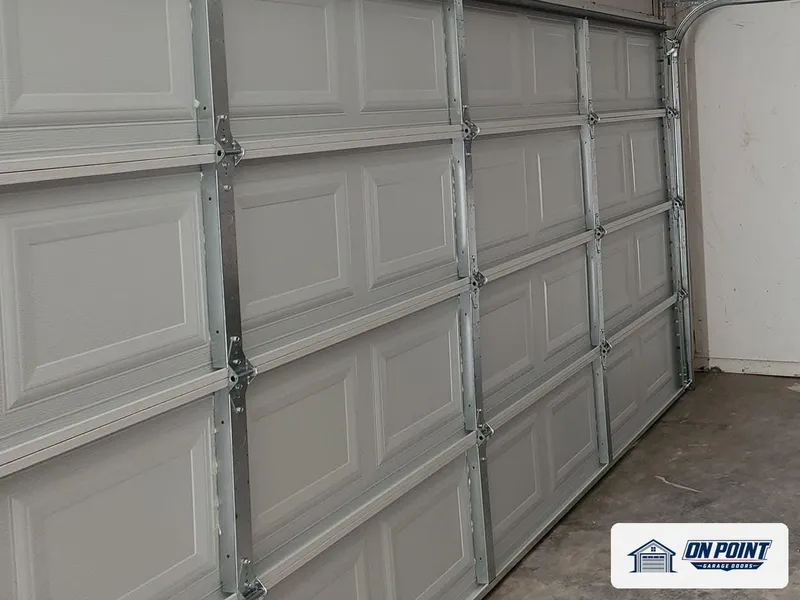
Tracks inside a garage, from one of our jobs
Tracks inside a garage
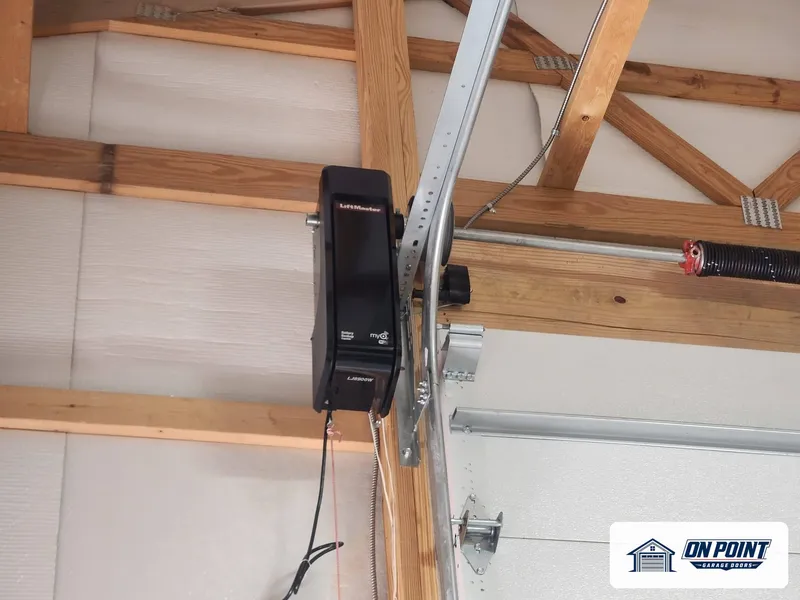
Wall-mounted opener, from one of our jobs
Wall-mounted opener
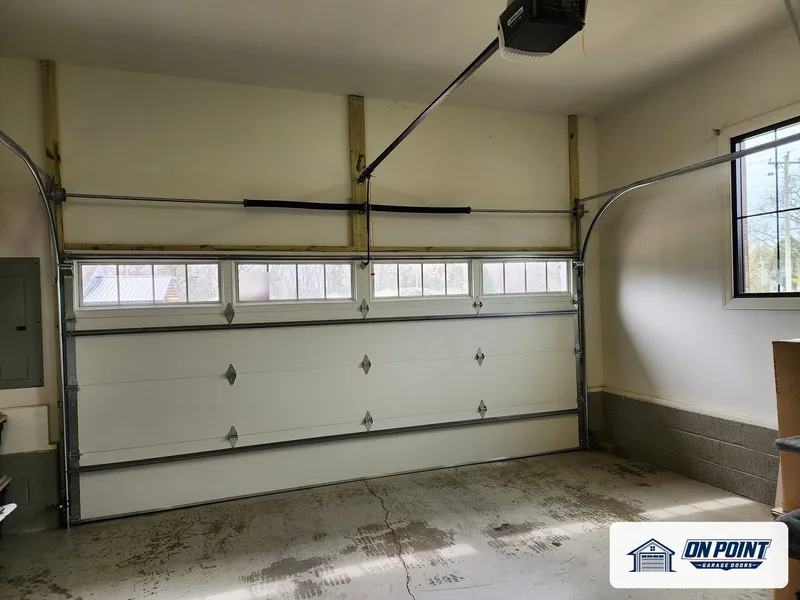
New door and opener, from one of our jobs
New door and opener

Standard, high-lift and vertical-lift

  1. Standard liftThe track turns just above the door. Needs the least headroom; the open door sits low.
  2. High-liftThe track runs up the wall, then turns near the ceiling. Needs a taller ceiling.
  3. Vertical liftThe door runs straight up the wall and never turns. Needs a very tall wall above the door.
  4. Low-headroomThe opposite case, for garages with almost no room above the door.

Who needs high-lift

What high-lift needs

The ceiling has to be high enough above the door for the vertical track, and the wall above the door has to be sound enough to carry it. The springs, drums and cables are different from a standard door, because the door rises farther before it turns. That is why converting a door is a full track and spring job, not a simple add-on.

Converting an existing door

Many existing doors can be converted to high-lift if the ceiling allows. New vertical tracks, high-lift drums, new cables and springs sized for the door are installed, and the horizontal tracks are hung higher. The door itself stays, so it is a good option when the door is in good shape.

Openers for high-lift doors

A standard ceiling opener does not work well on a high-lift door, because the door rises straight up first. Wall-mounted openers, which turn the spring bar directly, are the usual choice. They also keep the ceiling clear, which is often the reason for going high-lift in the first place.

Car lifts

Owners adding a car lift need to know where the door will sit when open and how much clearance the lift and the top car need. The technician measures with you and plans the door height and track position so the lift and the door never meet.

Safety and balance

High-lift doors carry their weight differently as they move, so the springs and drums must be matched carefully. A properly set up high-lift door is balanced along its whole travel and stays where it is stopped. The safety reverse is tested before the technician leaves.

Commercial high-lift doors

Warehouses, workshops and storage buildings use high-lift and vertical-lift doors so the open door does not block racks, cranes or lights. Those doors are sized for heavy use and paired with commercial operators.

What a visit includes

The technician measures the headroom, the wall above the door and the back room, checks the door's condition, and explains whether high-lift, vertical lift or a new door fits. You get a free estimate for each option.

When a new door is better

If the door is old, damaged or very heavy, converting it may not be worth it. A new door with high-lift track designed in from the start is often the cleaner choice. We give you a free estimate on both.

Measuring for high-lift

High-lift setups are planned from a few measurements: the height of the opening, the distance from the top of the opening to the ceiling, the depth of the garage, and any obstacles like beams, lights or a lift. The technician takes those with you and explains how high the door can sit when open.

Lights and sprinklers

When the door rides higher, it can come close to ceiling lights, sprinkler heads or ducts. Those are checked before the track is planned, and lights can be moved where needed so the open door clears everything.

Insulated and heavy doors on high-lift

Insulated and wood-look doors are heavier, and high-lift springs and drums are sized for that weight. A heavy door on high-lift track needs careful balancing so it does not drift up or down when stopped. That balance is checked along the whole travel of the door.

Home gyms and workshops

Owners turning a garage into a gym or a workshop often want the door out of the way when it is open. A high-lift door tucks up near the ceiling, leaving room for racks, a punching bag or tall equipment without the door hanging overhead.

Questions we get asked

What is a high-lift garage door?

A door whose track runs up the wall before turning near the ceiling, so the open door sits high.

Can my existing door be converted to high-lift?

Often yes, if the ceiling is tall enough. It needs new track, drums, cables and springs.

What opener works with a high-lift door?

Usually a wall-mounted opener, which turns the spring bar directly.

Do I need high-lift for a car lift?

Usually. It keeps the open door above the lift and the top car.

Is the estimate free?

Yes. You see the options that fit your garage before any work starts.

Booking takes a minute

Across Brooklyn, Queens and Long Island, tell us what the door is doing and we set a visit that fits your day.

Free estimate, call (929) 429-2429.

Not sure what is wrong? We will come and look

Tell us what the door is doing and we will give you an honest arrival time. The estimate is free.

Easier to explain by phone? Call (929) 429-2429.

Two minutes to a free estimate

Tell us what the door is doing. The estimate is free either way.

Or just call (929) 429-2429 and talk it through.

The other six things that go wrong