Serving Brooklyn, Queens and Long Island(929) 429-2429Open six days a weekFree estimateGuaranteed work
On Point Garage Doors
Open 24 hours Sun-Thu, Fri until 5 pm Free estimate Springs, openers, cables We come to you
Emergency?Call nowBook free estimate
New York, NY - open six days a week

Garage door center bearing plate

Free estimateSame-day serviceCommon parts on board
  • Free estimate
  • Same-day service
  • Common parts on board
Emergency garage door repair★★★★★ 5.0 on Google · 42 reviews

Book your free estimate

Takes 30 seconds. We call you back to set a time.

Or just call (929) 429-2429 and talk it through.

Home › Center Bearing Plate

On a door with torsion springs, a steel plate is fastened to the wall above the middle of the door. It holds the fixed ends of the springs and often a bearing for the spring bar. Everything the springs do pushes against that plate. When the screws behind it start to pull out, or the wood behind it splits, the whole spring system is at risk. This page explains what the plate does, why it comes loose, what the warning signs look like and how it is put back for good. Free estimate at (929) 429-2429.

By Sean Cohen, owner, On Point Garage Doors · Updated

Real jobs. Real photos.

These photos are from our own jobs, with our logo on them.

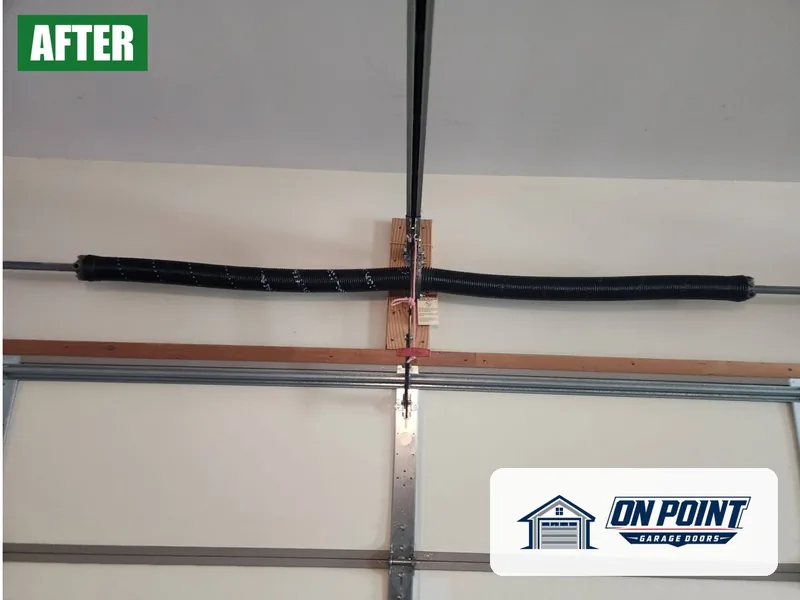
Torsion spring on a center bracket and wood pad, from one of our jobs
Torsion spring on a center bracket and wood pad
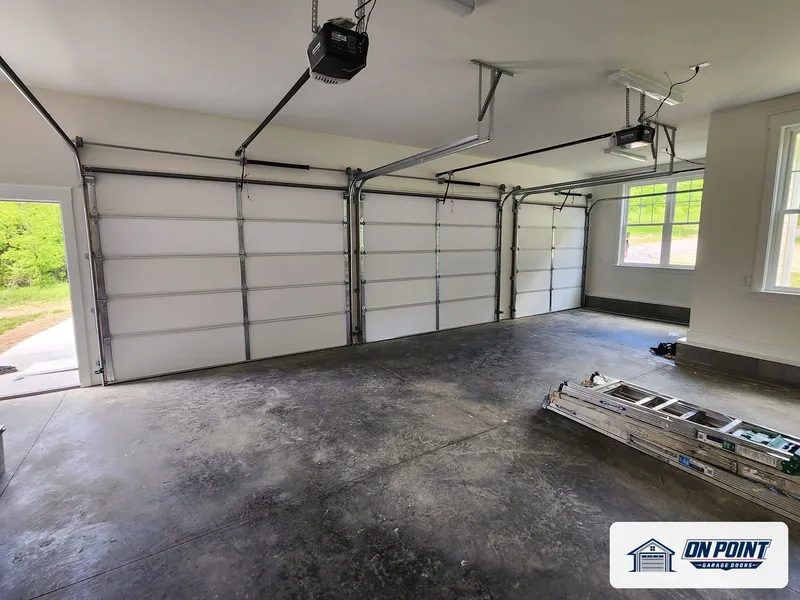
Two doors and openers seen from inside, from one of our jobs
Two doors and openers seen from inside
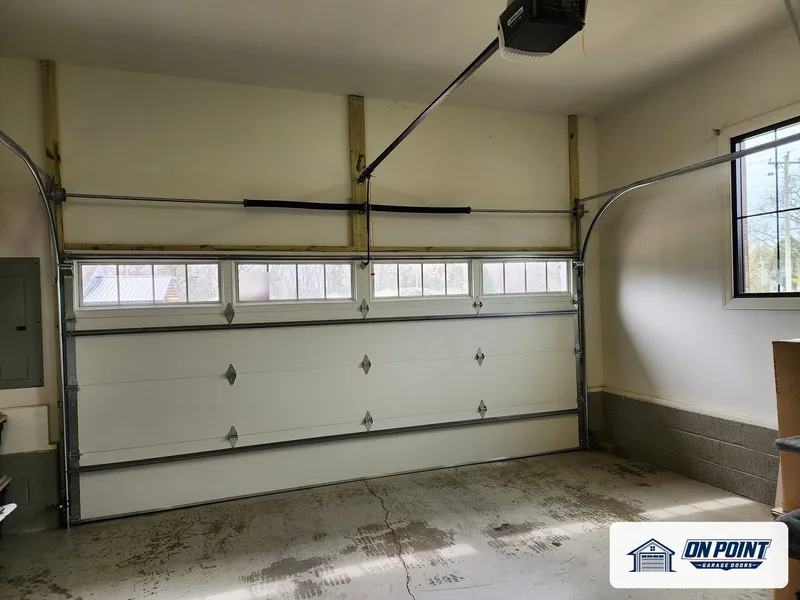
New door and opener seen from inside, from one of our jobs
New door and opener seen from inside

What the center plate does

The springs on the bar above the door are wound tight. One end of each spring is clamped to the bar and turns with it. The other end is bolted to the center plate, which stays still. That fixed end is what lets the spring store energy and lift the door. On many doors the plate also holds a bearing that supports the middle of the bar. It is a small bracket doing a big job.

Where it is fastened

The plate is usually screwed through a wood pad into the framing above the opening. The pad spreads the load and gives the screws solid wood to grip. In a masonry garage, the plate may be anchored into block, brick or concrete instead. Behind finished walls, the pad may sit over drywall, which matters if the screws do not reach the framing behind it.

Signs the plate is pulling loose

These signs mean the door should stop being used until the plate is looked at.

Why plates pull out

Screws that are too short, too few or driven into a thin pad can work loose over time. A pad held on with nails instead of proper fasteners can pull away from the header. Wood that has rotted from a roof or wall leak loses its grip. A pad over drywall that never reached the framing can crush. On masonry, anchors that are the wrong type or are set in crumbling mortar can let go.

Heavier doors and new springs

Replacing a light door with a heavier insulated or wood door, or adding windows, means stronger springs and more force on the center plate. Mounting that was fine for the old door may not be for the new one. When springs are changed or a door is replaced, the pad and plate should be checked as part of the job, not assumed sound.

Why it is dangerous

If the plate tears free, the springs can unwind all at once. The bar can spin, the plate can swing, and the door can drop or jerk to one side. That stored energy is what makes spring work hazardous. A plate that is pulling out is not a part to try to screw back in place while the springs are still wound. Leave the door closed, unplug the opener and keep people clear.

How it is mounted again

The technician first unwinds the springs so there is no load on the plate. The old pad and fasteners are removed, the framing is checked, and a new solid pad is fastened into sound wood with fasteners sized for the load. The plate is then bolted to the pad, the springs are wound again to the right tension, and the door is balanced and tested. In masonry, anchors suited to the material are used.

When the header itself is bad

Sometimes the wood above the opening is rotten, split or too thin to hold anything. Then the framing needs repair before the plate can go back. Small areas can often be handled with new blocking. Larger damage to the header, or rot from a leak in the wall, is carpentry work, and we will tell you when a carpenter needs to go first.

Bearings, bar and drums

A plate that has been moving has usually strained the parts around it. The center bearing may be worn, the bar may be bent, and the end bearings and cable drums may be out of line. These are checked when the plate is remounted, because a new plate on a bent bar soon shows the same symptoms. Our pages on bearings and the torsion shaft go into those parts.

Doors with other spring systems

Doors with extension springs along the tracks do not have a center plate, and their springs are anchored at the back of the tracks instead. Some doors have their springs inside a tube, with a center bracket that still carries the load. Commercial doors with long bars may have more than one center bracket. Each is checked for the same thing: solid mounting into sound structure.

What the visit covers

We check the plate, the pad, the header and the fasteners, then the springs, bearings, bar, drums and cables. If the door is unsafe to run, we say so and secure it. You get a written estimate for the remount and any parts that have been damaged, and work starts after you approve it.

Questions we get asked

What is the center bearing plate on a garage door?

It is the steel bracket fastened above the middle of the door. It holds the fixed ends of the torsion springs and often a bearing for the spring bar.

Is a loose center plate dangerous?

Yes. If it tears free, the springs can unwind suddenly. Stop using the door and keep people clear until it is fixed.

Can I just put longer screws in it?

Please do not. The springs are wound and pushing on the plate. Fixing it safely means unwinding the springs first, which is a technician's job.

Why did my plate pull out after new springs?

Stronger springs or a heavier door put more force on the mounting. If the pad or fasteners were not checked, they may not hold the new load.

Is the estimate free?

Yes. We check the plate, the wood behind it and the springs and give you a written estimate before work begins.

Booking takes a minute

Across Brooklyn, Queens and Long Island, tell us what the door is doing and we set a visit that fits your day.

Free estimate, call (929) 429-2429.

Center plate pulling loose? Stop using the door and call

Tell us what the door is doing and we will give you an honest arrival time. The estimate is free.

Easier to explain by phone? Call (929) 429-2429.

Two minutes to a free estimate

Tell us what the door is doing. The estimate is free either way.

Or just call (929) 429-2429 and talk it through.

The other six things that go wrong