Serving Brooklyn, Queens and Long Island(929) 429-2429Open six days a weekFree estimateGuaranteed work
On Point Garage Doors
Open 24 hours Sun-Thu, Fri until 5 pm Free estimate Springs, openers, cables We come to you
Emergency?Call nowBook free estimate
New York, NY - open six days a week

Garage door spring safety

Free estimateSame-day serviceCommon parts on board
  • Free estimate
  • Same-day service
  • Common parts on board
Emergency garage door repair★★★★★ 5.0 on Google · 42 reviews

Book your free estimate

Takes 30 seconds. We call you back to set a time.

Or just call (929) 429-2429 and talk it through.

Home › Garage Door Spring Safety

The springs on a garage door are what make a heavy door feel light. To do that, they store a huge amount of energy: torsion springs are twisted tight above the door, and extension springs stretch along the tracks. That stored energy is exactly why springs are the most dangerous part of a garage door, and why spring work is the one job every homeowner should leave to a trained technician. Free estimate at (929) 429-2429.

By Sean Cohen, owner, On Point Garage Doors · Updated

Real jobs. Real photos.

These photos are from our own jobs, with our logo on them.

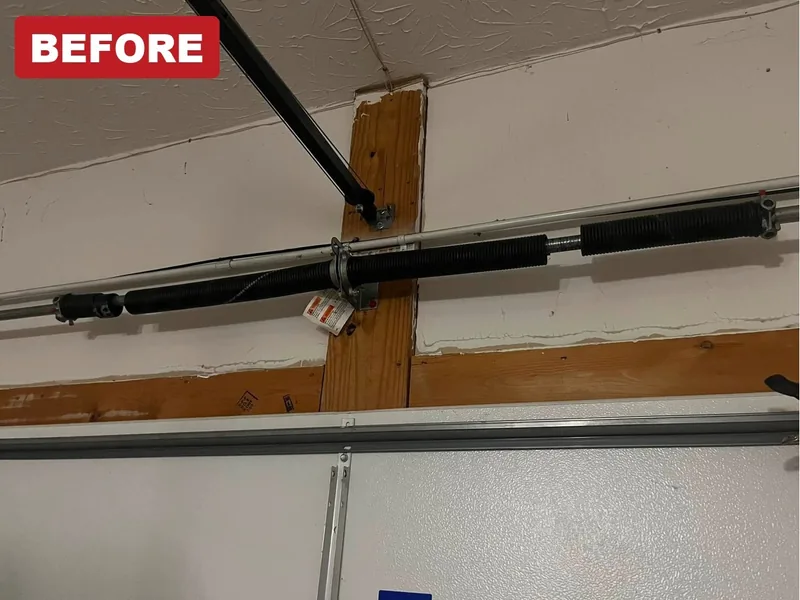
Broken garage door spring with a gap in the coil, before On Point Garage Doors replaced it
Torsion spring winding cone
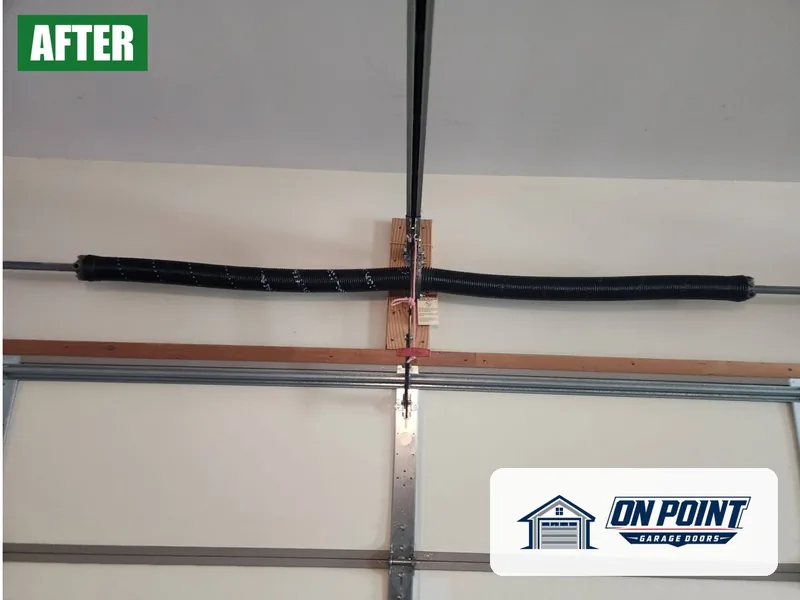
New garage door spring installed by On Point Garage Doors
Springs and cables
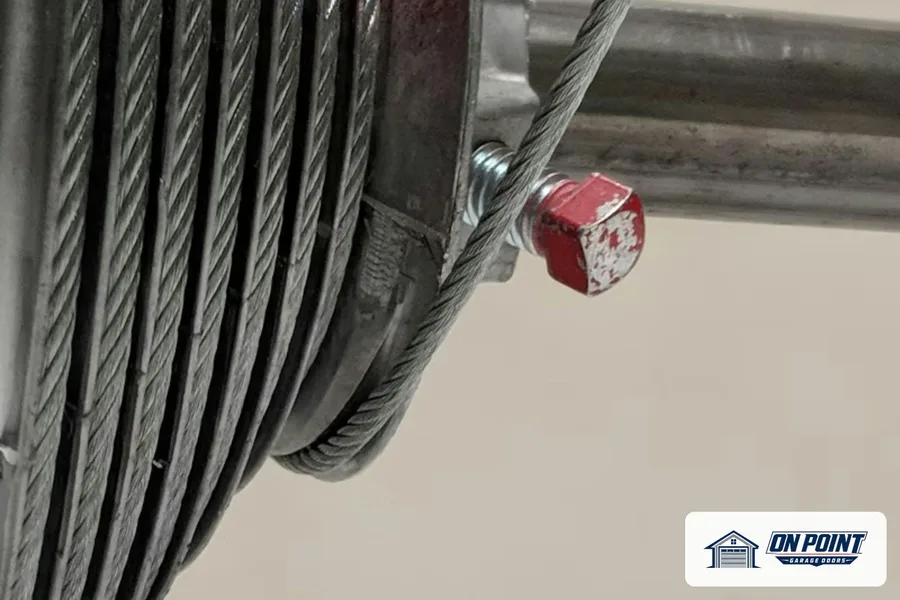
Cable drum on the spring bar, from one of our jobs
Cable drum on the spring bar

How much force springs hold

A garage door can weigh as much as a small motorcycle. The springs hold enough force to lift all of that. When a torsion spring is wound, or an extension spring is stretched with the door down, that force is waiting to be released. Handled wrong, it can spin a bar, snap a cable or throw a part with enough speed to cause serious injury.

What happens when a spring breaks

  1. A loud bangThe steel snaps and the stored energy releases in a flash.
  2. A heavy doorWith the spring gone, the door's full weight is no longer balanced.
  3. A door that dropsIf the door is open when the spring breaks, it can fall hard.
  4. Flying partsExtension springs without safety cables can whip across the garage.
  5. A struggling openerThe opener strains, stops or reverses against the weight.

Warning signs before a spring breaks

Torsion spring dangers

Torsion springs are wound with special bars inserted into a cone on the end of the spring. Using the wrong tool, or letting a bar slip, lets the spring unwind violently. The cones, the clamps on the bar and the center bracket all carry the spring's force. This work is done with the right bars, the right technique and the door secured.

Extension spring dangers

Extension springs stretch along the tracks on older and lighter doors. When one breaks without a safety cable running through it, the pieces can fly across the garage. Every extension spring should have a safety cable; when we find one missing, it is added. Many owners also convert to torsion springs for smoother, safer lifting.

Cables and bottom brackets

The cables and the brackets at the bottom corners of the door carry the springs' force too. Rusted brackets and frayed cables can fail suddenly. Taking off a bottom bracket with the springs wound is one of the most common ways people get hurt.

Why springs are replaced in pairs

Doors with two springs had both installed together, so both have worn the same amount. When one breaks, the other is close behind. Replacing both keeps the door balanced and avoids a second break soon after.

If your spring just broke

Keep the door closed if it is closed. Do not try to lift it, and do not keep pressing the opener. Keep children and pets out of the area. If the door is stuck open or a car is trapped inside, tell us when you call and the visit is treated as urgent.

Choosing the right springs

Springs are sized to the door's weight and height, and rated for a number of open-and-close cycles. Longer-life springs suit doors used many times a day. Correctly sized springs make the door balanced, which is safer and easier on the opener.

What a spring visit includes

The technician secures the door, releases any remaining tension safely, replaces the springs with ones sized to the door, checks the cables, drums, bearings and bottom brackets, balances the door, and tests the opener's force and the safety reverse. You get a free estimate before any work starts.

Rust and spring life near the water

Salt air and damp garages rust springs, and rust eats into the steel. A rusted spring is weaker and more likely to break without warning. Coated or galvanized springs last longer by the water, and a yearly check catches rust before it becomes a failure.

After a spring breaks, check the rest

When a spring breaks, the sudden release can jump a cable off its drum, crack a bearing or bend the top section if the opener kept pulling. After new springs go in, the cables, drums, bearings, top section and opener are all checked so nothing damaged is left behind.

Springs on commercial doors

Commercial sectional and rolling doors use much larger springs than home doors, often several on one shaft or inside a barrel. They hold even more force, and they are serviced only with the door secured and the tension released in a controlled way.

Questions we get asked

Why are garage door springs dangerous?

They store enough force to lift the whole door. Released the wrong way, that force can cause serious injury.

Can I replace a garage door spring myself?

It is not safe. Spring work needs the right tools and training.

What should I do if my garage door spring breaks?

Keep the door closed, do not use the opener, keep everyone away and call.

Do extension springs need safety cables?

Yes. A safety cable keeps a broken spring from flying across the garage.

Is the estimate free?

Yes. You see the options before any work starts.

Booking takes a minute

Across Brooklyn, Queens and Long Island, tell us what the door is doing and we set a visit that fits your day.

Free estimate, call (929) 429-2429.

Not sure what is wrong? We will come and look

Tell us what the door is doing and we will give you an honest arrival time. The estimate is free.

Easier to explain by phone? Call (929) 429-2429.

Two minutes to a free estimate

Tell us what the door is doing. The estimate is free either way.

Or just call (929) 429-2429 and talk it through.

The other six things that go wrong