Serving Brooklyn, Queens and Long Island(929) 429-2429Open six days a weekFree estimateGuaranteed work
On Point Garage Doors
Open 24 hours Sun-Thu, Fri until 5 pm Free estimate Springs, openers, cables We come to you
Emergency?Call nowBook free estimate
New York, NY - open six days a week

Garage door cable drums

Free estimateSame-day serviceCommon parts on board
  • Free estimate
  • Same-day service
  • Common parts on board
Emergency garage door repair★★★★★ 5.0 on Google · 42 reviews

Book your free estimate

Takes 30 seconds. We call you back to set a time.

Or just call (929) 429-2429 and talk it through.

Home › Garage Door Cable Drums

At each end of the torsion spring bar is a grooved drum. The lift cable wraps around it, and as the springs turn the bar, the drums wind the cables to lift the door. If one drum slips, cracks or wears, that side of the door lifts differently, cables jump their grooves, and the door goes crooked. Drums are a quiet part of the system until they fail. Free estimate at (929) 429-2429.

By Sean Cohen, owner, On Point Garage Doors · Updated

Real jobs. Real photos.

These photos are from our own jobs, with our logo on them.

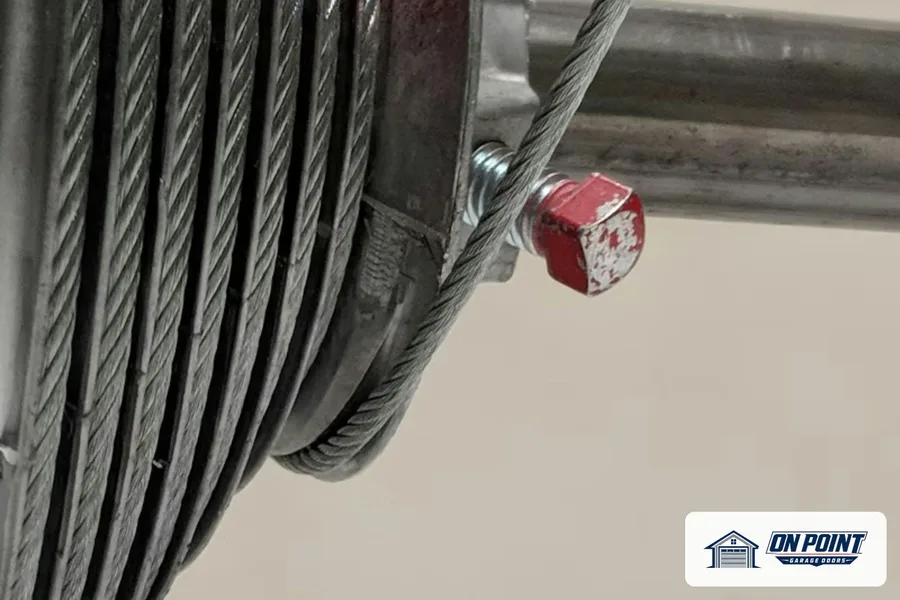
Cable on its drum, from one of our jobs
Cable on its drum
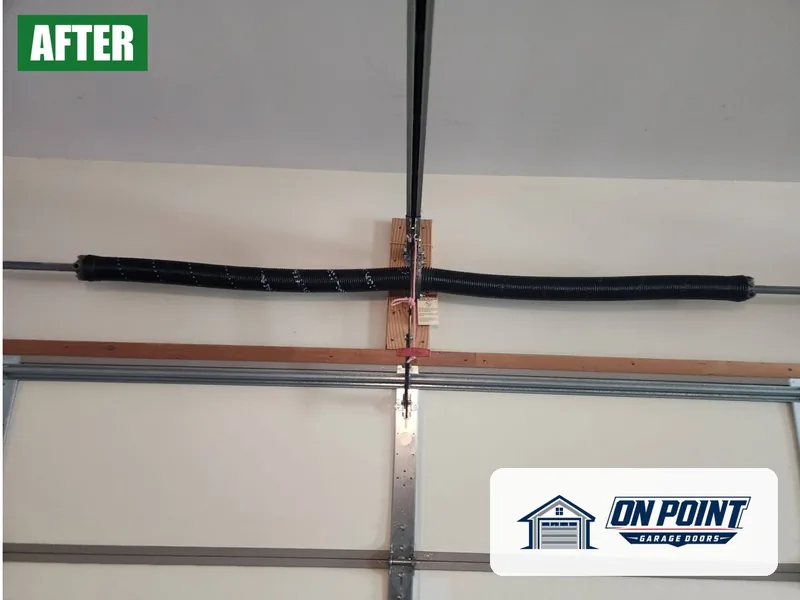
New garage door spring installed by On Point Garage Doors
Springs and cables
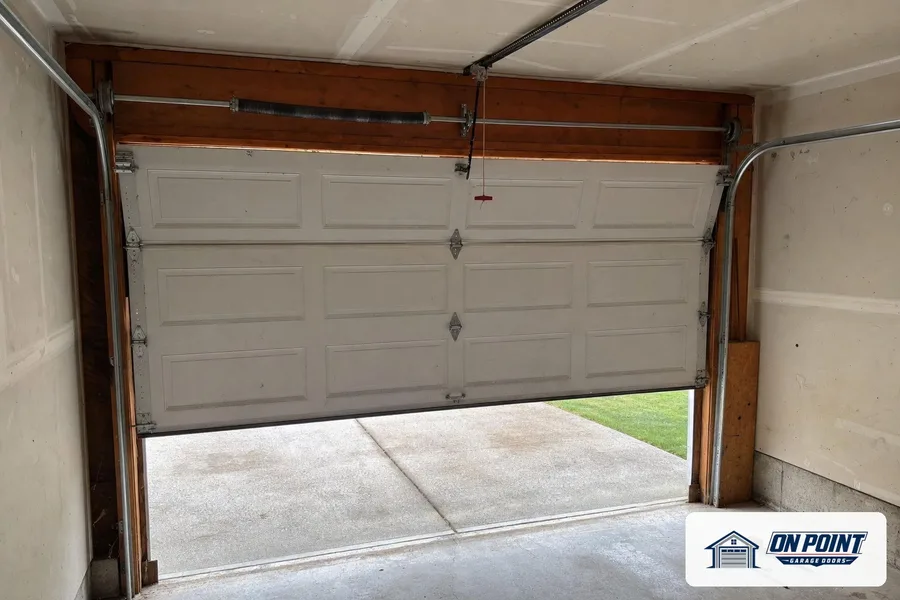
Door stuck partly open, from one of our jobs
Door stuck partly open

What drums do

The drums turn the twisting force of the springs into a straight pull on the cables. Both drums must be the same size, set at the same position on the bar and wound with the same cable tension, so both sides of the door lift evenly.

How drums fail

  1. Slipping on the barA drum that slips turns less than the other, and the door goes crooked.
  2. CrackingCast drums can crack, especially after a broken spring or a door that dropped.
  3. Worn groovesFrayed cables wear the grooves, so new cables do not seat properly.
  4. RustDamp and salty garages rust drums and the set points on the bar.
  5. Wrong sizeDrums that do not suit the door's height or track leave slack or overwind.

A cable off its drum

The most common drum call is a cable that has jumped off. It usually happens when the door gets stuck on the way down while the drums keep unwinding, leaving slack that slips out of the grooves. The door can then hang crooked on one cable. Do not run the door; the cable must be re-seated with the spring tension safely released.

Drums and door types

Standard-lift, low-headroom and high-lift doors use different drums. A door converted to high-lift, for example, needs high-lift drums. Using the wrong drum leaves the cables slack at the top or bottom of travel and makes the door unbalanced.

Why drums are a technician's job

Drums sit on the spring bar under full spring tension and are set in place on the bar. Moving or adjusting a drum with the springs wound can release that force suddenly. Drum work is done with the springs unwound and the door secured.

Replace drums with cables

When cables are replaced, the drums are checked. Worn grooves shorten the life of new cables, and a cracked drum can fail under the new cable's tension. Replacing both drums keeps the door balanced.

After a broken spring

A spring that snaps releases its energy suddenly and can jolt the drums and cables. After any spring break, the drums are inspected for cracks and slipping before the new springs go in.

Signs of a drum problem

What a visit includes

The technician secures the door, releases spring tension, inspects the drums, cables, bearings and springs, replaces worn drums and cables, sets both drums evenly, winds and balances the springs, and tests the opener and safety reverse. You get a free estimate before any work starts.

Preventing drum problems

Keep the door balanced, replace frayed cables early, and avoid running the opener against a door that is stuck. A yearly tune-up checks the drums and cables before they cause a crooked or jammed door.

High-lift and low-headroom drums

High-lift doors use drums with a tapered section that winds extra cable as the door rises up the wall. Low-headroom doors may use special drums mounted toward the back. When a door is converted, the drums are changed to match, and the cables are set to the new travel.

Drums on heavy doors

Heavy insulated, wood and glass doors put more load on the drums. Drums rated for the door's weight and height are used, and they are checked whenever the springs are replaced.

Rusted drums by the water

In salty, damp garages, drums and the bar beneath them rust. A rusted drum can slip on the bar or crack under load. They are inspected every year on homes near the water.

Doors that sit crooked

A door that sits crooked with both cables still on their drums may have one drum that has slipped on the bar. The drums are reset to the same position so both sides lift together, with the spring tension safely released first.

Drums on extension spring doors

Doors with extension springs do not use drums; their cables run over pulleys instead. When those doors are converted to torsion springs, new drums, a spring bar and bearings are installed, and the cables are sized to the door's height.

Drums and the opener

A slipping drum makes one side of the door lag, and the opener feels the drag as the door twists in the tracks. If the opener has started to reverse or stop for no clear reason and the sensors are fine, the drums and cables are checked next.

Questions we get asked

What are garage door cable drums?

Grooved drums at each end of the torsion spring bar that wind the lift cables.

Why did my garage door cable come off the drum?

Usually the door got stuck while the drums kept unwinding, leaving slack that slipped off.

Can I put the cable back on the drum myself?

No. The drums are under spring tension. A technician releases it safely first.

Should drums be replaced with cables?

When the grooves are worn or a drum is cracked, yes.

Is the estimate free?

Yes. You see what is wrong before any work starts.

Booking takes a minute

Across Brooklyn, Queens and Long Island, tell us what the door is doing and we set a visit that fits your day.

Free estimate, call (929) 429-2429.

Not sure what is wrong? We will come and look

Tell us what the door is doing and we will give you an honest arrival time. The estimate is free.

Easier to explain by phone? Call (929) 429-2429.

Two minutes to a free estimate

Tell us what the door is doing. The estimate is free either way.

Or just call (929) 429-2429 and talk it through.

The other six things that go wrong