Takes 30 seconds. We call you back to set a time.
Lift cables are the thin steel cables running from the bottom corners of your garage door up to the drums above it. Together with the springs, they carry the door's weight. When one snaps or slips off its drum, the door drops on that side, twists in the tracks and often jams crooked. A door in that state is under uneven tension and should not be moved until a technician has secured it. Free estimate at (929) 429-2429.
By Sean Cohen, owner, On Point Garage Doors · Updated
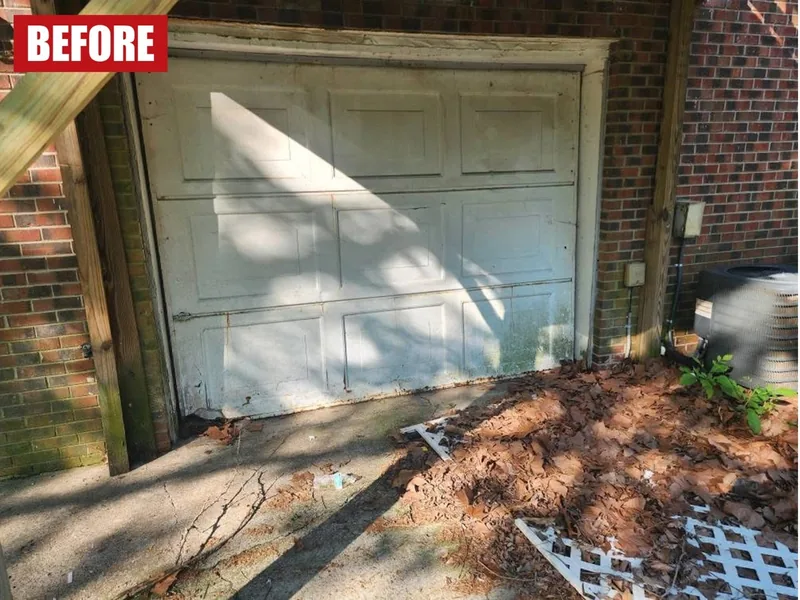
These photos are from our own jobs, with our logo on them.


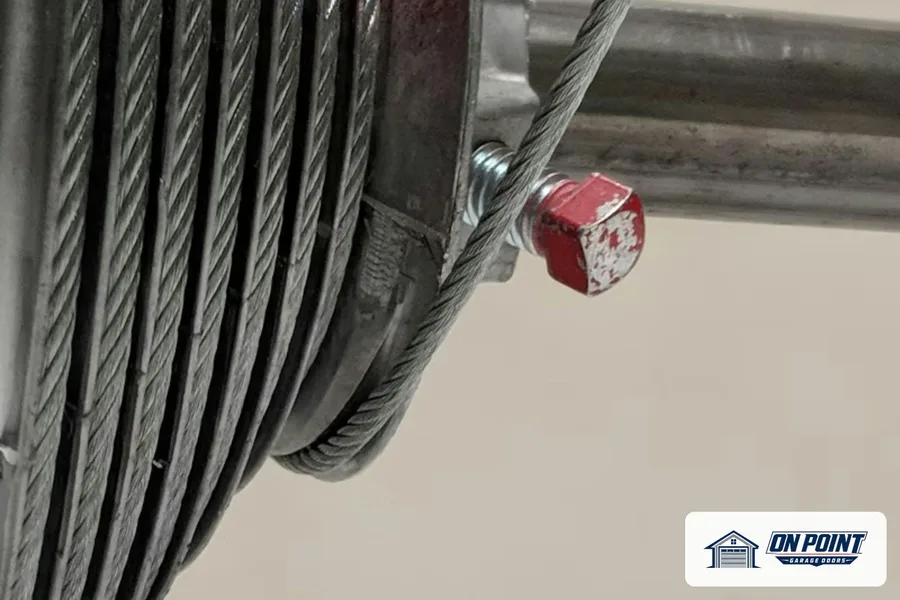
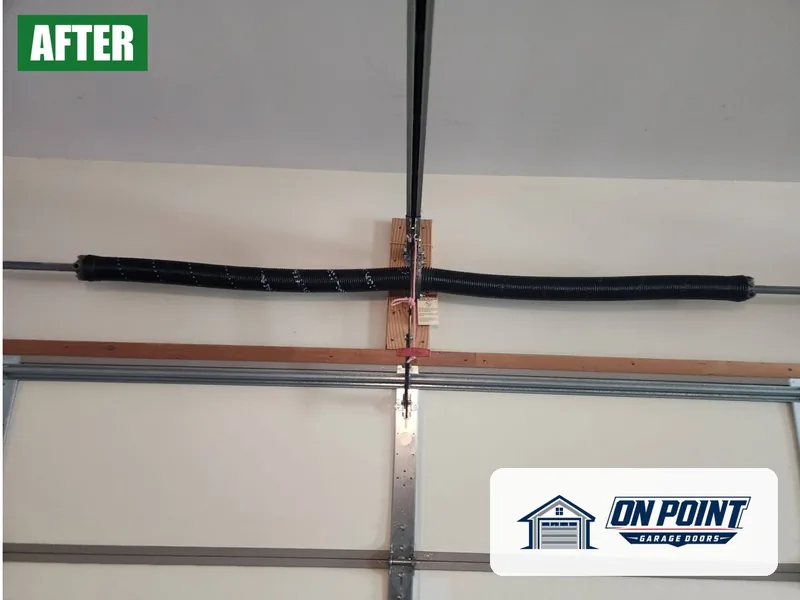
On most doors here, torsion springs above the door twist to store force, and that force turns two drums on the spring bar. The cables wrap around those drums and connect to brackets at the bottom of the door on each side. As the springs unwind, the drums turn and the cables lift the door evenly.
On doors with extension springs along the tracks, the cables run through pulleys instead. Either way, the cables are what connect the spring force to the door.
Stop using the opener. Keep people, pets and cars away from the door. Do not try to lift, lower or straighten it, and do not disconnect the opener if the door is crooked: the opener may be the only thing keeping a lopsided door from shifting.
Call and tell us what you see. If a car is trapped inside or the door is stuck open, say so and the visit is treated as urgent.
Sometimes the cable is not broken at all but has jumped off its drum. That usually happens when the door gets stuck on the way down while the drums keep unwinding, leaving slack that slips off. The door can then hang on one cable, with all of the spring force on one side.
Re-seating the cable means taking the tension off the springs safely, which is a job for a trained technician with the right tools.
Cables wear together. If one has frayed or rusted through, the other has had the same years of salt and wear. Replacing both keeps the door lifting evenly and avoids a second breakdown soon after. Worn drums and rusted bottom brackets are replaced at the same time.
Each cable ends at a bracket on the bottom corner of the door. That bracket holds the full force of the springs. When it rusts, it can let go and take the cable with it. Rusted bottom brackets are dangerous to handle and are always replaced by the technician with the tension off.
A door that dropped on one side can bend its bottom section, crack hinges or twist a track. After the cables are replaced, every section, hinge, roller and track is checked. The springs are tested too, because a broken spring is a common reason cables jump off.
The technician secures the door, releases the spring tension safely, brings the door back level, installs new cables, and replaces any worn drums or bottom brackets. The springs are set to the door's weight, the door is balanced and run several times, and the opener's force and the safety reverse are tested.
You get a clear explanation and a free estimate before any work starts.
Garages close to the bay and the canals, and garages on streets that get heavy salting, see cables rust from the bottom up. Galvanized cables and rust-resistant brackets last longer there, and a yearly check catches fraying before a cable lets go.
Keep the bottom seal in good shape so water does not pool at the corners, rinse salt off the bottom of the door after winter, and have the cables, drums and springs checked once a year. A balanced door with sound cables is far less likely to drop on one side.
The door drops on that side, goes crooked and can jam in the tracks. Stop using it and call.
No. Cables work with springs under high tension, and handling them wrong can cause serious injury.
Yes. They wear together, and replacing both keeps the door lifting evenly.
Usually the door got stuck while the drums kept turning, leaving slack, or a spring broke.
Yes. You see what is wrong and the fix before any work starts.
Across Brooklyn, Queens and Long Island, tell us what the door is doing and we set a visit that fits your day.
Free estimate, call (929) 429-2429.
Tell us what the door is doing and we will give you an honest arrival time. The estimate is free.
Easier to explain by phone? Call (929) 429-2429.
Tell us what the door is doing. The estimate is free either way.